

Muscle Topics Lesson

Presentation
•
Biology
•
10th Grade
•
Hard
Used 2+ times
FREE Resource
29 Slides • 28 Questions
1
Muscle actions, Muscle shapes, Muscle Lever systems and How muscles are named
2
Muscles have varying shapes for the job they perform.
3

4
Circular Muscles-
These muscles appear circular in shape and are normally sphincter muscles which surround an opening such as the mouth, surrounded by Obicularis Oris and Obicularis Oculi surrounding the eyes
5
Convergent Muscles
These are muscles where the origin (the attachment to a fixed bone, usually the proximal attachment) is wider than the point of insertion. This fibre arrangement allows for maximum force production. An example is Pectoralis Major. Convergent muscles are also sometimes known as triangular muscles.
6
Parallel Muscles
Parallel muscles have fibres which, as the name suggests, run parallel to each other and are sometimes called strap muscles.
They are normally long muscles which cause large movements, are not very strong but have good endurance. Examples include Sartorius and Sternocleidomastoid. Some textbooks include Fusiform muscles in the parallel group.
7
Pennate muscles have a large number of muscle fibres per unit and so are very strong, but tire easily. They can be divided into:
8
Unipennate: These muscles have their fibres arranged to insert in a diagonal direction onto the tendon, which allows great strength. Examples include the Lumbricals (deep hand muscles) and Extensor Digitorum Communis (wrist and finger extensor) Bipennate: Bipennate muscles have two rows of muscle fibres, facing in opposite diagonal directions, with a central tendon, like a feather. This allows even greater power but less range of motion. An example is the Rectus Femoris Multipennate: As the name suggests Multipennate muscles have multiple rows of diagonal fibres, with a central tendon which branches into two or more tendons. An example is the Deltoid muscle which has three sections, anterior, posterior and middle.
9
Fusiform Muscles
Sometimes, included in the parallel muscle group, these muscles are more spindle-shaped, with the muscle belly being wider than the origin and insertion. Examples are, Biceps Brachii and Psoas major.
10
Multiple Choice
Which of the following is a convergent triangular muscle?
psoas major
biceps brachii
pectoralis major
rectus femoris
11
Multiple Choice
Muscles with circular forms tend surround openings of the body.
True
False
12
Multiple Choice
Muscles with many dense fibers are usually weaker but have endurance.
True
False
13
Multiple Choice
A muscles shape affects its function.
True
False
14
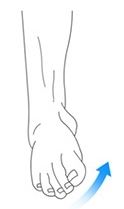
Muscle actions are the same as muscle movements and muscle functions. Refer to your movement handouts for these questions. and the video!!!
15
16
Multiple Choice
17
Multiple Choice
18
Multiple Choice

19
Multiple Choice

20
Multiple Choice

21
Multiple Choice
22
Multiple Choice

23
Multiple Choice

24
LeversA lever is composed of three parts: a fixed rod which is attached to a fulcrum (pivot) and a load. Depending on the relative position of the three components, levers can move heavy loads or move loads further or faster when a force is applied.
If a load is close to a pivot and the force is applied far from the pivot, then the lever is said to operate at mechanical advantage. A large but relatively small force can move a heavy object. The classic example of such a lever is a car jack. With big movements of the lever, the heavy car is lifted in small increments off the ground.
25
26
If a load is far from a pivot and a force is applied near to the pivot, then the lever is said to operate at a mechanical disadvantage. A large force is required to move a relatively small load, but the speed and distance at which that load can be moved is greatly increased. An example of this is a spade combined with forceful movements of the muscles in the arm, which results in large movements of the spade head.
In muscles, the joints are the pivots and the bones are the fixed rods. The load is the weight of the bone, associated tissues, and other objects being moved, and the force is applied by the muscle at its insertion point.
27
Levers can also vary based on the relative position of the load, pivot and point of force application. Classes of levers include:
First-class Lever
In a first class lever, the load and force sit on either side of the pivot like a seesaw. First-class levers are relatively uncommon in the body, but one example is the triceps brachii muscle of the upper arm which acts to extend the forearm. The force is applied at its point of insertion on the ulna in the forearm, the elbow is the pivot, and the load is the humerus in the upper arm. Thinking of the relative distance between the points of attachment, the triceps brachii can be said to act at a mechanical disadvantage.
28
In a second-class lever, the force is applied at one end with the pivot at the other and the load in between. Second-class levers are also relatively uncommon in the body. One example is raising yourself up on your toes. The pivot is based at the front of the foot, the load is the weight of the body, and the force is applied through the Achilles tendon in the heel. All second-class levers in the body act at a mechanical advantage since the force is always applied closer to the load than to the pivot.
29
In a third-class lever the force is applied between the load and the pivot. The majority of muscles in the body are third-class levers and all act at a mechanical disadvantage as the force is applied closer to the pivot than the load. An example of a third-class lever in the body is the biceps brachii, which flexes the forearm towards the shoulder. Originating at the scapula, the pivot is the elbow, with the force applied immediately after the elbow at the point of insertion on the radius of the forearm. The load is the forearm and any objects a person carries.
30
Every lever system has a bar or rod which in our case is our bone, a fulcrum or pivot which is our joints, a force which is applied by our muscle and a resistance which is whatever we are trying to lift or move.
31
Multiple Choice
All lever systems are equally strong.
true
false
32
Multiple Choice
Which class of lever system is like a "seesaw", or "teetertotter"?
1st class
2nd class
3rd class
33
Multiple Choice
In a lever system in our body the "rigid bar " or arm is our
joint
muscle force
bone
Load or resistance
34
Multiple Choice
In a lever system the fulcrum in our body are the
bones
joints
muscles
load or resistance
35
There are well over 600 muscles in the human body and there criteria that are followed when they are named.
36
37
Location of or body part covered by the muscle
Frontal bone
Tibia
Frontalis
Tibialis anterior
38
Direction of muscle fascicles relative to muscle midline.
Rectus – parallel
Transverse – perpendicular
Oblique – at a 45° angle
Rectus abdominis
Transversus abdominis
39
Relative size
Maximus – largest
Longus – longest
Brevus – shortest
40
Gluteus maximus
Palmaris longus
Peroneus longus
Teres major
Teres minor
41
Number of origins
Biceps – two origins
Triceps – three origins
Biceps brachii
Triceps brachii
42
Location of origin or insertion
origin at sternum
origin at clavicle
insertion at mastoid process
Sternocleidomastoid
43
Shape
Deltoid – triangular
Trapezius – trapezoidal
Serratus – saw-tooth edge
Orbicularis – circular
Deltoid
Trapezius
Serratus anterior
Orbicularis oris
44
Flexion
Extension
Adduction
Flexor carpi radialis
Extensor digitorum
Adductor longus
45
levator labii superioris alaeque nasi muscle
The levator labii superioris alaeque nasi muscle is, translated from Latin, the "lifter of both the upper lip and of the wing of the nose". It has the longest name of any muscle in an animal.
46
Multiple Choice
The rectus femoris is named by what criteria?
Direction of fiber and relative size
shape and number of origins
Direction of fibers and location
Location and action
47
Multiple Choice
The sternocleidomastoid is named based on what criteria?
Shape
origins and insertions
number of origins
location
48
Multiple Choice
Which muscle would close or elevate your jaw?
sternocleidomastoid
massester
pectineus
sartorius
49
Multiple Choice
Intercostal muscles are named by what criteria?
Relative size
location
how tasty they are
number of origins
50
Multiple Choice
The sternocleidomastoid is named based on what criteria?
Shape
origins and insertions
number of origins
location
51
Multiple Choice
The infraspinatus muscle is named by what criteria?
size and shape
Shape only
location
none of these
52
Multiple Choice
The infraspinatus muscle is named by what criteria?
size and shape
Shape only
location
none of these
53
Multiple Choice
Muscles have 2 or more attachments what are they called?
agonists and antagonists
origins and insertions
isotonic and isometric
none of these
54
Multiple Choice

The muscle in green is the
rectus femoris
biceps brachii
biceps femoris
gluteus maximus
55
Multiple Choice

This muscle has how many origins?
1
2
6
3
56
Multiple Choice

Does this muscle pass 2 joints?
yes
no
57
Multiple Choice

Is this the largest tendon in the body?
yes
no
Muscle actions, Muscle shapes, Muscle Lever systems and How muscles are named
Show answer
Auto Play
Slide 1 / 57
SLIDE
Similar Resources on Wayground

51 questions
Language Review for AASA - Day 1
Presentation
•
KG
52 questions
SSS, SAS, ASA, AAS, HL
Presentation
•
10th Grade
53 questions
Computer Hardware and Software
Presentation
•
10th Grade
56 questions
Cell Structures & Functions
Presentation
•
10th - 11th Grade
51 questions
10/8 DNA structure and Replication Quizizz Slides 25-26
Presentation
•
9th Grade
48 questions
Classification Lesson
Presentation
•
11th Grade
52 questions
Ecology Unit Key points and practice
Presentation
•
9th Grade
52 questions
Photosynthesis part 1
Presentation
•
11th Grade
Popular Resources on Wayground
10 questions
Safety Day 2026 – Student Review

Quiz
•
9th Grade
21 questions
Continents and Oceans
Quiz
•
6th Grade
20 questions
Parts of Speech
Quiz
•
5th Grade
16 questions
Subject & Predicate
Quiz
•
5th Grade
25 questions
Multiplication Facts
Quiz
•
5th Grade
12 questions
Map Skills
Quiz
•
3rd Grade
22 questions
Continents and Oceans
Quiz
•
5th Grade
15 questions
Rounding Decimals
Quiz
•
5th Grade
Discover more resources for Biology
20 questions
Cell organelles and functions
Quiz
•
10th Grade
20 questions
Cell Transport
Quiz
•
9th - 12th Grade
8 questions
DNA vs. RNA
Presentation
•
9th - 12th Grade
20 questions
Macromolecules
Quiz
•
10th Grade
20 questions
Characteristics of Life
Quiz
•
9th - 10th Grade
15 questions
Photosynthesis and Cellular Respiration
Quiz
•
10th Grade
15 questions
DNA Structure and Replication
Quiz
•
9th - 12th Grade
20 questions
Ecological Succession Review
Quiz
•
9th - 12th Grade