Search Header Logo
Semester Review

Semester Review

Assessment

Presentation

Science

8th Grade

Easy

Created by

Janeth Hernandez

Used 1+ times

FREE Resource

47 Slides • 62 Questions

1

8th Grade Science

Semester Review

2

Unit 4 Review ​

Convection Currents, Weather Maps, Hurricanes​

3

COLD FRONT

-A cold front is a boundary between two air masses, one cold and the other warm, moving so that the colder air replaces the warmer air.

-A cold front is represented as a blue line with the teeth pointing toward the direction of movement.

media

4

Multiple Choice

Question image

If you see this symbol on a weather map, what can you predict about the weather?

1

This symbol points in the direction of air movement. It is likely to get colder as the cold front moves across.

2

It is getting warmer there.

3

There will be a hurricane.

4

It is cloudy there.

5

Warm Front

A warm front is a boundary between two air masses, one cool and the other warm, moving so that the warmer air replaces the cooler air.

A warm front is represented as a red line with half circles pointing toward the direction on movement.

media

6

Multiple Choice

Question image

If you see this symbol on a weather map, what can you predict?

1

The weather is getting colder as the front moves across.

2

There will be snow.

3

There will be a flood.

4

The weather is getting warmer as the front moves across.

7

Low Pressure

​(LOUSY WEATHER)

A low pressure system is a whirling mass of warm, moist air that generally brings stormy weather with strong winds.

media

8

Multiple Select

Question image

You look at the weather map and see this symbol. What kind of weather can you predict? CHOOSE ALL THAT APPLY.

1

sunny skies

2

thunderstorms

3

rain

4

strong winds

5

little or no wind

9

High Pressure

​(HAPPY WEATHER)

A high pressure system is a whirling mass of cool, dry air that generally brings fair weather, sunny skies, and light winds.

media

10

Multiple Choice

Question image

Based on the weather map, what will most likely happen to the weather in the North western area of Texas

1

Clear skies and warmer

2

Dry air and sunny

3

Thunderstorms and lower temperatures

4

Calm breezes

11

Multiple Choice

Question image

A cold front is approaching Minneapolis. What will happen to the air temperature?

1

stay the same

2

increase

3

decrease

12

​Hot air rises, Cool air Sinks

media

13

Multiple Choice

Warm air is __________ dense than cold air and rises creating convection currents.

1

more

2

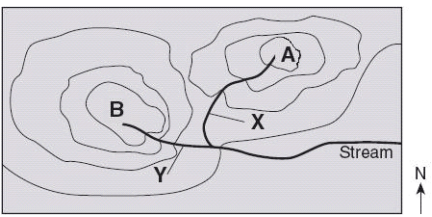
less

14

Multiple Choice

Question image

Warm air rises and the cool air sinks demonstrates this type of heat transfer.

1

conduction

2

convection

3

radiation

4

Insolation

15

Multiple Choice

____________ air rises because it is ____________dense.
1
Cool, Less
2
Warm, Less
3
Cold, More
4
Warm, More

16

media

17

media

18

Multiple Choice

Which situation would reduce the strength of a hurricane?

1

the formation of a low-pressure area

2

the formation of a high-pressure area

3

warm water moving into the area

4

cool water moving into the area

19

Multiple Choice

Which of the following is a true statement?

1

hurricane is a triangle-shaped storm.

2

Thunderstorms last longer than hurricanes.

3

It's common to see hurricanes in January and February.

4

Hurricanes form in warm weather.

20

Unit 6 Review ​

Rotation, Revolution, Lunar Cycle and Tides ​

21

Rotation and Revolution

Rotation = day and night

Revolution = Seasons

media

22

Multiple Choice

Rotation is (pick the correct image)

1
2

23

Multiple Choice

Revolutionis (pick the correct image)

1
2

24

media

25

Multiple Choice

Earth's movement around the sun is called:

1

Rotation

2

Revolution

3

Summer

4

Fall

26

Multiple Select

Select all correct answers about REVOLUTION.

3 answers

1

Moving around the sun

2

Seasons

3

Day and night

4

Takes 1 year

27

Multiple Select

Select all correct answers about ROTATION

1

Spinning around the axis

2

Seasons

3

Day and night

4

Takes 24 hours or 1 day

28

media

29

Multiple Choice

Question image
What are the reasons for the season?
1
Earth's tilt & rotation
2
Earth's tilt & revolution
3
Earth's rotation & rovolution
4
Earth's tilt & resolution

30

Multiple Choice

Question image

Which season is taking place in the Northern Hemisphere in Position 1?

1
Winter
2
Spring
3
Summer
4
Fall

31

Multiple Choice

Question image

Which season is taking place in the Northern Hemisphere in Position 3?

1
Winter
2
Spring
3
Summer
4
Fall

32

media

33

Multiple Choice

Question image

Observe the moon and determine if it is waxing or waning

1

Waxing

2

Waning

34

Multiple Choice

Question image

Observe the moon and determine if it is waxing or waning

1

Waxing

2

Waning

35

media

36

Multiple Choice

Question image

Observe the moon and determine if it is a crescent, quarter, or gibbous

1

Crescent

2

Quarter

3

Gibbous

37

Multiple Choice

Question image

Observe the moon and determine if it is a crescent, quarter, or gibbous

1

Crescent

2

Quarter

3

Gibbous

38

Multiple Choice

Question image

Observe the moon and determine if it is a new or full moon

1

New

2

Full

39

Multiple Choice

Question image

Observe the moon and determine if it is a new or full moon

1

New

2

Full

40

media

41

Open Ended

Question image

If you observe a first quarter on September 16th , on what day would you observe a full moon ?

42

Multiple Choice

Why does the moon's gravitational pull have more of effect on tides than the sun's gravitational pull?
1
they are the same
2
the moon is larger than the sun
3
tides are not caused by the moon
4
the moon is closer to the Earth than the sun

43

Spring Tide

​SPRING TIDE

-Twice a month (during full and new moon)

-the Earth, Moon, & Sun align (line up) causes the Moon & Sun to pull together on Earth’s oceans.

-Higher high tides / lower low tides

media

44

Multiple Choice

A[n] ___________ tide occurs when the sun, Earth, and the moon are nearly in a line.

1

spring

2

high

3

low

4

neap

45

NeaNEp Tide

​NEAP TIDE

-Twice a month (during 1st and last quarter moon)

-the Earth, Moon, & Sun will form a right angle (90 degrees)

media

46

Multiple Choice

A[n] ______________ tide occurs when the sun is at right angles to the line between Earth and the moon.

1

high

2

neap

3

low

4

spring

47

Multiple Choice

During a neap tide, the sun, moon, and earth are at a ___________ angle.

1

360 degree

2

23.5 degree

3

45 degree

4

90 degree

48

Unit 7​

Galaxies, Stars, Sun, Electromagentic spectrum​

49

3 Main Types (based on shape)

3 Types of galaxies

-Spiral

- Elliptical

- Irregular

media

50

The Milky Way

The Milky Way is a special type of spiral galaxy, called a Spiral galaxy. 

​Our solar system is located in the arm.

media

51

media

52

Multiple Choice

Question image
Which star has the lowest temperature?
1
A
2
B
3
C
4
D

53

Multiple Choice

Question image
Look at the H-R diagram. Which star is
sort of cool, dim (not too much light), and red?
1
Betelguse
2
Sirius B
3
Procyon B
4
Barnard's star

54

Multiple Choice

Question image
Blue stars are the _____________.
1
hottest
2
coolest
3
smallest

55

Multiple Choice

Which category is our Sun located in?
1
White Dwarfs
2
Supergiants
3
Main Sequence
4
Giants

56

Multiple Choice

Question image
Which star is the coldest?
1
Yellow Star
2
Red Star
3
Orange Star
4
Blue Star

57

Multiple Choice

Question image

In the diagram given, what happens as we move to the left?

1

Stars Get Larger

2

Stars get Colder

3

Stars get hotter

58

Multiple Choice

The Sun appears brighter than all other stars because it is.....

1

further away from Earth than other stars

2

closer than other stars

3

the brightest star in the universe

59

Electromagnetic Spectrum Review

media

60

media

61

Multiple Choice

Question image

As the frequency of an electromagnetic wave increases, the amount of energy in that wave...

1

Increases

2

Stays the same

3

Decreases

62

Multiple Choice

Question image

Which EM wave has the highest frequency?

1

Microwave

2

Radiowave

3

Gamma Ray

4

Visible Light

63

Unit 3​

Force, Speed, Velocity, Acceleration, Laws of Motion​

64

media

65

media

66

Multiple Choice

Question image

What is the net force

1

10 N to the right

2

30 N to the right

3

10 N to the left

4

30 N to the left

67

Multiple Choice

Question image

What is the net force?

1

15 N

2

5 N to the left

3

5 N to the right

4

15 N left

68

Speed

  • Speed is the measure how quickly distance changes with time.

  • Units for speed include mph with SI unit being m/s.

media

69

Using Equations to Solve for Speed, Distance, & Time

  • Distance = speed x time

  • Time = distance / speed

  • Speed = distance / time

media

70

Multiple Choice

Question image

Find the speed of Ms. Chen after 40 sec at 8 meters.

1

5m/s

2

8m/s

3

5 mph

4

40 mph

71

Multiple Choice

Question image

The average speed on 933 is 60mph and it is 30 miles from Whitney to Cleburne. How long will it take to get to Cleburne if I leave at 4pm?

1

5min

2

30 min

3

5hrs

4

30 sec

72

Velocity

  • Velocity of an object is its speed combined with the direction of the motion

  • Just add the direction to the speed and you have velocity

  • An example of velocity would be 70mph south

media

73

Multiple Select

Check all of the correct examples of velocity

1

6km/h

2

4 km/h north

3

70mph

4

70mph east

5

25 feet up

74

Acceleration

  • Acceleration is a measure how quickly velocity changes.

  • Acceleration describes the change in velocity over time.

  • The SI unit for acceleration is m/s2

media

75

Multiple Select

How are speed and velocity different?

1

Velocity has direction plus speed

2

Speed is scaler while velocity is vector

3

change in position

4

one is normal and one is weird

76

Multiple Choice

A train that travels 100 kilometers in 4 hours is traveling at what average speed?

1

50 km/h

2

100 km/h

3

2 km/h

4

25 km/h

77

media

78

media

79

Multiple Choice

What is Newton's First Law
1
F=ma
2
Every action has an equal and opposite reaction
3
An object at rest stays at rest, an object in motion stays in motion. 
4
Friction 

80

Multiple Choice

According to Newton’s first law of motion, a moving object that is not acted on by an unbalanced force will
1
remain in motion.
2
eventually come to a stop.
3
change its momentum.
4
accelerate.

81

media

82

Multiple Choice

You push on a tree with 20 N of force. If the tree doesn't move, the tree is pushing back on you with _____of force.

1

20N

2

10N

3

40N

4

70N

83

Also known as the "Law of Action/Reaction"

media

84

Multiple Choice

Newton's Third Law States...
1
Objects in motion stay in motion and objects at rest stay at rest
2
Force is equal to mass times acceleration
3
For each action there is an equal and opposite reaction

85

Multiple Choice

A player hits a ball with a bat. The action force is the impact of the bat against the ball. The reaction force is...
1
The grip of the player's hands on the ball
2
the air resistance of the ball
3
the force of the ball against the bat

86

Unit 5

Continental drift theory, Plate tectonics, topographic maps ​

87

media

88

Multiple Choice

What does the theory of continental drift state?
1
The continents were once joined in a super-continent and have moved over time
2
Continents are stationary and do not move
3
The Earth is broken into lithospheric plates that move due to convection currents
4
none of the above

89

Convergent Boundaries

  • Collide (crash into each other)

  • Create mountains, trenches, volcanoes

media

90

Subduction

At a convergent boundary, plates collide. Heavier (more dense) oceanic crust goes under and melts into the mantle.

media

91

Multiple Select

Choose all the features that can be formed at CONVERGENT boundaries.

1

Volcanoes/Mountains

2

Faults

3

Trenches

4

Mid Ocean Ridge

5

Rift Valley

92

Divergent Boundaries

  • Plates move apart

  • Creates mid - ocean ridges and rift valleys

  • Creates new crust through Seafloor Spreading

media

93

Seafloor Spreading

At a divergent boundary, two oceanic plates move apart. This allows mantle material to rise and cool, forming new crust. Older crust moves further away.

media

94

Multiple Choice

How do plates move at DIVERGENT boundaries?

1

Collide (together)

2

Move apart

3

Slide past each other

95

Multiple Select

Choose all the features that can be formed at DIVERGENT boundaries.

1

Volcanoes/Mountains

2

Faults

3

Trenches

4

Mid Ocean Ridge

5

Rift Valley

96

Transform Boundaries

  • Plates slide past each other

  • Creates faults

  • Does not destroy or create crust

media

97

Multiple Choice

How do plates move at TRANSFORM boundaries?

1

Collide (together)

2

Move apart

3

Slide past each other

98

Multiple Select

Choose all the features that can be formed at TRANSFORM boundaries.

1

Volcanoes/Mountains

2

Faults

3

Trenches

4

Mid Ocean Ridge

5

Rift Valley

99

Contour Interval

  • The Contour Interval (CI) is the difference in elevation from one contour line to the next.

  • Usually, every line isn't marked so you have to determine the CI yourself.

  • Let's practice. What is the CI for this topographic map?

media

100

Multiple Choice

Question image

What is the contour interval (CI)?

1

100m

2

10m

3

25m

4

20m

101

Contour Lines

  • Lines that connect equal points of elevation.

  • Any POINT on that line will be the same elevation on that line.

  • First, what is the contour interval?

  • What is the elevation at point A?

  • Point B?

media

102

Multiple Choice

Question image
What is the difference in elevation between Point X and Point Y?
1
120 m
2
240 m
3
360 m
4
340 m

103

STEEP Slopes

With STEEP slopes, hard to climb, lines would be close together. The STEEP slope of this landform is on the East side.

media

104

Multiple Choice

Question image

Which side is steeper?

1

The left side of the hill

2

The right side of the hill

105

Multiple Choice

Question image

Match the topographic map to its profile.

1
2
3
4

106

GENTLE Slope

With GENTLE slopes, easy to climb, lines would be spread apart together. The GENTLE slope on this landform would be on the West side.

media

107

Multiple Choice

Question image

Which point, A or B, has a gentle slope?

1

A, because lines are spread apart.

2

B, because lines are close together.

3

B, because it's higher elevation.

4

A, because the land has a lower elevation compared to pt. B.

108

Water

A v-shape or u-shaped pattern on a topographic map is used to show a river or stream. The point of the V or the U points to the source of water. Remember, Water flows from a HIGH point to a LOW point. GRAVITY!

Which direction does this RIVER flow?

media

109

Multiple Choice

Question image
Which direction is the stream flowing?
1
northward
2
southward
3
westward
4
eastward

8th Grade Science

Semester Review

Show answer

Auto Play

Slide 1 / 109

SLIDE