Waves Lesson
Presentation
•
Science
•
8th Grade
•
Hard
+5
Standards-aligned
Deborah McDaniel
Used 17+ times
FREE Resource
28 Slides • 142 Questions
1
Waves Lesson
By Deborah McDaniel
2
3
4
5
6
7
8
9
10
Multiple Choice
11
Multiple Choice
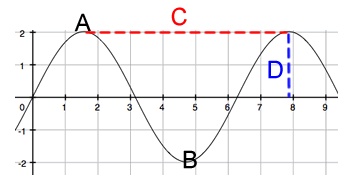
This is a transverse wave. Which part of the wave is "B"
crest/peak
wavelength
trough
12
Multiple Choice
13
Multiple Choice
Look at this wave. "A" is which part of a wave?
Crest/Peak
Wave Speed
Resting Point
14
Multiple Choice
15
Multiple Choice
16
Multiple Choice
17
Multiple Choice
18
Multiple Choice
19
Multiple Choice
20
Multiple Choice
21
Multiple Choice
22
Multiple Choice
23
Multiple Choice
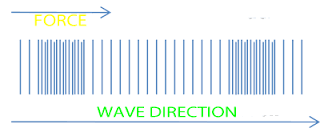
It is the high pressure part of the wave where the particles are close together. It is part A on this picture.
Compression
Amplituide
Rarefaction
Wavelength
24
Multiple Choice
25
Multiple Choice
26
Multiple Choice
Which type of wave moves parallel to the direction of the wave?
transverse
longitudinal
surface
electromagnetic
27
Multiple Choice
28
Multiple Choice
29
30
31
Multiple Choice
How many waves pass through a fixed point every second, or how often a wave occurs is the wave's __________________
amplitude
wave speed
32
Multiple Choice
The distance from resting point to the top of a crest or the bottom of a trough of a wave (height of the wave) is the _____________________
wave speed
33
Multiple Choice
34
Multiple Choice
The distance between 2 corresponding parts of a wave (example- crest to crest) is the _____________________
wave speed
35
Multiple Choice
As the frequency of a wave increases, the __________________ decreases.
number of waves
energy
36
Multiple Choice
37
Multiple Choice
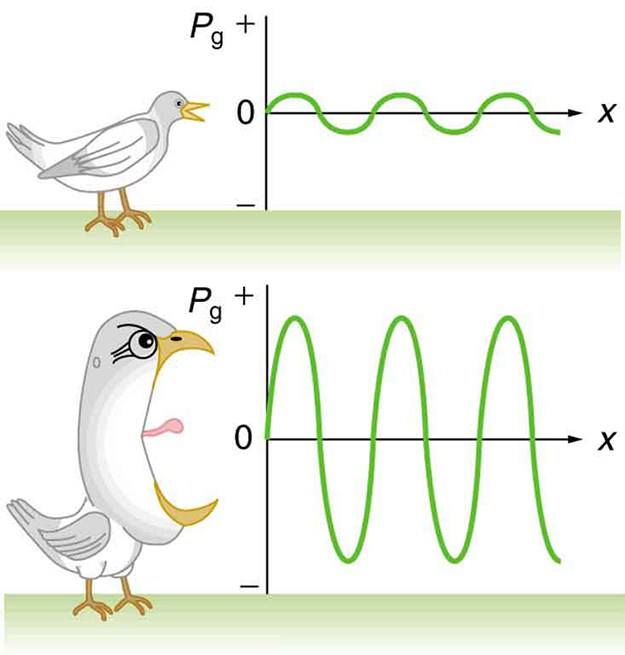
Increasing the amplitude means you are increasing the _______________ of a wave.
frequency
speed
energy
wavelength
38
Multiple Choice
39
Multiple Choice
40
Multiple Choice
When the frequency of a wave increases, what happens to the energy of the wave?
The energy is not directly affected by the frequency of a wave.
The energy increases.
The energy decreases.
41
Multiple Choice
How many waves pass through a fixed point every second, or how often a wave occurs is the wave's __________________
amplitude
wave speed
42
Multiple Choice
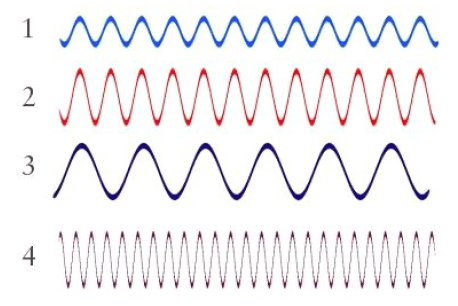
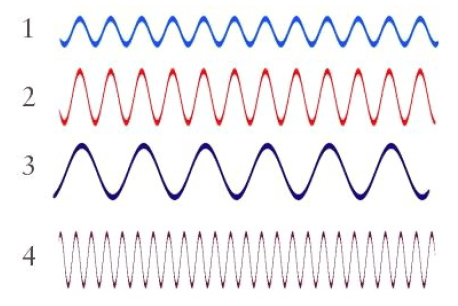
Which wave in the diagram has the greatest wavelength?
43
Multiple Choice
The distance between 2 corresponding parts of a wave (example- crest to crest) is the _____________________
wave speed
44
Multiple Choice
Increasing the amplitude means you are increasing the _______________ of a wave.
frequency
speed
energy
wavelength
45
Multiple Choice
Which wave in the diagram has the highest energy?
46
Multiple Choice
As the frequency of a wave increases, the __________________ decreases.
number of waves
energy
47
Multiple Choice
The distance from resting point to the top of a crest or the bottom of a trough of a wave (height of the wave) is the _____________________
wave speed
48
Multiple Choice
The greater the frequency, the ________ energy carried by the wave.
more
less
49
Multiple Choice
50
Multiple Choice
Which wave in the diagram has the greatest frequency?
51
Multiple Choice
Which wave in the diagram has the greatest wavelength?
52
Multiple Choice
When the frequency of a wave increases, what happens to the energy of the wave?
The energy is not directly affected by the frequency of a wave.
The energy increases.
The energy decreases.
53
Multiple Choice
54
Multiple Choice
55
Multiple Choice
56
Multiple Choice
The bigger the amplitude, the ________ energy carried by the wave.
more
less
57
Multiple Choice
Which wave in the diagram has the highest energy?
58
Multiple Choice
59
60
61
62
63
Multiple Choice
64
Multiple Choice
65
Multiple Choice
66
Multiple Choice
What is the Doppler Effect?
A change in frequency due to the relative motion of a wave source and an observer
When a wave overlaps with another wave
When a wave bounces off of another object
When a wave bends due to traveling through a different medium
67
Multiple Choice
68
Multiple Choice
You are standing on the side of the road when a police car races past you with its siren on. After the police car passes you, what happens to the pitch of the siren?
It increases
It decreases
It turns red
69
Multiple Choice
70
Multiple Choice
71
Multiple Choice
72
Multiple Choice

73
Multiple Choice
74
Multiple Choice
As a wave travels further from its center, the
energy of the wave is increased.
energy of the wave is decreased.
energy of the wave does not change.
energy of the wave is doubled.
75
Multiple Choice
76
Multiple Choice
Which material would a mechanical wave (like sound) travel the fastest through?
A solid (like metal)
A liquid (like water)
A gas (like air)
All mechanical waves travel at the same speed regardless of the medium.
77
Multiple Choice
78
Multiple Choice
Which material would a mechanical wave (like sound) travel the fastest through?
A solid (like metal)
A liquid (like water)
A gas (like air)
All mechanical waves travel at the same speed regardless of the medium.
79
Multiple Choice
The medium through which a wave travels affects its...
Wavelength
Speed
Amplitude
Resting point
80
Multiple Choice
81
Multiple Choice
Definition: when a wave reaches the interface between two different media, typically some of the wave will bounce back into the original medium.
Reflection
Refraction
Diffraction
Polarization
82
Multiple Choice
You can't hear sounds in outer space because there is no
medium
light
energy
heat
83
Multiple Choice
Why is there no sound in space?
There is no material (medium) for the energy to travel through.
The molecules in space are too small.
Sound needs the correct temperature to travel through.
Sound only travels through solid material.
84
85
86
87
88
89
90
Multiple Choice
91
Multiple Choice
92
Multiple Choice
93
Multiple Choice
94
Multiple Choice
95
Multiple Choice
96
Multiple Choice
97
Multiple Choice
98
Multiple Choice
99
Multiple Choice
100
Multiple Choice
101
Multiple Choice
102
Multiple Choice
103
Multiple Choice
104
Multiple Choice
105
Multiple Choice
106
Multiple Choice
What is the Order of the visible portion of the Electromagnetic System?
Red,Yellow,Orange,Green,Blue,Indigo,Violet
Red,Orange,Yellow,Green,Blue,Indigo,Violet
Violet,Indigo,Green,Blue,Red,Orange,Yellow
Violet,Blue,Red,Orange,yellow,green,Indigo
107
Multiple Choice
Longest Wavelengths and Lowest Frequencies?
Visible Light
Microwaves
X-Rays
Radio Waves
108
Multiple Choice
Shortest Wavelength and a Higher Frequency on the Electromagnetic System?
X-rays
Infrared
Visible Lights
Gamma Rays
109
Multiple Choice
Which color has the longest wavelength?
Red
Orange
Yellow
Blue
110
Multiple Choice
111
Multiple Choice
112
Multiple Choice
113
Multiple Choice
114
Multiple Choice
115
Multiple Choice
116
Multiple Choice
117
Multiple Choice
118
Multiple Choice
119
Multiple Choice
120
Multiple Choice
121
Multiple Choice
122
Multiple Choice
123
Multiple Choice
124
Multiple Choice
125
Multiple Choice
It is the bending of light rays as it travels from one medium to another medium of different densities?
a. Reflection
b. Refraction
c.Dispersion
d. Diffusion
126
Multiple Choice
The principle behind the appearance of a rainbow in the sky?
a. Diffusion
b.Dispersion
c.Reflection
d. Refraction
127
Multiple Choice
Which color in the visible light has the highest frequency and the most energy?
a.Violet
b. Red
c. Blue
D. indigo
128
Multiple Choice
Which color in the visible light has the lowest frequency and the least energy?
a. Red
b. Violet
c. Blue
d. Orange
129
Multiple Choice
Things in our sorrounding appear to be colored because the material________ that color of light?
a.Reflects
b. Refracts
c. Disperses
d. Diffuses
130
Multiple Choice
A straight glass rod appears to bend when placed in a beaker of water. What is the best explanation for this phenomenon?
a.The water is warmer than the air
b.Light travels faster in water than in air
c.Light is reflected at the air-water interface
d.Light is refracted as it crosses at the air- water interface
131
Multiple Choice
A straight glass rod appears to bend when placed in a beaker of water. What is the best explanation for this phenomenon?
a.The water is warmer than the air
b.Light travels faster in water than in air
c.Light is reflected at the air-water interface
d.Light is refracted as it crosses at the air- water interface
132
Multiple Choice
The visible light is composed of several spectral of colors with different frequencies and wavelength. What is the correct order of arrangement of these colors?
a. VIGBYOR
b. ROYGVIB
C. ROYGBIV
d.ROYBGIV
133
Multiple Choice
Light travels
around corners
in a straight line (transverse waves)
in loops, like a slinky (longitudinal waves)
134
Multiple Choice
Light bounces when it strikes a smooth and/or lustrous surface
reflected
absorbed
refracted
135
Multiple Choice
Light bends when it is
reflected
absorbed
refracted
136
Multiple Choice
Can be used to send communications, videos, and music short range (local areas) or long range (to space)
Infrared
Radio
Microwaves
Ultraviolet (UV)
X-Rays
137
Multiple Choice
Sunlight, tanning beds, plant lights
Infrared
Radio
Microwaves
Ultraviolet (UV)
X-Rays
138
Multiple Choice
Used to cook with
Infrared
Radio
Microwaves
Ultraviolet (UV)
X-Rays
139
Multiple Choice
Which of these types of light have the highest energy?
Red
Yellow
Blue
Violet
140
Multiple Choice
141
Multiple Choice
142
Multiple Choice
We can see this calculator as white because it contains no pigments and
Reflects all colours
Reflects no colours
Absorbs all colours
Absorbs no colours
143
Multiple Choice
Which colour light is being reflected?
Magenta
Red + Blue
Orange
All colours except for orange
144
Multiple Choice
The brightness of light is most closely associated with its
speed
frequency
amplitude
145
Multiple Choice
The color of light is most closely associated with its
speed
frequency
amplitude
146
Multiple Choice
The colors of the rainbow are ROYGBIV. Of the colors listed, which moves the fastest in a vacuum?
blue
green
yellow
red
Nonsense. They all move at the same speed.
147
Multiple Choice
148
Multiple Choice
149
Multiple Choice
150
Multiple Choice
This is an example of?
fog
Reflection
Refraction
translucent
151
Multiple Choice
A straw sitting in a glass of water looks broken because light travels more slowly through the water than air. This is an example of ____________.
Reflection
Refraction
Absorbing
Transmitting
152
Multiple Choice
What is the name of the object in the picture. Hint: it forms a rainbow
lens
telescope
prism
mirror
153
Multiple Choice
When light is _____________, it bounces back from a surface.
reflected
refracted
absorbed
154
Multiple Choice
Stan can see the moon at night because the moon
glows in the dark
reflects light from the sun
is very large
makes its own light
155
Multiple Choice
Light refracts when:
It changes speed
It changes from a particle to a wave
Its density changes
It encounters a solid object
156
Multiple Choice
Why does white light from the sun form a colorful rainbow when it passes through water droplets in the atmosphere?
The droplets of water in the air have different densities
Different-sized water droplets refract white light at different angles
The colors that make up white light refract at different angles
White light diffracts when it encounters water
157
Multiple Choice
Which of the following is the best example of diffraction?
Your voice echoing back when you shout into a canyon
A straw appearing to bend when you place it in a glass of water
A prism breaking a beam of light into its component colors
The music on your stereo getting louder when you turn up the volume
158
Multiple Choice
159
160
161
Multiple Choice
162
163
164
165
166
167
Multiple Choice
168
Multiple Choice
169
Multiple Choice
This illustration best depicts which of the following behaviors?
Reflection
Refraction
Diffraction
Resonance
170
Multiple Choice
A rough surface reflects sound better than a smooth surface.
True
False
Waves Lesson
By Deborah McDaniel
Show answer
Auto Play
Slide 1 / 170
SLIDE

Similar Resources on Wayground
155 questions
Classification
Presentation
•
8th Grade
152 questions
Untitled Presentation
Presentation
•
8th Grade
170 questions
A Level Chapter 4 Processor Fundamentals
Presentation
•
9th - 12th Grade
167 questions
พลังงานความร้อน
Presentation
•
7th Grade
176 questions
Motion Lesson- 2024/25
Presentation
•
8th Grade
175 questions
Integer Operations and Absolute Value
Presentation
•
7th Grade
173 questions
TN 8.PS2.3-MASTER
Presentation
•
6th - 8th Grade
Popular Resources on Wayground
20 questions
"What is the question asking??" Grades 3-5
Quiz
•
1st - 5th Grade
20 questions
“What is the question asking??” Grades 6-8
Quiz
•
6th - 8th Grade
10 questions
Fire Safety Quiz
Quiz
•
12th Grade
20 questions
Equivalent Fractions
Quiz
•
3rd Grade
34 questions
STAAR Review 6th - 8th grade Reading Part 1
Quiz
•
6th - 8th Grade
20 questions
“What is the question asking??” English I-II
Quiz
•
9th - 12th Grade
20 questions
Main Idea and Details
Quiz
•
5th Grade
47 questions
8th Grade Reading STAAR Ultimate Review!
Quiz
•
8th Grade
Discover more resources for Science
20 questions
8th Grade Science STAAR Review
Quiz
•
8th Grade
8 questions
Amoeba Sister Asexual vs Sexual Reproduction
Interactive video
•
8th Grade
19 questions
Introduction to Properties of Waves
Presentation
•
6th - 8th Grade
16 questions
Interactions within Ecosystems
Presentation
•
6th - 8th Grade
46 questions
8th Science STAAR Review
Quiz
•
8th Grade
15 questions
Symbiotic Relationships
Quiz
•
6th - 8th Grade
10 questions
Food Chain and Food Web
Quiz
•
8th Grade
24 questions
8th grade Science STAAR Review
Quiz
•
8th Grade