Search Header Logo
Ch. 6 L. 1 Atoms, Elements & Compounds

Ch. 6 L. 1 Atoms, Elements & Compounds

Assessment

Presentation

•

Science, Biology, Chemistry

•

7th - 12th Grade

•

Medium

Created by

D Olguin

Used 1+ times

FREE Resource

37 Slides • 82 Questions

1

Ch. 6 L. 1 Atoms, Elements & Compounds

By D Olg

media

2

media

3

media

4

media

5

media

6

media

7

media

8

media

9

Multiple Choice

The smallest particle that makes up matter.

1

Atoms

2

Elements

3

Molecules

4

Compounds

10

Multiple Choice

Question image
The smallest particle of any element that still has the properties of that element is called
1
an atom
2
a compound
3
a solution
4
a mixture

11

Multiple Choice

Atoms are made up of __________________________.

1

germs, red bloods cells, and liver

2

elements

3

molecules and mixtures

4

protons, neutrons, & electrons

12

Multiple Choice

A neutron has a _________ charge.

1

negative

2

positive

3

neutral

13

Multiple Select

Which two parts of the atom are in the nucleus?

1

protons and electrons

2

electrons and neutrons

3

neutrons and protons

4

neutrons and elements

14

Multiple Choice

The atomic number of an element represents the ___________________.

1

number of molecules

2

number of protons

3

number of electrons

4

number of neutrons

15

Multiple Choice

What is a proton?

1

A part of an atom with a positive charge goes in the center of the atom(nucleus).

2

A molecule

3

An atom

4

A compound

16

Multiple Choice

What is an electron?

1

A proton

2

A part of an atom with a negative charge, goes in the outer shells

3

A neutron

4

An atom

17

Multiple Choice

What is a neutron?

1

An element

2

Atomic mass

3

A mixture

4

A part of an atom with no charge, goes in the center of the atom(nucleus).

18

Multiple Choice

What is an atom made of?

1

Elements

2

Compounds

3

Electrons, Neutrons and Protons

4

Mixtures

19

Multiple Choice

What is at the center of every atom?
1
An electron
2
A compound
3
A nucleus
4
A molecule

20

Multiple Choice

What determines the type of element an atom makes?
1
The size of the nucleus
2
The number of protons
3
How much an atom weighs
4
The number of neutrons

21

Multiple Choice

In an atom, what is the number of protons equal to?
1
The number of electrons
2
The number of molecules
3
The number of neutrons
4
The number of nucleii

22

media

23

media

24

media

25

media

26

media

27

media

28

media

29

media

30

media

31

Multiple Choice

Question image

This picture represents which of the following?

1

Element

2

Compound

3

Molecule

32

Multiple Choice

Two or more atoms chemically joined are called...
1
atoms
2
ionics
3
covalents
4
compounds

33

Multiple Choice

Two atoms of the same element but with different mass numbers are called________
1
electrons
2
isotopes
3
variables
4
electron cloud

34

Multiple Choice

What is a compound?

1

Two or more different elements bonded together.

2

Two of the same elements bonded together.

3

A mixture of different substances.

4

Two substances stuck together with glue.

35

Multiple Choice

Lithium-6 and lithium-7 are examples of

1

compounds

2

neutrons

3

isotopes

4

protons

36

Multiple Choice

Is H2 an element or a compound?

1

element

2

compound

37

Multiple Choice

Rows on the period table are called _____ while columns are called _____.
1
groups, families
2
groups, periods
3
periods, groups
4
families, groups

38

Multiple Choice

The periodic table has __ groups.
1
8
2
7
3
18
4
2

39

Multiple Choice

The periodic table has __ periods.
1
18
2
8
3
2
4
7

40

Multiple Choice

Metalloids can be described as...
1
same as nonmetals
2
bad conductors
3
characteristics of metals and nonmetals
4
same as metals

41

Multiple Choice

Which of the following represents an element?
1
H2O
2
H2
3
NaCl
4
CaCO3

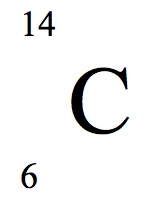
42

Multiple Choice

Question image
The photo above shows the isotopic notation for which isotope?
1
Carbon 12
2
Carbon 13
3
Carbon 14
4
Carbon 15

43

Multiple Choice

Question image
Different isotopes have...
1
different masses
2
different atomic numbers
3
different electrons
4
different protons

44

Multiple Choice

Question image
How many neutrons does a Sodium 24 isotope have?
1
12
2
13
3
14
4
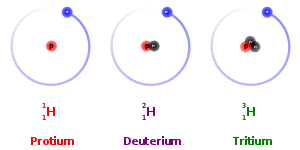
15

45

Multiple Choice

Question image
What is the atomic mass of the pictured isotope?
1
2
2
4
3
6
4
Hehehehe

46

Multiple Choice

Question image
What is the name of the pictured isotope?
1
Carbon-12
2
Carbon-13
3
Carbon-14
4
Carbon-15

47

Multiple Choice

Question image

This picture represents which of the following?

1

Element

2

Compound

3

Molecule

48

Multiple Choice

A substance whose molecules contain DIFFERENT elements is call a ___________.

1

compound

2

atom

3

element

4

proton

49

Multiple Select

Question image

This picture represents which of the following?

1

Element

2

Compound

3

Molecule

50

media

51

media

52

media

53

media

54

media

55

media

56

Multiple Choice

What is the correct Lewis Dot Structure for ammonia NH3

1
2
3
4

57

Multiple Choice

Question image

By replacing the element symbol, this could be a diagram of which element?

1

Li

2

Al

3

C

4

Be

58

Multiple Choice

According to the Octet Rule, atoms of elements react with each other in order to attain ____ electrons in their outermost energy level or shell.

1

2

2

4

3

6

4

8

5

10

59

Multiple Choice

Which of the following elements GAINS 1 electron in order to attain an octet?

1

sodium

2

calcium

3

helium

4

boron

5

chlorine

60

Multiple Choice

Which of the following elements GAINS 2 electrons in order to attain an octet?

1

cesium

2

magnesium

3

phosphorus

4

sulfur

5

iodine

61

Multiple Choice

What is the best definition of valence electrons?

1

The outermost electron NOT involved in chemical reactions

2

The innermost electrons involved in chemical reactions

3

The outermost electrons involved in chemical reactions.

4

The innermost electrons NOT involved in chemical reactions

62

Multiple Choice

How do can atoms complete the octet rule?

1

They lose or gain protons

2

They lose or gain neutrons

3

They lose or gain electrons in the outer most level

4

They lose of gain electrons from the inner most level

63

Multiple Choice

Metals tend to _______________ electrons and form __________ ions. These ions are called ______________.

1

gain, negative, anions

2

lose, positive, cations

3

gain, negative, negatrons

4

lose, positive, positrons

64

Multiple Choice

Anions have a ________ charge.

1

positve

2

negative

3

neutral

65

Multiple Choice

Cations have a __________ charge.

1

positive

2

negative

3

neutral

66

media

67

media

68

media

69

media

70

media

71

Multiple Choice

Valence electrons are shared

1

Ionic bonds

2

Covalent bonds

72

Multiple Choice

Question image

What type of bonding does this picture show?

1

Ionic

2

Covalent

73

Multiple Choice

Question image

What type of bonding does this picture show?

1

Ionic

2

Covalent

74

Multiple Choice

Ionic bonds exist between a metal with a non-metal.
1
True
2
False

75

Multiple Choice

The chemical bond between a metal and a non-metal will be a _____ bond.

1

metal

2

ionic

3

covalent

4

polar

76

Multiple Choice

The chemical bond between a non-metal and another non-metal will be a ________ bond.

1

metal

2

ionic

3

covalent

4

polar

77

Multiple Choice

Question image

In an ionic bond the metal wants to ______ electrons.

1

lose

2

gain

3

share

78

Multiple Choice

Question image

When a metal loses an electron(s) it becomes a ...

1

positive ion

2

negative ion

3

metalloid

4

nonmetal

79

Multiple Choice

Question image

In an ionic bond the non-metal wants to ______ electron(s).

1

lose

2

gain

3

share

80

Multiple Choice

Question image

When a non-metal gains an electron it becomes a...

1

positive ion

2

negative ion

3

metalloid

4

metal

81

media

82

media

83

media

84

Multiple Choice

Which is the correct description about van der Waals' forces?

1

They are the weakest of the intermolecular forces arising from instantaneous dipole - induced dipole interactions.

2

They are the strongest of the intermolecular forces arising from dipole - dipole interactions.

85

Multiple Choice

Water is made up of hydrogen and oxygen, two elements that were chemically combined. This makes water a(n)

1

atom

2

compound

3

element

4

mixture

86

Multiple Choice

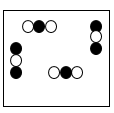
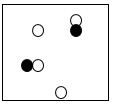
Question image

Which of the diagrams below represent a mixture?

1

A

2

B

3

C

4

D

87

Multiple Choice

How are elements and compounds different?

1

A compound is represented by a chemical formula, and elements are represented by a chemical symbol.

2

Compounds are represented by chemical symbols of one letter, and elements are represented by symbols of two letters.

3

Elements are pure substances, and compounds are not.

4

Elements are always larger units of matter, and compounds are smaller.

88

Multiple Choice

How many elements are in the compound Fe2O3?

1

0

2

1

3

2

4

3

89

Multiple Choice

Hydrogen is considered an element, while hydrogen peroxide is considered a compound. This is because hydrogen peroxide is...

1

is used for cleaning wounds.

2

made of two different elements.

3

is a liquid.

4

useful to human beings.

90

Multiple Choice

Element or Compound? O6O_6  

1

Element

2

Compound

91

Multiple Choice

Element or Compound? H6O5H_{6_{ }}O_5  

1

Element

2

Compound

92

Multiple Choice

What is matter?

1

anything that has mass and takes up space

2

anything that has volume and is solid

3

anything that you can see

93

Multiple Choice

Question image

Is this a compound or element?

1

compound

2

element

94

Multiple Choice

What is at the center of every atom?
1
An electron
2
A compound
3
A nucleus
4
A molecule

95

Explanation Slide...

This is the compound Carbon Dioxide (what we breathe out). It is made of the elements Carbon and Oxygen.

media

96

Multiple Choice

Which two particles make up the nucleus of an atom?
1
protons and electrons
2
protons and neutrons
3
molecules and compounds
4
neutrons and electrons

97

Explanation Slide...

Matter is EVERYTHING

media

98

Multiple Choice

In an atom, what is the number of protons equal to?
1
The number of electrons
2
The number of molecules
3
The number of neutrons
4
The number of nucleii

99

media

100

Multiple Choice

What determines the type of element an atom makes?
1
The size of the nucleus
2
The number of protons
3
How much an atom weighs
4
The number of neutrons

101

media

102

Multiple Choice

What forms when two atoms combine? 
1
A nucleus
2
A proton
3
A molecule
4
A neutron

103

media

104

Multiple Choice

Which of the following cannot be broken down into something simpler?
1
A compound
2
An element
3
A mixture
4
A chemical formula

105

media

106

Multiple Choice

Which of these is most like a recipe? 
1
An element
2
A periodic table
3
An electron formula
4
A chemical formula

107

Multiple Choice

What needs to occur in order for elements to form a compound?
1
An elemental reaction
2
An atomic reaction
3
An electric reaction
4
A chemical reaction

108

Multiple Choice

The air we breathe contains different individual gases (mostly nitrogen and oxygen). Which of the following correctly describes the air we breathe?
1
compound
2
liquid
3
element
4
mixture

109

Multiple Choice

Question image

This picture represents which of the following?

1

Element

2

Compound

3

Molecule

110

Multiple Choice

Question image

This picture represents which of the following?

1

Element

2

Compound

3

Molecule

111

Multiple Choice

Which part of an atom has no charge?
1
protons
2
neutrons
3
electrons
4
atoms

112

Multiple Choice

TRUE OR FALSE:
Every compound is a molecule but not every molecule is a compound.
1
TRUE
2
FALSE

113

Multiple Choice

Question image
What is the picture displayed?
1
Atom
2
Element
3
Molecule
4
Compound

114

Multiple Choice

Question image
What is the picture displayed?
1
atom
2
element
3
molecule
4
compound

115

Multiple Choice

Question image
Are these molecules also compounds?
1
YES
2
NO

116

Multiple Choice

Question image
What does the diagram show?
1
A mixture of two elements
2
A pure compound
3
A mixture of two compounds
4
A mixture of a compound & element

117

Multiple Choice

Question image
What does the diagram show?
1
A mixture of two elements
2
A pure compound
3
A mixture of two compounds
4
A mixture of a compound & element

118

Multiple Choice

Question image
What does the diagram show?
1
A mixture of two elements
2
A pure compound
3
A mixture of two compounds
4
A mixture of a compound & element

119

Multiple Choice

Question image
Which description below is a true statement about the diagram?
1
The diagram can be classified as an element and a molecule
2
The diagram can be classified as a compound
3
The diagram can be classified as a mixture of two compounds
4
The diagram can be classified as a mixture of two elements

Ch. 6 L. 1 Atoms, Elements & Compounds

By D Olg

media

Show answer

Auto Play

Slide 1 / 119

SLIDE