Search Header Logo
Year 9 End of Semester Exam

Year 9 End of Semester Exam

Assessment

Presentation

Science

9th Grade

Medium

Created by

Jazmin Couper

Used 32+ times

FREE Resource

4 Slides • 60 Questions

1

Year 9 End of Semester Exam

2

Some text here about the topic of discussion

Replace this text with your body text.

​Duplicate this text as many times as you would like.

Subheader text

3

Matter and Properties of chemicals ​

media

30 Questions ​

4

Multiple Choice

The atomic number determines_____________________.
1
its symbol
2
the number of protons and neutrons
3

The charge of the element

4
the number of protons in the atom

5

Multiple Choice

If an atom has 5 protons and 3 neutrons, what is its atomic number?
1
5
2
2
3
8
4
0

6

Multiple Choice

Can an element be broken down into simpler substances and keep the properties of the element?
1
yes
2
no

7

Multiple Choice

Properties that can be measured and observed.

1
gas
2
mustangs
3
physical properties
4
melting point

8

Multiple Choice

Solid Iron can be separated from non magnetic solids using a magnet. A mixture of liquid and insoluble solid can be separated using filtration. A mixture of a liquid and a soluble solid can be separated using evaporation

There is a mixture of a salt solution with sand and iron filings

Which option is the correct order of steps needed to seperate all of the solids in the mixture?

1

Filtration and then magnetic separation

2

evaporation and then magnetic separation

3

magnetic separation, evaporation and then filtration

4

filtration, evaporation and then magnetic separation

9

Multiple Choice

An example of a physical property is 
1
flammability
2

acidity

3
color
4
ability to rust

10

Multiple Choice

Which change can occur when you add heat energy to water?

1
The water can change from a liquid to a solid
2
The water can change from a gas to a liquid
3
The water can change from a liquid to a gas
4

The water can change from a solid to a gas

11

Multiple Choice

Changing the way matter looks without changing it into NEW matter is a:
1
Chemical change
2
Physical change
3
Energy change
4
BOTH a chemical and a physical change

12

Multiple Choice

Burning wood to ash is an example of a:
1
Physical change
2
Chemical change

13

Multiple Choice

Water freezing to ice is an example of a:
1
Physical change
2
Chemical change

14

Multiple Choice

Adding HEAT to matter causes its particles to:
1
move faster and farther apart
2
Move slower and farther apart
3
Move faster and closer together
4
Move slower and closer together

15

Multiple Choice

Solids have a definite _______________.
1
smell
2
shape
3
picture
4
sound

16

Multiple Choice

Liquid matter takes the shape of _______.

1
a gas
2
water
3
a pet
4
Its container

17

Multiple Choice

Salt has a chemical formula of NaCl.  Salt is a...
1
Compound
2
Element
3
Mixture
4
None of the Above

18

Multiple Choice

What is diffusion?
1
when molecules move 
2
when molecules move from a high concentration to a low concentration.
3
no movement 
4
molecules move everywhere

19

Multiple Choice

Question image
Where is there a low concentration of dye?
1
at the bottom of cup
2
in the color
3
at the top of cup 
4

no concentration gradient

20

Multiple Choice

Is water an element or a compound?
1
Element
2
Compound

21

Multiple Choice

Water (H2O) freezing is an example of:
1
A chemical change
2
A physical change

22

Multiple Choice

Which of these is a pure substance?
1
bread
2
table salt
3
garden soil
4
sea water

23

Multiple Choice

_______ is used to separate a solid from a liquid in which it is suspended.

1

filtration

2

distillation

3

suspension

4

colloid

24

Multiple Choice

Which of the following is NOT a pure substance?
1
milk
2
oxygen
3
water
4
carbon dioxide

25

Multiple Choice

In the modern periodic table elements are arranged by:
1
atomic mass
2
atomic number
3
valence electrons
4
number of isotopes

26

Multiple Choice

The mass number of an element tells the number of protons and ______.

1
protons
2
neutrons
3
electrons
4
isotopes

27

Multiple Choice

Most of the mass of an atom is found it its _____.
1
electron cloud
2
nucleus
3
atomic number
4
empty space

28

Multiple Choice

An element is made up of only one kind of _____.
1
isotope
2
plastic
3
atom
4
metal

29

Multiple Choice

Question image
Which is an electron?
1
A
2
B
3
C

30

Multiple Choice

Question image
Which is a proton?
1
A
2
B
3
C

31

Multiple Choice

Question image
Which is a neutron?
1
A
2
B
3
C

32

Multiple Choice

Question image
Which item on this element square represents the atomic number?
1
13
2
Al
3
Aluminum
4
26.981538

33

Multiple Choice

Question image

What is the number of protons that the element in this image contains?

1
14
2
7
3
15
4
18

34

Astronomy ​

30 Questions ​

media

35

Multiple Choice

Question image

A student observed the Moon on a Tuesday evening. She drew a picture of its shape in her science notebook. Approximately how long will she have to wait before she can see the Moon the same shape and position again?

1

365 days

2

29 days

3

7 days

4

1 week

36

Multiple Choice

Question image
A constellation is a group of visible ____ that form a pattern when viewed from Earth.  
1
planets
2
stars
3
patterns
4
creatures

37

Multiple Choice

Question image

People in the Northern Hemisphere see the same constellations as the people in the Southern Hemisphere.

1
True
2
False

38

Multiple Choice

What is the greek name for Matariki

1

Subaru

2

Pleiades

3

Orions Belt

4

Tautoru

39

Multiple Choice

Question image
The image shown represents which Moon phase?
1
Waxing gibbous
2

Half moon

3

quarter moon

4
Waxing crescent

40

Multiple Choice

Two thousand years ago, most people believed the Earth was the centre of the universe and all celestial bodies revolved around Earth.

Which of these observations does NOT support this idea

1

The moon rises and sets daily

2

Jupiter has moons orbiting around it

3

The stars appear to move across the night sky

4

The Sun rises on the East and Sets in the West once every 24 hours

41

Multiple Choice

A large object that orbits a star is a:

1

planet

2

moon

3

star

4

comet

42

Multiple Choice

How many stars are in our solar system?

1

too many to count

2

billions

3

one

4

only the stars that we can see

43

Multiple Choice

Question image

Earth experiences day and night because it -

1

always faces the Sun

2

rotates on its axis once each day

3

orbits on its axis once each day

4

orbits around the Sun

44

Multiple Choice

Question image

The diagram shows Earth orbiting the Sun. Letters A and B show two locations in Earth's orbit around the Sun. How long will it take for Earth to travel from point A to point B?

1

1 month

2

3 months

3

6 months

4

9 months

45

Multiple Choice

How many planets are in the solar system?
1
10
2
8
3
9
4
7

46

Multiple Choice

Which planets are the gaseous planets?
1
Mercury, Mars, Neptune, and Uranus
2
Earth, Venus, Jupiter, and Neptune
3
Neptune, Saturn, Jupiter, and Earth
4
Jupiter, Saturn, Uranus, and Neptune

47

Multiple Choice

Which planet is closest to the Sun?
1
Earth
2
Jupiter
3
Mercury
4
Venus

48

Multiple Choice

How many planets have liquid water on them?

1
6
2
3
3
4
4
1

49

Multiple Choice

Which planets axis is sideways?

1
Earth
2
Jupiter
3
Saturn
4
Uranus

50

Multiple Choice

Which statement best describes the geocentric model

of our solar system?

1

The Earth is located at the center of the model

2

The Sun is located at the center of the model.

3

All planets revolve around the Sun.

4

All planets except the Earth revolve around the Sun.

51

Multiple Choice

A(n) ____________ is a solar system body that consists of frozen gases, rocks and dust.

1

comet

2

meteoroid

3

asteroid

4

meteor

52

Multiple Choice

What is the result of the tilt of the Earths axis?

1

The existence of seasons

2

day-night transitions

3

Coriolis effect

4

Years

53

Multiple Choice

Which statement is not true about the motions of the Earth?

1

It rotates around its axis.

2

It revolves around the Moon.

3

It revolves around the Sun.

4

It revolves around the bulge of the galaxy.

54

Multiple Choice

Question image

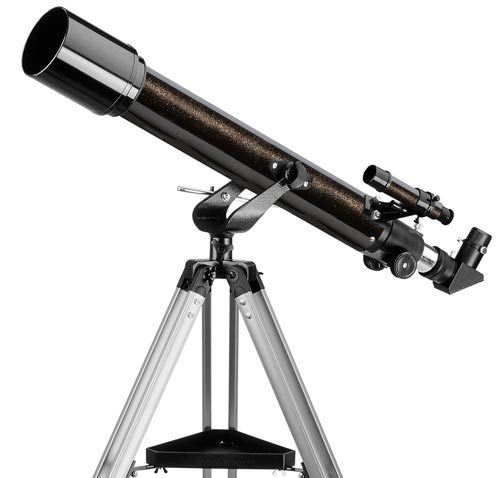
A refracting telescope uses _______ to focus light.

1

Lenses

2

Mirrors

3

Lasers

4

Water

55

Multiple Choice

Question image

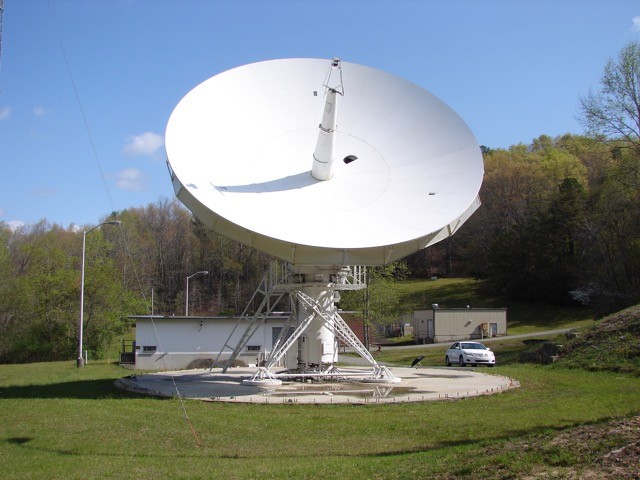
What type of telescope can work 24 hours a day and even be used in the rain?

1

Refracting Telescope

2

Radio Telescope

3

Newtonian Telescope

4

Solar Telescope

56

Multiple Choice

What is the Goldilocks zone?

1

The best temperature for a planet

2

The Zone where a planet is the perfect distance from a star to have liquid water

3

The Zone where a planet is the perfect distance from a star to have Ice

4

The zone where a planet is the perfect distance from a star so its sky is always gold

57

Multiple Choice

What is a shooting star?

1

An asteroid

2

A comet

3

A meteor

4

A satelite

58

Multiple Choice

Radio telescopes show us

1

Things we cant see

2

Things we didnt know existed

3

Things not in the visible light spectrum

4

All of the above

59

Multiple Choice

Which of the following dose NOT contribute to light pollution

1

Street lights

2

House lights

3

Car lights

4

The moon

60

Multiple Choice

A day must always be shorter than a year

1

True

2

False

61

Multiple Choice

Which of these can be used to explore space when positioned on Earth?

1

Rover

2

Telescope

3

Satelite

4

Probe

62

Multiple Choice

Which planet is the hottest?

1

Venus

2

Mercury

3

Mars

4

Jupiter

63

Multiple Choice

Out of these planets which planet is has the most moons?

1

Mars

2

Earth

3

Neptune

4

Jupiter

64

Multiple Choice

What lies between Mars and Jupiter

1

The international space station

2

The Sun

3

The kuiper belt

4

An asteroid belt

Year 9 End of Semester Exam

Show answer

Auto Play

Slide 1 / 64

SLIDE