Search Header Logo
Chemistry Final Exam Review Part 1

Chemistry Final Exam Review Part 1

Assessment

Presentation

Chemistry

10th Grade

Medium

NGSS
HS-PS1-1, HS-PS1-2, MS-PS1-1

+6

Standards-aligned

Created by

llanham summitt

Used 18+ times

FREE Resource

52 Slides • 107 Questions

1

Chemistry Final Exam Review Part 1

By llanham summitt

2

Multiple Choice

1.  The number of significant figures in the measurement 170.040 km is ___.
1
Three
2
Four
3
Five
4
Six

3

Multiple Choice

3.  A sample of bismuth has a mass of 343g and a volume of 35.0cm3. What is the density of bismuth?
1
a.  0.102 g/cm3 
2
b. 9.80 g/cm3 
3
c. 378 g/cm
4
d. 1.20 x 10⁴ g/cm3

4

Multiple Choice

5. A student determined the density of aluminum by averaging the results of three density calculations. Each value was different, but the average was equal to the accepted value for aluminum’s density. The results of this investigation are best described as ______.
1
a.  Accurate, but not precise.
2
a.  Precise, but not accurate.
3
a.  Both precise and accurate.
4
a.  Neither precise nor accurate.

5

Multiple Choice

6.  Expressed in scientific notation, 0.0930 m is ___.
1
      93 x 103 m.
2
       9.3 x 10⁻³m.
3
     9.30 x 10⁻² m.
4
     9.30 x 10⁴ m.

6

Multiple Choice

12.  Which element does the following configuration represent?  1s2,2s2,2p6,3s2,3p5
1
   Phosphorus
2
     Chlorine
3
   Silicon
4
    Argon

7

Multiple Choice

The name of group 17.
1
Alkali metals
2
Noble Gases
3
Alkaline Earth metals
4
Halogens

8

Multiple Choice

The atom with the largest ionization energy.
1
Francium
2
Fluorine
3
Argon
4
Radon

9

Multiple Choice

Noble gases don't react with anything else because...
1
they are too large
2
they are gases
3
they have 8 valence electrons
4
they need to gain 1 valence electron

10

Multiple Choice

The most reactive metals are the...
1
Alkaline earth metals
2
Transition metals
3
Alkali metals
4
Halogens

11

Multiple Choice

Question image

This symbol indicates a _______.

1

neutron

2

proton

3

electron

12

Multiple Choice

Question image

What is the atomic mass for this element?

1

6

2

12.0107

3

6.0107

4

18.0107

13

Multiple Choice

The center of an atom is called

a/an __________.

1

atomic mass

2

nucleus

3

proton center

4

energy shell

14

Multiple Choice

Question image

How many neutrons are in an Calcium atom?

1

20

2

40.08

3

60

15

Multiple Choice

The atomic number of an element is determined by the _________ of ________ in the nucleus.

1

protons, neutrons

2

number, electrons

3

electrons, protons

4

number, protons

16

Multiple Choice

Question image

Which image shows a Bohr model for Carbon.

1
2
3
4

17

Multiple Choice

If the protons and electrons do not match, the atom is ____.

1

neutral

2

ion

18

Multiple Choice

An electron is

1

positively charged

2

neutral

3

negatively charged

19

Multiple Choice

atomic number is

1

the number of protons

2

the number of electrons

3

the number of neutrons

4

the location of an atom on the periodic table

20

Multiple Choice

Frank has a paper clip. It has a mass of 9g and a volume of 3cm3. What is its density?
1
3 g/cm3
2
1/3 g/cm3
3
27 g/cm3
4
39 g/cm3

21

Multiple Choice

Which form of matter does not take the shape of its container?
1
liquid
2
gas
3
solid
4
air

22

Multiple Choice

Subatomic particles with a negative charge

1

Electrons

2

Neutrons

3

Protons

4

Quarks

23

Multiple Choice

subatomic particles found on the outermost shell & responsible for the atom's reactivity
1
neutrons
2
valence electrons
3
isotopes
4
ions

24

Multiple Choice

Subatomic particles with a positive charge
1
neutrons
2
atomic mass
3
protons
4
isotopes

25

Multiple Choice

Measure mainly of the nuclear particles: protons + neutrons
1
Subatomic Particles
2
Atomic Number
3
Atomic Mass
4
Gluons

26

Multiple Choice

Value representing the number of protons in an element
1
Atomic Mass
2
Mass Number
3
Valence Electrons
4
Atomic Number

27

Multiple Choice

Subatomic particles that are neutral in charge
1
Neutrons
2
Protons
3
Nucleus 
4
Electrons

28

Multiple Choice

Atoms of the same element with a different number of neutrons
1
Ion
2
Gluons
3
Isotope
4
Quarks

29

Multiple Choice

A charged atom
1
Ion
2
Isotope
3
Electron Cloud
4
Quark

30

Multiple Choice

Question image

What is the atomic number?

1

35

2

18

3

17

4

52

31

Multiple Choice

Question image

How many protons and electrons does this element have?

1

35

2

18

3

17

4

52

32

Multiple Choice

Question image

What is the atomic mass of Neon?

1

10

2

20

3

30

33

Multiple Choice

How many valence electrons are found in atoms of group 4?

1

4

2

3

3

14

4

16

34

Multiple Choice

How many valence electrons are found in atoms of group 5A?

1

4

2

5

3

2

4

3

35

Multiple Choice

How many valence electrons are found in atoms of group 5A?

1

4

2

5

3

2

4

3

36

Multiple Choice

All atoms are most stable with (or would "prefer") how many electrons in their valence shell?

1

1

2

2

3

8

4

18

37

Multiple Choice

What groups are the most reactive non metals?

1

1

2

7A

3

2

4

6A

38

Multiple Choice

Why are halogens so reactive?

1

They want to get rid of their only valance electron

2

They only need one more electron

3

They are non reactive, they have a full shell

39

Multiple Choice

How do electrons of an element determine that element's reactivity?

1

If the valence shell has missing electrons it is very reactive to attract or lose more electrons.

2

If the valence shell has a full ring of electrons it is very reactive because it needs more.

3

If the valence shell has a full shell of electrons it is very reactive because it is already full.

4

If the valence shell has missing electrons it is not reactive because it is missing electrons.

40

Multiple Choice

As you move down a group, atomic radius increases because - 
1
you add more and more neutrons
2
you add more and more protons
3
you add more and more shells (energy levels)
4
you add more atomic mass

41

Multiple Choice

The atom with the largest atomic radius in Group 8A is -

1

Ar

2

He

3

Kr

4

Rn

42

Multiple Choice

As you move across the periodic table from left to right, the atomic radius decreases.  This is because - 
1
the number of protons increases, so attraction to electrons increases
2
the number of energy levels increases
3
the number of electrons increases
4
the atomic mass increases

43

Multiple Choice

Francium (Fr) has the lowest ionization energy in Group 1 because - 
1
it has the smallest number of valence electrons
2
it has the greatest atomic mass
3
it has the greatest number of protons, so it attracts its electrons the strongest
4
its 1 valence electron is very far from the nucleus, so little energy is needed to remove it

44

Multiple Choice

The energy required to remove electrons is the definition of: 
1
Electronegativity
2
Atomic Number
3
Atomic Radius
4
Ionization

45

Multiple Choice

Electronegativity is...
1
the ability of an atom to attract/ accept electrons
2
the ability of an atom to lose electrons
3
the energy required to remove an electron from a specific atom
4
how easy it is to make friends. 

46

Multiple Choice

Which has the greater Electronegativity: 
N or C?
1
C
2
N

47

Multiple Choice

Electronegativity is...
1
how good an atom is at attracting electrons
2
the ability of an atom to lose electrons
3
the energy required to remove an electron from a specific atom
4
how easy it is to make friends. 

48

Multiple Choice

Put the following in order of increasing ionization energy:Neon, Lithium, Carbon
1
Lithium, Carbon, Neon
2
Carbon, Lithium, Neon
3
Neon, Carbon, Lithium
4
Lithium, Neon, Carbon

49

Multiple Choice

Which of the following would have the smallest ionization energy?

1

K

2

P

3

S

4

Ca

5

Mg

50

Multiple Choice

Which of the following would have the largest ionization energy?

1

Na

2

Al

3

Mn

4

N

5

Pd

51

Multiple Choice

What is ionization energy?

1

The amount of energy to add an electron to an element

2

The amount of energy added to make a bond with a valence electron

3

The energy required to remove an electron

4

The energy added to promote an electron in a lower energy level to a higher energy level

52

Multiple Choice

Of the following metals, which will be the MOST reactive? (Hint: reactive metals have low ionization energies)

1

gold

2

cobalt

3

strontium

4

tungsten

53

Multiple Choice

Which atom has the largest atomic radius?
1
potassium
2
rubidium 
3
francium
4
cesium

54

Multiple Choice

As you move down the periodic table atoms get bigger.  This is because ____________.
1
The atoms have more mass.
2
The atoms have more protons.
3
The atoms have more energy levels
4
The atoms have more nuetrons

55

Multiple Choice

Which element has a lower electronegativity value?
1
Zr
2
Ag

56

Multiple Choice

Which element is less electronegative?
1
Nb
2
Sr

57

Multiple Choice

Which element has a higher ionization energy?
1
I
2
Cl

58

Multiple Choice

Which element has a larger radius?
1
Fr
2
K

59

Chemistry I Final Exam Review Part 1

By llanham summitt

60

media

Timers are turned off so that you can relax and think about the questions and take your time.

Chemistry take thought and carefully reading.

Take you time and read carefully!

61

The periodic table. the polyatomic ion chart, the mole conversion chart and your calculator are available to you; USE THEM.

​rely on your resources not GOOGLE or others.

Use your resources!

media

62

You can do this if you try!

Effort is an important part of anything that you do..

“The average person puts only 25% of his energy and ability into his work. The world takes off its hat to those who put in more than 50% of their capacity, and stands on its head for those few and far between souls who devote 100%.” ~ Andrew Carnegie

Where do you want to be?

63

media

64

media

65

media

66

media

67

media

68

media

69

media

70

media

71

media

72

media

73

media

74

media

75

media

76

media

77

media

78

media

79

media

80

media

81

media

82

Multiple Choice

Question image

What is the volume of a piece of zinc with measurements 5.0 cm x 5.0 cm x 5.0 cm?

1

15 cm3

2

125 cm3

3

15 cm

4

125 cm

83

Multiple Choice

Question image

What is the volume of the fluid in the graduated cylinder shown?

1

12.0 ml

2

13.0 ml

3

13.5 ml

4

12.5 ml

84

Multiple Choice

Question image

Which of the following is NOT a chemical property of sugar?

1

it decomposes readily

2

It is a white, crystalline powder

3

It has a composition of carbon, hydrogen, and oxygen

4

It will burn when heated

5

It does not conduct electricity so is non-ionic

85

Multiple Choice

Question image
1 L = _______ mL
1

1

2

10

3

100

4

1000

86

Multiple Choice

Question image

Matter is made of small indestructible particles called:

1

protons

2

electrons

3

atoms

4

neutrons

87

Multiple Choice

Question image

Matter takes up space or ______, and has mass or quantity, measured in ______.

1

area, grams

2

mass, milliliters

3

volume, grams

88

Multiple Choice

Question image

Different substances can often be identified by their density. Density is a derived unit equal to:

1

mass x volume

2

volume / mass

3

length x width x height

4

mass /volume

89

Multiple Choice

Question image

All of the following are physical changes except:

1

Melting

2

burning

3

condensing

4

vaporizing

90

Multiple Choice

Question image

If the graph represents the energy of the reactants and products of a chemical reaction, which of the following is true of the reaction?

1

there is an exothermic reaction

2

there is an endothermic reaction

3

the activation energy is lower than the energy released

4

the total energy is higher than the starting energy

91

Multiple Choice

Question image

Atoms in a _______ are closely packed vibrating particles.

1

plasma

2

liquid

3

solid

4

gas

92

Multiple Select

Question image

1 ml is the same as which af the following? (Mark all that apply)

1

1 cc

2

1 cm3

3

1 μl\mu l  

4

1 dm3

93

Multiple Select

Question image

Increasing the temperature of a substance causes the particles to speed up and can cause which of the following to occur? (Multiple answers)

1

condensing

2

vaporizing

3

melting

4

boiling

94

Multiple Choice

Question image

Which is NOT a chemical property?

1

iron will react with oxygen

2

white phosphorus is very flammable

3

copper is malleable (can be bounded into sheets) and ductile (can be pulled into wire)

4

lead is toxic

95

Multiple Choice

Question image

Which is NOT a Chemical Change?

1

iron is oxidized to become rust (iron oxide)

2

carbon products are usually combustible

3

Decomposition is a necessary reaction

4

dissolving substances is often the 1st step in any procedure

96

Multiple Choice

Question image

There are seven naturally occurring diatomic elements; which of the following is NOT a diatomic element?

1

H

2

O

3

Cl

4

N

5

C

97

Multiple Choice

Question image

A _________ is a pure substance made of different elements that are chemically combined into a new substance.

1

mixture

2

ion

3

compound

98

Multiple Choice

Question image

A material that is made of different substances that are NOT chemically combined is called a(an)

1

compound

2

mixture

3

ion

99

Multiple Choice

Question image

In a solution, the substance that causes the dissolving is known as a ________

1

solute

2

solvent

3

suspension

4

colloid

100

Multiple Choice

Question image

_________ mixtures are evenly blended and appear to be the same throughout.

1

homogeneous

2

heterogeneous

101

Multiple Select

Question image

A mixture, like salt water, containing one substance dissolved in another, is known as a ____________ (mark all that apply)

1

homogeneous mixture

2

solution

3

suspension

4

colloid

102

Multiple Choice

Question image

The two main parts of an atom are the:

1

principle energy levels and sublevels

2

nucleus and energy levels

3

planetary electrons and energy levels

4

nucleus and kernel

103

Multiple Choice

Question image

The number of electrons in the 2nd principal energy level, n=2, of an atom is: 2n22n^2  

1

4

2

2

3

8

4

18

104

Multiple Choice

Question image

When the particles of a liquid are heated, they begin to expand and the phase changes to a _____. These particles then move in straight lines until they bounce off of something. When the particles cool back down to a liquid it is called _________

1

Gas, condensation

2

Plasma, condensation

3

Gas, Sublimation

4

Plasma, vaporization

105

Multiple Choice

Question image

An atom of beryllium contains 4 protons, 5 neutrons, and 4 electrons. What is the mass number of this atom?

1

13

2

9

3

8

4

5

106

Multiple Select

Question image

A substance that contains only one type of atom is known as a(n) ______ (choose all that apply)

1

compound

2

element

3

Pure substance

4

Mixture

107

Multiple Choice

Question image

A can of baking powder reads: "Ingredients- cornstarch, sodium bicarbonate, calcium acid phosphate, and sodium aluminum sulfate." Baking soda is a

1

compound

2

mixture of compounds

3

molecule

4

mixture of elements

108

Multiple Choice

Question image

A 220 g piece of metal was submerged in a graduated cylinder containing 50 ml of water. The level of the water rose to 150 ml. What is the density of the metal?

1

2.2 g/ml

2

0.45 ml/g

3

320 g/ml

4

20 g/ml

109

media

110

media

111

media

112

media

113

media

114

media

115

media

116

media

117

media

118

media

119

media

120

media

121

Chm.1.3.1 Classify the components of a periodic table (period, group, metal, metalloid, nonmetal, transition).

Periods

Groups

Valence Electrons

media

122

media

123

The Periodic Table

Group- Up and Down

Main group elements in the same group have similar properties, the same number of valence electrons, and the same

Period- Left to Right

Reactivity increases as you go down within a group for metals and decreases for nonmetals.

Valence Electron Cheat Code!

media

124

media

125

Element Classification

Representative Elements(main group)- A groups or as groups 1, 2, 13-18.

Transition elements as B groups or as groups 3-12.

media

126

Chm.1.3.2 Infer the physical properties (atomic radius, metallic and nonmetallic characteristics) of an element based on its position on the Periodic Table.

Periodic Trends

Electron Configuration

media

127

Electronegativity

A measure of the ability of an atom to attract the electrons.

Fluorine F is the most electronegative and Francium is the least electronegative.

Electronegativity is not measured in energy units, but is rather a relative scale

Increase L to R, this is due to an increase in nuclear charge

Electronegativities generally decrease from top to bottom within a group due to the larger atomic size.

media

128

media

129

Electron Configuration

Understanding Electron Configuration and Notation helps understand bonding and chemical reactions by indicating where electrons are located in a specific atom.

Hunds Rule

Aufubau's Principle

Pauli Exclusion

media

130

Hunds Rule

Every orbital in a sublevel is singly occupied before any orbital is doubly occupied.

media

131

Aufbau Principle

Electrons fill lower-energy atomic orbitals before filling higher-energy ones in the pattern shown. This pattern can be memorized or you can follow the Periodic table.

media
media
media
media
media
media
media
media
media

​1s

2s & 2p​

3s ​ & 3 p

4s 3d & 4p

5s 4d & 5p

6s 4f 5d & 6p​

7s 5f 6d & 7p​

d orbitals drop & are 1 behind

f orbitals drop & are 2 behind​

132

media

133

Pauli Exclusion Principle

States that, in an atom or molecule, no two electrons can have the same four electronic quantum numbers. As an orbital can contain a maximum of only two electrons, the two electrons must have opposing spins

media

134

Metallic Character vs Non Metallic

Metallic character refers to the level of reactivity of a metal; Metals tend to lose electrons in chemical reactions. Metallic character increases as you go down a group

Nonmetals tend to gain electrons in chemical reactions and have a high attraction for electrons within a compound. The most reactive NM: upper right portion of the periodic table

media

135

media

136

Multiple Select

Question image

Chlorine is represented by the electron dot structure shown in the picture. Which other atom(s) would have the same atomic dot structure? (Mark all that apply)

1

Iodine

2

Oxygen

3

Sodium

4

Fluorine

137

Multiple Choice

Elements in the same column of the periodic table always have the same # of _______ as one another.

1

Protons

2

Neutrons

3

Electrons

4

Valence Electrons

138

Multiple Choice

Which has the greater Electronegativity:

N or C?

1

C

2

N

139

Multiple Choice

Which group of the periodic table is composed of inert (not reactive) gases?

1

alkali metals

2

alkaline earth metals

3

halogens

4

noble gases

140

Multiple Choice

If an atom loses two electrons what charge will it have?
1

+ 2

2

 - 2

3

+1

4

-1

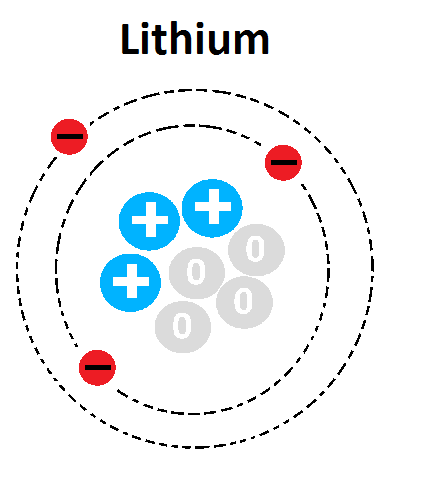
141

Multiple Select

Question image

Which two statements are correct about the figure shown?

1

It is a covalent bond.

2

Hydrogen atoms loss electrons and Carbon gains the atoms.

3

It happens on metal and on another non-metal.

4

The valence electrons are shared by both atoms.

142

Multiple Choice

Predict the bond that will form between Be and F.
1

Ionic

2

Covalent

143

Multiple Choice

Question image

An electron dot diagram consists of the symbol representing the element and an arrangement of dots that usually shows

1

the atomic number

2

the atomic mass

3

the number of neutrons

4

the number of valence electrons

144

Multiple Choice

Question image

What element on the periodic table has 16 protons?

1

germanium Ge

2

phosphorus P

3

oxygen O

4

sulfur S

145

Multiple Choice

Question image

Which element easily gives up 1 electron to form a cation with +1 charge?

1

F

2

Cl

3

Mg

4

Li

146

Multiple Choice

Question image

Which atom will have the strongest affinity for electrons, becoming an anion with a -1 charge?

1

K

2

F

3

O

4

Fe

147

Multiple Choice

Question image

Where on the periodic table do you find elements that form the strongest bases?

1

left

2

right

3

middle

4

inert gases

148

Multiple Choice

Question image

If two atoms bond in such a way that one-member beomes a positive cation and the other a negative anion, what type of bond is formed?

1

ionic bond

2

covalent bond

3

polar bond

4

Vanderwaals bond

149

Multiple Choice

Question image

Isotopes are atoms with different numbers of ________.

1

protons

2

neutrons

3

electrons

150

Multiple Choice

Question image

The first scientist to show that atoms emit tiny negative particles was

1

J J Thomson

2

Ernest Rutherford

3

James Chadwick

4

Neils Bohr

151

Multiple Choice

Question image

The scientist whose alpha-particle scattering experiment led him to conclude that the nucleus of an atom contains a dense center of positive charge is

1

JJ Thomson

2

Ernest Rutherford

3

Neils Bohr

4

John Dalton

152

Multiple Choice

Question image

This scientist is responsible for the model that we use today to illustrate and help understand the atoms' energy levels.

1

JJ Thomson

2

Ernest Rutherford

3

Neils Bohr

4

John Dalton

153

Multiple Select

Which of the following parts of Dalton's atomic theory are no longer entirely correct? (Mark all that apply)

1

atoms are small indestructible particles

2

all atoms of an element are alike and different from atoms of other elements

3

compounds are made of elements combined in different ratios of elements

4

chemical reaction occur that rearrange elements but do not destroy them

154

Multiple Choice

An atom has 10 protons, 15 neutrons and 10 electrons what is its mass number.

1

20

2

10

3

35

4

25

155

Multiple Choice

If an atom has 12 positively charged subatomic particles, which of the following must it also have to be considered a neutral atom?
1

12 neutrons

2

12 electrons

3

12 protons

4

24 protons and neutrons

156

Multiple Choice

Question image

What is the mass number of this atom?

1

1

2

3

3

4

4

7

157

Multiple Choice

Which Bohr model represents Neon?

1
2
3
4

158

Multiple Choice

What atom matches this electron configuration?

1s2 2s2 2p6 3s2

1

Neon

2

Magnesium

3

Aluminum

4

Potassium

159

Part 1 Ends Here

media

Take a break. Part two contains formulas, balanced equations and mole calculations. Be sure to have your calculator and charts ready. ​

Chemistry Final Exam Review Part 1

By llanham summitt

Show answer

Auto Play

Slide 1 / 159

SLIDE