Search Header Logo
Teach .Ed. Periodic table/Mixtures

Teach .Ed. Periodic table/Mixtures

Assessment

Presentation

Science

8th Grade

Medium

NGSS
MS-PS1-1, HS-PS1-1

Standards-aligned

Created by

Aguado Angelica

Used 7+ times

FREE Resource

21 Slides • 34 Questions

1

media

2

media

3

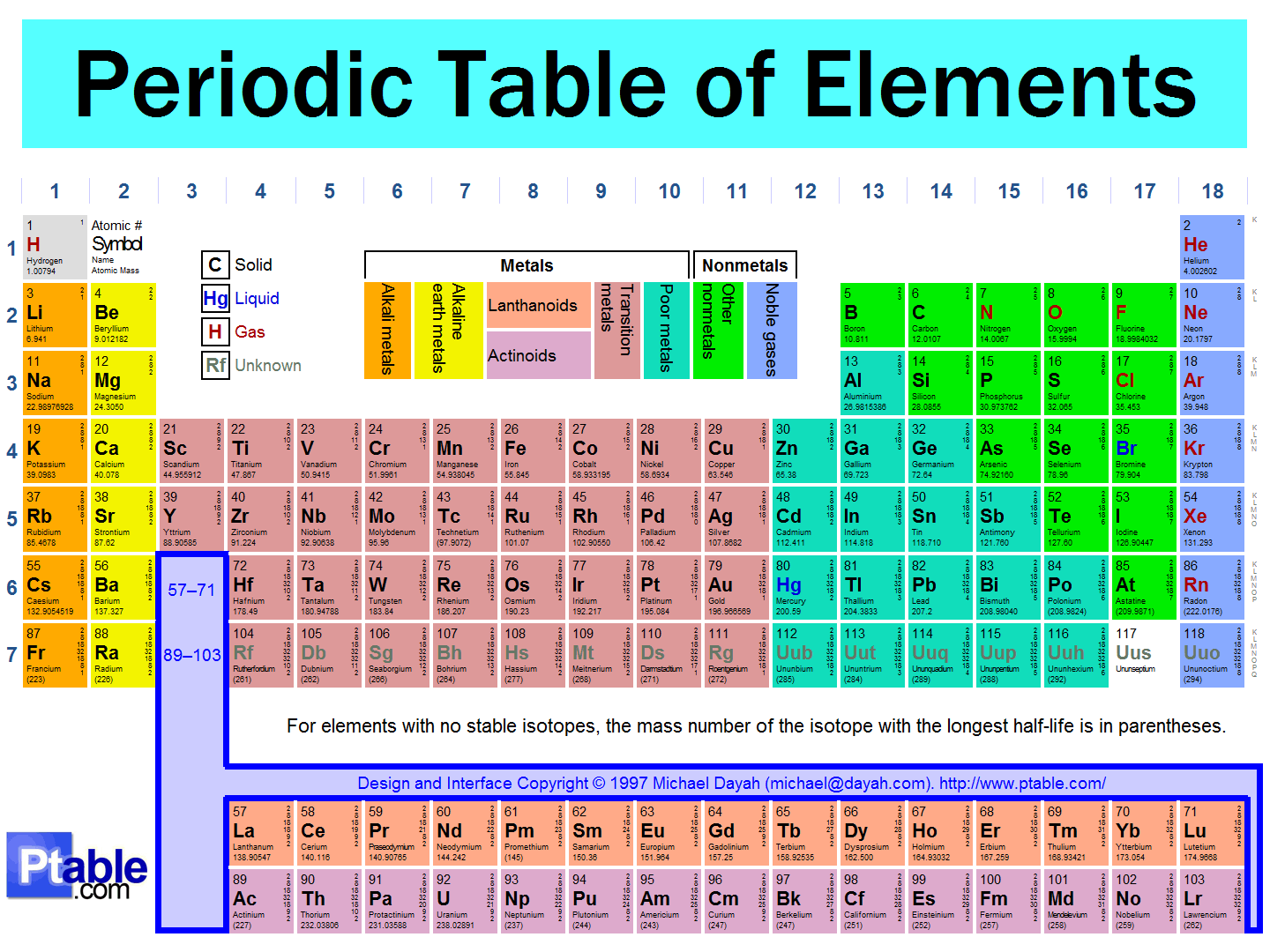
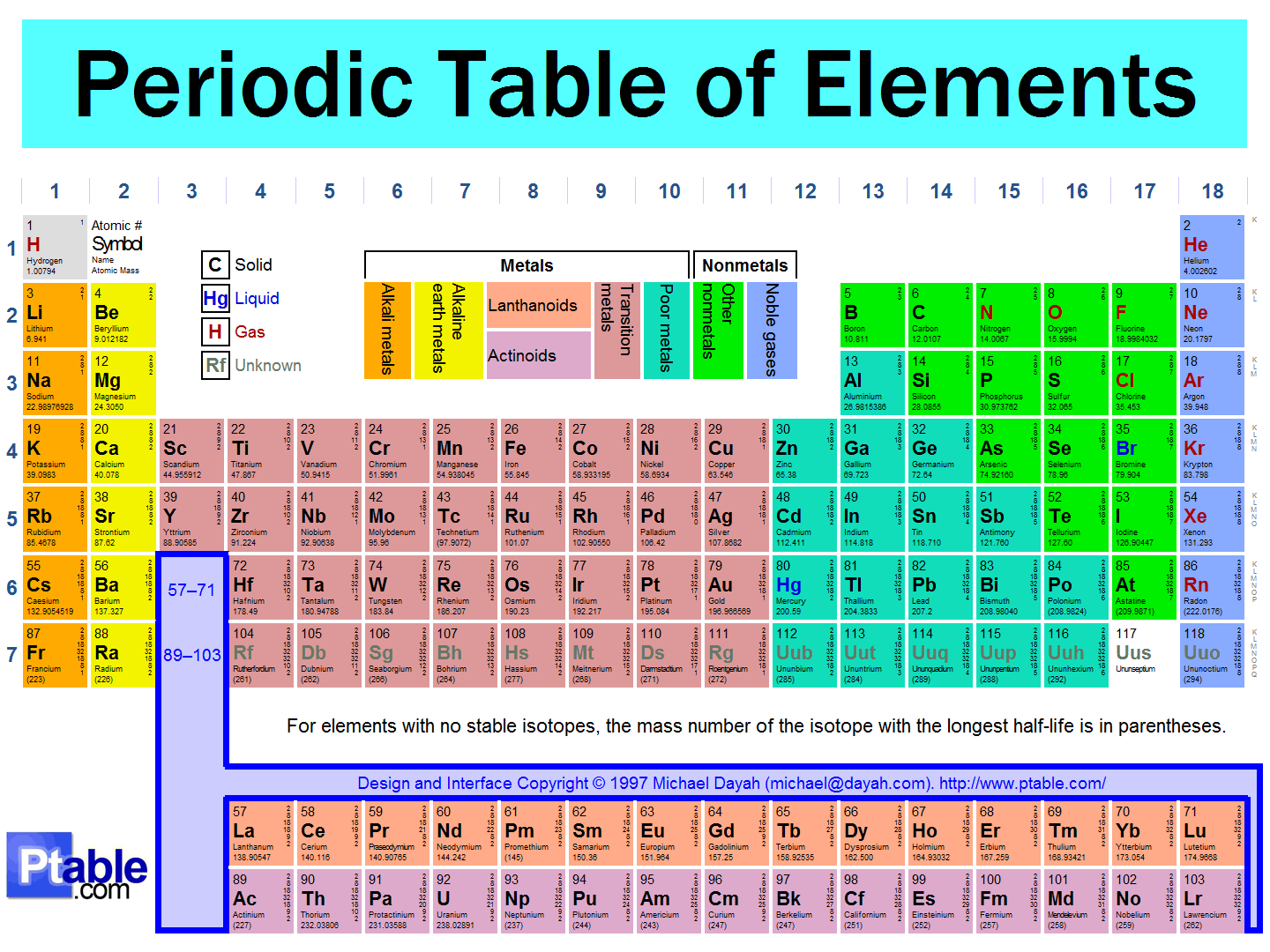
Periods

The horizontal rows on the periodic table

All elements in the same period have the same number of energy levels in their electron cloud

4

Groups

The vertical columns on the periodic table

All elements in the same group have the same number of valence electrons

5

Multiple Choice

Question image

The positively charged particle in an atom.

1

Proton

2

Neutron

3

Electron

4

Nucleus

6

Multiple Choice

The unit used to express the mass of the particles in an atom.

1

Proton

2

AMU

3

Neutron

4

Electron

7

Multiple Choice

Question image

The vertical (up and down) columns in the Periodic Table are called

1

groups

2

towers

3

periods

4

atomic numbers

8

Multiple Choice

Question image
The horizontal row on the periodic table is called a
1
group
2
family
3
period
4
atomic number

9

media

10

media

11

media

12

media

13

media

14

media

15

Multiple Choice

Question image
How many protons are in this element?
1
79
2
196
3
117
4
Cannot be determined

16

Multiple Choice

Elements in the periodic table are arranged by...

1

Atomic mass

2

Atomic number

3

Number of neutrons

4

Chemical reactivity

17

Multiple Choice

The rows of the periodic table are called periods.

1

True

2

False

18

Multiple Choice

Which of these is NOT a family of elements?

1

Halogens

2

Alkali Metals

3

Transition Metals

4

All of these are families

19

Multiple Choice

You will find metals on the far right column of the periodic table.

1

True

2

False

20

Multiple Choice

Question image

Atoms of elements in the same group have the same number of what?

1

protons

2

protons and neutrons

3

valence electrons

4

neutrons

21

Multiple Choice

Question image

Which two elements share common characteristics based on the periodic table?

1

Sodium and Magnesium

2

Chlorine and Sulfur

3

Argon and Neon

4

Calcium and Bromine

22

Multiple Choice

What is a group (also called a family)?

1

Number of valence electrons

2

Orbital levels/energy levels

3

elements with similar properties

4

Number of elements

23

Multiple Select

The subatomic particle(s) found in the nucleus of an atom

1

Proton and electron

2

Neutron and electron

3

Protons and neutron

4

Neutron and proton

24

Multiple Choice

Question image
1
Metals
2
Nonmetals
3
Metalloids

25

Multiple Choice

Question image
1
Metals
2
Nonmetals
3
Metalloids

26

Multiple Choice

Question image
1
Metals
2
Nonmetals
3
Metalloids

27

Multiple Choice

one or two letters that represent the name of an element

1

element name

2

element symbol

3

atomic number

4

atomic mass

28

Multiple Choice

Name this group: These metals are the most reactive.

1
2
3
4

29

Multiple Choice

Name this group: These metals are the second most reactive.

1
2
3
4

30

Multiple Choice

Name this group: These metals contain familiar metals such as gold, iron, and copper.

1
2
3
4

31

Multiple Select

Locate Lanthanides and Actinides.

1
2
3
4

32

Multiple Choice

Which of these is not a noble gas?
1
Helium
2
Argon
3
Nitrogen
4
Krypton

33

Explanation Slide...

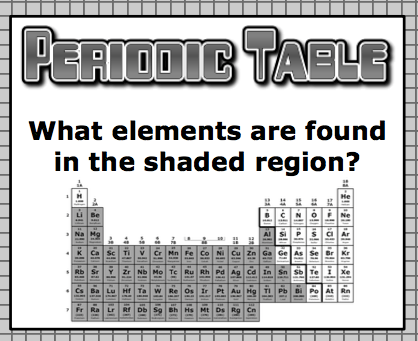
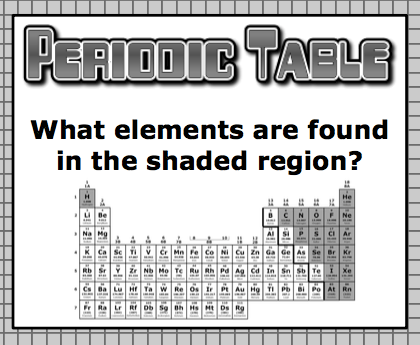
Noble gases are found on the far right of the periodic table in group VIIIA. Halogens are in the second group from the right. Metals of all types are found around the left side of the periodic table. There may be earth, transition, or alkaline earth metals across the table.

media

34

Explanation Slide...

All of these choices are different types and families of elements. Inert gases can be found on the far right of the periodic table in group VIIIA. Halogens are just to the left in VIIA. Metals make up the center and left side of the table in a variety of groups.

media

35

Explanation Slide...

The rows of the periodic table are called periods. The columns of the periodic table are called groups. Periods are loosely organized by the number of atomic orbitals found in each element. For example, hydrogen (H) in the first row has only one orbital. Lithium (Li) in the second row has electrons in two orbitals. Francium (Fr), in row seven, has electrons in seven orbitals.

media

36

Multiple Choice

6.15: Which of these is not a property of noble gases?

1

Colourless

2

Odourless

3

Flammable

4

Gas at room temperature

37

Multiple Choice

Question image
How many elements are in the Noble Gas family?
1
24
2
13
3
6
4
18

38

​Compound

  • Elements can chemically combine to form new, pure chemical substances. 

  • A chemical substance that is made of two or more different elements that chemically combine together is called a compound

  • The force between compounds is STRONGER than between mixtures​

media
media

39

  • Contain one or more substances NOT bonded together

  • ​Can be separated physically

  • Retains many of the properties of the components

Record the information above on your note-taker.

Mixtures

media

40

Mixture

  • A compound is NOT the same as a mixture

  • A mixture is a physical combination of two or more different chemical substances.

  • A compound is a chemical combination of two or more different chemical substances (specifically, elements)

  • Unlike an element and compound, a mixture is NOT a pure chemical substance

media
media

41

media

42

media

43

Multiple Choice

A combination of two or more substances that can be separated is a

1

potion

2

mixture

3

solute

4

compound

44

Multiple Choice

Substance dissolved in a solution
1
concentration
2
solute
3
solvent
4
solution

45

Multiple Choice

Capable of being dissolved
1
Soluble
2
concentration
3
colloid
4
molarity

46

Multiple Choice

In sweet tea the solvent would be

1

water

2

tea

3

sugar

4

lemon

47

Multiple Choice

When a certain amount of solvent cannot hold any more solute it is called a ________ solution.
1
Diluted
2
Saturated

48

Concept Map of Classifying Matter

media

49

Recall

  • Mixtures are a combination of substances

    • Can heterogenous or homogenous

      • Heterogenous Mixtures: large particles that ​can be easily seen and separated

        • Suspensions: a heterogenous mixture that separates on its own over time

          • Clay in water

        • Colloids: a heterogenous mixture that does not separate on its own over time

          • Milk

media
media

50

Homogenous solutions are Solutions

  • Solution: any mixture that is homogenous on a microscopic level

    • Usually a liquid, but can be solid or gas as well

      • Solid solutions tend to be alloys like brass

    • ​Liquids Solutions have two parts

      • Solvent: The main ingredient that you dissolve substances in

        • Water is called the universal solvent because it dissolves so many things into aqueous solutions

      • Solute: the ingredient you are dissolving

media

51

Multiple Choice

The ______ contains a dispersed phase and a dispersing medium.

1

colloids

2

solute

3

solvent

4

solution

52

Multiple Choice

Which of the following is not an example of a colloid?

1

whipped cream

2

mayonnaise

3

jelly

4

sand

53

Multiple Choice

Which of the following is not an example of suspension?

1

Flour suspended in water

2

Chalk suspended in water

3

Sand suspended in water.

4

Rocks in water

54

Multiple Choice

Which of the following is an example of a solution?

1

salt in water

2

sand and water

3

rocks and water

4

pebbles and water

55

Multiple Choice

A combination of two or more substances that can be easily separated.
1
dissolve
2
mixture
3
solution
4
physical property
media

Show answer

Auto Play

Slide 1 / 55

SLIDE