

Science Exam 8

Presentation
•
Chemistry
•
8th Grade
•
Easy

Pham Kien Binh
Used 2+ times
FREE Resource
1 Slide • 58 Questions
1
Multiple Choice
A pure substance that is make up of only one kind of atom
Element
Electricity
Compound
Molecule
2
Multiple Choice
A combination of two or more elements.
Element
Electricity
Compound
Molecule
3
Multiple Choice
It is formed by two or more atoms.
Element
Electricity
Compound
Molecule
4
Multiple Choice
An observable characteristic that decribes an object or a substance.
Element
Property
Compound
Matter
5
Multiple Choice
Characteristist of matter thay may be observed or measured without changing the chemical
Physical properties
Physical changes
Chemical properties
Chemical changes
6
Multiple Choice
Can be classified as element or compound, which one made up of atoms that retain their chemical properties until they undergo change through a chemical reaction.
Matter
Compound
Element
Atoms
7
Multiple Choice
Properties of matter that depend on the amount of matter
Extensive
Intensive
Melting piont
Durability
8
Multiple Choice
Properties of matter that not depend on the amount of matter
Extensive
Intensive
Melting piont
Durability
9
Multiple Choice
Observable changes in the appearance or physical property of matter while it does change a new
Physical properties
Physical changes
Chemical properties
Chemical changes
10
Multiple Choice
Chemical reactions that result in the formation of new substances or products
Physical properties
Physical changes
Chemical properties
Chemical changes
11
Multiple Choice
Observable changes in the appearance or physical property of matter while it does change a new
Phy
Physical changes
12
Multiple Choice
Is the ability of substance to undergo chemical changes to become a different kind of matter
Physical properties
Physical changes
Chemical property
Chemical changes
13
Multiple Choice
Are usually in liquid and gases forms are those that can easily catcj refat relatively low temperatures
Flammable substances
Ammability of a substance
Volatility
Volume
14
Multiple Choice
Based on its ash point, which refers to the lowest temperature at which a liquid can be ignited and mixed
Flammable substances
Ammability of a substance
Volatility
Volume
15
Multiple Choice
Is the tendency of a liquid to vaporite
Volatility
Ammability
Flammable
Chemical changes
16
Multiple Choice
A phase of matter that has a definit volume and distinct shape given a certain temperature
Solid
Liquid
Gas
Plasma
17
Multiple Choice
A phase of matter that has a definit volume but take the shape of its container due to gravity
Solid
Liquid
Gas
Plasma
18
Multiple Choice
The volume dependent on its temperature and surrounding pressure.
Solid
Liquid
Gas
Plasma
19
Multiple Choice
When the gas gain energy through heating at very high temperature or when they absord electrical energy
Solid
Liquid
Gas
Plasma
20
Multiple Choice
The exact oppsite of plasma, ecisit at extremely low temperature
Solid
The Bose-Einstein
Gas
Liquid
21
Multiple Choice
Is considered the smallest particle of matter
Atom
Atomic
Subatomic particle
Element
22
Multiple Choice
Particle smaller than an atom
Atom
Subatomic
Atomic
23
Multiple Choice
Is considered the smallest particle of matter
Atom
Atomic
Subatomic particle
Element
24
Multiple Choice
Found on the outermost shell. responsible for the atoms recutivity (valence electron)
Atom
Atomic
Subatomic particle
Element
25
Multiple Choice
Is a representation of what an atom could look based on observations and scientific evidence that describe how atoms behave.
Atomic Model
Atomic
Subatomic particle
Element
26
Multiple Choice
A Greek philosopher named Democritus expressed the belief that matter consists of very small, indivisible particles
5th CENTURY B.C
7th CENTURY B.C
4th CENTURY B.C
3th CENTURY B.C
27
Fill in the Blanks
Type answer...
28
Multiple Choice
A Greek words of atom and meaning ..
Atomos
Atomes
Indivisible
Divisible
29
Multiple Choice
When John Dalton, proposed the first atomic theory after conducing?
1808
1911
1897
1920
30
Multiple Choice
Father of the Modern Atomic Theory
Chadwick
Dalton
Rutherford
Thomson
31
Multiple Choice
In 1897 he discovered that Electrons are negetive charge particles found outside nuclues of an atom
Rutherford
Chadwick
Dalton
Thomson
32
Multiple Choice
In 1911 he discovered that Protons are positive charge particles found within nuclues of an atom
Rutherford
Chadwick
Dalton
Thomson
33
Multiple Choice
Father of Nuclear Physics
Rutherford
Chadwick
Dalton
Thomson
34
Multiple Choice
Discovered electrons in 18th century in his cathode ray tube experiment.
Chadwick
Dalton
Rutherford
Thomson
35
Multiple Choice
The electrodes contains a positive charge called
Cation
Anion
Anode
Cathode
36
Multiple Choice
An Ion with negative charged meaning its has more electron than protons
Cation
Anion
Anode
Cathode
37
Multiple Choice
The electrodes contains a negaitve charge called
Cation
Anion
Anode
Cathode
38
Multiple Choice
An Ion with positive charged meaning its has more protons than electrons
Cation
Anion
Anode
Cathode
39
Fill in the Blanks
Type answer...
40
Multiple Choice
Is the number of protons it is alway a whole number. It tell the number of electrons in a neutral atom.
Atomic number
Mass number
Atom number
Neutron
41
Multiple Choice
Gained or lost electrons leaving with a net charge
Ions
Iosotopes
Ionic
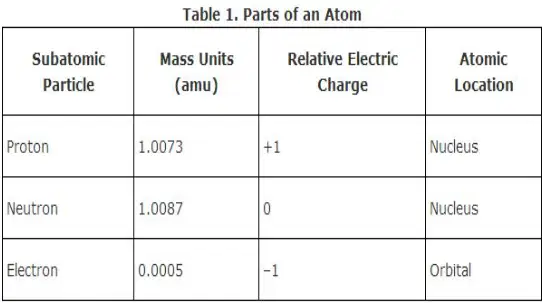
42
43
Multiple Choice
The model showed you that electrons are spread in various energy levels.
Niels Bohr's model
Nuclear model
Plum Pudding model
Solid Sphere model
44
Multiple Choice
Chemist use Bohr's planetary model known as
Electron configuration
Physical configuration
Chemical
configuration
45
Multiple Choice
Describe and show the distribution of electron in each energy level located in various locations or orbits
Electron configuration
Physical configuration
Chemical
configuration
46
Multiple Choice
The region in the atom where electrons may be found
Electron cloud
Molecules
47
Multiple Choice
Atoms of the same element with different number of neutrons
Ion
Isotope
Protons
Electrons
48
Multiple Choice
Has two or more forms of the same element, cointains equal number of protons but different number of neutrons?
Ion
Isotope
Protons
Electrons
49
Multiple Choice
Most of the volume an atoms is made of this
Empty space
Electrons cloud
Molecules
50
Fill in the Blanks
Type answer...
51
Multiple Choice
The energy of an electron and size of the orbital and its distance away from the nucleus (letter "n" is used to represent the energy level)
Principal Quantum Number
Quantum Number
Angular Momentum Quantum Number
Magnetic Quantum Number
Spin Quantum Number
52
Multiple Choice
A value that is used when describing the energy levels of electron in atoms.
Principal Quantum Number
Quantum Number
Angular Momentum Quantum Number
Magnetic Quantum Number
Spin Quantum Number
53
Multiple Choice
Represent the shape of the sublevel in each energy level ((letter "l" is used to represent the energy level)
Principal Quantum Number
Quantum Number
Angular Momentum Quantum Number
Magnetic Quantum Number
Spin Quantum Number
54
Multiple Choice
Describer the orbital in space of an orbital of a give energy(n) and shape(l) ((letter "ml" is used to represent the energy level)
Principal Quantum Number
Quantum Number
Angular Momentum Quantum Number
Magnetic Quantum Number
Spin Quantum Number
55
Multiple Choice
Describer the spin of an electrons in a orbital.
Principal Quantum Number
Quantum Number
Angular Momentum Quantum Number
Magnetic Quantum Number
Spin Quantum Number
56
Multiple Choice
Wave function for an electron in an atom is called
Atomic Orbital
Atom Orbital
57
Multiple Choice
Fill up low energy level first
Aufbaw Principle
Orbital diagrams
Pauli exclusion principles
Hunds rules
58
Multiple Choice
Only 2 electrons per orbitals
Aufbaw Principle
Orbital diagrams
Pauli exclusion principles
Hunds rules
59
Multiple Choice
Electrons go their own orbital before they fill up an occupied orbital
Aufbaw Principle
Orbital diagrams
Pauli exclusion principles
Hunds rules
A pure substance that is make up of only one kind of atom
Element
Electricity
Compound
Molecule
Show answer
Auto Play
Slide 1 / 59
MULTIPLE CHOICE
Similar Resources on Wayground

55 questions
Scientific Method & Graphing
Presentation
•
8th Grade
51 questions
Biomolecules (AP)
Presentation
•
8th Grade
52 questions
investigating endothermic reaction
Presentation
•
7th - 8th Grade
55 questions
Science 9 - Unit A Review Slides
Presentation
•
9th Grade
50 questions
Lessons on Pure Substances and Mixtures
Presentation
•
8th Grade
50 questions
Chemical and Physical Changes
Presentation
•
9th Grade
52 questions
Tracking Tropical Cyclone
Presentation
•
8th Grade
54 questions
Race, Relations, Reform
Presentation
•
8th Grade
Popular Resources on Wayground
20 questions
Math Review

Quiz
•
3rd Grade
15 questions
Fast food
Quiz
•
7th Grade
20 questions
Context Clues
Quiz
•
6th Grade
20 questions
Inferences
Quiz
•
4th Grade
19 questions
Classifying Quadrilaterals
Quiz
•
3rd Grade
20 questions
Figurative Language Review
Quiz
•
6th Grade
20 questions
Equivalent Fractions
Quiz
•
3rd Grade
10 questions
Identify Fractions, Mixed Numbers & Improper Fractions
Quiz
•
3rd - 4th Grade