Search Header Logo
1.2 Atomic Structure

1.2 Atomic Structure

Assessment

Presentation

•

Chemistry

•

6th - 8th Grade

•

Medium

Created by

Lloyd Cascabel

Used 2+ times

FREE Resource

19 Slides • 78 Questions

1

media

2

media

​Dimitri Mendeleev organized all the atoms of different elements into a table based on their atomic number.

3

media

4

media

5

Due to developments in available technology and with more information is generated from the creativity of scientists, the model of the atom grew in time.

media

6

Multiple Choice

Bohr Model of an atom

1
2
3
4

7

Multiple Choice

Quantum Mechanical Model of an Atom

1
2
3
4

8

Multiple Choice

Dalton's Atomic Model

1
2
3
4

9

Multiple Choice

Who was the first person to "think" of an atom?

1

Democritus

2

J.J. Thompson

3

Rutherford

4

Bohr

10

Multiple Choice

Ernest Rutherford discovered that the atom was mostly _________________ and has a _______________ charged nucleus.
1

empty space, positively

2

empty space, negatively

3

full of protons, positively

4

full of neutrons, negatively

11

Multiple Choice

Who organized the elements into a table based on their atomic number?

1

John Dalton

2

Aristotle

3

Dimitri Mendeleev

4

Earnest Rutherford

12

Multiple Choice

Which of the following is similar to the models of Rutherford, Bohr, Shrodinger, and Thompson?

1

Atoms are indivisible

2

Atoms are all the same

3

Atoms have positive and negative charges

4

Atoms have layers of neutrons

13

Multiple Choice

Question image

Who proposed this atomic model?

1

Earnest Rutherford

2

John Dalton

3

Democritus

4

Niels Bohr

14

media

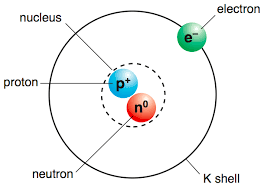
​There are three subatomic particles: protons (+), electrons (-), and neutrons (no charge).

The number of protons determine the atomic number and the identity of the element.

15

media

​There are three subatomic particles: protons (+), electrons (-), and neutrons (no charge).

The number of protons determine the atomic number and the identity of the element.

​Boron

.

.

.

Silver

16

media

17

Multiple Choice

An atom of an element is electrically neutral because the number of protons

is equal to the number of _____________.

1

A. electrons

2

B. neutrons

3

C. nucleons

4

D. nucleus

18

Multiple Choice

Which two particles would be attracted to each other?

1

A. protons and neutrons

2

B. electrons and protons

3

C. electrons and neutrons

4

D. All particles are attracted to each other.

19

Multiple Choice

What was Thomson's atomic model called?

1

A. Spherical Model

2

B. Solar System Model

3

C. Plum Pudding Model

4

D. Model of the Atomic Theory

20

Multiple Choice

Which of the following statements BEST describes the location of electrons in

Rutherford’s model of the atom?

1

A. The electrons are inside the nucleus.

2

B. The electrons are outside the nucleus.

3

C. There are no electrons in the Rutherford Model.

4

D. Electrons are both inside and outside of the nucleus.

21

Multiple Choice

Question image

The nucleus of an atom contains which subatomic particles?

1

protons and electrons

2

protons and neutrons

3

electrons and neutrons

4

protons, electrons, and neutrons

22

Multiple Choice

Question image

In a neutral atom, which two subatomic particles are equal in number?

1

protons and neutrons

2

all subatomic particles are equal in number

3

neutrons and electrons

4

protons and electrons

23

Multiple Choice

Question image

Which subatomic particle is counted to determine the type of element the atom represents?

1

proton

2

neutron

3

electron

4

boron

24

Multiple Choice

Particles in an atom that are neutral and have no charge are 
1

negatrons 

2

electrons 

3

neutrons 

4

protons 

25

media

26

media

27

media

28

media

​Neon Ne-20 isotope

​Neon Ne-21 isotope

29

media

30

media

31

Multiple Choice

Which particles have approximately the same size and mass?

1

A. protons and neutrons

2

B. electrons and protons

3

C. neutrons and electrons

4

D. None because all are different in terms of size and mass

32

Multiple Choice

The atomic mass is equal to _.
1

the number of protons only

2

the number of neutrons only

3

the total number of protons and neutrons

4

the number of protons, neutrons, and electrons.

33

Multiple Choice

Particles in an atom that are neutral and have no charge are 
1

negatrons 

2

electrons 

3

neutrons 

4

protons 

34

Multiple Choice

Question image

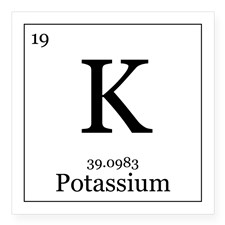
How many neutron are in the atom "K"?

1

29

2

19

3

58

4

20

35

Fill in the Blank

An atom has 10 protons and 12 neutrons. What is the mass number?

36

Fill in the Blank

An atom of iron has 30 neutrons. What is the mass number?

37

Multiple Choice

Potassium has a mass number of 39. How many protons does it have?

1

39

2

19

3

20

38

Multiple Choice

The smallest subatomic particle

1

Protons

2

Neutrons

3

Electrons

4

Atoms

39

Multiple Choice

An element has an atomic number of 9 and a mass of 19 amu. What is the number of protons this element has?

1

9

2

19

3

10

4

28

40

Multiple Choice

Question image

What is represented by the letter T?

1

Nucleus

2

Electron

3

Proton

4

Neutrons

41

Multiple Choice

Question image

What is represented by the letter S?

1

Nucleus

2

Electron

3

Proton

4

Neutrons

42

Multiple Choice

Question image

What is represented by the letter R?

1

Nucleus

2

Electron

3

Proton

4

Neutrons

43

Multiple Choice

What gives you the identity of an element?

1

Mass

2

Atomic number

3

Protons

4

Electrons

44

Multiple Choice

An element has 3 electrons and a mass of 7. How many protons does this element have?

1

3

2

7

3

4

4

10

45

Multiple Choice

Question image
Which subatomic particles contribute the most to the mass of an atom?
1

Protons, Neutrons, Electrons

2

Protons only

3

Protons and Electrons

4

Protons and Neutrons

46

Multiple Choice

How many electrons does an atom of Krypton have?

1

36

2

83.80

3

48

4

119.80

47

Multiple Choice

How many electrons does a Copper atom have?

1

63

2

29

3

92

4

34

48

Multiple Choice

Typically in an atom, which two subatomic particles are equal in number?

1

protons and neutrons

2

all subatomic particles are equal in number

3

neutrons and electrons

4

protons and electrons

49

Multiple Choice

How many protons are present in phosphorus?

1

15

2

16

3

31

4

46

50

Multiple Choice

Lithium has 7 a.m.u. How many neutrons does this lithium have?

1

8

2

3

3

4

4

5

51

media

52

media

53

media

54

media

55

media

56

Multiple Choice

Element A has a mass number of 100 while element B has an atomic number

of 118. What will be the number of electrons of element B?

1

A. 59

2

B. 60

3

C. 118

4

D. 120

57

Multiple Choice

Question image
An atom becomes _________ when it gains electrons.
1

Positive

2

Negative

3

Neutral

4

Invinsible

58

Multiple Choice

An atom that has gained or lost electrons is called ...
1

a winner

2

an isotope

3

an ion

4

a loser

59

Multiple Choice

When an atom loses an electron, it becomes a

1

positive ion

2

negative ion

3

neutral ion

4

neutral atom

60

Fill in the Blank

When an atom has a net charge, it is considered an...

61

Multiple Choice

If the number of protons and the number of electrons are equal, the net charge will be...

1

Positive

2

Neutral

3

Negative

62

Fill in the Blank

What is the net charge of an atom with 15 protons and 12 electrons?

63

Multiple Choice

An atom of oxygen has a - 2 charge, how many electrons does it have?

1

8

2

10

3

6

64

Multiple Choice

An atom of fluorine has a -1 charge, how many protons does it have?

1

10

2

8

3

9

65

Multiple Choice

Potassium has a mass number of 39. How many protons does it have?

1

39

2

19

3

20

66

Multiple Choice

An element has 3 electrons and a mass of 7. How many protons does this element have?

1

3

2

7

3

4

4

10

67

Multiple Choice

What is a positive ion called?

1

positron

2

pos-ion

3

anion

4

cation

68

Multiple Choice

What is a negative ion called?

1

negion

2

negation

3

anion

4

cation

69

Multiple Choice

Fluorine (F) has an atomic number of 9 and an atomic mass of 18.998. How many electrons does it have?

1

18

2

10

3

9

70

Match

Match the following

Li

He

Na

71

Fill in the Blank

An atom of iron has 30 neutrons. What is the mass number?

72

Multiple Choice

Question image

How many protons are in Silicon?

1

7

2

42

3

28

4

14

73

Multiple Choice

Question image

How many neutrons are in Phosphorus?

1

16

2

15

3

31

4

46

74

Multiple Choice

Question image

How many electrons are in Aluminium?

1

40

2

27

3

13

4

14

75

Multiple Choice

Adding or subtracting electrons changes the elements overall charge and makes the element change into an...

1

ion

2

mixture

3

isotope

4

neutral atom

76

Multiple Choice

A neutral atom of the element sodium has ____ electrons.

1

22

2

23

3

8

4

11

77

Multiple Choice

Question image
How many electrons does a Copper atom have?
1

63

2

29

3

92

4

34

78

Multiple Choice

Question image
How many neutrons does a Hydrogen atom have?
1

1

2

2

3

3

4

0

79

Multiple Choice

How many protons are present in phosphorus-31
1

15

2

16

3

31

4

46

80

Multiple Choice

Question image
What does the 6 represent above the C
1

Symbol 

2

Name 

3

Mass Number 

4

Atomic Number 

81

Multiple Choice

A rule that states that atoms are most stable when they have a full shell

of electrons in the outside electron shell.

1

Octet Rule

2

Golden Rule

3

Hund's Rule

4

All of the above

82

Multiple Choice

According to the Octet Rule, atoms of elements react with each other

in order to attain electrons in their outermost energy level or shell.

1

2

2

4

3

6

4

8

83

Multiple Choice

The valence electrons of representative elements are

1

In s orbitals only.

2

Located in the outermost occupied major energy level.

3

Located closest to the nucleus.

4

Located in d orbitals

84

Multiple Choice

How do you find the number of valence electrons in an atom?

1

Use the Atomic Number

2

Use the Group Number

3

Use the Mass - Atomic number

4

Use the Period Number

85

Multiple Choice

Which of the following elements GAINS 3 electrons in order to attain an octet?

1

nitrogen

2

lithium

3

boron

4

oxygen

5

fluorine

86

Multiple Choice

Which of the following elements can EITHER GAIN or LOSE 4 electrons in order to attain an octet?

1

silicon

2

beryllium

3

boron

4

selenium

5

chlorine

87

Multiple Choice

Each of the following elements will LOSE ELECTRONS in order to attain an octet EXCEPT _______

1

iodine

2

magnesium

3

potassium

4

copper

5

strontium

88

Multiple Choice

When atoms GAIN electrons, they get a...

1

Positive (+) charge

2

Negative (-) charge

3

No charge (zero)

89

Multiple Choice

Fluorine gains 1 electron to satisfy the Octet Rule. What kind of ion is formed?

1

Anion (-)

2

Cation (+)

90

Multiple Choice

Question image

What does Oxygen have to do to satisfy the Octet Rule? What would its charge be after? (TAKE YOUR TIME!)

1

Lose 6 electrons, + 6

2

Gain 8 electrons, - 8

3

Lose 2 electrons, + 2

4

Gain 2 electrons, - 2

91

Multiple Choice

Question image

Which group already satisfies the Octet Rule and therefore does not bond with other atoms?

1

Group 1 (H at top)

2

Group 2 (Be at top)

3

Group 13 (B at top)

4

Group 18 (He at top)

92

Multiple Choice

When anions and cations join together, what kind of bond is formed?

1

Ionic

2

Covalent

3

Metallic

4

Hydrogen

93

Multiple Choice

Question image

What is the charge of the Na ion based on its position on the Periodic Table?

1

Neutral (zero)

2

+1

3

-1

4

+11

94

Multiple Select

Beryllium (Be) is found in Group 2. What can Beryllium do in order to follow the Octet Rule? (Check ALL that work...)

1

Gain 6 more valence electrons

2

Gain 8 more valence electrons

3

Lose 2 valence electrons

4

Lose 8 valence electrons

95

Multiple Choice

Phosphorus (P) is in Group 5. How many MORE electrons does it need in order to follow the Octet Rule?

1

2 more valence electrons

2

5 more valence electrons

3

8 more valence electrons

4

3 more valence electrons

96

Multiple Choice

Question image

Do you think Nitrogen at the central already achieved an octet?

1

Yes

2

No

97

Multiple Choice

Question image

Do you think Sulfur at the central already achieved an octet?

1

Yes

2

No

media

Show answer

Auto Play

Slide 1 / 97

SLIDE