

cell organelles 2023

Presentation
•
Biology
•
9th - 12th Grade
•
Medium
+2
Standards-aligned

KARA SMITH
Used 27+ times
FREE Resource
12 Slides • 22 Questions
1


Cell Structure
& Function
2
Fill in the Blanks

All living things are made of...
3


“Typical” Animal Cell
4


“Typical” Plant Cell
5

6
Drag and Drop
7
Multiple Choice
Both eukaryotic and prokaryotic cells contain membrane bound organelles?
TRUE
FALSE
8


9

Nucleus
• Directs cell activities
• Separated from cytoplasm by nuclear membrane(envelope) which has openings that allow some material to enter and leave nucleus
• Contains genetic material - DNA
• Nucleolus contains RNA to help assemble proteins

Endoplasmic Reticulum
• Moves materials around in cell
• Smooth type: no ribosomes, lipid and steroid synthesis
• Rough type: contains ribosomes, the proteins made here are pinched off in vesicles which move to the Golgi
10

Ribosomes
• Each cell contains thousands
• Make proteins
• Found on Rough ER & floating throughout the cell
• Is not surrounded by a membrane!! Found in both prokaryotes and eukaryotes.
Golgi Apparatus
• Protein 'packaging plant'
• Move materials within and out of the cell
• Processes the proteins made in the ER


11


Vesicles
• Small membrane bound sacs that are used to transport molecules into, out of and through the
eukaryotic cell.

• Produces energy through chemical reactions – breaking down fats & carbohydrates
• Converts chemical food energy into usable energy for the cell (ATP)
• Recycles and decomposes proteins,
fats, and carbohydrates
12

Vacuoles
• Membrane-bound sacs for storage, digestion, and waste removal
• Contains water solution
• Help plants maintain shape

• Outer membrane of cell that controls movement of substances in and out of the cell
• Double layer called the phospholipid bilayer
• Selectively permeable which means only certain things enter and exit the cell.
13


Lysosome
• Digestive 'plant' for proteins, fats, and carbohydrates
• Transports undigested material to cell membrane for removal
• Cell breaks down if lysosome explodes
Cytoskeleton is made up of the long, strong proteins that helps the cell keep its shape and structure. It also helps the cell divide into two cells as it reproduces.
Cytoskeleton
14


Flagella are long, wavy structures that are used to move an entire cell.
Cilia are short, hair-like structures that are used to move entire cells or substances along the outer surface of the cell.
FLAGELLA and CILIA
CYTOPLASM
• Gel-like mixture that protects organelles
• Stores the molecules required for cellular processes
• Surrounded by cell membrane
15


Chloroplast
• Found in plant cells and contains green chlorophyll
• Where photosynthesis takes place
● Provides the cells with strength and support
● Most commonly found in plant, bacteria, and fungi cells
● In plants it is composed of cellulose which is a complex carbohydrate
Cell Wall
16
Multiple Choice
Which organelle contains genetic material?
Endoplasmic Reticulum
Golgi Complex
Nucleolus
Nucleus
17
Multiple Choice
Sac that stores water, nutrients, and waste products
Sac filled with digestive chemicals
Jelly-like substance within the plasma membrane
stack of membranes that packages chemicals
18
Multiple Choice
mitochondria
stomata
xylem
chloroplast
19
Multiple Choice

Eukaryotic Cell
Prokaryotic Cell
Bacteria
Blood cell
20
Multiple Choice
Chloroplast
Mitochondria
Lysosome
Ribosome
21
Multiple Choice
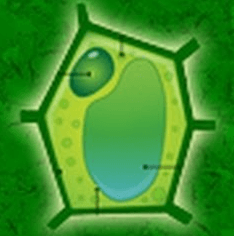
Cytoskeleton
Cilia
Cell Wall
Flagella
22
Multiple Choice
Nucleus
Cilia
Cell membrane
Flagella
23
Multiple Choice

Endoplasimic Reticulum
Orange Juice
Water
Cytoplasm
24
Multiple Choice
Transports molecules throughout the cell. The "vehicle" of the cell.
Vesicle
Ribosomes
Chloroplasts
Golgi Apparatus
25
Multiple Choice
Which organelle receives proteins and materials from the endoplasmic reticulum, packages them, and distributes them?
lysosomes
golgi apparatus
ribosomes
endoplasmic reticulum
26
Multiple Choice
Which organelle is responsible for cell movement?
pili
flagella
cytoskeleton
it's legs
27
Multiple Choice

mitochondria
lysosomes
chloroplast
endoplasmic reticulum
28
Multiple Choice
Vessicles
Vacuoles
Ribosomes
Chromosomes
29
Multiple Choice
Prokaryote
Eukaryote
both
30
Multiple Choice
fungus
bacteria
animal
plant
31
Match
* All cells have
* Smaller simple cells no nucleus
Plant Cell
Bacteria Cell
Animal Cell
* DNA, Cytoplasm, Ribosomes
* Prokaryote
Plant Cell
Bacteria Cell
Animal Cell
* DNA, Cytoplasm, Ribosomes
* Prokaryote
32
Multiple Choice

Euglena are unicellular organisms that live in pond water. They move around using a flagella and can perform photosynthesis when needed. They contain many organelles . What type of cells are they?
Animal Cell
Prokaryotic Cell
Eukaryotic Cell
Plant Cell
33
Match
Match the following organelles, that are found in all cells, to their functions.
Fluid filling all cells
Makes proteins for all cells
Surrounds all cells
Cytoplasm
Ribosome
Plasma membrane
Cytoplasm
Ribosome
Plasma membrane
34
Multiple Select
Select all that are true regarding bacteria
Unicellular
Have a nucleus
Contain Ribosomes
They have mitochondria and other membrane bound organelles
Cell Structure
& Function
Show answer
Auto Play
Slide 1 / 34
SLIDE
Similar Resources on Wayground

27 questions
Commas Lesson
Presentation
•
9th - 12th Grade
26 questions
DNA Structure & Replication
Presentation
•
9th - 12th Grade
26 questions
Limiting Factors and Carrying Capacity EOC Review
Presentation
•
9th - 12th Grade
24 questions
Protein Synthesis
Presentation
•
9th - 12th Grade
25 questions
Population Ecology
Presentation
•
9th - 12th Grade
28 questions
MDCPS RMS Biology Unit 3 Recap 22-23
Presentation
•
9th - 12th Grade
26 questions
3 Lesson: BIO.A.3.1 Photosynthesis
Presentation
•
9th - 12th Grade
Popular Resources on Wayground
10 questions
How much do you know about our Portrait of an Eagle?

Quiz
•
10th Grade
10 questions
Fast Food Slogans
Quiz
•
6th - 8th Grade
21 questions
Continents and Oceans
Quiz
•
6th Grade
20 questions
Parts of Speech
Quiz
•
5th Grade
16 questions
Subject & Predicate
Quiz
•
5th Grade
25 questions
Multiplication Facts
Quiz
•
5th Grade
12 questions
Map Skills
Quiz
•
3rd Grade
22 questions
Continents and Oceans
Quiz
•
5th Grade
Discover more resources for Biology
20 questions
Characteristics of Life
Quiz
•
9th - 10th Grade
10 questions
Exploring the 4 Major Macromolecules and Their Functions

Interactive video
•
9th - 12th Grade
20 questions
Cell organelles and functions
Quiz
•
10th Grade
20 questions
Cell Transport
Quiz
•
9th - 12th Grade
25 questions
photosynthesis and cellular respiration
Quiz
•
9th Grade
20 questions
Macromolecules
Quiz
•
10th Grade
16 questions
Population Ecology
Quiz
•
9th - 12th Grade
20 questions
Cell Organelles
Quiz
•
9th Grade