

Small Business PBM-9-12-2023

Presentation
•
Computers
•
12th Grade
•
Hard

Steve Howard
Used 2+ times
FREE Resource
35 Slides • 23 Questions
1


Business in Action: Thriving in the Digital
Enterprise
Tenth Edition
Chapter 6
Entrepreneurship and
Small-Business
Ownership
Copyright © 2024, 2020, 2017 Pearson Education, Inc. All Rights Reserved
2


Copyright © 2024, 2020, 2017 Pearson Education, Inc. All Rights Reserved
Learning Objectives (1 of 2)
6.1 Highlight the contributions small businesses make to
the U.S. economy.
6.2 List the most common reasons people start their own
companies, and identify the common traits of successful
entrepreneurs.
6.3 Explain the importance of planning a new business,
and outline the key elements in a business plan.
6.4 Identify the major causes of business failures, explain
what pivoting means and identify sources of advice and
support for business owners.
3


Copyright © 2024, 2020, 2017 Pearson Education, Inc. All Rights Reserved
Learning Objectives (2 of 2)
6.5 Discuss the principal sources of small-business private
financing.
6.6 Explain the advantages and disadvantages of
franchising.
6.7 Define machine learning and deep learning, and
describe their importance to contemporary business.
4


Copyright © 2024, 2020, 2017 Pearson Education, Inc. All Rights Reserved
The Big World of Small Business
• Small business
– A company that is independently owned and
operated, is not dominant in its field, and employs
fewer than 500 people (although this number varies
by industry)
5


Copyright © 2024, 2020, 2017 Pearson Education, Inc. All Rights Reserved
Economic Roles of Small Business
• They provide jobs.
• They introduce new products.
• They meet the needs of larger organizations.
• They inject a considerable amount of money into the
economy.
• They take risks that larger companies sometimes avoid.
• They provide specialized goods and services.
6


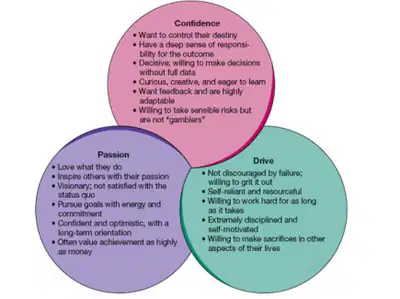
Copyright © 2024, 2020, 2017 Pearson Education, Inc. All Rights Reserved
Exhibit 6.1
Qualities Shared by Successful Entrepreneurs
7
Multiple Choice
Long-Term
Owner
Short-Term
Start-up
8
Multiple Choice
Provide unique services to customers
Market their products
Raise large amounts of financial capital
Mass produce products
9


Copyright © 2024, 2020, 2017 Pearson Education, Inc. All Rights Reserved
Characteristics of Small Businesses
• Most small firms have a narrow focus.
• Small businesses have to get by with limited resources.
• Small businesses often have more freedom to innovate.
• Entrepreneurial firms find it easier to make decisions
quickly and react to changes in the marketplace.
10
Multiple Choice
A lack of sufficient start-up money
Lack of management experience
Shortage of skilled workers
failure to manage credit offered to customers
11


Copyright © 2024, 2020, 2017 Pearson Education, Inc. All Rights Reserved
The Entrepreneurial Spirit
• Entrepreneurial spirit
– The positive, forward-thinking desire to create
profitable, sustainable business enterprises
12


Copyright © 2024, 2020, 2017 Pearson Education, Inc. All Rights Reserved
Why People Start Their Own Companies
• More control over their futures
• Tired of working for someone else
• Passion for new product ideas
• Pursue business goals that are important to them on a
personal level
• Inability to find attractive employment anywhere else
13


Copyright © 2024, 2020, 2017 Pearson Education, Inc. All Rights Reserved
Exhibit 6.2 (1 of 3)
Business Start-Up Options
Start-Up
Strategy
Financial
Outlay
at Start-
Up
Possibilities
for Borrowing
Start-Up
Capital or
Getting
Investors
Owner’s
Freedom
and
Flexibility
Business
Processes
and
Systems
Support
Networks
Workforce
Customer
Base, Brand
Recognition,
and Sales
Create a
new,
independ
ent
business
Some
businesses
can be
started
with very
little cash;
others,
particularly
in
manufactur
ing, may
require a
lot of
capital
Usually very
limited; most
lenders and
many investors
want evidence
that the business
can generate
revenue before
they’ll offer
funds; venture
capitalists invest
in new firms, but
only in a few
industries
Very high,
particularly
during
early
phases,
although
low capital
can
severely
restrict the
owner’s
ability to
maneuver
Must be
designed
and
created
from
scratch,
which can
be time-
consuming
and
expensive
Suppliers,
bankers,
and other
elements of
the network
must be
selected;
the good
news is that
owners can
select and
recruit ones
they
specifically
want
Must be
hired and
trained at
the owner’s
expense
None; must
be built from
the ground
up, which can
put serious
strain on
company
finances until
sales volume
builds
14
Multiple Choice
What is the first and primary question you should ask yourself before starting a small business?
Am I business savvy
Where will I get the money
Where should my business be located
Do I have what it takes
15


Copyright © 2024, 2020, 2017 Pearson Education, Inc. All Rights Reserved
Exhibit 6.2 (2 of 3)
Business Start-Up Options
Start-Up
Strategy
Financial
Outlay
at Start-Up
Possibilities
for Borrowing
Start-Up
Capital or
Getting
Investors
Owner’s
Freedom
and
Flexibility
Business
Processes
and
Systems
Support
Networks
Workforce
Customer
Base, Brand
Recognition,
and Sales
Buy an
existing
independe
nt
business
Can be
considerable;
Some
companies
sell for
multiples of
their annual
revenue, for
example
Banks are
more willing to
lend to
established,
profitable
businesses,
and investors
are more likely
to invest in
them
Less than
when
creating a
new
business
because
facilities,
workforce,
and other
assets are
already in
place more
than when
buying a
franchise
Already in
place,
which can
be a plus or
minus,
depending
on how well
they work
Some
elements
will
already be
in place
but may
need to be
upgraded
Already in
place,
which could
be a
positive or a
negative,
but at least
there are
staff to
operate the
business
Assuming that
the business
is at least
somewhat
successful, it
has a
customer
base with
ongoing sales
and some
brand
reputation
(which could
be positive or
negative)
16


Copyright © 2024, 2020, 2017 Pearson Education, Inc. All Rights Reserved
Exhibit 6.2 (3 of 3)
Business Start-Up Options
Start-Up
Strategy
Financial
Outlay
at Start-
Up
Possibilities
for Borrowing
Start-Up
Capital or
Getting
Investors
Owner’s
Freedom
and
Flexibility
Business
Processes
and
Systems
Support
Networks
Workforce
Customer
Base, Brand
Recognition,
and Sales
Buy into a
franchise
system
Varies
widely,
from a few
thousand
to several
million
dollars;
most well-
known
franchises
require
low- to
mid-six
figures
Varies, but
many
franchisors do
not allow
franchisees to
buy a franchise
with borrowed
funds, so they
must have their
own capital;
many have
minimum
liquidly and net
worth criteria
Low to
very low;
most
franchisor
s require
rigid
adherence
to
company
policies
and
processes
One of the
key
advantage
s of buying
a franchise
is that it
comes with
an
established
business
system
Varies;
some
franchise
companies
specify
which
suppliers a
franchisee
can use
Must be
hired and
trained, but
many
franchisors
provide
training or
training
support
Customer base
and repeat
sales must be
built up, but
one of the
major
advantages of
a franchise is
established
brand
recognition
17


Copyright © 2024, 2020, 2017 Pearson Education, Inc. All Rights Reserved
Blueprint for an Effective Business
Plan (1 of 3)
• Business plan
– A document that summarizes a proposed business
venture, goals, and plans for achieving those goals
18
Multiple Choice
Business Plan
Blueprint
Venture
Opportunity
19
Multiple Choice
survey
data
demographics
business plan
20
Multiple Choice
franchise
corporation
partnership
sole proprietorship
21
Multiple Select

What is the purpose of a business plan? (hint: choose 2 correct answers)
To document your financial activity during one year
Legal document to be filed with the SEC
States the purpose and vision of your company
States the amount of capital you need to run the company
22


Copyright © 2024, 2020, 2017 Pearson Education, Inc. All Rights Reserved
Blueprint for an Effective Business
Plan (2 of 3)
• Summary
• Mission and objectives
• Company overview
• Products and services
• Management and key personnel
• Target market
• Marketing strategy
23


Copyright © 2024, 2020, 2017 Pearson Education, Inc. All Rights Reserved
Blueprint for an Effective Business
Plan (3 of 3)
• Design and development plans
• Operations plan
• Start-up schedule
• Major risk factors
• Financial projections
• Exit strategy
24


Copyright © 2024, 2020, 2017 Pearson Education, Inc. All Rights Reserved
Exhibit 6.3
Why New Businesses Fail
Strategic Issues
Leadership Issues
Marketing and Sales Issues
Financial Issues
Little or no demand:
Company introduced a
product that few, if any,
customers wanted.
Lack of strategic planning
or a viable business
model:
Owners didn’t think through
all the variables needed to
craft a viable business
strategy.
Failure to pivot: Owners
missed (or failed to take) an
opportunity to pursue a
better opportunity.
Overpowering
competition:
Company might have been
on the right track, but the
competition simply did
things better.
Managerial incompetence:
Owner didn’t know how to plan,
lead, control, or organize.
Lack of relevant experience:
Owner may have been
experienced in business but not
in the particular markets or
technologies that are vital to the
new firm’s success.
Inability to make the transition
from employee to
entrepreneur: Owner couldn’t
juggle the multiple and diverse
responsibilities or survive the
lack of support that comes with
going solo.
Motivational collapse:
Entrepreneur burned out before
the business became self-
sustaining.
Ineffective marketing: Small
companies—especially new small
companies—face a tremendous
challenge getting recognition in
crowded markets.
Uncontrolled growth: Company
added customers faster than it
could handle them, leading to
chaos, or might have even “grown
its way into bankruptcy” if it spent
wildly to capture and support
customers.
Poor Location: For retailers and
businesses that depend on easy
customer access or visibility, a poor
location limited sales potential.
Customer neglect: Company
failed to support customers or
respond to problems
Inadequate funding: Company
lacked the funding needed to
launch or scale up to the point of
being self-funding.
Poor cash management:
Company spent too much on
nonessentials, failed to balance
expenditures with incoming
revenues, failed to use loan or
investment funds wisely, or failed to
budget enough to pay its bills.
Excessive overhead: Company
created too many fixed expenses
that aren’t directly related to
creating or selling products, leaving
it vulnerable to any slowdown in the
economy.
Poor inventory control: Company
produced or bought too much
inventory, raising costs too high—or
it did the opposite and was unable
to satisfy demand.
25
Multiple Choice
Who would NOT be considered an entrepreneur?
Chef who just wrote a new cookbook
An accountant who just opened their own practice
A lawyer who started working for the largest firm in the US
Businesswoman who inherited a company from her parents
26
Multiple Choice
Which is NOT a characteristic of a successful entrepreneur?
Creative
Inquisitive
Goal-Oriented
Procrastination
27
Multiple Choice

What is a disadvantage of being an entrepreneur?
You have more control over your work
You have a more flexible schedule
You do not always receive a regular paycheck
Your work schedule is always predictable
28


Copyright © 2024, 2020, 2017 Pearson Education, Inc. All Rights Reserved
Government Agencies and Not-For-Profit
Organizations
• Small Business Administration
• Minority Business Development Agency
• Score
• U.S. Chamber of Commerce
29


Copyright © 2024, 2020, 2017 Pearson Education, Inc. All Rights Reserved
Mentors and Advisory Boards
• Advisory board
– A team of people with subject-area expertise or vital
contacts who help a business owner review plans and
decisions
30
Multiple Choice
profit business
non-profit business
retail business
31


Copyright © 2024, 2020, 2017 Pearson Education, Inc. All Rights Reserved
Business Incubators and Accelerators
• Business incubators
– Facilities that house small businesses and provide
support services during the company’s early growth
phases
• Business accelerators
– Organizations that work with existing companies with
the primary goal of making them more attractive to
investors
32
Multiple Choice
Farms, mines, and lumber companies are examples of
builders
manufacturers
trade industries
raw good producers
33
Multiple Choice
A company that transforms cotton into wearable clothing is considered a
raw goods producer
manufacturer
service business
builder
34
Multiple Choice
Socially responsibility should be part of the objectives of_____businesses.
all
nonprofit
government
specialized
35
Multiple Choice
What is the main purpose of incubators?
helping entrepreneurs think of new business ideas
providing entrepreneurs with training to be successful
helping entrepreneurs find investors
providing start up money to a new business in exchange for partial ownership
36
Multiple Choice
Which of the following is true about nonprofit organizations?
The results of their efforts can be analyzed in the same way as for-profit businesses.
They work in a businesslike way to promote member interests.
Most are informal businesses that are not incorporated.
They make up an insignificant part of the economy
37


Copyright © 2024, 2020, 2017 Pearson Education, Inc. All Rights Reserved
Financing Options for Small
Businesses (1 of 4)
• Seed money
– The first infusion of capital used to get a business
started
• Micro lenders
– Organizations, often not-for-profit, that lend smaller
amounts of money to business owners who might not
qualify for conventional bank loans
38
Multiple Choice
Loan
Investment costs
Seed money
Interest
39
Multiple Choice
Equity
Investment
Seed Money
Debt
40
Multiple Choice
true
false
41


Copyright © 2024, 2020, 2017 Pearson Education, Inc. All Rights Reserved
Exhibit 6.4
Financing Possibilities over the Life of a Small Business
42


Copyright © 2024, 2020, 2017 Pearson Education, Inc. All Rights Reserved
Financing Options for Small
Businesses (2 of 4)
• Microlenders
– Organizations, often not-for-profit, that lend smaller
amounts of money to business owners who might not
qualify for conventional bank loans
• Venture capitalists (VCs)
– Investors who provide money to finance new
businesses or turnarounds in exchange for a portion
of ownership, with the objective of reselling the
business at a profit
43


Copyright © 2024, 2020, 2017 Pearson Education, Inc. All Rights Reserved
Financing Options for Small
Businesses (3 of 4)
• Angel investors
– Private individuals who invest money in start-ups,
usually earlier in a business’s life and in smaller
amounts than VCs are willing to invest or banks are
willing to lend
• Initial public offering (IPO)
– A corporation’s first offering of shares to the public
44
Multiple Choice
Which of the following is the right or license to sell a company’s product or service at a designated location?
Partnership
Franchise
Sole proprietorship
Corporation
45
Multiple Choice
Wealthy individuals who invest in high-potential businesses are...
Banks
Angel Investors
Shareholders
Crowdfunders
46
Multiple Choice
This is the cash that is generated by the business when it operates successfully
Retained profits
Share capital
Angel investor
Owner savings
47


Copyright © 2024, 2020, 2017 Pearson Education, Inc. All Rights Reserved
Financing Options for Small
Businesses (4 of 4)
• Crowdfunding
– Soliciting project funds, business investment, or
business loans from members of the public
48


Copyright © 2024, 2020, 2017 Pearson Education, Inc. All Rights Reserved
The Franchise Alternative (1 of 2)
• Franchise
– A business arrangement in which one company (the
franchisee) obtains the rights to sell the products and
use various elements of a business system of another
company (the franchisor)
49


Copyright © 2024, 2020, 2017 Pearson Education, Inc. All Rights Reserved
The Franchise Alternative (2 of 2)
• Franchisee
– A business owner who pays for the rights to sell the
products and use the business system of a franchisor
• Franchisor
– A company that licenses elements of its business
system to other companies (franchisees)
50


Copyright © 2024, 2020, 2017 Pearson Education, Inc. All Rights Reserved
Advantages of Franchising
• Combines at least some of the freedom of working for
yourself with many of the advantages of being part of a
larger, established organization
• Name recognition, national advertising programs,
standardized quality of goods and services, and a proven
formula for success
51


Copyright © 2024, 2020, 2017 Pearson Education, Inc. All Rights Reserved
Disadvantages of Franchising
• Typically agree to follow the business format
• Little control over decisions the franchisor makes that
affect the entire system
• Don’t have the option of independently changing your
business in response to market changes
52


Copyright © 2024, 2020, 2017 Pearson Education, Inc. All Rights Reserved
Exhibit 6.5 (1 of 2)
Key Questions to Ask Before Signing a Franchise Agreement
1.
What are the total start-up costs? What does the initial franchise fee cover?
Does it include a starting inventory of supplies and products?
2.
Who pays for employee training?
3.
How are the periodic royalties calculated and when must they be paid?
4.
Who provides and pays for advertising and promotional items? Do you
have to contribute to an advertising fund?
5.
Are all trademarks and names legally protected?
6.
Who selects or approves the location of the business?
7.
Are you restricted to selling certain goods and services?
53


Copyright © 2024, 2020, 2017 Pearson Education, Inc. All Rights Reserved
Exhibit 6.5 (2 of 2)
Key Questions to Ask Before Signing a Franchise Agreement
8. Are you allowed to sell online?
9. How much control will you have over the daily operation of the business?
10. Is the franchise assigned an exclusive territory?
11. If the territory is not exclusive, does the franchisee have the right of first refusal on
additional franchises established in nearby locations?
12. Is the franchisee required to purchase equipment and supplies from the franchisor or
other suppliers?
13. Under what conditions can the franchisor or the franchisee terminate the franchise
agreement?
14. Can the franchise be assigned to heirs?
Source: “Buying a Franchise: A Consumer Guide,” U.S. Federal Trade Commission,
September 2020, www.ftc.gov
.
54


Copyright © 2024, 2020, 2017 Pearson Education, Inc. All Rights Reserved
Thriving in the Digital Enterprise:
Machine Learning and Deep Learning
• Machine learning
– The general capability of computers to learn
• Deep learning
– A type of machine learning that uses layers of neural
networks to attack problems at multiple levels
55


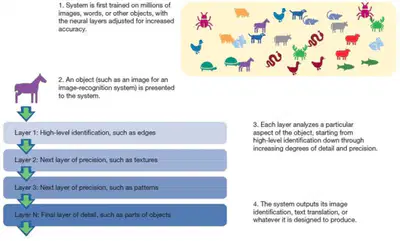
Copyright © 2024, 2020, 2017 Pearson Education, Inc. All Rights Reserved
Exhibit 6.6
Deep Learning
56


Copyright © 2024, 2020, 2017 Pearson Education, Inc. All Rights Reserved
Applying What You’ve Learned (1 of 2)
1. Highlight the contributions small businesses make to the
U.S. economy.
2. List the most common reasons people start their own
companies, and identify the common traits of successful
entrepreneurs.
3. Explain the importance of planning a new business, and
outline the key elements in a business plan.
4. Identify the major causes of business failures, and
identify sources of advice and support for struggling
business owners.
57


Copyright © 2024, 2020, 2017 Pearson Education, Inc. All Rights Reserved
Applying What You’ve Learned (2 of 2)
5. Discuss the principal sources of small-business private
financing.
6. Explain the advantages and disadvantages of
franchising.
7. Define machine learning and deep learning, and
describe their importance to contemporary business.
58


Copyright © 2024, 2020, 2017 Pearson Education, Inc. All Rights Reserved
Copyright
This work is protected by United States copyright laws and is
provided solely for the use of instructors in teaching their
courses and assessing student learning. Dissemination or sale of
any part of this work (including on the World Wide Web) will
destroy the integrity of the work and is not permitted. The work
and materials from it should never be made available to students
except by instructors using the accompanying text in their
classes. All recipients of this work are expected to abide by these
restrictions and to honor the intended pedagogical purposes and
the needs of other instructors who rely on these materials.
Business in Action: Thriving in the Digital
Enterprise
Tenth Edition
Chapter 6
Entrepreneurship and
Small-Business
Ownership
Copyright © 2024, 2020, 2017 Pearson Education, Inc. All Rights Reserved
Show answer
Auto Play
Slide 1 / 58
SLIDE
Similar Resources on Wayground

52 questions
APUSH 7.7, 7.8
Presentation
•
11th Grade
56 questions
G12 - Operations strategy
Presentation
•
12th Grade - University
54 questions
BUS 101 Part 1
Presentation
•
University
49 questions
L2 - Project Life Cycle (ITPM)
Presentation
•
12th Grade
51 questions
Info Sec Managment L4-Security Standards, Frameworks & Reg
Presentation
•
University
52 questions
Topic 3: Establishment of Travel and Tour Business
Presentation
•
12th Grade
54 questions
Great Depression & New Deal Review
Presentation
•
11th Grade
55 questions
Chesapeake Colonies Notes
Presentation
•
12th Grade - University
Popular Resources on Wayground
10 questions
Safety Day 2026 – Student Review

Quiz
•
9th Grade
21 questions
Continents and Oceans
Quiz
•
6th Grade
20 questions
Parts of Speech
Quiz
•
5th Grade
16 questions
Subject & Predicate
Quiz
•
5th Grade
25 questions
Multiplication Facts
Quiz
•
5th Grade
12 questions
Map Skills
Quiz
•
3rd Grade
22 questions
Continents and Oceans
Quiz
•
5th Grade
15 questions
Rounding Decimals
Quiz
•
5th Grade