IB Psych Analyzing IA data
Presentation
•
Social Studies
•
11th Grade
•
Easy
Tanya HS]
Used 8+ times
FREE Resource
48 Slides • 18 Questions
1
2
Multiple Choice
3
Multiple Choice
____________refers to the extent to which the !findings can move from one context to another. This is a similar concept to generalizability as the “context” may refer to a setting or participants outside the original study.
credibility
generalizability
triangulation
transferability
4
Multiple Choice
What are observations made using our five senses called?
Qualitative data
Quantitative data
5
Multiple Choice
Independent measures designs have the problem of participant variability. What does this mean?
Participants are not the same as the general population and the results cannot be generalized.
Participants drop out of the study because of boredom.
Participants have different levels of skill, so some understand the directions better than others.
Differences in the traits and past experiences of the participants in each condition may affect the results of the study.
6
Multiple Choice
Which of the following is not true of a repeated measures design?
Fewer participants are needed than for an independent samples design.
Participants are less likely to show demand characteristics than in an independent samples design.
Participant variables are controlled.
Participants are more likely to show order effects - such as improvement of a skill through practice - than in an independent samples design.
7
Multiple Choice
A researcher wants to find out if talking on a hands-free mobile phone affects one's driving ability. Participants were asked to take a driving test in a driving simulator that monitored their mistakes. In one condition, the participants were asked simply to take the driving test. In the second condition, the participants were asked to dial up a friend and to have a conversation while taking the driving test. Half the group did the first condition and half the group did the second condition. Then both groups took a one-hour break before taking the test again - but in the other condition. What is the best description of the design of this study?
A longitudinal case study
A counterbalanced independent samples design
A counterbalanced repeated measures design
A counterbalanced matched pairs design
8
9
Open Ended
Is this study an experiment? Why or why not?
10
Open Ended
What type of sample was used? Could this sample be biased? How might this affect the results?
11
Open Ended
What was the control group used in this study? Was this a good choice?
12
Open Ended
What is one limitation of this study?
13
Open Ended
What other examples of behavior can you think of that this study might explain?
14
Multiple Choice
The ethical guideline for research in which participants must agree to be a part of the study is known as
Informed consent
Confidentiality
Free from harm
Debriefing
15
Multiple Choice
Choose the type of experiment that has the highest reliability.
Laboratory experiment
Field experiment
Natural experiment
16
Multiple Choice
The names of the participants in a research experiment must be kept secret is an ethical guideline known as
Debriefing
Free from harm
Informed Consent
Confidentiality
17
18
19
20
21
22
23
24
25
26
27
Multiple Choice
A carefully worded statement of the exact procedures used in a research experiment is known as
replication
operational definition
hypothesis
standardization
28
Multiple Choice
The level of difficulty of psychology is significantly different to the level of difficulty of biology. This is an example of a....
2 Tailed Hypothesis
1 Tailed Hypothesis
Null Hypothesis
29
Multiple Choice
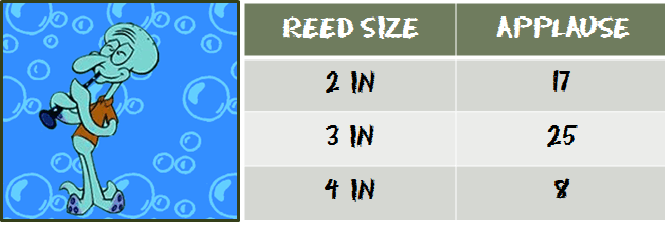
What was the dependent variable?
30
Multiple Choice
Choose the type of experiment that has the highest ecological validity.
Laboratory experiment
Field experiment
Natural experiment
31
The assessment criteria
5-6 Marks
Descriptive and inferential statistics are appropriately and accurately applied.
The graph is correctly presented and addresses the hypothesis.
The statistical findings are interpreted with regard to the data and linked to the hypothesis.
32
Tips for doing well on your analysis
Tip 1: Discuss the data.
In the analysis, you must describe the data that you obtained. Were there outliers? Why do we think that those outliers exist? Maybe there is a bimodal distribution of the data. Why might that be true? It may also be that there is a difference between the two groups, but the data is not significant. Why might that be true? What if the data is significant but the researchers feel that they cannot discount that other factors may have influenced the data? Could it be that the results are mathematically significant but perhaps not a good predictor of behavior?
Tip 2: If you have nothing to say about it, leave it out.
You will need to put a table with appropriate descriptive statistics (mean, median, mode) as well as a measure of distribution (range, standard deviation, variance) to describe your data. You do not have to include all of the measures of central tendency. If it is not important to understand the data, don't include it. For example, the mode of the number of words remembered from a list is probably not highly important - so do not include it.
33
Tips for doing well on your analysis
Tip 3: The graph must reflect the hypothesis.
The reader should be able to read your hypothesis and then flip to your graph and see your results. Please remember that there should be one graph. You should not include, for example, graphs that show gender differences, even if that data looks interesting. It is also important that you do not simply graph all of your raw data. Your graph should "answer the research question."
Tip 4: End the analysis with a statement of conclusion that reflects the hypothesis and addresses the target population.
Finally, the report should end with a conclusion. The conclusion should clearly state what was found. A typical conclusion might look like this:
Example: As a result of our study, we can conclude at a p ≤ 0.01 level of significance that playing music while trying to rehearse a list of 40 words has a negative effect on international teenagers' recall.
34
Becareful
Because of the importance of the word "significance" in experimental research, please be careful that you do not use it in any other manner other than to discuss inferential statistics. It is inappropriate to write in your descriptive statistics section that the means are significantly different, without having applied inferential statistics to know if this is true.
35
36
37
38
39
40
41
42
43
44
45
46
47
48
49
50
51
52
53
54
55
56
57
58
59
60
61
62
63
64
65
66
Show answer
Auto Play
Slide 1 / 66
SLIDE

Similar Resources on Wayground
60 questions
Israeli- Palestinian Conflict
Lesson
•
10th Grade
60 questions
How Hertz produced Radiowaves
Lesson
•
11th Grade
63 questions
EOC Standard 2 Review
Lesson
•
11th Grade
61 questions
Greece
Lesson
•
KG
62 questions
Honors US2 Final Exam Review 2025
Lesson
•
11th Grade
63 questions
2022: Mobilization of the U.S.
Lesson
•
10th Grade
61 questions
Federal Spending
Lesson
•
11th - 12th Grade
61 questions
M1.1 BRIEF HISTORY OF PHILIPPINE ARTS
Lesson
•
12th Grade
Popular Resources on Wayground
10 questions
5.P.1.3 Distance/Time Graphs
Quiz
•
5th Grade
10 questions
Fire Drill
Quiz
•
2nd - 5th Grade
20 questions
Equivalent Fractions
Quiz
•
3rd Grade
15 questions
Hargrett House Quiz: Community & Service
Quiz
•
5th Grade
20 questions
Main Idea and Details
Quiz
•
5th Grade
20 questions
Context Clues
Quiz
•
6th Grade
20 questions
Inferences
Quiz
•
4th Grade
15 questions
Equivalent Fractions
Quiz
•
4th Grade
Discover more resources for Social Studies
37 questions
Review - Pretest
Quiz
•
9th - 12th Grade
39 questions
Unit 7 Key Terms
Quiz
•
11th Grade - University
15 questions
Credit Ratings and Credit Scores
Quiz
•
11th Grade
41 questions
Unit 8 Key Terms
Quiz
•
11th Grade - University
5 questions
10.3 DOL Resource Management
Quiz
•
9th - 12th Grade
30 questions
Review
Quiz
•
11th Grade
59 questions
US History EOC Review
Quiz
•
11th Grade