

Principles of Design

Presentation
•
Other
•
University
•
Practice Problem
•
Easy

KHO CHUNG WEI IPG-Pensyarah
Used 1+ times
FREE Resource
10 Slides • 6 Questions
1
Designing a Digital-based Language Teaching Activity for CALT: Principles of Design
Kho Chung Wei
TSLB3463
2
To be successful in this topic, I can:
Apply the six principles to design a digital-based language teaching activity
CALT
TSLB3463
3
Open Ended
What does "authentic" mean to you?
4
1: Authenticity
Learners perceived the task as related to the real world.
An authentic task is one whose topic, process, content, or other element learners perceive they will use outside of class in their real world or that parallels or replicates real functions beyond the classroom.
Students who perceive a task’s how and why will also be
more attentive and more motivated to learn.
Even grammar drills and practice can be engaging if learners see them as enabling them to use language outside of the classroom.
CALT
TSLB3463
5
Open Ended
What type of learning task will engage your interest? Do you think it'll be the same for young learners?
6
2: Engagement
Interesting = one or more aspects of the task hold deep interest for learners
Input that is interesting and meaningful is more likely to become actual language intake and be processed by the learner than input that is uninteresting and unconnected to students’ lives.
Many teachers do not know what their students are interested in, but they can find out and integrate the ideas into tasks.
CALT
TSLB3463
7
Open Ended
In a digital learning environment, how do you think we can provide opportunities for learners to interact with each other? Apart from fellow learners, who else could they interact with?
8
3: Interaction Opportunities
Opportunities for social interaction = conversation, cooperation, and / or collaboration with peers, teachers, experts, and others
Social interaction holds special significance for engaging language tasks because it is a main feature of both engagement and language learning.
The interaction is based on two-way give and take rather than one way where either only one person is talking or no one is listening and responding.
Technology has evolved since pandemic to provide a creative, responsive interactive environment.
CALT
TSLB3463
9
Open Ended
Why is it important for us (teachers) to strike a balance in giving challenging tasks that students have the skills to complete? Why can't we just give an easy task?
10
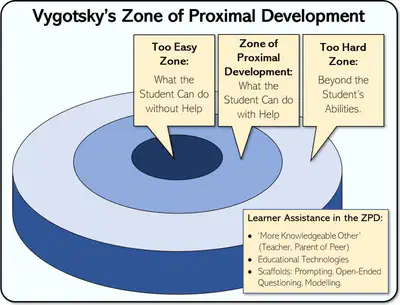
4: Support Challenge/Skills Balance
Includes choices of challenge
The amount of stress or pressure that helps students learn effectively is different for each person.
Language learners should feel comfortable enough to take risks with the target language, but they should not be put to sleep by
overly simple-minded tasks and exercises.
Educators can create optimal stress (eustress or good stress) by matching the degree of difficulty, or challenge, to the students’ skills (Cziksentmihalyi, 1990), giving them enough difficulty to keep their attention while providing them with tasks that are possible to complete.
CALT
TSLB3463
11
4: Support Challenge/Skills Balance
CALT
TSLB3463
12
Poll
Which do you prefer when learning a language?
Teacher provides you with a rigid structure/aspect to follow.
Teacher allows you some freedom in choosing certain aspects when learning the skill.
Teacher allows you total freedom in learning the skills.
13
5: Support Autonomy/Structure Balance
Includes choices of task aspects
Many language classes push learners along a rigid schedule requiring a certain number of book chapters, exercises, and essays in a given amount of time.
This teacher-directed syllabus may be effective for some students, but it may ignore the needs of others.
Allowing learners to control some aspects of a task can make them much more likely to engage.
CALT
TSLB3463
14
Open Ended
Recall your own language learning experience. What is an effective "help" or "guidance" or "assistance" given by the teacher when you are learning a skill or completing a language task?
15
6: Scaffolding
Effective scaffolding (a range of resources, including just-in-time feedback)
Feedback is an important aspect of both language learning and engagement.
Some students work more slowly than others, and some need more or less guidance for different tasks.
Giving students the right amount of time and administering appropriate feedback are among the most difficult but also most important conditions to meet.
CALT
TSLB3463
16
Tutorial Task
Think about your CALT project.
How would you apply all the six principles that you have just learned in designing your digital-based language teaching-learning kit? Explain it in any written form of your choice.
CALT
TSLB3463
Designing a Digital-based Language Teaching Activity for CALT: Principles of Design
Kho Chung Wei
TSLB3463
Show answer
Auto Play
Slide 1 / 16
SLIDE
Similar Resources on Wayground

11 questions
PARAGRAPH STRUCTURE
Presentation
•
University
12 questions
How to Use Quizizz
Presentation
•
University
13 questions
BLOCK 4 TTP COORDINATION
Presentation
•
University
8 questions
Unit 103 - Lesson 12
Presentation
•
KG - University
14 questions
Workshop
Presentation
•
University
14 questions
ALL ABOUT NU
Presentation
•
University
14 questions
Ejemplo de Lección
Presentation
•
University
11 questions
Reading tips
Presentation
•
12th Grade
Popular Resources on Wayground
20 questions
Math Review

Quiz
•
3rd Grade
15 questions
Fast food
Quiz
•
7th Grade
20 questions
Context Clues
Quiz
•
6th Grade
20 questions
Inferences
Quiz
•
4th Grade
19 questions
Classifying Quadrilaterals
Quiz
•
3rd Grade
20 questions
Figurative Language Review
Quiz
•
6th Grade
20 questions
Equivalent Fractions
Quiz
•
3rd Grade
10 questions
Identify Fractions, Mixed Numbers & Improper Fractions
Quiz
•
3rd - 4th Grade
Discover more resources for Other
20 questions
Guess The App
Quiz
•
KG - Professional Dev...
11 questions
NFL Football logos
Quiz
•
KG - Professional Dev...
19 questions
Minecraft
Quiz
•
6th Grade - Professio...
40 questions
8th Grade Math Review
Quiz
•
8th Grade - University
20 questions
Block Buster Movies
Quiz
•
10th Grade - Professi...
10 questions
Would you rather...
Quiz
•
KG - University
40 questions
Flags of the World
Quiz
•
KG - Professional Dev...
14 questions
Superhero
Quiz
•
1st Grade - University