Physics Review Kinematics & Dynamics
Presentation
•
Physics
•
11th Grade
•
Medium
llanham summitt
Used 1+ times
FREE Resource
18 Slides • 151 Questions
1
Physics Review Mechanics
Kinematics and Dynamics
2
Position, Distance, and Displacement
Position is a location that can be described by coordinates (x,y)
Distance is measurement between two positions
Examples: Walking from home (zero) to the school and back 1000 m
Or
Falling from a plane (zero) to the ground 30,000 ft below.
Displacement is a change in position of an object. It is independent of the path taken. Displacement is given the designation s, Dx Dy or Dz
No displacement from home! Blown out of straight line by the winds as the object falls.
3
Speed is a scalar quantity describing distance traveled in a specified time.
Average Speed = Total distance / total time
Scalar quantities have magnitude only.
speed
Velocity is a vector quantity. It describe displacement with relation to time.
Vector quantities have magnitude and direction.
V = s/t = Dx/Dt = vf +vi / 2
Average Velocity need not equal average speed.!
Velocity
4
Graphing Velocity
The slope of a line on a position-time graph is the average velocity.
The slope of a tangent is the instantaneous velocity.
The area under the line on a velocity- time graph gives the displacement.
5
Vectors can be added or subtracted graphically or by breaking each vector into components and adding or subtracting components and then using Pythagorean theorem.
Vector Math
If the stream is 120 m wide how long will it take the person to get across the stream?
Remember that the person is rowing straight across at a rate of 8.0 km/hr.
V = 8km/hr d = 0.120 km
v = d/t
Vt = d
t = d/v
t = 0.120 km/8 km/hr
t = .015 hr (60min/hr) = 0.9min
The problem is that the person will not end up directly across from where they started unless they compensate for drift. They will be 90 m down stream.
6
When acceleration is constant and in a straight line we call it uniform linear acceleration.
Rearranging the equation for average velocity we get vf = v0 +at.
In this case average and instantaneous velocity are equal.
Uniform linear acceleration
Acceleration is a change in velocity over a specified time period.
aavg = vf-vo / t.
A negative sign indicates acceleration in the negative direction or a deceleration.
If v and a are the same the object is accelerating if they are different it is decelerating.
The slope of a velocity time graph gives the average acceleration..
Acceleration
ACCELERATION
7
If the acceleration is in the positive direction and slowing down or in the negative direction and speeding up then acceleration is negative.
If the acceleration is positive direction and speeding up or negative and slowing down then the acceleration is positive.
SIGNS OF ACCELERATION
8
Remember that x is displacement- it can be in the x, y, or z directions.
If displacement is in the y direction a is g or 9.81m/s^2
DERIVED EQUATION
9
Free Fall
When an object falls with acceleration due to gravitational force and experiences no other significant forces this is known as free-fall
Earth’s gravitational force causes free-fall at the rate of 9.8 m/s2
DIRECTION must be defined at the beginning of each problem and by convention we assign up as positive; therefore acceleration due to gravity is -9.8 m/s2 and is designated g
10
Frame of reference is determined by the choice measurement being compared to. If applying Newtons laws the inertial frame of reference must be used.
Relative Frame of reference (if you throw a ball up while on a turning bus it will not come down where expected).
Inertial frame of reference (not accelerating or rotating)
Frame of Reference
11
A Projectile is any object that is thrown by any means. There are 3 basic situations: objects thrown vertically
Objects thrown horizontally from a height, and objects thrown at an angle
Key concepts are: horizontal movement is totally independent of vertical movement, both movements are vector quantities, the velocities are perpendicular to each other, there is a resultant velocity.
2 D Kinematics
12
Objects that are thrown or launched follow a two-dimensional path known as a trajectory.
Because the vertical and horizontal motion of a projectile are independent of each other we can analyze them separately using equations for linear velocity and acceleration.
PROJECTILES
2 D Motion
13
Any object that follows a curved path with a vertical and horizontal change in velocity is known as a projectile and the motion is projectile motion.
If air resistance is neglected, the initial and final horizontal velocity are equal and the angle of projection equals the angle of impact.
Projectiles follow a parabolic path.
PROJECTILE MOTION
p
14
A projectile launched at 300 with an initial velocity of 10 m/s. Its horizontal velocity is 10 m/s (cos 300) = 8.7 m/s.
This is the horizontal velocity of the projectile throughout the trajectory.
The horizontal velocity of a projectile remains constant if air resistance is neglected.
Vx = x/t.
Horizontal Motion of a Projectile
The horizontal component, x, is constant like the motion on a surface. (Vh or Vx are used for horizontal velocity. If we ignore air friction the horizontal velocity applied to the object at the start will remain unchanged unless acted on by another object or force)
vix = vfx ax = 0 x = vx t
15
Verticle components of Projectiles
16
These projectiles have highly symmetric characteristics of motion.
Definition: The trajectory is the path traveled by any projectile. It is plotted on an x-y graph.
Mathematically, the path is defined by a parabola.
Definition: The RANGE of the projectile is how far it travels horizontally.
The MAXIMUM HEIGHT of the projectile occurs when it stops moving upward.
For a projectile launched over level ground, the maximum height occurs halfway through the flight of the projectile Launch angle is symmetric with landing angle for a projectile launched over level ground.
Acceleration points down at 9.8 m/s2 for the entire trajectory of all projectiles.
17
Resolve the vector into its components 1st.
v becomes
vx cos Θ
vy sin Θ
18
Change in angular position.
s = Δθ r
1 rev = 3600 = 2πrad θ is described in radians by definition
θ = s/r where s is the arc length and r is the radius
Linear & Angular Analogy
19
Multiple Choice
Which description best describes the velocity of an object in uniform circular motion?
It changes magnitude and is tangent to the circle.
It constantly changes magnitude and direction.
It changes direction and is tangent to the circle.
It changes magnitude and is towards the center of the circle.
20
Multiple Choice
A 12.0 g rubber ball on the end of a 0.75 m string is swung in a horizontal circle. It travels at 3.4 m/s.
What is the centripetal acceleration of the ball?
15 s2m
4.5 s2m
0.18 s2m
41 s2m
21
Multiple Choice
Two bowling balls each have a mass of 6.8 kg. The balls are 0.218 m apart.
What is the gravitational force between the two bowling balls?
G = 6.67 x 10⁻¹¹
6.5 x 10⁻⁸ N
1 N
4 x 10⁻⁹ N
1.03 x 10⁻⁸ N
22
Multiple Choice
A runner is running around a circular track. The track has a diameter of 15 meters. How many meters, in total, does the runner run when it completes one loop?
Depends on how long it takes him to run the loop
47.12 meters
94.25 meters
176.71 meters
23
Multiple Choice
What effect does changing the length of a pendulum have on its period?
The period increases with increasing length
The period decreases with increasing length
The period remains the same regardless of the length
The period is unpredictable with changing length
24
Multiple Choice
25
Multiple Choice
26
Multiple Choice
27
Multiple Choice
The value of g for Jupiter is 24.79 m/s². What is the period of a pendulum that has a length of 2.00 meters?
1.78 s
2.52 s
44.2 s
1.26 s
28
Multiple Choice
If a pendulum has 20 J of potential energy at point 1, how much kinetic energy will it have a point 3?
0 J
10 J
20 J
30 J
29
Multiple Choice
Where does a pendulum have maximum kinetic energy?
at the bottom of its arc
at the end of its swing
as it rises up
as it falls
30
Multiple Choice
A spring oscillates 555 times in 13.2 seconds. What is it's frequency?
42 Hz
0.02 Hz
31 Hz
26 Hz
31
Multiple Choice
What is the period of a pendulum on a 0.12 m long string with a 2 kg mass attached to it?
0.69 s
1.54 s
1.44 s
0.039 s
32
Multiple Choice
A spring has a spring constant of 6 N/m. If a force of 2.5 N is used to stretch the spring, how far does it stretch?
0.81
15 m
2.4 m
0.42 m
33
Multiple Choice
A spring is compressed a distance of 9.56 m, using a force of 272 N. What is the spring constant of this spring?
0.04 N/m
28.45 N/m
2600 N/m
51.27
34
Multiple Choice
A spring starting at the resting position is compressed a distance of 0.87m. If the spring constant is 1500 N/m, what is the work required to compress the spring?
-461 J
-284 J
+567 J
+782 J
35
Multiple Choice
What is the work required to stretch a spring 0.67 m if it has a spring constant of 412 N/m from it's resting position?
+92.47 J
-92.47 J
+0.01 J
-0.01 J
36
Multiple Choice
37
Multiple Choice
38
Multiple Choice
Find the magnitude of the torque formula if produced by a 22.0 N force applied to a door at a 30 degree from the perpendicular distance of .005 km from the hinge.
T=Frsin𝞡
T=Frcos𝞡
Tnet=0
T/r=F
39
Multiple Choice
40
Multiple Choice
41
Multiple Choice
42
Multiple Choice
A circular object of radius R has an angular velocity of k rad/s. The angular velocity at a point R/2 is:
2k rad/s
k/2 rad/s
k2 rad/s
k rad/s
43
Multiple Choice
A force of 50-N is applied to a 4 kilogram mass. The acceleration of the object is:
200 m/s2
12.5 m/s2
54 m/s2
46 m/s2
44
Multiple Choice
45
Multiple Choice
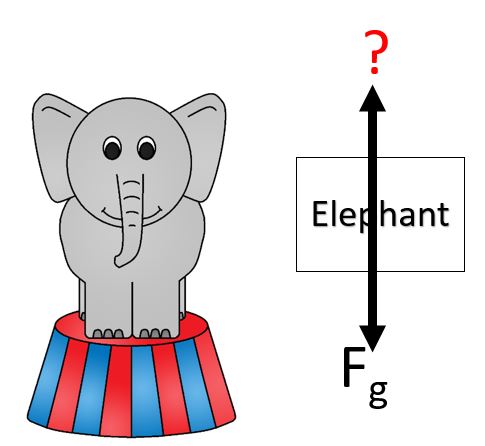
Name the missing force
weight
normal force
applied force
friction
46
Multiple Choice
As the angle of the incline increases, what happens to the normal force?
The normal force increases
The normal force decreases
The normal force is not affected by the incline
The normal force is only dependent on the force due to gravity
47
Multiple Choice
48
Multiple Choice
Which of the following is not true about the system?
T3 is equal to the scalar sum of the magnitudes of T2 and T1
T3 is equal in magnitude to Fg
The x- components of the T1 and T2 and equivalent but in opposite directions
The system is in equilibrium.
49
Multiple Choice
A man standing on a scale in an elevator notices that the scale reads 40 newtons greater than his normal weight. Which type of movement of the elevator could cause this greater-than-normal reading?
accelerating upward
accelerating downward
moving upward at a constant speed
moving downward at a constant speed
50
Multiple Choice
SI unit for distance
miles
centimeters
meters
inches
51
Multiple Choice
A stone is falling through the air. The acceleration of free fall is 10 m/s2. Ignoring air resistance, what happens to the stone each second during its fall?
The acceleration of the stone increases by 10 m/s2.
The speed of the stone increases by 10 m/s.
The stone travels a distance of 10 m.
The stone travels at a speed of 10 m/s.
52
Fill in the Blank
What is the acceleration of the object that is speeding up? (include units)
53
Multiple Choice
Given the FBD, which of the following must be true?
The frictional force must be accelerating the system to the left.
The box must be accelerating to the right.
The box must be moving to the right.
The FBD is incorrectly drawn. This situation isn't possible
54
Fill in the Blank
What is the acceleration of the object that is slowing down? (include units in your answer)
55
Multiple Choice
A mass of 2.5 kg falls from rest. It would be correct to say that _______________.
it falls with a constant acceleration of 25 m/s2
it falls with a constant acceleration of 10 m/s2
it falls with a constant acceleration of 4 m/s2
it falls with a constant velocity of 10 m/s2
56
Fill in the Blank
What is the distance travelled by the object that made this graph? (include units in your answer)
57
Multiple Choice
SI unit for time
seconds
minutes
hours
days
58
Fill in the Blank
What is the distance travelled by the object that made this graph? (include units in your answer)
59
Multiple Choice
60
Multiple Choice
What is the magnitude and direction of the net force?
10 N to the Right
10 N to the Left
0 N
8 N to the Left
61
Multiple Choice
62
Multiple Choice
Formula for velocity
v = d*t
v = d/t
v = m*t
v = m/t
63
Multiple Choice
64
Multiple Choice
65
Multiple Choice
66
Multiple Choice
Formula for acceleration
a = (vf-vo)/t
a = t/(vf-vo)
a = t*(vf-vo)
a = t*d
67
Multiple Choice
68
Multiple Choice
Calculate the net force acting upon the object.
10N, north
20N, south
10N, south
22.4N, north
69
Multiple Choice
70
Multiple Choice
SI unit for mass
kilograms
grams
pounds
ounces
71
Multiple Choice
72
Multiple Choice
By what factor will the kinetic energy of an object increase if the velocity of the object is tripled?
The kinetic energy will stay the same.
3
6
9
73
Multiple Choice
74
Multiple Choice
SI unit for force
Joules
Watts
Newtons
meters
75
Multiple Choice
The sum of all forces acting on an object is called:
Contact Force
Balanced Force
Unbalanced Force
Net Force
76
Multiple Choice
Formula for force
F = m*a
F = m/a
F = d*a
F = d/a
77
Multiple Choice
78
Multiple Choice
SI unit for energy
Joules
Watts
Newtons
meters
79
Multiple Choice
An object in motion...
must have balanced forces
must have unbalanced forces
must be accelerating
will stay in motion unless acted on by an unbalanced force
80
Multiple Choice
Formula for work
W = F*d
W = F/d
W = F*m
w = F/m
81
Multiple Choice
82
Multiple Choice
Formula for kinetic energy
KE = m*g*y
KE = 21 m*v^2
KE = F*d
KE = W/t
83
Multiple Choice
Name the missing force
Friction
Gravity
Applied force
Normal force
84
Multiple Choice
Formula for potential energy
U = m*g*y
U = 21 m*v^2
U = F*d
U = W/t
85
Multiple Choice
86
Multiple Choice
Formula for spring constant
k = -F/d
k = F/d
k = -F*d
k = F*d
87
Multiple Choice
What is the net force of the block?
8N, right
2N, right
8N, left
2N, left
88
Multiple Choice
Formula for elastic potential energy
Us = m*g*y
Us = 21 k*x^2
Us = F*d
Us = W/t
89
Multiple Choice
An object is thrown vertically upward with an initial speed of 15 m/s. What is the total time in the air?
3 second
1.5 seconds
5 seconds
3.5 seconds
90
Multiple Select
Formula for total mechanical energy
TME = Ki-Kf+Ugi-Ugf+Usi-Usf+W
TME = W
TME = Ki+Kf+Ugi+Ugf+Usi+Usf+W
TME = Ki-Kf-Ugi-Ugf-Usi-Usf-W
91
Multiple Choice
If there are two forces pushing an object in the same direction, how do you find the net force on the object?
Subtract
Add
Multiply
92
Multiple Choice
SI unit for power
Watts
Joules
Newtons
Meters
93
Multiple Choice
94
Multiple Choice
Formula for power
P = W/t
P = E/t
P = W*t
P = E*t
95
Multiple Choice
What is force?
A push exerted on an object
A push or pull exerted on an object
A pull exerted on an object
What an object feels
96
Multiple Choice
Definition of work
The amount of energy transferred when an object is moved over a distance by an external force in regards to the direction of the displacement.
The rate of energy transferred per second
The amount of energy transferred in motion
The amount of energy an object has at rest / before motion
97
Multiple Choice
Which of the following statements is true about the image above?
The accelerations of the blocks will vary according to their mass
The net force acting on each block is the same
The blocks will experience the same acceleration
The 3m box will eat the 2m and the m boxes
98
Multiple Choice
Definition of power
The amount of energy transferred when an object is moved over a distance by an external force in regards to the direction of the displacement.
The rate of energy transferred per second
The amount of energy transferred in motion
The amount of energy an object has at rest / before motion
99
Multiple Choice
The force that pulls objects toward the Earth
Speed
Gravity
Normal
Thrust
100
Multiple Choice
Definition of kinetic energy
The amount of energy transferred when an object is moved over a distance by an external force in regards to the direction of the displacement.
The rate of energy transferred per second
The amount of energy transferred in motion
The amount of energy an object has at rest / before motion
101
Multiple Choice
102
Multiple Choice
Definition of potential energy
The amount of energy transferred when an object is moved over a distance by an external force in regards to the direction of the displacement.
The rate of energy transferred per second
The amount of energy transferred in motion
The amount of energy an object has at rest / before motion
103
Multiple Choice
Given the FBD, which of the following must be true?
The frictional force must be accelerating the system to the left.
The box must be accelerating to the right.
The box must be moving to the right.
The FBD is incorrectly drawn. This situation isn't possible
104
Multiple Choice
An 8-kg object is raised by a crane to the top of a building 20-meters in height. If it takes 50 seconds for the object to get to the top of the building, then how much power was needed?
1600 watts
3.2 watts
32 watts
200 watts
105
Multiple Choice
Which of the following statements is true about the image above?
The accelerations of the blocks will vary according to their mass
The net force acting on each block is the same
The blocks will experience the same acceleration
The 3m box will eat the 2m and the m boxes
106
Multiple Choice
107
Multiple Choice
Sam is hover boarding down they hall at a constant velocity. Assuming there is friction, which of the following must be true?
The force applied by the board must be greater than the frictional force
The frictional force must equal the force applied by the board
The force applied must equal zero
There is not enough information
108
Multiple Choice
Which of the following is not true about the system?
T3 is equal to the scalar sum of the magnitudes of T2 and T1
T3 is equal in magnitude to Fg
The x- components of the T1 and T2 and equivalent but in opposite directions
The system is in equilibrium.
109
Multiple Choice
110
Multiple Choice
111
Multiple Choice
112
Multiple Choice
A kg-m2/s2 is otherwise known as a(n)
Newton
Joule
Watt
Displacement
113
Multiple Choice
114
Multiple Choice
A man standing on a scale in an elevator notices that the scale reads 40 newtons greater than his normal weight. Which type of movement of the elevator could cause this greater-than-normal reading?
accelerating upward
accelerating downward
moving upward at a constant speed
moving downward at a constant speed
115
Multiple Choice
116
Multiple Choice
If the gravitational force between two masses is F, then by what factor would the distance between the two object need to change if the mass of one of the objects is doubled in order for the force to remain the same?
4
2
21/2
61/2
117
Multiple Choice
118
Multiple Choice
A man weighing 800 Newtons is standing in an elevator. If the elevator rises with an acceleration of 0.5 meters per second2, the force exerted by the elevator on the man will be
400 N
800 N
1200 N
1000 N
119
Multiple Choice
120
Multiple Choice
A rocket of mass m begins to ascend vertically at v m/s. The work that gravity does on the rocket is:
Negative
Zero
Positive
Undefined
121
Multiple Choice
122
Multiple Choice
A car travels up a hill at constant speed. Which of the following diagrams best represents the forces acting on the car at this instant?
123
Multiple Choice
124
Multiple Choice
The area under a force-time curve represents:
Change in potential energy
Change in momentum
Change in force
Change in torque
125
Multiple Choice
126
Multiple Choice
127
Multiple Choice
128
Multiple Choice
A circular object of radius R has an angular velocity of k rad/s. The angular velocity at a point R/2 is:
2k rad/s
k/2 rad/s
k2 rad/s
k rad/s
129
Multiple Choice
130
Multiple Choice
The magnitude of the horizontal component of F is:
Fx =30 N
Fx =40 N
Fx =3 N
Fx =4 N
131
Multiple Choice
132
Multiple Choice
Two forces are acting on an object; a horizontal force of 8.3 Newtons and a vertical force of 5.4 Newtons. The magnitude of the resultant force is about:
13.7 Newtons
2.9 Newtons
9.9 Newtons
6.3 Newtons
133
Multiple Choice
134
Multiple Choice
135
Multiple Choice
The magnitude of the vertical component of F is:
Fy =30 N
Fy =40 N
Fy =4 N
Fy =3 N
136
Multiple Choice
137
Multiple Select
If a system is in static equilibrium, it must have the following 2 conditions:
∑τ=0
Constant acceleration
∑F=0
Positive forces only
138
Multiple Choice
139
Multiple Choice
A horizontal, uniform board of weight 125 N and length 4 m is supported by vertical chains at each end. A person weighing 500 N is sitting on the board. The tension in the right chain is 250 N. What is the tension in the left chain?
250 N
375 N
500 N
625 N
875 N
140
Multiple Choice
141
Reorder
Rank the magnitude of the torque the signs exert about the point at which the rod is attached to the side of the building. From Greatest to Least.
B
D
C
A
142
Multiple Choice
143
Multiple Choice
144
Multiple Choice
A block of weight W is pulled along a horizontal surface at constant speed v by a force F, which acts at an angle Θ with the horizontal, as shown. The normal force exerted on the block by the surface has magnitude_____.
greater than W
greater than 0 but less than W
equal to W
0
145
Multiple Choice
146
Multiple Choice
Taylor wants to test the effect of friction. She places a block on a plank and raises one end so that the plank is inclined. What is the maximum angle that incline can have before the block begins to accelerate if the coefficient of friction is 0.7?
46°
10°
35°
44°
147
Multiple Choice
148
Multiple Choice
Rank the tensions experienced by the strings.
TA > TB > TC
TB > TA = TC
TB > TC > TA
Cannot be determined
149
Multiple Choice
150
Multiple Choice
Refer to the picture to answer the following question. If M = 1kg, what is the acceleration of the masses? Assume the surface is frictionless.
a = 4.67m/s2
a = 6.67m/s2
a = 2.67m/s2
a = 1.33m/s2
151
Multiple Choice
152
Multiple Choice
Refer to the picture to answer the following question. If M = 1kg, what is the tension in the rope? Assume the surface is frictionless.
FT = 20.0N
FT = 0.67N
FT = 10.7N
FT = 13.3N
153
Multiple Choice
Will launches a catapult that changes the velocity of a ball (m= 2 kg) from 0 to 10 m/s. What is the average force that is exerted on the ball during launch?
154
Multiple Choice
155
Multiple Choice
156
Multiple Choice
A pendulum swinging with a maximum amplitude of π/6 has a period of T. If the maximum amplitude is increased to π/3, what is the new period of the pendulum?
T/4
T/2
T
2T
157
Multiple Choice
158
Multiple Choice
I. period
II. amplitude
III. mass
159
Multiple Choice
160
Multiple Choice
161
Multiple Choice
162
Multiple Choice
A spring-block simple harmonic oscillator is set up so that the oscillations are vertical. The period of the motion is T. If the spring and block are taken to the surface of the Moon, where the gravitational acceleration is 1/6 of its value here, then the vertical oscillations will have a period of
6T
3T
6T
T
163
Multiple Choice
164
Multiple Choice
A block with a mass of 20 kg is attached to a spring with a spring constant k = 50 N/m. What is the magnitude of the acceleration of the block when the spring is stretched 4 m from its equilibrium position?
4 m/s2
6 m/s2
8 m/s2
10 m/s2
165
Multiple Choice
A block with a mass of 4 kg is attached to a spring on the wall that oscillates back and forth with a frequency of 4 Hz and an amplitude of 3 m. What would the frequency be if the block were replaced by one with one-fourth the mass and the amplitude of the block is increased to 9 m?
4 Hz
8 Hz
12 Hz
24 Hz
166
Multiple Choice
167
Multiple Choice
168
Multiple Choice
169
Multiple Choice
Physics Review Mechanics
Kinematics and Dynamics
Show answer
Auto Play
Slide 1 / 169
SLIDE

Similar Resources on Wayground
159 questions
Untitled Presentation
Lesson
•
12th Grade
158 questions
Enviro Sci Final Review
Lesson
•
9th Grade
168 questions
Présentation sans titre
Lesson
•
KG - University
173 questions
Vocabulaire et salutation
Lesson
•
KG - University
167 questions
Đại số tuyến tính
Lesson
•
University
155 questions
F6 E2 Revision Exercise
Lesson
•
12th Grade
168 questions
F6 E1 on Geological hazards
Lesson
•
12th Grade
Popular Resources on Wayground
15 questions
Fractions on a Number Line
Quiz
•
3rd Grade
10 questions
Probability Practice
Quiz
•
4th Grade
15 questions
Probability on Number LIne
Quiz
•
4th Grade
20 questions
Equivalent Fractions
Quiz
•
3rd Grade
25 questions
Multiplication Facts
Quiz
•
5th Grade
22 questions
fractions
Quiz
•
3rd Grade
6 questions
Appropriate Chromebook Usage
Lesson
•
7th Grade
10 questions
Greek Bases tele and phon
Quiz
•
6th - 8th Grade
Discover more resources for Physics
22 questions
Waves
Quiz
•
KG - University
10 questions
Exploring the Properties of Waves
Interactive video
•
9th - 12th Grade
14 questions
Bill Nye Waves
Interactive video
•
9th - 12th Grade
18 questions
Work, Energy and Power MC Review
Quiz
•
11th Grade
20 questions
Conservation of Momentum
Quiz
•
11th Grade