
Video Frame Rates

Presentation
•
English
•
12th Grade
•
Practice Problem
•
Medium
+2
Standards-aligned

Sergio Herrera
Used 2+ times
FREE Resource
11 Slides • 12 Questions
1
Understanding Frame Rates


2
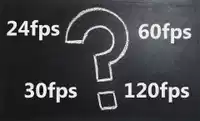
What is video frame rate and what does it mean?
Frame rate refers to the number of individual frames displayed per second in a video.
It affects the smoothness and realism of motion in video content.
3
Multiple Choice
What does video frame rate refer to?
The duration of a video from start to finish.
The number of individual frames displayed per second in a video.
The number of pixels displayed per inch on a screen.
The size of each frame in a video file.
4
Multiple Choice
Why is frame rate important in video editing?
It affects the smoothness and realism of motion in the video.
It determines the resolution of the video.
It controls the brightness and contrast of the video.
It defines the aspect ratio of the video.
5
The more images you have appearing per second, the more flexibility you have with the footage.
Your brain is literally processing double or triple the images, you feel it before you see it.
Consider how it feels to watch high frame rate video game footage as opposed to a movie in a theater.
6
7
Higher Frame Rates (e.g., 60fps): Result in smoother motion and a more realistic appearance.
Lower Frame Rates (e.g., 24fps): Can create a sense of nostalgia or vintage aesthetic.
8
Multiple Choice
Higher Frame Rates Result in smoother motion and a more realistic appearance.
a nostalgic aesthetic
smoother motion and a more realistic experience
a higher resolution
more pixel density
9
24 frames per second (fps): Commonly used in film and narrative filmmaking for a cinematic look. (23.976)
30 frames per second (fps): Standard frame rate for television broadcasts in the United States. (29.97)
60 frames per second (fps): Often used for sports broadcasts and creating smooth motion in high-action scenes and slow motion. (59.96)
10
Multiple Choice
In the film industry, which frame rate is commonly associated with the "cinematic look" ?
15 fps
30 fps
(29.97)
24 fps
(23.976)
60 fps
(59.96)
11
Multiple Choice
Which frame rate is commonly used for live television broadcasts in the United States?
15 fps
30 fps
(29.97)
24 fps
(23.976)
60 fps
(59.96)
12
Multiple Choice
Which frame rate is commonly used for creating slow-motion effects in videos?
15 fps
30 fps
(29.97)
24 fps
(23.976)
60 fps
(59.96)
13
120 Frames per second
240 Frames per second
You can shoot at even high frame rates for smoother slow motion. Some popular Slow Mo frame rates are:
14
15
Sports Broadcasting: Higher frame rates used to capture fast-paced action with clarity.
Narrative Filmmaking: 24fps commonly chosen for the "cinematic look" and emotional impact.
Animation and Motion Graphics: 60fps preferred for smooth motion and fluid transitions.
16
Multiple Choice
______ frame rates used to capture fast-paced action with clarity.
Higher
Lower
Cinematic
Dynamic
17
Multiple Choice
Which frame rate is commonly used for live television broadcasts in the United States?
15 frames per second
30 frames per second
(29.97 fps)
24 frames per second (23.976 fps)
60 frames per second (59.96 fps)
18
Multiple Choice
Which frame rate is commonly used for animation and graphics?
15 frames per second
30 frames per second
(29.97 fps)
24 frames per second (23.976 fps)
60 frames per second (59.96 fps)
19
Matching Frame Rates: Importing clips with consistent frame rates to avoid playback issues. Mismatches cause the video to be jittery.
Frame Rate Conversion: Adjusting frame rates to match project settings for smooth playback.
Time Remapping and Speed Ramping: Techniques for adjusting playback speed and creating dynamic effects. Time remapping allows for adjusting speed dynamically over time.
20
Multiple Choice
What does it mean to conform the frame rate of a video clip in a video editor?
To adjust the aspect ratio of the video clip.
To change the frame rate of the video clip to match the project settings.
To synchronize the audio and video tracks in the clip.
To apply color grading effects to the video clip.
21
Multiple Choice
What can happen if the frame rate of a video doesn't match the frame rate of the display device?
The video will have lower resolution.
The video playback may appear jittery or stutter due to frame rate conversion.
The audio in the video will be out of sync.
The colors in the video will appear distorted.
22
Multiple Choice
How does time remapping differ from regular speed adjustments in Premiere Pro?
Regular speed adjustments allows for adjusting speed dynamically over time.
Time remapping allows for adjusting the playback speed of multiple clips simultaneously.
Regular speed adjustments can only be applied to clips with constant frame rates.
Time remapping enables precise control over speed changes at specific points within a clip.
23
Frame rate is a crucial aspect of video editing that influences the visual feel and emotional impact of content.
Understanding frame rates means you have a solid understanding of how video works and unlocks creative choices.
Highly Technical AND Highly Creative
Understanding Frame Rates
Show answer
Auto Play
Slide 1 / 23
SLIDE
Similar Resources on Wayground

17 questions
Comparisons with as...as
Presentation
•
University
18 questions
Unit 4, T2: Argumentative Writing, Part 1
Presentation
•
12th Grade
17 questions
PASSIVE VOICE
Presentation
•
12th Grade
19 questions
Reading Motion Graphs
Presentation
•
11th - 12th Grade
16 questions
Present perfect
Presentation
•
12th Grade
20 questions
Air Force Academy
Presentation
•
12th Grade
15 questions
Basics of E-Mail Composition
Presentation
•
12th Grade - University
18 questions
Finding main ideas
Presentation
•
12th Grade
Popular Resources on Wayground
10 questions
Safety Day 2026 – Student Review

Quiz
•
9th Grade
21 questions
Continents and Oceans
Quiz
•
6th Grade
20 questions
Parts of Speech
Quiz
•
5th Grade
16 questions
Subject & Predicate
Quiz
•
5th Grade
25 questions
Multiplication Facts
Quiz
•
5th Grade
12 questions
Map Skills
Quiz
•
3rd Grade
22 questions
Continents and Oceans
Quiz
•
5th Grade
15 questions
Rounding Decimals
Quiz
•
5th Grade
Discover more resources for English
16 questions
Complete Sentences vs Fragments and Run-Ons
Presentation
•
5th - 12th Grade
28 questions
AP Vocab Group 7
Quiz
•
9th - 12th Grade
20 questions
Appositives & Commas
Quiz
•
9th - 12th Grade
20 questions
The Crucible Act 1 and 2 Quiz
Quiz
•
9th - 12th Grade
40 questions
Of Mice & Men Major Test Ch. 1-6
Quiz
•
9th - 12th Grade
20 questions
Ethos Pathos Logos
Quiz
•
9th - 12th Grade
21 questions
Evaluating Arguments 10th grade
Presentation
•
9th - 12th Grade
20 questions
SWBST (Summarizing)
Quiz
•
9th - 12th Grade