Search Header Logo
Review

Review

Assessment

Presentation

Science

9th Grade

Medium

Created by

Neic Falculan

Used 1+ times

FREE Resource

6 Slides • 59 Questions

1

Multiple Choice

Question image

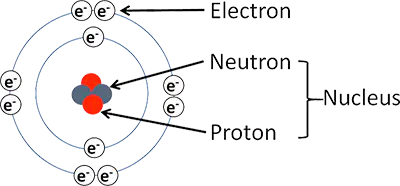
The nucleus of an atom contains which subatomic particles?

1

protons and electrons

2

protons and neutrons

3

electrons and neutrons

4

protons, electrons, and neutrons

2

Multiple Choice

Question image

Typically in an atom, which two subatomic particles are equal in number?

1

protons and neutrons

2

all subatomic particles are equal in number

3

neutrons and electrons

4

protons and electrons

3

media
media

4

Multiple Choice

An element has 3 electrons and a mass of 7. How many protons does this element have?

1

3

2

7

3

4

4

10

5

Multiple Choice

How many electrons does Lithium have if it has an atomic number of 3 and mass of 7?

1

3

2

7

3

4

6

Multiple Choice

An atom of Chlorine, Cl, has an atomic number of 17 and a mass of 35. How many subatomic particles are INSIDE the nucleus

1

17

2

35

3

18

7

media

8

media

9

Multiple Choice

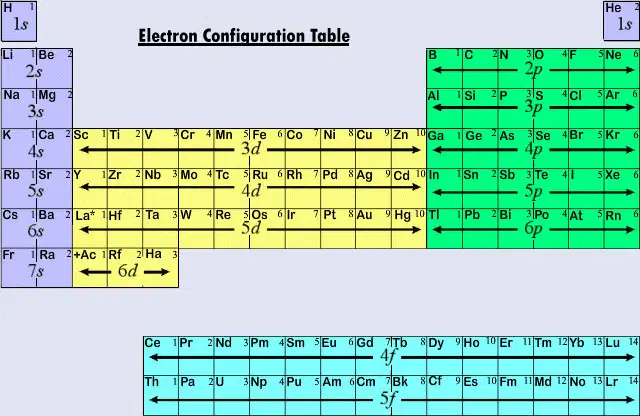
The electron configuration of an atom is 1s22s22p6.  The number of electrons in the atom is _____.

1

a. 3

2

b. 6

3

c. 8

4

d. 10

10

Multiple Choice

Question image
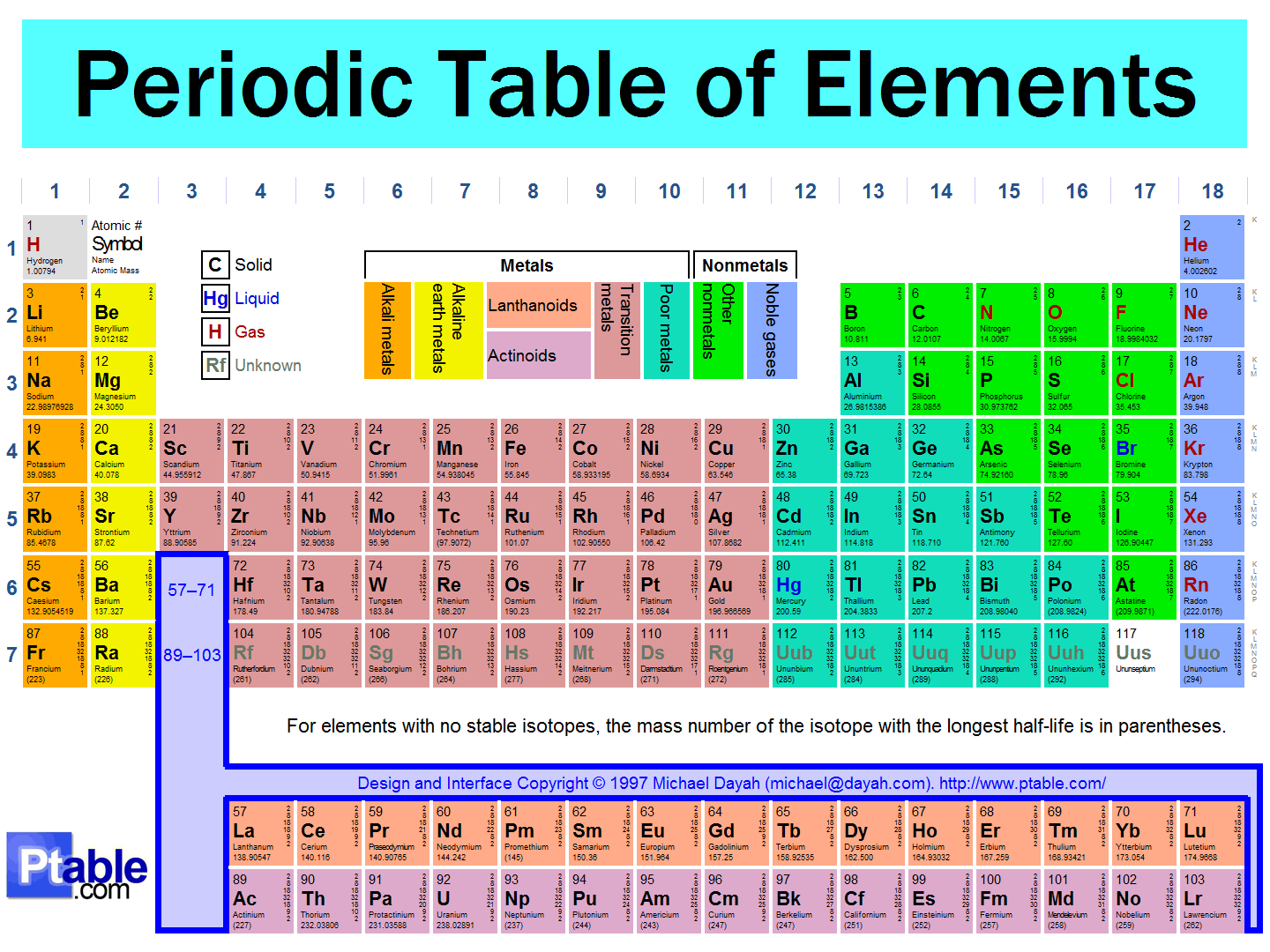
The atoms along the staircase are called 
1
metals
2
nonmetals
3
metalloids
4
noble gases

11

Multiple Choice

Question image

Which electron configuration belongs to Chlorine (Cl)?

1

a. 1s2s2p3s3p5

2

b. 1s2s2p3s3p6

3

c. 1s2s2p3s3p7

4

c. 1s2s2p3s3p4

12

Multiple Choice

How many electrons can the d sublevel hold?

1

a. 14

2

b. 10

3

c. 2

4

d. 6

13

Multiple Choice

What atom matches this electron configuration?1s22s22p63s2 ?

1

a. Al

2

b. Mg

3

c. Ne

4

d. Na

14

Multiple Choice

Each row on the periodic table represents:

1

a. an electron

2

b. a sublevel

3

c. an energy level

4

d. an orbital

15

Multiple Choice

What atom matches this electron configuration?
[Xe] 6s2 4f14 5d9
1
Mercury
2
Gold
3
Platinum
4
Thallium

16

Multiple Choice

What is the shorthand electron configuration for Sulfur atom?
1
[Ar] 3p4
2
[He] 3s23p4
3
[Ne] 3s23p4
4
[Na] 3s23p3

17

Multiple Choice

Question image
Which element is pictured?
1
neon
2
fluorine
3
magnesium
4
argon

18

Multiple Choice

How many electrons would a Nitrogen ion gain/lose? If it has 5 valence electrons.

1

lose 5

2

gain 5

3

lose 3

4

gain 3

19

Multiple Choice

What is the ion formed from Sulfur? If it has 6 valence electrons.

1

S+2

2

S-2

3

S+6

4

S-6

20

Multiple Choice

A Bromine ion gains 1 electron, which of the following is the correct symbol for a Bromine ion?

1

Br-1

2

Br+1

3

Br+7

4

Br-7

21

Multiple Choice

What is the charge of an atom that has lost one electron?
1
-1
2
-2
3
+1
4
+2

22

Multiple Choice

Al has 3 valence electron. It will have a charge of _______

1

+3

2

-3

3

+2

4

-2

23

Multiple Choice

Anions are _______ that form ____________ ions and __________ electrons.
1
nonmetals, positive, lose
2
nonmetals, negative, gain
3
metals, positive, gain
4
metals, positive, lose

24

Multiple Choice

Question image
Which orbital shows a violation of the Pauli Exclusion Principle?
1
A
2
B
3
C
4
D

25

Multiple Choice

Electrons occupy orbitals of lowest energy first is part of what electron configuration rule?
1
Hund’s Rule
2
Aufbau Principle
3
Pauli Exclusion Principle

26

media

27

Multiple Choice

What is the Pauli Exclusion Principle?
1
An atomic orbital can only hold a maximum of 2 electrons, each with opposite spins
2
An atomic orbital can hold a minimum of 6 electrons, each with opposite spins
3
An atomic orbital can hold a maximum of 6 electrons, each with the same spin
4
An atomic orbital can hold a minimum of 2 electrons, each with opposite spins

28

Multiple Choice

Question image
Which orbital shows a violation of Hund's Rule?
1
A
2
B
3
C
4
D

29

Multiple Choice

Question image
Which orbital shows a violation of the Aufbau Principle?
1
A
2
B
3
C
4
D

30

Multiple Choice

Question image
The horizontal row on the periodic table is called a
1
group
2
family
3
period
4
atomic number

31

Multiple Choice

As you move left to right on a row or period what happens?

1

Atomic number increases by 1

2

Electrons decrease

3

Number of shells decrease

4

Nothing

32

Multiple Choice

All elements in the same row have the same number of shells.

1

True

2

False

3

Sometimes

33

Multiple Choice

Question image

Elements in the same group or column have the same ...

1

# of valence electrons

2

# of shells

3

# of protons

4

Mass Number

34

Multiple Choice

Which periodic group has the smallest atomic radius?
1
Alkali metals
2
Halogens
3
Noble Gases
4
Transition metals

35

Multiple Choice

Ionization energy is...
1
the energy required to add an electron to a specific atom
2
how much energy it takes to remove an electron from an atom
3
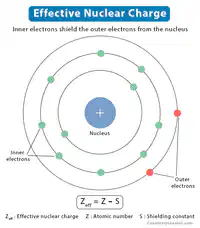
the energy required to shield the outer electrons from the nucleus
4
a measure of the ability of an atom to attract electrons

36

Multiple Choice

Electronegativity is...
1
how good an atom is at attracting electrons
2
the ability of an atom to lose electrons
3
the energy required to remove an electron from a specific atom
4
how easy it is to make friends. 

37

Multiple Choice

Which has the greater EN: 
Cl or Al?
1
Cl
2
Al

38

Multiple Choice

As you move down a Group on the periodic table, what happens to the size of the atoms?

1

they stay the same

2

they get larger

3

they get smaller

39

Multiple Choice

Why does atomic radius increase top to bottom in a group?

1

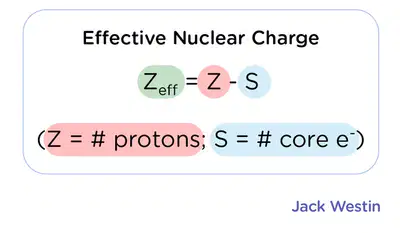
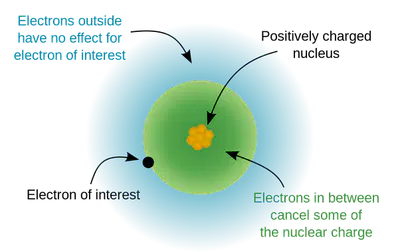
Zeff (nuclear pull) is greater. More protons pull the atom closer together

2

Zeff (nuclear pull) is less. More energy levels are added and the nucleus can't hold on.

3

Electrons are being lost

4

Protons are being lost

40

Multiple Choice

Why does ionization energy increase left to right in a period (row)?

1

Zeff (nuclear pull) is greater. More protons pull the atom closer together

2

Zeff (nuclear pull) is less. More energy levels are added and the nucleus can't hold on.

3

Electrons are being lost

4

Protons are being lost

41

media
media
media

42

43

Multiple Choice

The type of bond where valence electrons are SHARED is called: 
1
Covalent
2
Ionic
3
Hydrogen
4
Isotope 

44

Multiple Choice

The type of bond where valence electrons are TRANSFERRED is called: 
1
Covalent
2
Ionic
3
Hydrogen
4
Isotope

45

Multiple Choice

H2O
1
Ionic Bond
2
Covalent Bond
3
Both bonds
4
Neither bond

46

Multiple Choice

NaCl
1
Ionic Bond
2
Covalent Bond
3
Both bonds
4
Neither bond

47

Multiple Choice

Which of the following is a characteristic property of ionic compounds?
1
They form hard, brittle crystals with characteristic shapes
2
They have low melting points
3
They have low boiling points
4
They contain no charged particles

48

Multiple Choice

In what form can an ionic compound conduct electricity?
1
when dissolved in water
2
as a solid
3
as a crystal
4
when warmed slightly

49

Multiple Choice

Phosphorous trichloride
1
PCl3
2
P3Cl
3
P3Cl3
4
PCL

50

Multiple Choice

SeF4
1
Tetraselenium fluoride
2
Selenium Fluoride
3
Selenium tetraflouride
4
Selenium (IV) Fluoride

51

Multiple Choice

Name the following compound:
  BF3
1
boron fluoride
2
boron difluoride
3
monoboron trifluoride
4
boron trifluoride

52

Multiple Choice

P2O5
1
Phosphorus Oxide
2
Pentaphosphorus Dioxide
3
Diphosphorous pentoxide
4
Phosphoric Oxygen

53

Multiple Choice

SF6?
1
Monosulfur Hexafluoride
2
Sulfur hexafluoride
3
Sulfate hexafluoride
4
Sulfur hexafluorine

54

Multiple Choice

The correct name for the compound between sodium and sulfur is
1
sodium sulfuride
2
sodiumide sulfuride
3
sodium sulfide
4
sodium(I) sulfide

55

Multiple Choice

The formula for iron(III) oxide is
1
FeO
2
Fe3O
3
Fe2O3
4
Fe3O2

56

Multiple Choice

What is the formula for boron selenide?
1
B2Se3
2
BSe
3
BoSe
4
B3Se2

57

Multiple Choice

What is the formula for a compound made of Mg2+ and As3-?
1
Mg3As2
2
Mg2As3
3
MgAs
4
Mg6As4

58

Multiple Choice

The proper formula for aluminum nitrate:
1
AlNO3
2
Al2(NO3)3
3
Al(NO3)3
4
Al3NO3

59

Multiple Choice

Name the following ionic compound: MgSO4
1
magnesium sulfoxide
2
magnesium sulfide
3
magnesium sulfate
4
magnesium oxide

60

Multiple Choice

Name the following ionic compound: Cr(NO2)3
1
chromium nitrite
2
chromium nitride
3
chromium III nitride
4
chromium III nitrite

61

Draw

Draw the LEDS:
Hydrogen + Hydrogen

62

Draw

Draw the LEDS:
Hydrogen + Oxygen

63

Draw

Draw the LEDS:
Chlorine + Chlorine

64

Draw

Draw the LEDS:
CO2

65

Draw

Draw the LEDS:
NH3

Question image

The nucleus of an atom contains which subatomic particles?

1

protons and electrons

2

protons and neutrons

3

electrons and neutrons

4

protons, electrons, and neutrons

Show answer

Auto Play

Slide 1 / 65

MULTIPLE CHOICE