Search Header Logo
Weather Lecture

Weather Lecture

Assessment

Presentation

Science

9th Grade

Practice Problem

Easy

NGSS
MS-ESS1-1, MS-ESS2-6, MS-ESS2-5

+14

Standards-aligned

Created by

Josiah Lawrence

Used 5+ times

FREE Resource

42 Slides • 19 Questions

1

media

2

media

3

media

4

media

5

Multiple Choice

Where does all energy on earth come from?

1

The Sun

2

The Core

3

The atmosphere

4

The Ground

6

Poll

What do you think absorbs heat faster?

Land

Water

7

media

8

media

9

Categorize

Options (3)
Question image

Heat Energy from the Sun

Question image

Heat transferring through a metal pole

Question image

Hot water going up cold water going down

Organize these Images into the right categories

Convection
Conduction
Radiation

10

media

11

media

12

Drag and Drop

Wind flows from ​
to ​
Pressure. This is due to the ​
temperature of the earth's surface. The earth is heated and cooled through:

from the sun.

which is the upward movement of warm air and sinking of cold air.Conduction or the direct transfer of heat from the ground to the air.

Drag these tiles and drop them in the correct blank above
High
Low
uneven
Radiation
Convection
conduction
consistent
wet
Dry

13

media

14

media

15

Draw

Draw a graph showing how surface winds work.

16

media

17

Open Ended

Explain how the earth receives different amounts of sunlight.

18

media

19

media
media

20

media

21

media

22

media

23

Draw

Draw the direction of wind in the Northern and Southern Hemisphere.

24

media

25

Multiple Choice

Where is the warmest part of the earth.

1

Equator

2

Prime meridian

3

North Pole

4

South Pole

26

media

27

Drag and Drop

Air flows ​​ away from the poles towards the equator because the air is ​
. Air flows away from the equator towards the poles because it is ​
. It is does not flow directly North or South because of the ​
. ​
Drag these tiles and drop them in the correct blank above
cold and dense
hot and less dense
Coriolis Effect
Wet and cold
Dry and Hot
Circular Effect

28

media

29

media

30

Draw

Draw the wind direction and label them. TW, Westerlies, PE.

31

media

32

media

33

media

34

Multiple Choice

The Jetstream is

1

The boundary between warm and cold air masses.

2

The slow moving mass of air that rests of continents.

3

The large amount of water that flows from the westside to eastside of the atlantic.

4

The west blowing winds that move boats across the atlantic.

35

media

36

media
media
media

37

Labelling

Match the labels to the correct part of the map.

Drag labels to their correct position on the image

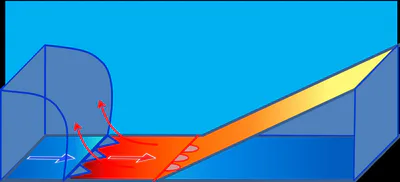
Sea Breeze

Land Breeze

Low Pressure (land)

High Pressure (land)

Low Pressure (sea)

High Pressure (sea)

38

media

39

Draw

Circle areas of similar temperatures. They can vary by a few degrees.

40

media

41

media

42

Multiple Select

Which of these are characteristics that define air masses?

1

Temperature

2

Moisture

3

Size

4

Location

43

media

44

media

45

Draw

Draw a line graph showing what happens to a cold air mass as it moves closer to the equator.

46

media

47

media
media

48

media
media

49

media

50

media

51

Dropdown

Warm Front-

As the warmer,
air rises, it


This produces clouds and frequent precipitation

Warm fronts move slowly, so the precipitation is
over a large area for a
period of time

Often followed by
weather.

52

media
media

53

media
media

54

media

55

media
media

56

Multiple Select

Cold Fronts are usually:

1

Fast

2

Stormy

3

Slow

4

Bring Sunny Weather

5

Create Large Clouds

57

media
media

58

media
media

59

Draw

A warm air mass is moving North from the South.

A Cold Air Mass is moving from the Northwest.

It has been raining in Arkansas for 2 weeks.

West Texas had a Major Storm Last night and now it is Colder.

Kentucky had light rain for 2 days.

Using the information above draw symbols on the map.

60

media
media

61

Categorize

Options (16)

Temperatures Drop

Question image

Violent storms

Pass quickly

Cold air mass moves into an area that used to be a warm air mass.

Temperatures increase

Light rain for a few days

Slow moving

Warm air mass overtakes cold air mass

Question image

Cold air front and warm air front not moving.

Rain for long periods of time. Often weeks

Question image

Cold front "chases" or pushes warm front in front.

Question image

Unpredictable weather patterns

Organize these options into the right categories

Cold Front
Warm Front
Stationary Front
Occluded Front
media

Show answer

Auto Play

Slide 1 / 61

SLIDE