

Evidence of Evolution

Presentation
•
Science
•
9th Grade
•
Easy
+20
Standards-aligned

Kyndaliln Mooney
Used 6+ times
FREE Resource
11 Slides • 22 Questions
1
Evidence of Evolution

2
Starting with the End in Mind... Review :)
3
Open Ended
A. Which biogeochemical cycle requires bacteria?
B. Describe the 3 types of bacteria in this cycle.
4
Open Ended
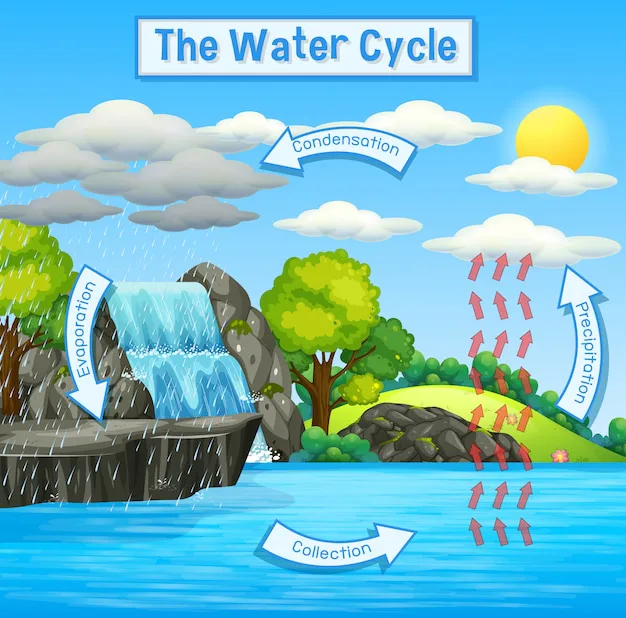
When Water is LOST from trees, what is this called?
5
Open Ended
Any scenario involving secondary succession would require ____ be present.
6
Open Ended
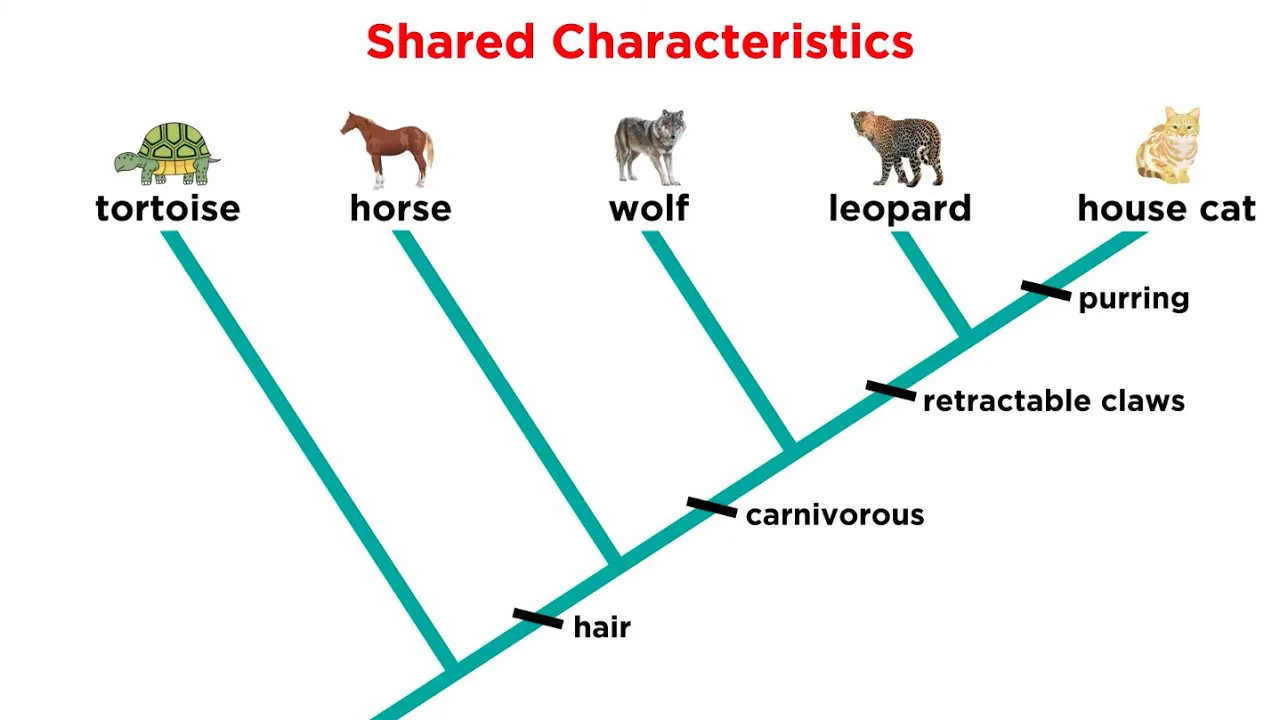
Who is the oldest organism on this chart?--According to this cladogram, can a leopard purr?
7
Open Ended
Make the punnett square... A mother that is Type AB blood marries a man who is heterozygous for type B blood. What is the chance the baby will have type AB?
8
Open Ended
A. The first organisms that colonize any place are called _______.
B. What are the pioneers that grow on ROCK?
C. What is this type of succession called?
D. Give 3 examples of disturbances that might cause this type of succession.
9
Open Ended
A. The type of succession that results from life being destroyed but soil remains is known as ________ succession.
B. What are the pioneers for this type of succession?
C. How long does it take to build a forrest?
D. Name 2 ecological disturbances that might cause this to happen.
10
11
External Anatomy (morphology)
HOMOLOGOUS BONES (internal structures)
Fossil Record
DNA similarities (i.e., amino acid sequence or protein sequence) aka. molecular similarities
Embryology
Biogeographical distrubtion
As you watch the 2 videos on the next slide, explain each of the different pieces of evidence listed---->
Prepare your NOTES
Evidence of Evolution
13

14
Multiple Choice
Which of the following is the collection of life's remains found in sedimentary rock?
natural selection
homologous structures
Charles Darwin
the fossil record
15
Multiple Choice

16
Multiple Choice
17

18
Multiple Choice

Similarities in bone arrangements, like those in the picture, support the hypothesis that...
these organisms are not well adapted
these organisms share a common ancestor
these organisms all share the same DNA sequences
these organisms are members of the same species
19
Multiple Choice
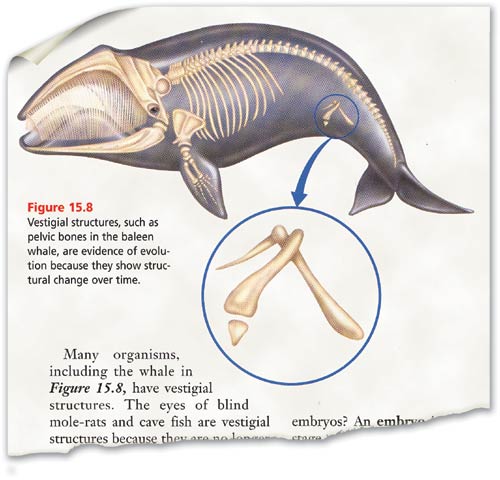
20
Multiple Choice

The picture shows a/an ___________
homologous structure
vestigial structure
21
Standard
4.1 - Students will learn to differentiate between organic and chemical evolution illustrating the steps leading to aerobic heterotrophs and photosynthetic autotrophs
22
Theory of the Origin of Life
Chemical Evolution
Organic Evolution--Endosymbiotic Theory
23
Multiple Choice
What is the difference between chemical and organic evolution?
Chemical evolution describes how complex organic molecules were first formed from simpler inorganic molecules on early Earth, while organic evolution describes the gradual process by which living organisms have undergone changes from simple unicellular creatures to complex multicellular organisms.
Chemical evolution describes the development of inorganic compounds and polyatomic ions on early Earth, while organic evolution describes the development of complex macromolecules (like starches and nucleic acids) from simpler monomers (such as monosaccharides and nucleotides).
24
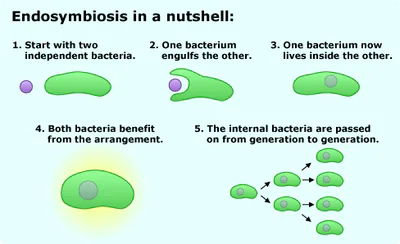
The first Prokaryotes would have likely been chemoautotrophs and heterotrophic Anaerobes.
Edosymbiotic Theory
25
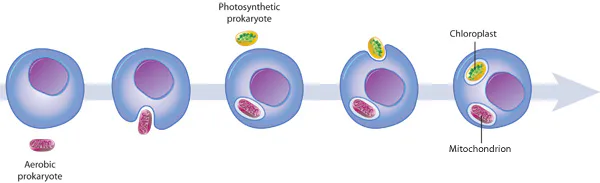
2. Aerobic heterotroph develops--engulfed by another bacteria and evolves into mitochondria
3. Photosynethic Autotroph develops--engulfed by larger cell---evolves into chloroplast
26
Multiple Choice
Which process is an example of organic evolution?
The Earth goes through chemical differentiation in which heavier elements sink to the core.
Cells develop the ability to produce their own food through the process of photosynthesis.
Lightning converts the early atmosphere into an atmosphere rich in the chemical building blocks of life.
Large macromolecules such as polypeptides and polynucleotides are formed from smaller building blocks.
27
Multiple Choice
What type of organism likely evolved before aerobic organisms could have come into existence?
fungi
eukaryotes
Anaerobic prokayrotes
photoautotrophs
28
Multiple Choice
Which statement best describes the evolution of cells on Earth?
Both chemical and organic evolution occurred simultaneously.
Chemical evolution occurred first, eventually making organic evolution possible.
Organic evolution occurred first, eventually making chemical evolution possible.
29
Multiple Choice
Which statement represents the best understanding of evolutionary theory?
Mitochondria must have evolved as endosymbionts before chloroplasts because all eukaryotes possess mitochondria, but not all eukaryotes necessarily possess chloroplasts.
Chloroplasts must have evolved as endosymbionts before mitochondria because all eukaryotes possess chloroplasts, but not all eukaryotes necessarily possess mitochondria.
30
Multiple Choice
How did the first heterotrophs obtain nutrients for carrying out their life functions in the primitive atmosphere of Earth?
They obtained their food by feeding on each other
They absorbed nutrients directly from the environment.
31
Multiple Choice
Two different species contain a nucleotide sequence that is almost identical. What does this evidence suggest?
The two species have the same number of chromosomes.
The two species may have a common ancestor.
32
Multiple Choice
The endosymbiotic theory of eukaryote evolution states that organelles in eukaryotic cells are derived from bacteria. Which statement is the strongest evidence in support of the endosymbiotic theory of eukaryote evolution?
Eukaryote organelles contain DNA similar to bacterial DNA
Eukaryote organelles stop functioning outside of a plant cell.
33
Open Ended
If you were absent... Complete this quizziz and turn in your NOTES. Confirm at the bottom you understand and will turn in your properly labeled notes. (April 15-16 Evidence of Evolution, Chemical and Organic Evolution)
Evidence of Evolution
Show answer
Auto Play
Slide 1 / 33
SLIDE
Similar Resources on Wayground

28 questions
Characteristics of Kingdoms
Presentation
•
9th Grade
26 questions
Genetics Review
Presentation
•
9th Grade
27 questions
Evolution
Presentation
•
9th Grade
27 questions
Astronomy Lessons Review
Presentation
•
9th Grade
26 questions
Ecology Review
Presentation
•
8th Grade
26 questions
Ionic Bonds
Presentation
•
9th Grade
26 questions
DNA Basics
Presentation
•
9th Grade
27 questions
Density
Presentation
•
9th Grade
Popular Resources on Wayground
10 questions
Impact of 9/11 and the War on Terror

Interactive video
•
10th - 12th Grade
21 questions
Continents and Oceans

Quiz
•
6th Grade
5 questions
9/11
Interactive video
•
9th Grade
20 questions
Parts of Speech
Quiz
•
5th Grade
16 questions
Subject & Predicate
Quiz
•
5th Grade
10 questions
Riddles Riddles fun Riddles
Quiz
•
6th - 12th Grade
21 questions
Lab Safety
Quiz
•
10th Grade
6 questions
PRIDE in the Hallways and Bathrooms
Presentation
•
12th Grade
Discover more resources for Science
10 questions
Exploring Chemical and Physical Changes
Interactive video
•
6th - 10th Grade
20 questions
Atomic Structure
Quiz
•
9th Grade
21 questions
Cell Organelles
Quiz
•
9th Grade
20 questions
Observation vs. Inference
Quiz
•
7th - 9th Grade
20 questions
ELEMENTS, COMPOUNDS, AND MIXTURES
Quiz
•
9th Grade
10 questions
Physical and Chemical Changes
Quiz
•
5th - 10th Grade
43 questions
1st SW Vocab Biology
Quiz
•
9th Grade
10 questions
Distance, Displacement, Speed, and Velocity Explained
Interactive video
•
6th - 10th Grade