Physical Science Review
Presentation
•
Science
•
6th - 8th Grade
•
Medium
+20
Standards-aligned
Felicia Powers
Used 25+ times
FREE Resource
26 Slides • 33 Questions
1
Physical Science Review
2
What are the parts of the atom ?
.
Some text here about the topic of discussion
3
Multiple Choice
What subatomic particles would you find in the nucleus of an atom?
Protons only
Protons and Neutrons
Neutrons and Electrons
Protons and Electrons
4
Labelling
Label the parts of the atom
proton
electron
neutron
nucleus
5
Multiple Choice
6
Each capital letter represents an element.
Molecule and compound are interchangeable.
Some text here about the topic of discussion
7
Multiple Choice
Element or Compound?
C₆H₁₂O₆
Element
Compound
8
Multiple Choice
As
Element
Compound
9
.
Some text here about the topic of discussion
10
Multiple Choice
This atom has 3 protons in its nucleus:
11
Multiple Choice
This atom has 8 electrons surrounding its nucleus:
12
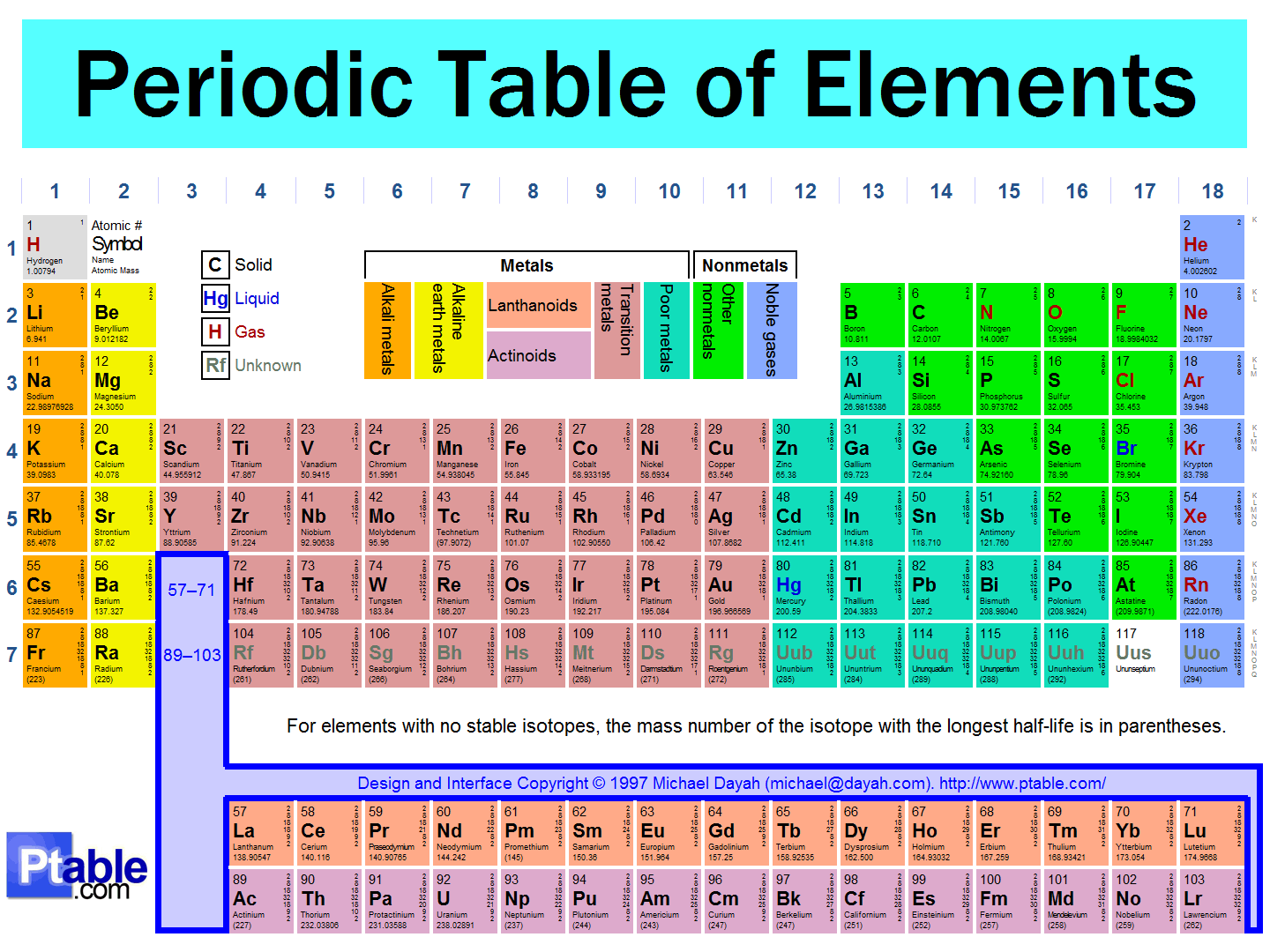
Know the difference between periods and groups.
How is the periodic table organized?
.
Some text here about the topic of discussion
13
14
Multiple Choice
The vertical (up and down) columns in the Periodic Table are called
groups
towers
periods
atomic numbers
15
Multiple Choice
The rows (side to side) in the Periodic Table are called
groups
towers
periods
atomic numbers
16
Multiple Choice
Which elements are colored red?
nonmetals
metals
metalloids
17
Multiple Choice
Metals
Nonmetals
Metalloids
Periods
18
19
20
21
22
23
Multiple Choice
What is the difference between frequency and wavelength?
The shorter wavelength, the less frequency.
The longer the wavelength, the frequency is greater.
The longer the wavelength, the frequency is less.
24
Multiple Choice
The image below is of the visible light spectrum. The colors of the visible light spectrum are arranged according to which property?
heat intensity
refraction rate
light intensity
wavelength
25
Multiple Choice
Which wave has the highest frequency?
A
B
C
None (same frequency)
26
Multiple Choice
Gamma Rays are
High energy
Low energy
Medium energy
Not Dangerous
27
28
29
Multiple Choice
Which piece of art demonstrates reflection?
A
B
C
D
30
Multiple Choice
Sound waves need to travel through something made of atoms or molecules to keep moving. They travel at different speeds through different materials. Through which of the following would they be likely to travel fastest?
Air
Water
Juice
Wood
31
Multiple Choice
While watching a popular space-based science fiction movie, space vehicles loudly shoot each other with lasers and explode with a booming sound. Students of science know that sound does not travel through space and these movie scenes showing space sounds are factually incorrect. Why are there no sounds in space?
Sound waves travel as transverse waves
Sound waves require a medium
Sound waves can only travel through air particles
Sound waves have high frequencies
32
Potential Energy
33
34
35
36
What are the energy transfers?
37
Multiple Choice
A student heats water as shown in the diagram below.
What sort of energy transformation is taking place?
Electrical energy transforms to heat
Heat moves from a cooler object to a warmer one
Light energy transforms to heat
Kinetic energy transforms to potential energy
38
Multiple Choice
Mary throws a tennis ball into the air. It rises, stops momentarily when it reaches its greatest height, and then falls back to the ground. At what point does kinetic energy converted to potential energy?
When the tennis ball is rising.
When the tennis ball is falling.
Just after the tennis ball hits the ground.
While the tennis ball is at the highest point.
39
Multiple Choice
Which of the following is the best example of chemical energy being transformed into light energy and heat energy?
boiling water on an electric stove
turning on a battery powered flashlight
watching a movie on television
using a solar panel to charge batteries
40
Multiple Choice
Look closely at the illustration. According to the law of conservation of energy, what happened to the energy of the ball in the illustration?
Both the potential energy and the kinetic energy remained unchanged.
Potential energy was transformed into kinetic energy.
The amount of total energy in the ball increased.
The amount of total energy in the ball decreased.
41
42
43
The correct answer is H (Substance Y would have less mass than substance Z
would have if they had the same volume).
Distractor Rationales
F.
The mass of substance X and the mass of substance Y cannot be determined from the graph if the volume of each substance is not known.
G.
The volume of substance W and the volume of substance X cannot be determined from the graph if the mass of each substance is not known.
I.
Substance Z has a greater mass per volume than substance W; therefore, the mass of substance Z would be greater than substance W if they each had equal volumes
44
Multiple Choice
If you hold a glass of ice tea on a summer’s day, which of the following will happen?
Cold will travel from the glass to your hand
The temperature of your tea will decrease
The temperature of your hand will increase
Heat will travel from your hand to the glass
45
46
47
48
Multiple Choice
The diagram below shows forces acting on a model airplane. Both its speed and height above the ground are constant. Which of the following conditions would cause the model airplane to descend toward the ground?
The lift is equal to the drag.
The lift is less than the weight.
The thrust is equal to the weight.
The thrust is greater than the drag.
49
Multiple Choice
An object moves through space with balanced forces acting on it. Which statement best describes the speed and
direction of the object as long as the forces acting on it remain balanced.
The sped and direction of the object will both change.
The speed and direction of the object will remain constant.
The speed will change, but the direction will remain constant.
The speed will remain constant, but the direction will change.
50
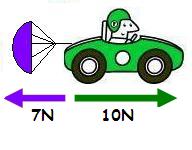
Multiple Choice
51
Multiple Choice
20N, left
35N, Right
5N, Left
25N, Right
52
Multiple Choice
Friction is a
Contact Force
Non-contact Force
53
Multiple Choice
Air resistance is a
Contact Force
Non-contact Force
54
Multiple Choice
Magnetic is a
Contact Force
Non-contact Force
55
Multiple Choice
The diagram shows three sets of objects. The objects all have the same mass and volume.
Order the sets of objects from greatest gravitational force between them to least gravitational force between them.
A, B, C
B, C, A
A, C, B
C, B, A
56
57
58
Match
Match the following
Stopped
Accelerating
constant speed
Slow
Stopped
Accelerating
constant speed
Slow
59
Multiple Choice
Match the description to the graph:
"The car is coming back."
Physical Science Review
Show answer
Auto Play
Slide 1 / 59
SLIDE

Similar Resources on Wayground
54 questions
Astronomy Galaxies
Lesson
•
6th - 8th Grade
52 questions
Unit 1 Review 6th Science
Lesson
•
6th - 8th Grade
56 questions
Genetics Make-up Session
Lesson
•
7th Grade
54 questions
U0: The Nature and Practice of Science
Lesson
•
7th Grade
54 questions
#5 Characteristics of Life
Lesson
•
6th - 8th Grade
51 questions
UNIT FORCE AND MOTION REVIEW
Lesson
•
6th - 8th Grade
53 questions
KINGDOMS OF LIFE
Lesson
•
6th - 8th Grade
54 questions
Cell Theory Eukaryotic and Prokaryotic Cells
Lesson
•
6th - 8th Grade
Popular Resources on Wayground
10 questions
5.P.1.3 Distance/Time Graphs
Quiz
•
5th Grade
10 questions
Fire Drill
Quiz
•
2nd - 5th Grade
20 questions
Equivalent Fractions
Quiz
•
3rd Grade
15 questions
Hargrett House Quiz: Community & Service
Quiz
•
5th Grade
20 questions
Main Idea and Details
Quiz
•
5th Grade
20 questions
Context Clues
Quiz
•
6th Grade
20 questions
Inferences
Quiz
•
4th Grade
15 questions
Equivalent Fractions
Quiz
•
4th Grade
Discover more resources for Science
20 questions
Recognizing Violence and Being an Upstander
Quiz
•
8th Grade
20 questions
Rocks and The Rock Cycle
Quiz
•
6th Grade
19 questions
Introduction to Properties of Waves
Lesson
•
6th - 8th Grade
16 questions
Interactions within Ecosystems
Lesson
•
6th - 8th Grade
10 questions
Exploring the Layers of the Earth
Interactive video
•
6th - 10th Grade
20 questions
Electricity and Circuits
Quiz
•
7th Grade
20 questions
Newton's Laws of Motion
Quiz
•
8th Grade
16 questions
Photosynthesis and Cellular Respiration Review
Quiz
•
7th Grade