Search Header Logo
Unit 1.2 Abiotic Factors in Ecosystems

Unit 1.2 Abiotic Factors in Ecosystems

Assessment

Presentation

English, Biology, Other, Geography, Science, Social Studies

11th Grade

Practice Problem

Hard

Created by

Samah Al-hamadi

FREE Resource

15 Slides • 34 Questions

1

media

2

media

3

media

4

media

5

6

media

7

Multiple Choice

Question image

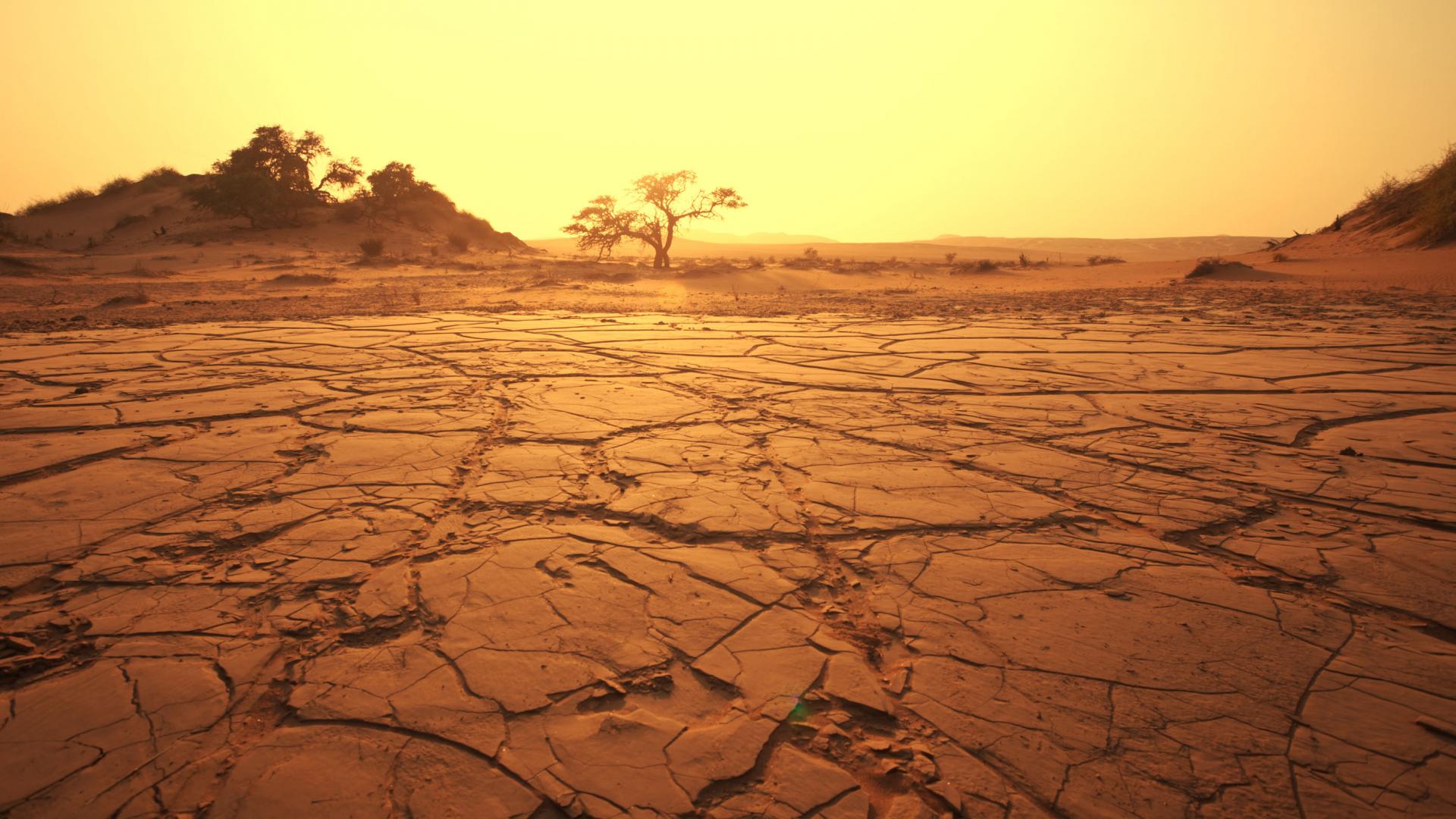
Which biome is the driest?

1

Desert

2

Tundra

3

Taiga

4

Rainforest

8

Multiple Choice

Question image

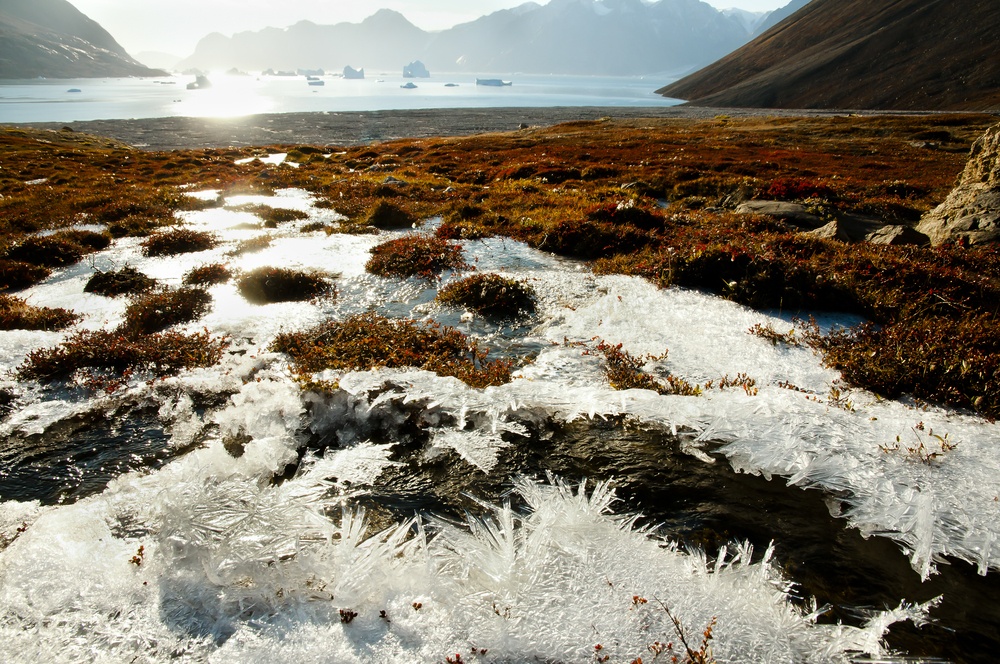
Which biome has permafrost?

1

Temperate Forest

2

Rainforest

3

Taiga

4

Tundra

9

Multiple Choice

Question image

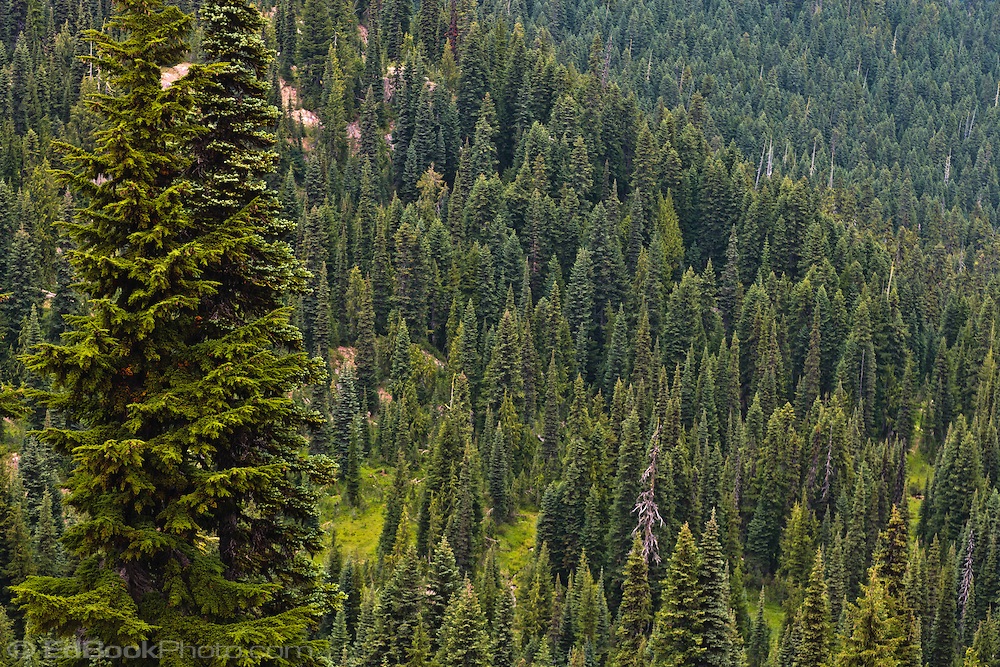
Which biome has coniferous trees (trees that don't lose their leaves)?

1

Taiga

2

Temperate Forest

3

Tundra

4

Grasslands

10

media

11

Multiple Choice

What is climatology?

1

Science that studies types of weather

2

studies the laws of climate formation

3

studies oceans and seas

4

Examines the soil

12

Multiple Choice

Areas defined by their geographical location and ecological similarity are called?
1
ecosystems 
2
environments 
3
population 
4
biome 

13

Multiple Choice

The place in which people live and work, including the land, water, air, plants, animals and all physical conditions that affect them

1

Ecology

2

Poison

3

Environment

4

House

14

media

15

Multiple Choice

Question image
What is the name of this line at 0 degrees latitude?
1

Equator

2

Prime Meridian

3

International Date Line

4

North Pole

16

Multiple Select

What are the two most significant abiotic factors that influence what type of biome is found in a geographic area

1

Wind speed

2

Humidity level

3

Average temperature

4

Average precipitation

17

Multiple Choice

The lines that run from east to west

1

Latitude

2

Longitude

3

Prime Meridian

4

Antarctica

18

media

19

Multiple Choice

1. Which statement describes the relationship between latitude and temperature?

1

As latitude increases, temperature increases.

2

As latitude increases, temperature decreases

3

There is no relationship between latitude and temperature.

20

Multiple Choice

The imaginary horizontal lines running parallel on the Earth is called

1

Grid

2

Latitude

3

Longitude

4

Heat zone

21

media

22

Multiple Choice

Question image
During which month does Washington, DC, receive the most precipitation?
1
February
2
April
3
August
4
December

23

Multiple Choice

Question image

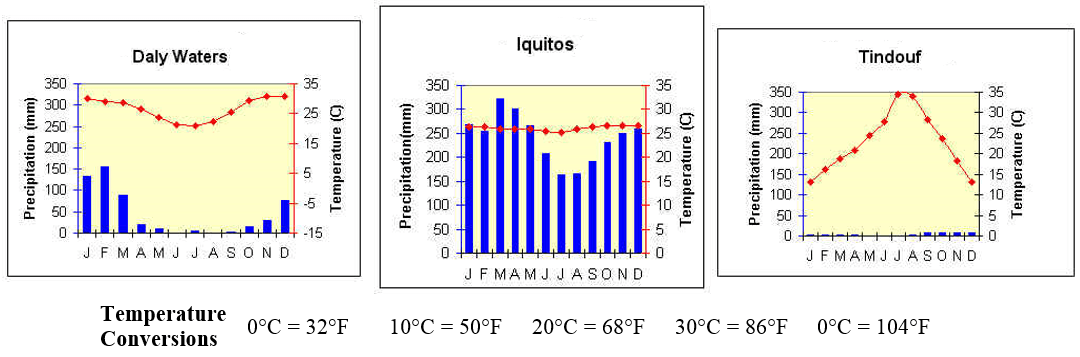
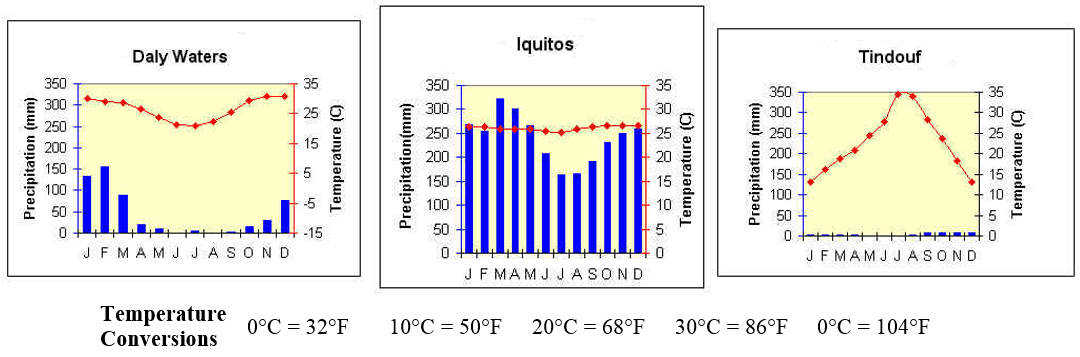
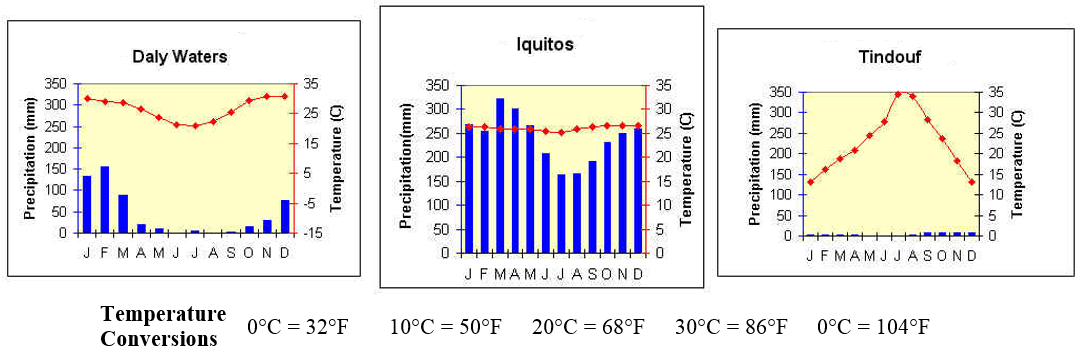
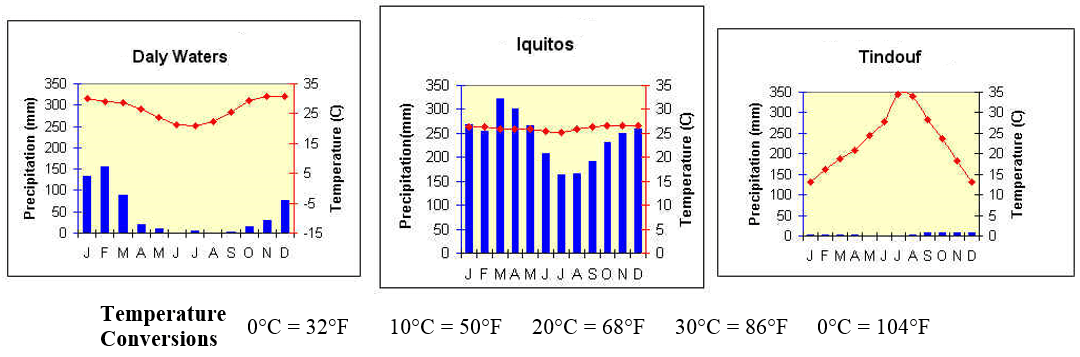
Which ecosystem above experiences a distinct dry season and wet season

1

Daly Waters

2

Iquitos

3

Tindouf

4

None of these

24

Multiple Choice

Question image

Based on the climate graph shown, what type of biome is Iquitos

1

Tropical grassland

2

Tropical rainforest

3

Deciduous forest

4

Tundra

25

Multiple Choice

Question image

Based on the climate data above, what type of biome is Tindouf

1

Temperate Forest

2

Tropical Rain Forest

3

Subtropical Desert

4

Temperate Grassland

26

Multiple Choice

Which of the fallowing has only abiotic factors?

1

Sunlight, algae, and temperature

2

Guppy, crab, oxygen

3

Sunlight, soil, and weather

4

Algae, temperature, and dog

27

Multiple Choice

Question image

Which ecosystem is the most likely to be on or very close to the Equator

1

Daly Waters

2

Iquitos

3

Tindouf

4

None of these is close to the equator

28

media

29

Multiple Choice

What is an example of an abiotic factor?
1
climate
2
fish
3
humans
4
plants

30

Multiple Choice

What refers to all the living and nonliving things in a given area?
1
abiotic factors
2
biotic factors
3
ecosystem
4
soil

31

Multiple Choice

The most important abiotic factors when studying biomes are...
1
oxygen and precipitation
2
sunlight and precipitation
3
oxygen and sunlight 
4
wind and precipitation 

32

media

33

Multiple Choice

What is a example of a abiotic factor?

1

Panda

2

Bacteria

3

Butterfly

4

Weather

34

Multiple Choice

Temperature, light, air, water, and soil are all  _____  parts of the environment
1
alive
2
biotic 
3
abiotic
4
living

35

Multiple Choice

Question image

What are the biotic factors in this image?

1

fish, birds, grass

2

water, soil, rocks

3

sunlight and water

36

Multiple Choice

What abiotic factor has the most influence on where certain organisms can survive?

1

Temperature

2

Water

3

Soil

4

Atmosphere

37

media

38

Multiple Choice

What is the layer of gases that surrounds Earth?
1
atmosphere
2
ecosystem
3
environment
4
greenhouse effect

39

media

40

Multiple Choice

Acidity of water has a direct impact on the _________ of the water.

1

Salinity

2

Aridness

3

Abundance

4

Absorption.

41

Multiple Choice

Rocks, water, air, minerals, and the remains of once-living things make up what abiotic factor?

1

Water

2

Soil

3

Rabbits

4

Atmosphere

42

Multiple Choice

Question image

Water is a compound that consists of 2 hydrogen atoms and 1 oxygen atom. Up to 60% of an adult human is made up of water. Water is an example of what type of factor?

1

Biotic

2

Abiotic

43

Multiple Choice

What is salinity?

1

The property of containing salt

2

The amount of suspended solids

3

Describes the condition of the water

4

Describes how acidic or basic water is

44

Multiple Choice

Which of these is a biotic factor in a river ecosystem?

1

the types of microorganisms that live in the river water

2

the amount of soil and other particles carried by the river

3

the speed at which the river water flows toward the ocean

4

the amount of rain that flows off the land and into the river

45

media

46

Multiple Choice

What is the end result of eutrophication?
1
More algae
2
decreased oxygen and fish kills
3
less turbidity
4
a new pond

47

Multiple Choice

Which of the following is not an abiotic factor that limits the organisms in an ecosystem?
1
drought
2
soil-nutrients
3
water
4
human activity

48

Multiple Choice

Which does picture refer to water pollution?

1
2
3
4

49

Multiple Choice

This term refers to an ecological imbalance caused by excess nutrients
1
Eutrophication
2
Nitrification
3
Decomposition
4
Photosynthesis
media

Show answer

Auto Play

Slide 1 / 49

SLIDE