

Unit 1.3 Online Communication and Listening to Listen

Presentation
•
Social Studies
•
12th Grade
•
Practice Problem
•
Easy

Amy Schneider
Used 2+ times
FREE Resource
25 Slides • 10 Questions
1
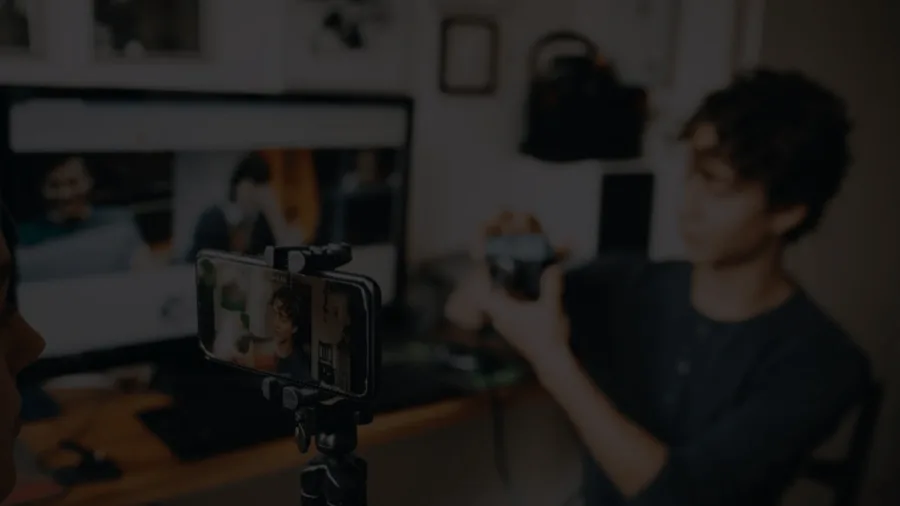
Unit 1 – Digital Citizenship
1.3 Online Communication and Listening to Listen
2

Lesson
Overview
Learners can:
• recognize and apply the differences between active and passive listening
• find and respond to a main idea
• identify ways to engage in active listening in both online and face-to-face communication
• recognize and construct appropriate responses in an academic or professional setting
Vocabulary:
• active listening - when you make the person you are communicating with the focus of your attention.
• passive listening - is one-way communication. Often the receiver does not provide verbal feedback or indicate that they are paying
attention.
3


What Differences Can You Spot in This Image?
*Hint –
there are 5!
4
Draw
Circle the differences on the picture to the right.
5


Did You Spot Them All?
6


Being Part of a Conversation
Most people have been part of a conversation
where it is clear the other person is not paying
attention.
• Sometimes they are distracted by their cell phone
or seem to be paying more attention to
something else.
• Distracted attention can be seen as rude and
insensitive to the speaker.
When someone is distracted in a
conversation, it is difficult to tell if they
are hearing anything you are saying.
7


Becoming a Better Communicator
Active Listening – When you make the person you are communicating
with the focus of your attention.
Why should you be an active listener?
1.
Builds trust within relationships
2.
Helps resolve conflict
3.
Helps avoid misunderstandings
•
If you want others to understand your feelings, you must
reciprocate
4.
Communicates respect
•
You get what you give!
8

Remember –
Paying
attention and
Listening
Paying attention and listening are not the
same!
• Some listen with the goal to respond,
rather than understanding
Active listening is key to being a good
communicator.
•Communication is often thought of as talking or
writing
•however, it is difficult to effectively respond if you
are unclear about what has been said.
9

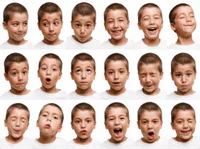

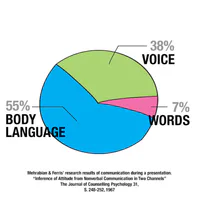
• When you are actively listening in person, you can see the other
person's facial expressions, body language, and other non-verbal
clues to understand more about what is being said. You can better
understand the mood and tone of the speaker.
• Reading the body language of the speaker can give context clues to
the conversation and meaning.
Based on the image,
what emotion is Captain
Picard showing? ->
10
11
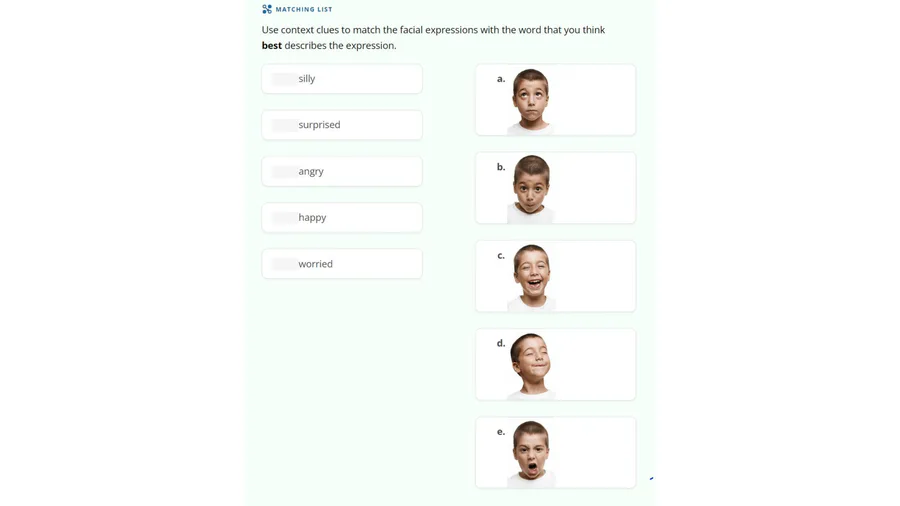
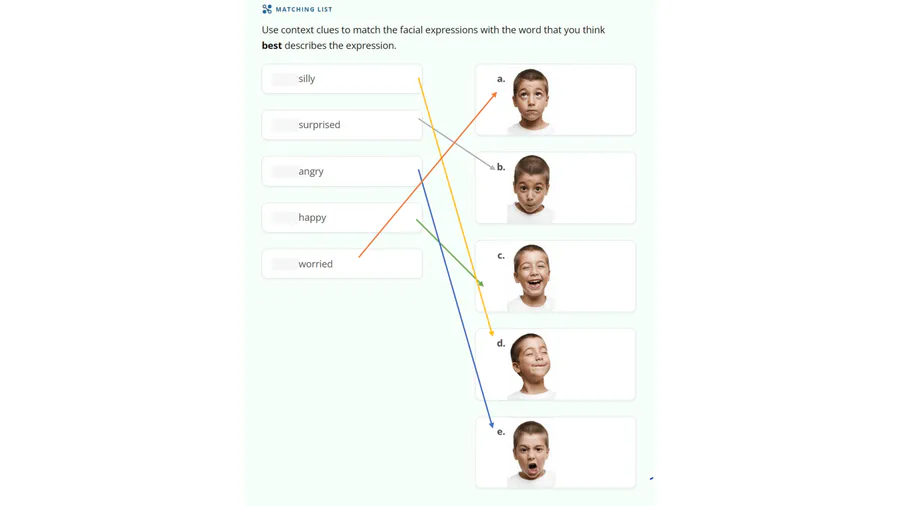
Draw
Match the face to the emotion.
12
13

Passive
Listening
• Passive listening - one-way communication
• receiver does not provide verbal feedback or
indicate that they are paying attention.
• When a listener does not make eye contact,
answers with a nod or a grunt, or does not ask
questions, it leaves the speaker feeling as if the
other person may not understand the sender's
message or have any interest in what is being
communicated to them.
14


15
16
Draw
Circle or highlight the correct answer.
17
18


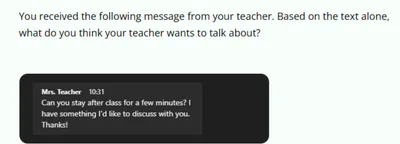
19
Draw
Circle or highlight the correct answer.
20

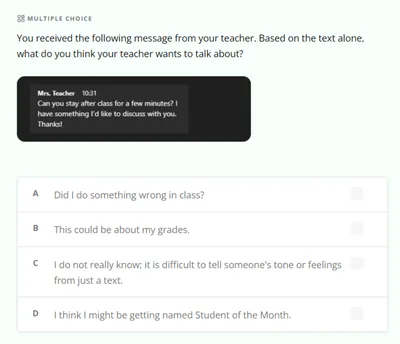

21

1.Be Attentive -
•As you listen, ask yourself what the
mood or tone of the speaker is. Use
facial and body language cues.
•Remain focused on the speaker and
processing their words.
•Give the speaker wait time. It takes
time to develop and express
thoughts.
2. Ask for Clarification -
•Do not voice judgment before you understand
what was said; seek information before judging.
•Rather, ask open-ended questions—questions
that require more than yes or no answers—that
help to clarify: “So, would you say that?” or
“Does this mean that?” or “Do you think?”
•If you have confusion or doubts about what is
said, now is the time to ask for clarification.
Statements such as: “Let me see if I am clear,” or
“Can you wait a minute? I did not follow you,”
ask for specific help.
3. Reflect the Speaker's
Feelings -
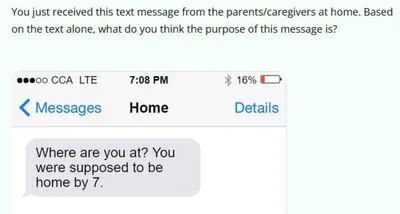
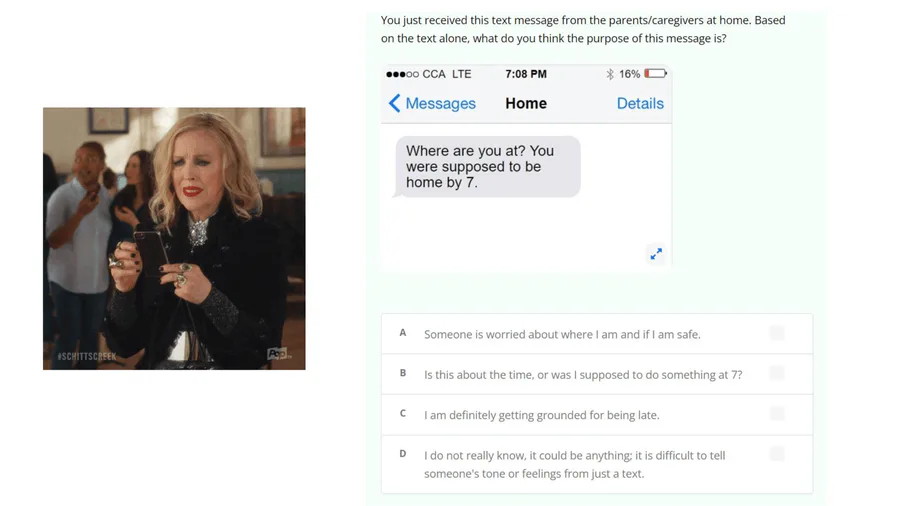
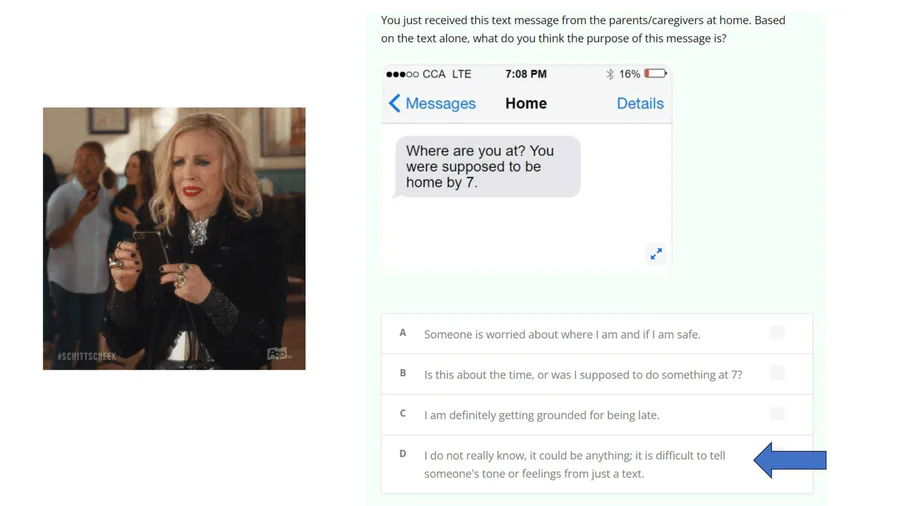
• As you have seen, it is difficult to read someone's
tone and feelings from text. One way to help is
to be aware of the topic. If you are reading
someone’s description of discrimination, your
tone in responding should be much different
than it would be if they were describing the birth
of a new sibling.
• Engage appropriately; respond with the same
care that you would want to be responded to.
4. Summarize Before Responding-
•As you listen, ask yourself what
the mood or tone of the
speaker is. Use facial and body
language cues.
•Remain focused on the speaker
and processing their words.
•Give the speaker wait time. It
takes time to develop and
express thoughts.
Being a Better
face to face
Communicator
22

1. Be Attentive -
• Listen carefully to what is being said.
• Take time to process what you are hearing before
you react.
• The first goal is to understand what is being said, not
to react quickly.
2. Ask for Clarification -
•Do not look to judge until you are absolutely sure
you understand the details of the point that you
are responding to.
•Ask open-ended questions, questions that go
beyond simple yes/no answers, that help to
clarify.
•Examples include: “So would you say that?” or
“Does this mean that?” or “Do you think?”
•If you have confusion or doubts about what is
said, now is the time to ask for clarification.
•Statements such as: “Let me see if I am clear,” or
“Can you wait a minute? I do not follow you,” give
you the opportunity to make sure you understand
the main point.
3. Reflect the Speaker's
Feelings -
• Be aware of body language and facial
expressions.
o If someone is making a serious point, validate
them by making eye contact and reflect their
expressions. Show that you are listening by how
you respond.
• Phrases such as: "I can understand how you
feel," or "I am happy (or sad, or sorry) for you.
That must have been difficult (or scary, or
exciting)," are a few good ways to connect with
others.
4. Summarize Before Responding-
•Once you are clear about what you believe the
speaker has said, it is time to ensure you are on
the same page and respond.
•Many disagreements come from a
misunderstanding or miscommunication
between what a speaker was trying to say and
how the listeners interpreted it. Summarizing
makes sure you share the same understanding.
•The first line of any response should start with:
“I believe this seems to be saying,” or “As I
understand it, this said,” and summarize your
takeaways of what was actually written.
Being a Better
Online
Communicator
23
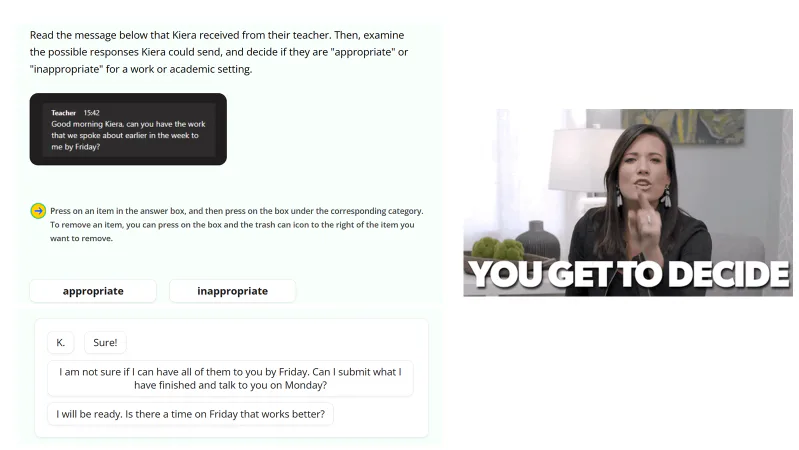
24
Multiple Select
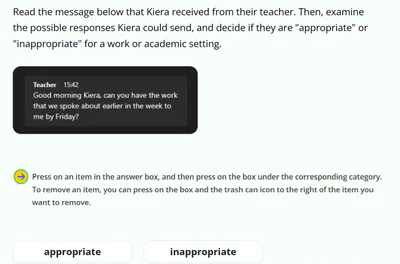
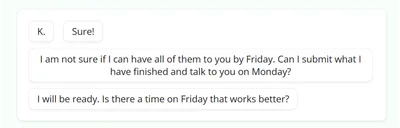
Message from Kiera's teacher: Good morning Kiera, can you have the work that we spoke about earlier in the week to me by Friday?
Which 2 responses below would be appropriate?
K
I am not sure I can have them to you by Friday. May I submit them Monday instead?
Nah
I will be ready, what time would you like them by on Friday?
25
26
Multiple Choice
Chat from Carter's teacher: Hi Carter, do you have a few minutes to chat? I have some concerns about missed assignments and how they're going to affect your grade.
What is the main idea of this message?
Carter is going to fail this class.
Carter is definitely in trouble
Carter's teacher would like to schedule a meeting.
Carter's teacher is mad at him.
27

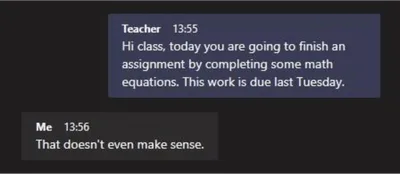
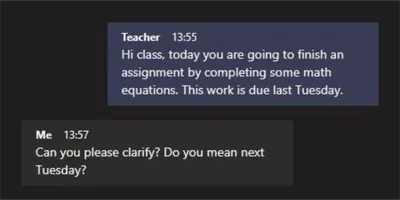
Read the conversation and consider the response to the teacher.
Determine whether the response is appropriate or inappropriate.
28
Draw
Write "A" if this response is appropriate or "I" if the response is inappropriate.
29
Draw
Write "A" is the response is appropriate, write "I" if the response is inappropriate.
30

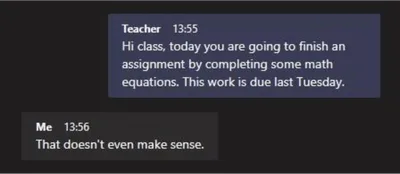
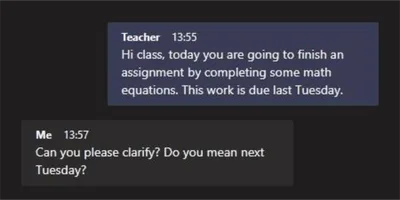
Read the conversation and consider the response to the teacher.
Determine whether the response is appropriate or inappropriate.
31

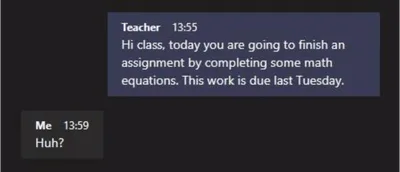
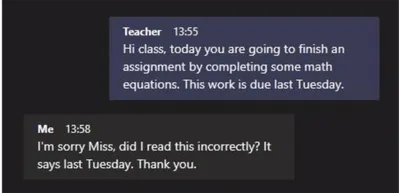
Read the conversation and consider the response to the teacher.
Determine whether the response is appropriate or inappropriate.
32
Draw
Write "A" if this response is appropriate, write "I" if this response is inappropriate.
33
Draw
Write an "A" if this response is appropriate, write "I" if this response is inappropriate.
34

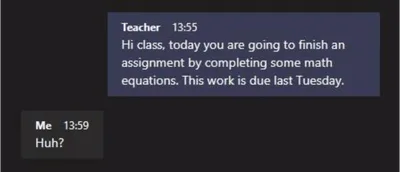
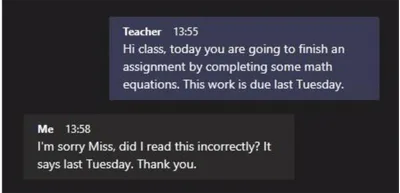
Read the conversation and consider the response to the teacher.
Determine whether the response is appropriate or inappropriate.
A
I
35
We will continue Unit 1 tomorrow. Your unit quiz will be Monday 9/15.
That's all for today! Happy Monday!
Unit 1 – Digital Citizenship
1.3 Online Communication and Listening to Listen
Show answer
Auto Play
Slide 1 / 35
SLIDE
Similar Resources on Wayground

26 questions
Circuits and Symbols
Presentation
•
9th - 12th Grade
31 questions
The War in Europe and North Africa (WW2)
Presentation
•
12th Grade
28 questions
Econ Chapters 2 & 3 Review
Presentation
•
12th Grade
30 questions
ECONOMICS TOPIC 3 LESSON 5
Presentation
•
12th Grade
30 questions
Viruses
Presentation
•
12th Grade
30 questions
Rules of Exponents
Presentation
•
12th Grade
28 questions
Module #7b: History of Political Parties
Presentation
•
12th Grade
25 questions
P1 Market Structures
Presentation
•
12th Grade
Popular Resources on Wayground
6 questions
Secondary Safety Quiz
Presentation
•
9th - 12th Grade
10 questions
Afterschool Activities & Sports

Quiz
•
6th - 8th Grade
19 questions
ROAR Week 2026
Quiz
•
9th - 12th Grade
20 questions
Lab Safety Quiz
Quiz
•
6th Grade
15 questions
Cool Tool:Chromebook
Quiz
•
6th - 8th Grade
22 questions
would you rather
Quiz
•
3rd - 11th Grade
21 questions
Continents and Oceans
Quiz
•
6th Grade
20 questions
Parts of Speech
Quiz
•
5th Grade
Discover more resources for Social Studies
16 questions
Economics: Choices & Scarcity
Quiz
•
12th Grade
15 questions
Unit 1 Quiz: Foundations
Quiz
•
9th - 12th Grade
21 questions
AgApps Obj. 1.02- FFA Ways
Presentation
•
12th Grade
4 questions
SSUSH2cd - Salutary Neglect and the Great Awakening
Presentation
•
9th - 12th Grade
20 questions
WHG CFA 1 Absolutism
Quiz
•
9th - 12th Grade
21 questions
Production Possibilities Curve Practice
Quiz
•
12th Grade
17 questions
Government Quiz #1 Review Game
Quiz
•
12th Grade
25 questions
Fundamentals Part I Quiz Review
Quiz
•
12th Grade