Unit 2 Review
Presentation
•
Chemistry
•
9th - 12th Grade
•
Easy
Erin Craven
Used 5+ times
FREE Resource
11 Slides • 38 Questions
1
Determine the Precision of the Instrument
2
Each line is called an increment.
The value given to the distance between the two line.
The smaller that value the more precise the instrument is.
What is the value of each line?
3
The larger number (1.5cm) - the smaller number (1.0 cm) ÷ the number of lines between those two numbers (5)
.5/5=
0.1 cm= each line equals
Calculate the value of the increment
4
Draw
Calculate the value of each line, using the graduated cyliner.
5
Reorder
You are given a chunk of metal that is said to be pure gold. You know the density of gold is 19.3 g/ml. You measure the mass of the metal and it has a mass of 176.8 g. Put the steps in order that would you need to take to determine if the sample is gold.
Fill a graduated cylinder with water and record the initial volume.
Put the sample in the graduated cylinder.
Record the finial volume with the sample and the the water.
Subtract the 2 values. The final value from the initial value
Calculate the density of the sample and compare it with gold's density.
6
Drag and Drop
7
DENSITY
Water displacement method
8
Fill in the Blanks
Type answer...
9
Draw
A cube is 5.0 cm on each edge. What is its density, if the mass is 257.3 g?
Answer in to the tenth. Your answer must have units. Show your work
10
Draw
Calculate the value of each line, using the graduated cyliner.
11
Estimating Numbers
24.5 ml
Numbers that come from your measurements must include:
1. the number you are 100% certain of
2. the estimated number
3. units
The estimated number is ALWAYS your last number.
Your estimated number is always one place value less than your known number (one less than your incremental value).
Each line = 100-50/5 =10 ml
Your estimated number can only go to the ones place.
I'm Sure there is 80ml, however, I'm am estimating to the ones. 85mL
12
Measurement is close to the "actual value"
Accurate
Measurements are close to each other.
Precise
How close is your measurement?
13
How much error in your measurement?
Experimental value can be called: Known, accepted, theoretical.
14
Multiple Choice
How close a measurement is to the accepted value is called:
Accuracy
Precision
Error
15
Multiple Choice
Which student had the MOST ACCURATE results?
Ash
Casey
Blake
16
Math Response
What is the average of for Casey?
17
Math Response
What is Casey's Percent error?
18
Multiple Choice
Which student's data is the MOST ACCURATE?
19
Open Ended
What is student B percent error? Round to the 100th.
20
Multiple Choice
Which best describes the target?
Precise, but not accurate
Accurate but not precise
Precise and accurate
21
Dropdown
for ruler 1 is
ruler 2 is
rule 3 is
22
Multiple Choice
Which ruler would be considered the most precise ruler?
1
2
3
4
23
Dropdown
Ruler 4 measures the paper clip at
24
Draw
What is the volume of the battery?
Show your work on the board.
Include: Known value, estimated value and units.
25
Multiple Choice
How much liquid is the graduated cylinder?
30.5 mL
35.5 mL
36.5 mL
36.0 mL
26
Categorize
Made of atoms
Makes up matter
Made of 2 or more atoms
Makes things move
Organize these options into the right categories
27
Physical or Chemical Change?
Physical Changes
These changes do not involve changing the substances chemical composition.
At the conclusion of a physical change you still have the same substance it only looks different.
28
Melting
Dissolving
Mixing
Ripping
Tearing
Cutting
Key Words to look for when determining if its a physical change.
29
Gas forms or bubbles
Chang in temperature without adding/removing heat
Change in color or odor
Formation of a precipitate: solid
Indicators of Chemical change.
30
Multiple Choice
physical change
chemical change
31
Multiple Choice
physical change
chemical change
32
Multiple Choice
physical change
chemical change
33
Multiple Choice

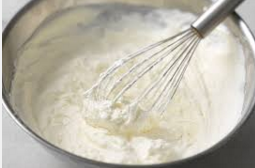
Is bleaching your hair a physical or chemical change?
physical change
chemical change
34
Multiple Choice

Is corroding metal a chemical or physical change?
physical change
chemical change
35
Multiple Choice

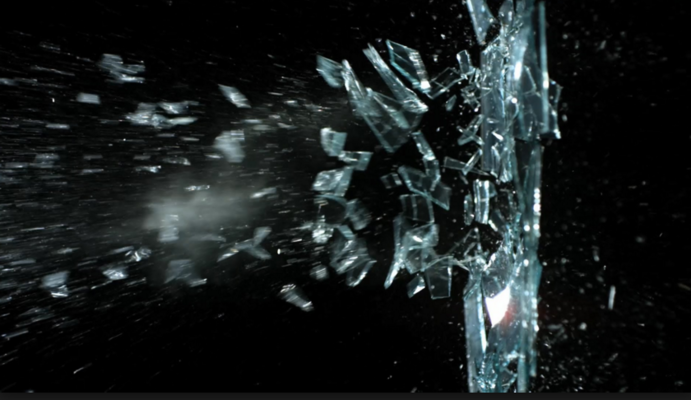
Are fireworks exploding a physical or chemical change?
physical change
chemical change
36
Multiple Choice

37
Multiple Choice
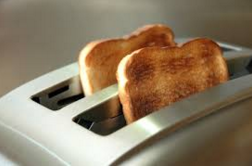
Is toasting a piece of bread a chemical or physical change?
physical change
chemical change
38
Multiple Choice

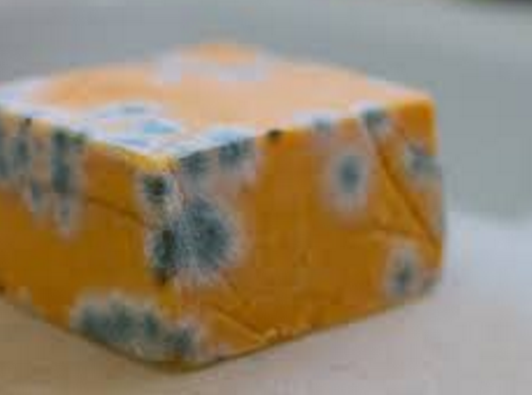
Is moldy cheese a chemical or physical change?
physical change
chemical change
39
Multiple Choice

40
Review Questions
41
Categorize
Shiny
pH above 7
Alkaline
Conducts electricity
Dull
Brittle
Insulator
pH below 7
Acidic
Reacts with acid
Categorize the following Physical and Chemical properties as belonging to Metals or Nonmetals
42
Multiple Choice
Between what two points is the most energy being added to cause a phase change?
43
Multiple Choice
Thermal Energy, also known as heat, flows from …
Hot objects to hotter objects.
Cooler objects to warmer objects.
Warmer objects to hotter objects.
Warmer objects to cooler objects
44
Multiple Choice
Which best describes the target?
Precise, but not accurate
Accurate but not precise
Precise and accurate
45
Match
Match the parts of the graph with the correct label
Title
Independent variable
Dependent variable
1 Chirp/Degree F
Cricket Chirps vs. Temperature
Number of Chirps
Temperature
Slope
Cricket Chirps vs. Temperature
Number of Chirps
Temperature
Slope
46
Fill in the Blanks
47
Multiple Select
What type of physical property is being shown in the picture?
What type of elements exhibit this property?
Ductile
Brittle
Sulfur
Copper
48
Open Ended
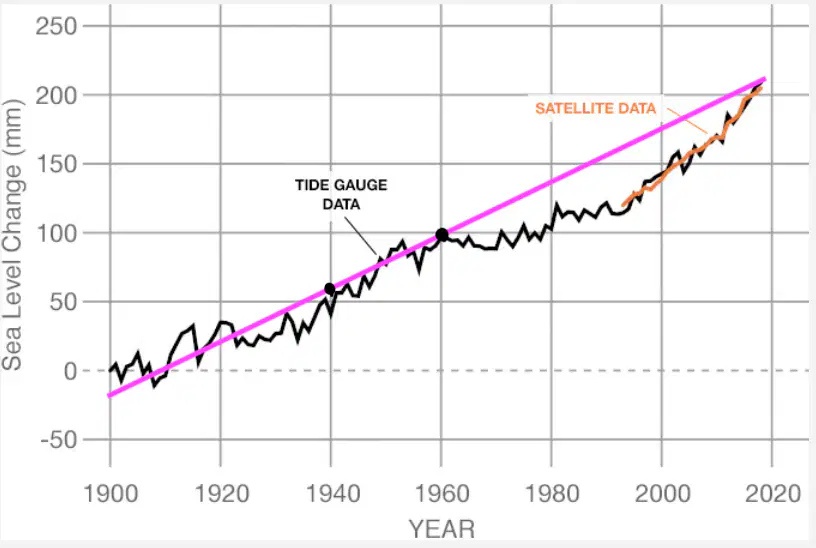
A. What is the slope of the line? Your answer needs to include the units of measurement.
(y2−y1)÷(x2−x1)
49
Multiple Choice
Which prediction would prove this model correct?
If energy is removed then the gas will condense to a liquid
If energy is added the solid will melt to a liquid.
If energy is added the chemical properties of the atom will change.
Determine the Precision of the Instrument
Show answer
Auto Play
Slide 1 / 49
SLIDE

Similar Resources on Wayground
44 questions
Phase Diagrams and Heating/Cooling Curves
Presentation
•
9th - 12th Grade
44 questions
Intro to the Periodic Table
Presentation
•
10th - 12th Grade
40 questions
Writing and Naming Acids
Presentation
•
9th - 12th Grade
48 questions
LESSON - 3rd 6wks
Presentation
•
9th - 12th Grade
42 questions
4-3 Logarithmic Functions
Presentation
•
9th - 12th Grade
42 questions
Biomolecule terms 2 - Enzymes
Presentation
•
9th - 12th Grade
45 questions
Skeletal System
Presentation
•
9th - 12th Grade
Popular Resources on Wayground
16 questions
Grade 3 Simulation Assessment 2
Quiz
•
3rd Grade
19 questions
HCS Grade 5 Simulation Assessment_1 2526sy
Quiz
•
5th Grade
10 questions
Cinco de Mayo Trivia Questions
Interactive video
•
3rd - 5th Grade
17 questions
HCS Grade 4 Simulation Assessment_2 2526sy
Quiz
•
4th Grade
24 questions
HCS Grade 5 Simulation Assessment_2 2526sy
Quiz
•
5th Grade
13 questions
Cinco de mayo
Interactive video
•
6th - 8th Grade
20 questions
Math Review
Quiz
•
3rd Grade
30 questions
GVMS House Trivia 2026
Quiz
•
6th - 8th Grade
Discover more resources for Chemistry
22 questions
Solubility Curve Practice
Quiz
•
10th Grade
25 questions
Unit 12 Thermochemistry Review
Quiz
•
10th Grade
20 questions
Types of Chemical Reactions
Quiz
•
9th - 12th Grade
20 questions
Interpreting Solubility Curves
Quiz
•
10th Grade
20 questions
Types of Chemical Reactions
Quiz
•
10th Grade
43 questions
Acids and Bases Review
Quiz
•
10th - 11th Grade
20 questions
Thermochemistry Review
Quiz
•
10th Grade
25 questions
Unit 4 (Mid) Rumble
Quiz
•
10th Grade