Search Header Logo
  1. Resource Library
  2. Science
  3. Chemistry
  4. ...
  5. Ionic Bonding Lesson
Ionic Bonding Lesson

Ionic Bonding Lesson

Assessment

Presentation

Science

10th Grade

Easy

NGSS
HS-PS1-1, HS-PS1-2, MS-PS1-1

+3

Standards-aligned

Created by

Diana Bowman

Used 5+ times

FREE Resource

1 Slide • 39 Questions

1

2

Multiple Choice

Question image

The positive ions tend to _____________ electrons.

1

lose

2

gain

3

Multiple Choice

Question image

Using the model, write the chemical formula for an ionic compound that has Mg and Cl.

1

MgCl2

2

Mg2Cl2

3

Mg+2Cl-1

4

Mg2Cl2

4

Multiple Choice

Question image

Using the model for the formation of Scandium Fluoride (an ionic compound), write the chemical formula.

1

Sc3F

2

Sc3F3

3

Sc+3F-1

4

ScF3

5

Multiple Choice

Question image

Why are there two sodiums (Na), in the formation of this ionic compound?

1

There always has to be 2 metals

2

The overall charge needs to add up to 4

3

The overall charge has to be 0

4

It needs to have more metal atoms than nonmetal

6

Multiple Choice

Question image

Nonmetals (like Cl) typically ____ electrons when they form ionic bonds.

1

Gain

2

Lose

3

Keep the same

7

Multiple Choice

Question image

Metals (like Na) typically _____ electrons in the formation of ionic bonds.

1

Gain

2

Lose

3

Keep the same

8

Multiple Choice

Question image

Write the chemical formula for Na and S (sodium sulfide).

1

NaS

2

S2S2

3

Na2S

4

NaS2

9

Multiple Choice

Question image

Write the chemical formula for K and Br (potassium bromide).

1

KBr

2

K2Br

3

KBr3

4

KBr2

10

Multiple Choice

Question image

Anions ____ electrons, becoming _____ charged.

1

Gain; positively (+)

2

Gain; negatively (-)

3

Lose; positively (+)

4

Lose; negatively (-)

11

Multiple Choice

Question image

Cations _______ electrons, becoming _______ charged.

1

Gain; positively (+)

2

Gain; negatively (-)

3

Lose; positively (+)

4

Lose; negatively (-)

12

Multiple Choice

If you were to draw the lewis dot structure for Germanium (Ge), how many dots would you put around it?

1

2

2

4

3

6

4

8

13

Multiple Choice

Question image

Name this ionic compound: Al2O3

1

Dialuminum oxide

2

Aluminum oxygen

3

Oxygen Aluminide

4

Aluminum oxide

14

Multiple Choice

Question image

What is the correct formula for Sodium Chloride?

1

SCl

2

NaCl

3

SC

4

NaCl2

15

Multiple Choice

Question image

Why do elements form chemical bonds?

1

Because they're friendly

2

To create a new element

3

To become stable

4

Because they all need to gain more electrons

16

Multiple Choice

Question image

Atoms are most stable when their outer shell is complete.

1

True

2

False

17

Multiple Choice

Question image

Ionic bonds typically form between

1

A metal and a nonmetal

2

Two nonmetals

3

Two metals

4

A metalloid and a metal

18

Multiple Choice

How many valence electrons does Po (Polonium) have? (Use your PTable)

1

2

2

4

3

6

4

8

19

Multiple Choice

How many valence electrons does Mg have? (use the PTable)

1

1

2

2

3

3

4

4

5

5

20

Multiple Choice

Question image

Ionic bonds are formed when electrons get

1

Shared between two atoms

2

Removed from both atoms

3

Transferred from one atom to another

4

Added to both atoms

21

Multiple Choice

Question image

How many VALENCE ELECTRONS does Chlorine have?

1

2

2

7

3

8

4

10

5

17

22

Multiple Choice

Question image

The negative ions tend to _____________ electrons.

1

lose

2

gain

23

Multiple Choice

When an atom loses an electron, it becomes a

1

positive ion

2

negative ion

3

neutral ion

4

neutral atom

24

Multiple Choice

Why do all bonds form?

1

so the number of protons equals the number of electrons

2

so an atom can become unstable

3

to fill the outermost energy level

25

Multiple Choice

Ionic bonds are between...
1
Metal and Non-metal
2
Non-metal and Non-metal
3
Metal and Metal

26

Multiple Choice

How are ionic bonds formed?
1
Transfer of electrons
2
Sharing of electrons

27

Multiple Choice

Why do elements bond?
1
To be friends
2
To create a new element
3
To become stable

28

Multiple Choice

Question image
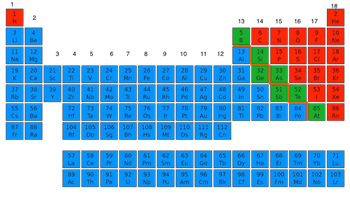
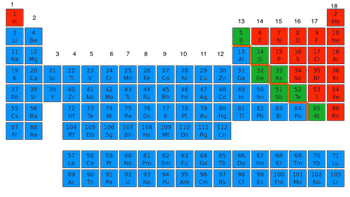
Where are the nonmetals located on the periodic table? 
1
Blue
2
Red
3
Green

29

Multiple Choice

Question image
Where are metals located on the periodic table?
1
Blue
2
Green
3
Red

30

Multiple Choice

Ionic bonds form between two ions that have...
1
ionic compounds
2
negative charges
3
positive charges
4
opposite charges

31

Multiple Choice

Question image

What type of elements form cations?

1

metals

2

nonmetals

3

metalloids?

32

Multiple Choice

Anions

1

Gain electrons, has an overall positive charge

2

Lose electrons, has an overall positive charge

3

Lose electrons, has an overall negative charge

4

Gain electrons, has an overall negative charge

33

Multiple Choice

Cations

1

Gain electrons, has an overall positive charge

2

Lose electrons, has an overall positive charge

3

Lose electrons, has an overall negative charge

4

Gain electrons, has an overall negative charge

34

Multiple Choice

How does calcium become an calcium ion?

1

it loses 2 electrons

2

it gains 2 electrons

35

Multiple Choice

How does magnesium become an magnesium ion?

1

it loses 2 electrons

2

it gains 2 electrons

36

Multiple Choice

How does oxygen become an oxide ion?

1

it loses 2 electrons

2

it gains 2 electrons

37

Multiple Choice

Is hydrogen considered a metal or a non-metal?
1
A metal
2
Nonmetal
3
Metalloid

38

Multiple Choice

Question image
Is this ionic bond drawn correctly?
1
Yes
2
No

39

Multiple Choice

An electron has what kind of charge?
1
no charge
2
positive 
3
negative
4
it depends

40

Multiple Choice

How many Aluminum atoms are in Al2O3?

1

3

2

5

3

2

4

1

Show answer

Auto Play

Slide 1 / 40

SLIDE