
Court Power

Presentation
•
Social Studies
•
12th Grade
•
Practice Problem
•
Medium

Amy Schneider
Used 2+ times
FREE Resource
12 Slides • 6 Questions
1
COURT
POWER
UNIT 6-11
2
LESSON OVERVIEW
Students Will Be Able To:
o Apply the concepts of common law, judicial activism and restraint, double jeopardy, and dual prosecution.
o Evaluate what approaches to law make courts fairest and most effective.
Vocabulary:
o Double Jeopardy, Dual Prosecution, Civil Law, Common Law, Judicial Activism, Judicial Restraint
3
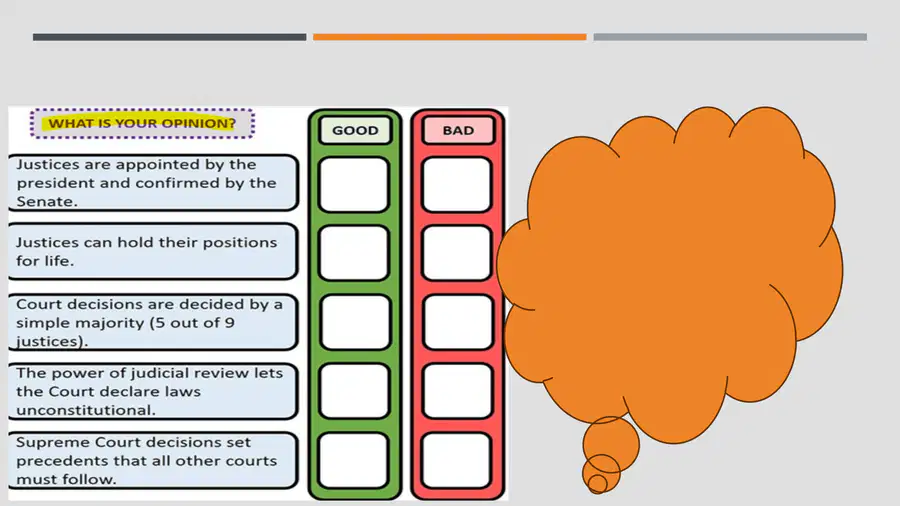
ESSENTIAL QUESTION- HOW APPROPRIATE ARE THE COURTS'
POWERS FOR CREATING AN EFFECTIVE AND FAIR GOVERNMENT?
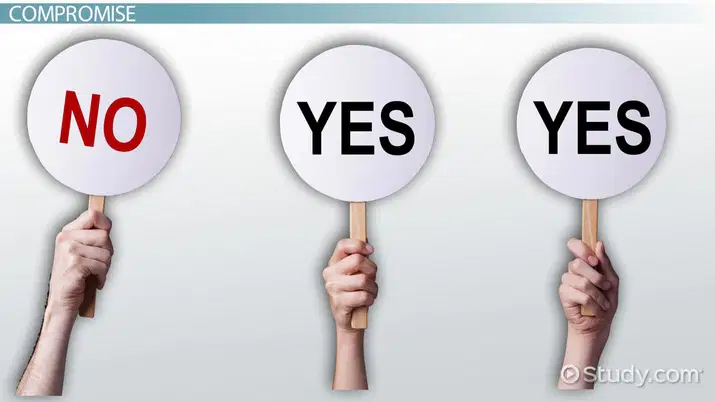
Your Opinion Matters!
As you look over these
statements which ones do
you think are good and/or
bad and why?
Hint- think about
everything we have
covered about the
principles of government
so far.
4
Dropdown

5
Dropdown

6
Dropdown
7
Dropdown

8
Dropdown
9

CIVIL LAW AND COMMON LAW
Both of these terms describe a way to organize laws based on how you interpret them
Historically Common Law began in England during the Middle Ages and Civil Law began in continental Europe (the rest of what we call Europe on the map)
Civil Law- courts interpret laws by examining written legal codes as passed by legislatures and apply them to a given situation
o Civil Law judges are primarily concerned with correctly applying existing laws
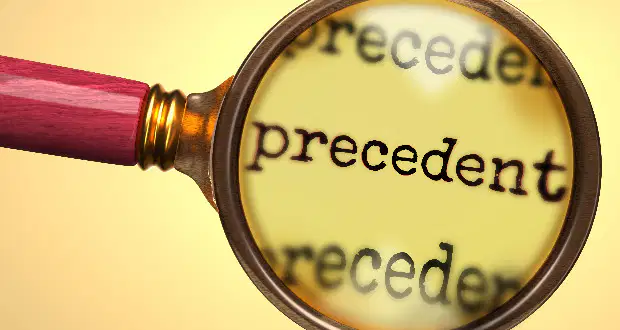
Common Law- courts make decisions based on similar, previous cases (Precedents)
o Common Law judges follow precedents and help to make laws clearer as new court cases develop
The United States' court system, including the Supreme Court, uses common law which we borrowed from the British
10
11
Multiple Choice
Which line from the video BEST characterizes the United States' legal system as following common law?
"which belongs to the Anglo-American legal system"
"the judge would... look for a comparable case"
"the court held the department store owner responsible"
12
JUDICIAL ACTIVISM AND RESTRAINT
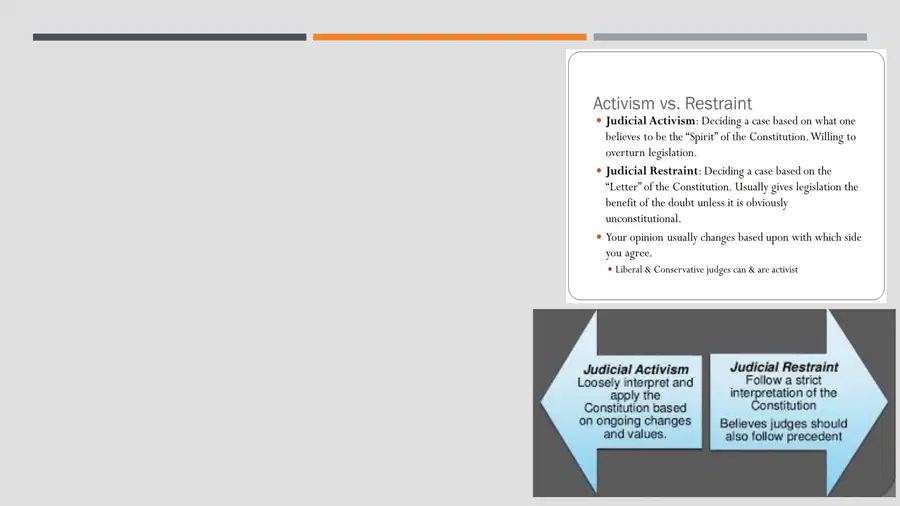
These are two different philosophies (ways of thinking) that can influence a Justice to change policy
Judicial Activism- the idea that Justices should use the Supreme Court to influence policy to reflect modern issues and create positive social change (Loose Constructionism)
Judicial Restraint- is the idea that Justices should follow
established precedents and not make major changes (Strict Constructionism)
So even with these philosophies, the government has rules in place to limit the power of the judicial branch (Checks and Balances)
Point to Ponder - Can you think of examples of how the court has used these philosophies?
13
14

HOW THE COURTS AFFECT POLICY
The courts have the ability to focus on an exact policy or question, whereas the Executive and Legislative branches take a broader view
The Judicial Branch can influence policy through ruling and interpretations
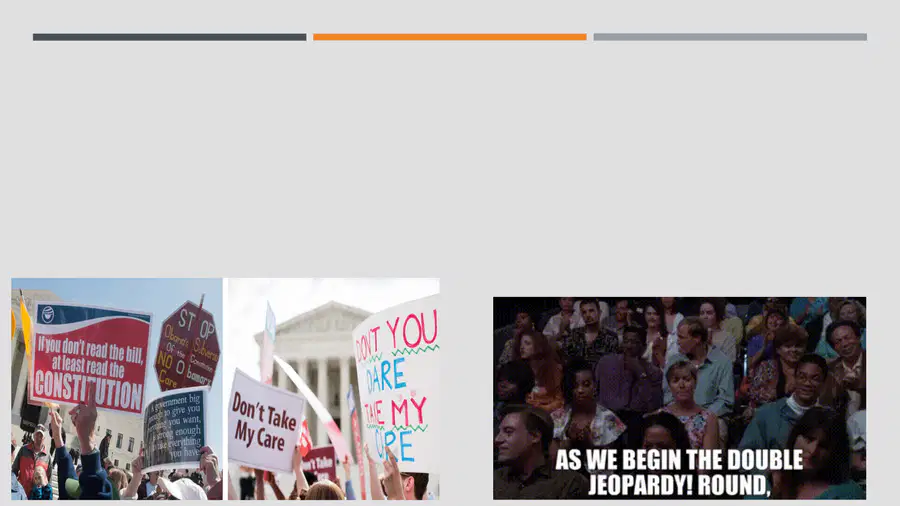
Example- The Patient Protection and Affordable Care Act (ACA) also known as "Obama Care"
oThis law significantly changed the nation's healthcare system with the goal of making
healthcare more affordable
oCritics of the law knew that Congress was unlikely to change the law, so they took it to the
courts
oThey challenged the "constitutionality" of the law and wanted the Supreme Court to exercise Judicial Review
oThe Court ruled in a 5-4 decision to uphold the ACA law (2012)
oIn 2014 the Court rules that corporations could, for religious reasons, be exempt from some of the requirements of the law
o2015 the Court ruled that the federal government was able to provide tax credits to those that bought their insurance through the service
In this role the Supreme Court is acting like an Umpire and enforcing the rules between the Executive and Legislative Branches
15
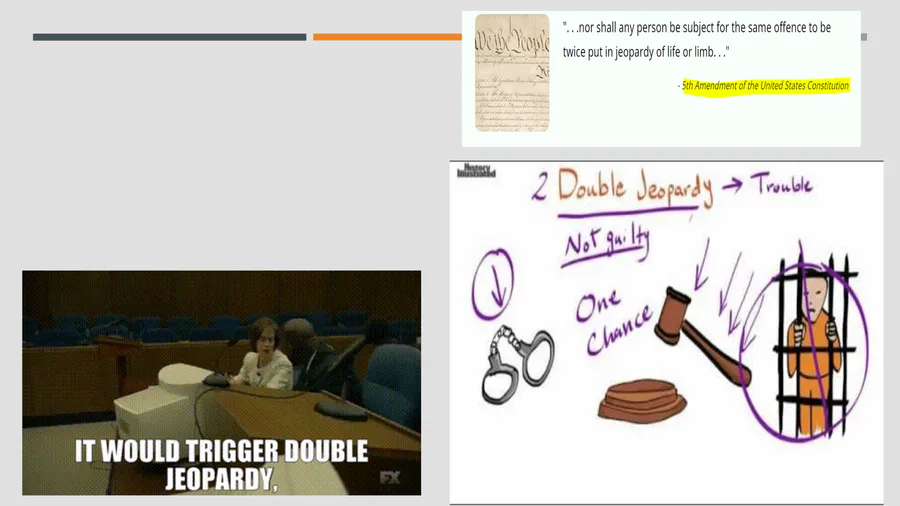
DOUBLE JEOPARDY
The role of courts is to put people on trial for committing crimes, but we also have rules in place to protect those people's rights
You are protected from Double Jeopardy- being put on trial for the same crime more than once (5th Amendment of the Constitution)
16
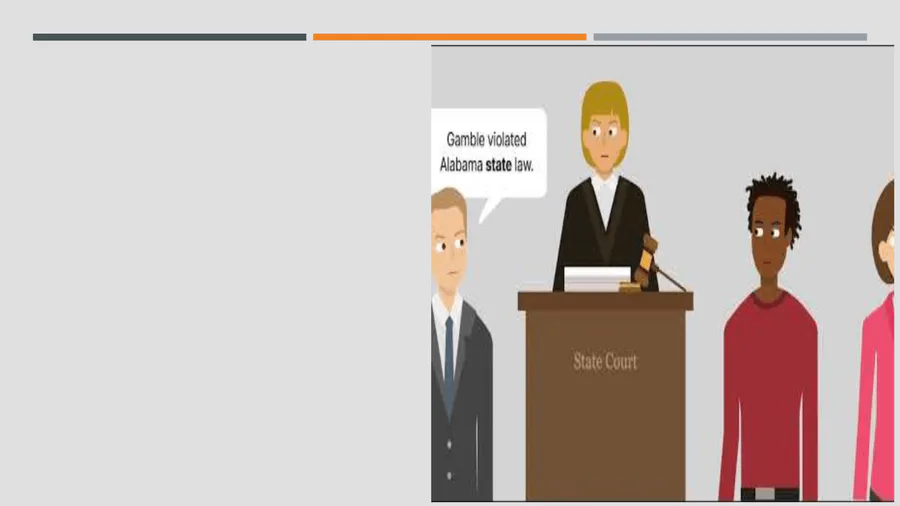
DUAL PROSECUTION
It is possible to be prosecuted at both the state and
federal level and not violate the Double Jeopardy rules
The crime would have to violate both state and federal laws, known as Dual Prosecution- double prosecution
Example-
oIn 2015 an Alabama court sentenced Terance Martez
Gamble to one year in prison for possessing a handgun illegally
oThis also violated a federal law and a federal court sentence him to three more years
oTook his case to the Supreme Court, in a 7-2 decision the
Supreme Court ruled this did not violate Double Jeopardy
oThe majority decision held that due to federalism there were two separate courts and thereby two separate offenses
17

COURT POWER & INDIVIDUAL RIGHTS
The Constitution protects the rights of people, especially when dealing with courts and crimes
Examples-
oRight to a speedy trial
oProtection from testifying against yourself
oProtection from unreasonable search and seizures
oProtection from cruel and unusual punishment
Courts need to balance individual constitutional rights with the need to protect the public/society
Questions to Consider-
oIf pulled over for speeding and given a breathalyzer is that an unreasonable search and seizure?
oHow far does free speech go until it is considered an illegal threat of violence against someone?
Remember that courts make decisions that can influence people
throughout the country
18
ESSENTIAL QUESTION- HOW APPROPRIATE ARE THE COURTS'
POWERS FOR CREATING AN EFFECTIVE AND FAIR
GOVERNMENT?
Civil law is based on legal codes, while common law is based on precedents.
Court rulings can change public policies.
Judicial activism involves making rulings to change policies, while judicial restraint
seeks to limit changes.
People cannot be tried for the same offense twice, but they can be tried for
breaking similar state and federal laws.
Courts must balance individual rights with the common good.
COURT
POWER
UNIT 6-11
Show answer
Auto Play
Slide 1 / 18
SLIDE
Similar Resources on Wayground

13 questions
Supply
Presentation
•
11th - 12th Grade
11 questions
Martin Luther King and Malcolm X Debate
Presentation
•
12th Grade
13 questions
Mastering Consumer Skills
Presentation
•
12th Grade
12 questions
DEMAND
Presentation
•
11th - 12th Grade
13 questions
FODA
Presentation
•
12th Grade
13 questions
PRUEBA CUARTO PARCIAL MATEMÁTICA (SEGUNDO AÑO)
Presentation
•
12th Grade
14 questions
Pronoun Problems
Presentation
•
12th Grade
13 questions
Rise and Fall of the Ottomans
Presentation
•
12th Grade
Popular Resources on Wayground
10 questions
How much do you know about our Portrait of an Eagle?

Quiz
•
10th Grade
10 questions
Fast Food Slogans
Quiz
•
6th - 8th Grade
21 questions
Continents and Oceans
Quiz
•
6th Grade
20 questions
Parts of Speech
Quiz
•
5th Grade
16 questions
Subject & Predicate
Quiz
•
5th Grade
25 questions
Multiplication Facts
Quiz
•
5th Grade
12 questions
Map Skills
Quiz
•
3rd Grade
22 questions
Continents and Oceans
Quiz
•
5th Grade
Discover more resources for Social Studies
46 questions
Unit 1 Test REVIEW Ancient Greece and Rome
Quiz
•
9th - 12th Grade
27 questions
Supply & Demand Test Review
Quiz
•
12th Grade
36 questions
Unit 5 Key Terms
Quiz
•
11th Grade - University
12 questions
supply and demand shifters
Quiz
•
9th - 12th Grade
25 questions
NGPF Budgeting - Unit Test
Quiz
•
12th Grade
16 questions
Unit 3 Personal Finance Guided Notes
Presentation
•
9th - 12th Grade
19 questions
USHC 5 Spanish-American War to Panama Canal
Quiz
•
9th - 12th Grade
22 questions
2.5A: Changes in Political Parties Over Time
Presentation
•
12th Grade