Search Header Logo
Cell Characteristics & Types: Pro vs Eu

Cell Characteristics & Types: Pro vs Eu

Assessment

Presentation

•

Biology

•

10th Grade

•

Easy

•
NGSS
MS-LS1-1, MS-LS1-2, MS-LS3-1

+2

Standards-aligned

Created by

Amy Kirkwood

Used 6+ times

FREE Resource

15 Slides • 44 Questions

1

Cell Characteristics & Types:
Prokaryotes vs Eukaryotes

2

Do you know your vocabulary?

Most terms should be familiar to you already, but let's see!

3

Match

As a pre-assessment, match the following terms to their definitions. Let's see what you know.

Cells

Prokaryotes

Eukaryotes

Structure & Function

Organelles

The basic unit of life

Cells without a nucleus

Cells with a nucleus

Shape & Job

Cell structures with specific functions

4

Match

Match the following terms and definitions.

Tissue

Organs

Cell

System

Organism

A group of similar cells that perform a specific function

A group of tissues that work together to perform a specific function

The basic unit of life

A group of organs that work together to perform complex functions

A living being that can function independently

5

Match

Match the following terms to their definitions.

Unicellular

Multicellular

Autotroph

Heterotroph

Organism made up of a single cell

Organism made up of multiple cells

Organism that produces its own food

Organism that consumes other organisms for food

6

Instructional Delivery

Do you know about the types of cells?

7

media

Look at how these parts build to make the next!

​

Levels of Organization

8

Reorder

Put these parts in order from smallest to largest. What builds to make the next thing?

Atoms

Molecules

Macromolecules

Organelles

Cells

1
2
3
4
5

9

Reorder

Put these parts in order from smallest to largest. What builds to make the next thing?

Cells

Tissues

Organs

Organ Systems

Organism

1
2
3
4
5

10

Reorder

Put these parts in order from smallest to largest. What builds to make the next thing?

Organism

Population

Community

Ecosystem

Biosphere

1
2
3
4
5

11

Hotspot

Where does life begin within these levels?

12

media

13

Multiple Choice

What is an example of a unicellular organism?

1

Mushroom

2

Bacteria

3

Human

4

Plant

14

media

​These are the original parts of the Cell Theory, but in modern times other features have been added over time.

15

media

The generally accepted parts of modern cell theory include:

  1. All known living things are made up of one or more cells.

  2. All living cells arise from pre-existing cells by division.

  3. The cell is the fundamental unit of structure and function in all living organisms.

  4. The activity of an organism depends on the total activity of independent cells.

  5. Energy flow (metabolism and biochemistry) occurs within cells.

  6. Cells contain DNA which is in the chromosomes and RNA found in the cell nucleus and cytoplasm.

  7. All cells are basically the same in chemical composition in organisms of similar species.

Additions to the Cell Theory

16

Multiple Choice

Can life come from non-life?

1

Yes

2

No

3

Sometimes

17

Multiple Choice

True or False?

A virus is considered a living thing?

1

True

2

False

18

Multiple Select

Question image

Which 4 cell parts & organelles do all cells have?

1

Cell/Plasma Membrane

2

Cytoplasm

3

Ribosomes

4

DNA

5

Cell Wall

19

media

20

media
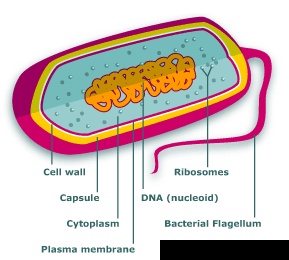
  • examples include bateria

  • ​a simple, single-celled organism

  • lack (do not have) a nucleus

  • lack (do not have) membrane-bound organelles, like a mitochondria

  • significantly smaller than eukaryotic cells

  • Main DNA & plasmids (circular) in the cytoplasm

Prokaryotic Cells

  • examples include plants, animals, and fungi

  • ​Complex, multicellular organisms

  • do have a nucleus

  • do have membrane bound organelles like a mitochondria

  • Large cells

  • DNA is linear in the nucleus

Eukaryotic Cells

media

21

Hotspot

Which cell is the simple, prokaryotic cell? Click the circle in the picture to select your answer.

22

Hotspot

Which cell is the complex, eukaryotic cell? Click the circle in the picture to select your answer.

23

Categorize

Options (16)

No nucleus

No Membrane bound Organelles

Unicellular
Circular DNA

Bacteria

Cytoplasm

Ribosomes

Cell Membrane

Genetic Material

Has a nucleus
Membrane bound organelles

Larger & Complex

Fungi, Protist, Plant, Animal

Linear DNA

Simple & Small

Either Unicellular or Multicellular

What are the characteristics of prokaryotes vs eukaryotes?

Prokaryotes
All Cells
Eukaryotes

24

Multiple Select

What are the characteristics of prokaryotic cells?​ ​ ​

1
No membrane bound organelles
2
Example: Bacteria
3
Has Membrane Bound Organelles
4

No Nucleus

5
Example: Animals

25

Multiple Select

Which options below are typical of eukaryotic cells?

1

Has Nucleus

2

Complex, Larger Cells

3

Small, Simple Cells

4

Has Membrane Bound Organelles

5

Bacteria

26

Let's review & see what you know!

See if you can answer the following questions after watching the video!

27

28

Match

Question image

Match the following

Prokaryote

Eukaryote

Both

No nucleus or membrane bound organelles

has nucleus + membrane bound organelles

Cell Membrane

and cytoplasm and DNA

29

Match

Question image

Match the following

Prokaryotes DNA

Eukaryotes DNA

Both

free floating in the cytoplasm

located in the nucleus

contain genetic material (DNA)

30

Multiple Choice

How does the size of prokaryotic cells compare to eukaryotic cells?

1

Prokaryotic cells are much smaller than eukaryotic cells.

2

Eukaryotic cells are typically smaller than prokaryotic cells.

3

Prokaryotic cells can be the same size as eukaryotic cells, if they grow under the right conditions.

4

Prokaryotic and eukaryotic cells are the same size.

31

Multiple Choice

The _______ is the smallest structural and functional unit of a living thing.

1

atom

2

cell

3

bone

4

blood

32

Multiple Choice

Both prokaryotes and eukaryotes have DNA.

1

True

2

False

33

Multiple Choice

Prokaryotic cells do not have…….

1

membrane bound organelles

2

cell membrane

3

DNA

4

genetic material

34

Multiple Choice

Both prokaryotes and eukaryotes have a nucleus.
1
True
2
False

35

Multiple Choice

Question image

Which type of cell?

1

Prokaryote

2

Eukaryote

3

Both

4

Neither

36

Multiple Choice

Question image
Which type of cell?
1
Prokaryote
2
Eukaryote

37

Multiple Choice

Question image
This is a picture of:
1
Prokaryote
2
Eukaryote

38

Multiple Choice

Plants and animal cells are examples of ___ cells

1

prokaryotic cells

2

eukaryotic cells

3

both eukaryotic and prokaryotic

4

neither

39

Multiple Choice

Which organelle is responsible for storing a eukaryotic cells genetic material?

1

Cytoplasm

2

Nucleus

3

Mitochondria

4

Chloroplast

40

Multiple Choice

Which of the following is NOT a characteristic of a Prokaryotic cell?

1

unicellular

2

floating DNA

3

very small

4

complex

41

Multiple Choice

A fossilized cell is discovered, and evidence suggests it reproduced on its own and had DNA, but a membrane did not enclose its DNA. Which type of organism would this most likely be?
1
prokaryote
2
eukaryote
3
plant cell
4
animal cell

42

Multiple Choice

What is a prokaryote?

1

A multi-celled organism with no nucleus

2

A single-celled organism with no nucleus

3

A multi-celled organism with a true nucelus

4

A multi-celled organism with no nucleus

43

Multiple Choice

What is a eukaryote?

1

A multi-celled organism with a true nucleus

2

A multi-celled organism without a nucleus

3

A single-celled organism with a true nucleus

4

A single-celled organism without a nucleus

44

Multiple Choice

Question image

A Prokaryote and Eukaryotes are shown. Which characteristic best distinguishes these cells as either prokaryotes or eukaryotes?

1

The purpose of the flagella.

2

The organization of the genetic material.

3

The location of the cytoplasm.

4

The role of the cell membrane.

45

Multiple Choice

Question image

Students used a microscope to look at 4 different cells. The students placed an X for each structure that was viewed for each cell in the table shown. Which cell is most likely considered a prokaryote?

1

Cell W

2

Cell X

3

Cell Y

4

Cell Z

46

Multiple Choice

Question image

Students gathered information from a lab investigation to prepare this table shown. Which answer choice correctly identifies the two cells described in the table?

1

Both cells are eukaryotes

2

Both cells are prokaryotes

3

Cell 1 is a prokaryote, Cell 2 is a eukaryote.

4

Cell 1 is a eukaryote, Cell 2 is a prokaryote.

47

Multiple Choice

Question image

A table is shown grouping specific cells together. What should the table headings for these two groups be?

1

1 = Prokaryotes,

2 = Eukaryotes

2

1 = Animal Cells,

2 = Plant Cells

3

1 = Mobile Cells,

2 = Motile Cells

4

1 = Eukaryotes,

2 = Prokaryotes

48

Multiple Choice

Question image

 Prokaryotes and Eukaryotes share all of the following structures EXCEPT 

1

Cell membrane

2

Genetic Material

3

Cytoplasm

4

Golgi Body

49

Fill in the Blank

The responsibility of this organelle is to hold genetic material in Eukaryotic Cells.

50

Multiple Select

The Cell Theory contains which of the following tenants  (SELECT ALL THAT APPLY)

1

All living things are made of cells 

2

Cells are the smallest unit of a living organism 

3

Most cells come from pre-existing cells 

51

Multiple Choice

Question image

Fungi would be considered to be which type of cell/

1

Prokaryote

2

Eukaryote

52

Multiple Choice

What is the statement "Pro-" rhymes with "no" a memory trip for?

1

Prokaryotes have NO cell membrane

2

Prokaryotes have NO nucleus

3

Prokaryotes have NO ribosomes

4

Prokaryotes have NO DNA

53

Multiple Choice

"Eu" rhymes with "Do".  What do eukaryotes have that prokaryotes do not?

1

membrane bound organelles

2

cytoplasm

3

ribosomes

4

Cell membrane

54

media

Closure

55

media

Smaller
No Nucleus
No membrane-

bound organelles

Older

DNA
Ribosomes
Cell Membrane
Cytoplasm

Larger
Nucleus
Membrane- bound

Organelles

Newer
More complex

56

Multiple Choice

Question image

Some students used information they gathered from lab investigations to prepare a table. They entered the table in their lab notebooks.

Which of these correctly identifies the two cells described in the table?

1

Cell 1 is eukaryotic, and Cell 2 is prokaryotic.

2

Cell 1 is prokaryotic, and Cell 2 is eukaryotic.

3

Both Cell 1 and Cell 2 are eukaryotic.

4

Both Cell 1 and Cell 2 are prokaryotic

57

Open Ended

Summarize the similarities and differences of prokaryotic cells and eukaryotic cells.

58

Cell Organelles

To prepare for the next section in the unit, watch the following video. The next slide is a video of the various cell organelles and reviews a bit of the prokaryote vs eukaryote information.

59

Cell Characteristics & Types:
Prokaryotes vs Eukaryotes

Show answer

Auto Play

Slide 1 / 59

SLIDE