
- Resource Library
- Social Studies
- Civics & Government
- The Constitution
- 7.1 Intro To The Constitution In Action
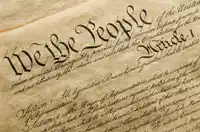
7.1 Intro to the Constitution in Action

Presentation
•
Social Studies
•
12th Grade
•
Practice Problem
•
Easy

Amy Schneider
Used 2+ times
FREE Resource
13 Slides • 3 Questions
1

Intro to the
Constitution in
Action
This Photo by Unknown author is licensed under CC BY-NC-ND.
2


Lesson Overview
• Students Will Be Able To:
o Identify the purpose of the Articles of the Constitution.
o Explain how the Constitution was designed to address some of the
main concerns of the Framers.
• Vocabulary:
o Article IV (4), Article V (5), Article VI (6), Article VII (7), Precedence


3


Remember Where We Started...
• In writing the Constitution the Framers needed to overcome
these issues/obstacles that were not addressed well enough
by the Articles of Confederation (AOC):
oWeak National Government
oState Sovereignty
oRegional Factions
oFederalists and Anti-Federalists


4


Essential Question- How does the U.S Constitution continue to provide a framework for the American government today?
Remember
how we said
before that the
Constitution is
the "Blueprint"
or the "Rules"
of the
country!!
5


Articles I (1), II (2), and III (3)
• The "Framers" created a government with three parts that all work separately
but together and can check one another's powers
oArticle I- The Legislative Branch
oArticle II- The Executive Branch
oArticle III- The Judicial Branch
• The Framers wanted a government that would be thoughtful and debate ideas
before acting


6
Multiple Select
What features did the Framers install in the Constitution so that government officials make thoughtful and just laws? **Select the 3 that apply.
Bicameral legislature that requires cooperation between the chambers to pass laws
Separate branches of government that must cooperate to govern
Using the popular vote to elect ALL officials
System of checks and balances to ensure no branch becomes too powerful
7

The U.S. Constitution | Constitution Center
You can open this webpage in a new tab.
8


Article IV (4) - Upholds Federalism
• This was included to help the states not be
overpowered by the national (federal)
government
• Sections 1 and 2
oStates are required to recognize one another's laws
(Full Faith and Credit Clause)
oSo, a driver's license or high school diploma from one state is recognized by others
oReturn a person accused of a crime to the state that has accused them
• Sections 3 and 4
oDeals with the states and the federal government
oGrants the federal government the power to admit
new states, defend the states and, maintain a
republican form of government


9


Article V (5) -Amendment Process
• To change the Constitution, you must have an
amendment, and this is spelled out in Article 5
• You must have-
oAt least two-thirds of both houses of Congress or
two-thirds of the states are required to propose an
amendment.
oAt least three-fourths of the state legislatures or
constitutional conventions are required to ratify an
amendment.
• Can also be used to change laws or flaws in the
Constitution
oAmendments 13-14-15 (Civil Rights Amendments)

10
11
Multiple Choice

How has Article V been used to make the Constitution responsive to change?
To delete sections of the Constitution that are no longer necessary
To ensure Constitutional changes are only made by the executive branch
To reflect the needs of the changing society/make corrections
12

13
Dropdown
14


Article VI (6)- Supreme Law of the Land
• Establishes the Constitution as the "Supreme
Law" of the land as stated by the Supremacy
Clause
oStates that the Constitution takes Precedence-
priority over all other laws
• So, remember that all states have their own
Constitutions, but the U.S. Constitution is the
"Law of the Land"
•Point to Ponder- Why do you think
that they worded the language in
Article 6 this way?

15
16

Essential Question- How does the U.S. Constitution continue to provide a framework for the American government today?
• The Constitution is slow to change because the Framers
wanted to force factions to compromise and agree before
acting rashly.
• The Constitution has changed since 1787 to provide a way
to correct flaws and reflect the changing needs of society.
• Although states have the right to make their own laws
under federalism, the Constitution is the supreme law of
the land and takes precedence over all other laws.
Intro to the
Constitution in
Action
This Photo by Unknown author is licensed under CC BY-NC-ND.
Show answer
Auto Play
Slide 1 / 16
SLIDE
Similar Resources on Wayground

12 questions
Living Things
Presentation
•
KG
11 questions
The Autonomic Nervous System
Presentation
•
12th Grade
13 questions
Inferential Statistics
Presentation
•
12th Grade
12 questions
LAPORAN KEUANGAN
Presentation
•
12th Grade
11 questions
Teenager 5 Session 24: Pronunciation & Speaking
Presentation
•
KG
11 questions
Algebra - Lesson Negative Exponents
Presentation
•
12th Grade
12 questions
SECOND CONDITIONAL
Presentation
•
12th Grade
10 questions
Cation/Anion
Presentation
•
12th Grade
Popular Resources on Wayground
10 questions
How much do you know about our Portrait of an Eagle?

Quiz
•
10th Grade
10 questions
Fast Food Slogans
Quiz
•
6th - 8th Grade
21 questions
Continents and Oceans
Quiz
•
6th Grade
20 questions
Parts of Speech
Quiz
•
5th Grade
16 questions
Subject & Predicate
Quiz
•
5th Grade
25 questions
Multiplication Facts
Quiz
•
5th Grade
12 questions
Map Skills
Quiz
•
3rd Grade
22 questions
Continents and Oceans
Quiz
•
5th Grade
Discover more resources for Social Studies
46 questions
Unit 1 Test REVIEW Ancient Greece and Rome
Quiz
•
9th - 12th Grade
27 questions
Supply & Demand Test Review
Quiz
•
12th Grade
36 questions
Unit 5 Key Terms
Quiz
•
11th Grade - University
12 questions
supply and demand shifters
Quiz
•
9th - 12th Grade
25 questions
NGPF Budgeting - Unit Test
Quiz
•
12th Grade
16 questions
Unit 3 Personal Finance Guided Notes
Presentation
•
9th - 12th Grade
19 questions
USHC 5 Spanish-American War to Panama Canal
Quiz
•
9th - 12th Grade
22 questions
2.5A: Changes in Political Parties Over Time
Presentation
•
12th Grade