Search Header Logo
Temperature and Heat

Temperature and Heat

Assessment

Presentation

Chemistry

9th - 12th Grade

Hard

Created by

James Gonzalez

FREE Resource

10 Slides • 98 Questions

1

Multiple Choice

Question image
The specific heat of aluminum is 0.21 cal/g°C.  How much heat(Q) is released when a 10 g piece of aluminum foil is taken out of the oven and cools from 100° to 50°?
1
105 J
2
10.5 J
3
1.05 J

2

Multiple Choice

A material was cooled from 100ºC to 40ºC.  What is the temperature change?
1
60ºC
2
40ºC
3
-60ºC
4
-40ºC

3

Multiple Choice

The specific heat(c) of copper is 0.39 J/g °C. What is the temperature change(∆t) when 100 Joules of heat(Q) is added to 20 grams?
1
12.82 °C
2
24.12°C
3
351 °C

4

Multiple Choice

The specific heat is the amount of energy needed to raise the temperature one degree Celsius of a substance.
1
True
2
False

5

Multiple Choice

Question image
Calculate the heat needed to raise the temperature of 0.25 kg of aluminum 7°C (c=900 J/kg°C)
1
1575 J
2
-1575 J
3
514 J
4
-514 J

6

Multiple Choice

The amount of energy required to raise the temperature 1ºC for every kilogram is called____?
1
Thermal Energy
2
Specific Heat
3
Temperature
4
Kinetic Energy

7

Multiple Choice

Water has a specific heat of 4184 J/KgºC.  Wood has a specific heat of 1760 J/KgºC.  What material needs more energy to raise the temperature 1ºC
1
Wood
2
Water
3
Both are the same

8

Multiple Choice

How does heat flow?
1
Always from cold to warm
2
Always from warm to cold
3
Both warm to cold & cold to warm
4
It depends on the temperature

9

Multiple Choice

When a  piece of aluminum foil is taken out of the oven and cools from 100° to 50°, What is the change in temperature?
1
50°
2
3
100°
4
150°

10

Multiple Choice

A pot of 2400g of water at a temperature of 25˚C is heated on a stove until the water boils (100˚C).  The specific heat of water is 4.18 J/(g˚C).
Determine the heat energy needed to heat the water in the pot to boiling.
1
133.76J
2
43,062.2J
3
752,400J
4
1,003,200J

11

Multiple Choice

The temperature of a sample of water increases from 20°C to 46°C as it absorbs 5650 joules of heat. What is the mass of the sample? (Specific heat of water is 4.18 J/g°C.)

1

51.98 g

2

65.3 g

3

51.99 g

12

Multiple Choice

Question image

A 4.50 g coin of copper absorbed 254 Joules of heat. What was the change in temperature of the copper? The specific heat of copper is .385 J/goC.

1

210 oC

2

146.61 oC

3

244.8 oC

13

Multiple Choice

Question image

Which will heat up faster?

1

copper

2

granite

3

iron

4

basalt

14

Multiple Choice

Question image

Which will heat up slower?

1

water

2

lead

3

granite

4

iron

15

Multiple Choice

If I heat up 2 pans of water one has 100 mL in it and one has 1000mL. Which one heats up the fastest?
1
100 mL
2
1000 mL
3
They both heat up at the same speed
4
They cool down.

16

Multiple Choice

Which of the following best explains why the sand at the beach is hotter than the water?

1

Sand has a higher specific heat than water.

2

Sand has a lower specific heat than water.

3

There is more water than sand at the beach.

4

There is more sand than water at the beach.

17

Multiple Choice

The amount of energy required to raise the temperature 1ºC for every gram is called____?

1

Thermal Energy

2

Specific Heat

3

Temperature

4

Kinetic Energy

18

Multiple Choice

Question image
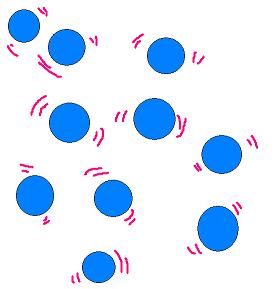
What would be the effect on the particles if more heat is supplied to the system?
1
They would slow down
2
They would stop moving
3
They would speed up
4
There would be no effect

19

Multiple Choice

Question image
Copper, Stainless Steel, Carbon Steel, and Zinc were all heated using the same thermal energy.  What material would be the coolest after being heated?
1
Copper
2
Carbon Steel
3
Zinc
4
Stainless Steel

20

Multiple Choice

Specific heat of water is  4.18 J/g°C. Specific heat of wood is 1.760 J/g°What material needs more heat energy to raise the temperature?
1
Water
2
Wood
3
Both are same

21

Multiple Choice

Question image

The diagrams shown represents two solids and the temperature of each. What occurs when the two solids are placed in contact with each other?

1

Heat energy flows from solid A to solid B.

2

Heat energy flows from solid A to solid B. Solid A increases in temperature.

3

Heat energy flows from solid B to solid A. Solid B decreases in temperature.

4

Heat energy flows from solid B to solid A.

22

Drag and Drop

Two samples of gold that have different temperatures are placed in contact with one another. Heat will flow spontaneously from a sample of gold at 60°C to a sample of gold that has a temperature of
.
Drag these tiles and drop them in the correct blank above
50°C

60°C

70°C

80°C

23

Multiple Choice

Which term represents a form of energy?

1

heat

2

degree

3

kilocalorie

4

temperature

24

Multiple Choice

Which form of energy is converted to thermal energy when propane burns in air?

1

electromagnetic

2

nuclear

3

electrical

4

chemical

25

Multiple Choice

What  is the formula to calculate heat energy required to raise the temperature of any substance?
1
Q = m Cp ∆T
2
Q = m Cp
3
Q =  ½ m v
4
m = Q Cp

26

Multiple Choice

Question image
There are four cups of hot cocoa. The cup sizes are shown. The temperature of the cocoa in each cup is 25 degrees celsius. Which cup has the MOST thermal energy?
1
Large cup (Trenta)
2
Small cup (Tall)
3
Venti
4
All three are the same temperature so they have same thermal energy

27

Multiple Choice

Question image
What would be the effect on the particles if more heat is supplied to the system?
1
They would slow down
2
They would stop moving
3
They would speed up
4
There would be no effect

28

Multiple Choice

The specific heat is the amount of energy needed to raise the temperature one degree Celsius of 1 gram of a substance.
1
True
2
False

29

Multiple Choice

What is the symbol for Thermal Energy?
1
Q
2
T
3
m
4
Cp

30

Multiple Choice

What unit do you use to measure Thermal Energy?
1
J/Kg ºC
2
Kg
3
ºC
4
J

31

Multiple Choice

The symbol for specific heat is .......
1

C

2
Q
3
m
4
T

32

Multiple Choice

Water has a specific heat of 4184 J/KgºC.  Wood has a specific heat of 1760 J/KgºC.  What material needs more energy to raise the temperature 1ºC
1
Wood
2
Water
3
Both are the same

33

Multiple Choice

A high specific heat means...
1
It heats up quickly with energy added
2
It requires more energy to change temperature

34

Multiple Choice

Question image

According to the ESRT, which material would require the most heat energy to increase the temperature of 1 gram of the material one Celsius degree?

1

Ice

2

Water

3

Basalt

4

Granite

35

Multiple Choice

Question image

Which material would require the greatest amount of heat energy to raise its temperature from 5oC to 10oC? [Refer to the Earth Science Reference Tables.]

1

Iron

2

Lead

3

Granite

4

Dry Air

36

Multiple Choice

Question image

If the same amount of heat is added to each sample, the smallest change in temperature will occur in the

1

Iron

2

Dry Air

3

Granite

4

Water

37

Multiple Choice

Question image

What would heat up the fastest if left out in the sunlight on a clear, summer day?

1

Liquid Water

2

Dry Air

3

Lead

4

Granite

38

Multiple Choice

Why does water heat heat up and cool down VERY SLOWLY?

1

High Specific Heat

2

Low Specific Heat

3

It's solid

4

It's always cold

39

Multiple Choice

A high specific heat means...
1
It heats up quickly with energy added
2
It requires more energy to change temperature

40

Multiple Choice

What does temperature measure?
1
Heat
2
ºC
3
Kinetic Energy
4
Thermal Energy

41

Multiple Choice

Heat ALWAYS moves from

1

Low to High Temperature

2

High to Low Temperature

3

It doesn't move

4

High to Low Pressure

42

Multiple Choice

Specific Heat is....

1

The speed of the particles in a substance

2

The temperature of the substance

3

How much energy it takes to heat something up

4

Heat

43

Multiple Choice

When heat is absorbed by a substance, what happens to the temperature of the substance?

1

it increases

2

it stays the same

3

it decreases

4

it depends on the substance

44

Multiple Choice

When heat is released by a substance, what happens to its temperature?

1

it increases

2

it stays the same

3

it decreases

4

it depends on the substance

45

Multiple Choice

What is the SI unit for temperature?
1
Kelvin
2
Celcius
3
Fahrenheit
4
All of these

46

Multiple Choice

What is the symbol for Specific Heat
1
Q
2
t
3
m
4
C

47

Multiple Choice

What is the equation to measure change in Thermal Energy?
1
Q=mc∆t
2
Q=mc
3
Q= ∆mct
4
m=QC

48

Multiple Choice

Which of the following would be the best insulator?
1
air
2
aluminum
3
copper
4
silver

49

Multiple Choice

What does temperature measure?
1
Heat of Molecules
2
ºC
3
Average Kinetic Energy of Molecules
4
Thermal Energy

50

Multiple Choice

Specific heat is....
1
The measure of kinetic energy of an objects particles
2
A measure of the energy needed to increase the average kinetic energy of the particles
3
The heating caused by the motion of flluid due to temperature difference
4
The transfer of energy by electromagnetic radiation

51

Multiple Choice

lowest possible temperature on the Kelvin scale
1
boiling point
2
insulation
3
absolute zero
4
heat

52

Multiple Choice

The unit for temperature is

1

K or °C\degree C

2

J

3

J/gC

4

g or kg

53

Multiple Choice

What letter do we use to represent mass?

1

Q

2

m

3

c

4

ΔT\Delta T

54

Multiple Choice

What does ΔT\Delta T  represent?

1

tf tit_{f\ }-t_i  

2

ti tft_{i\ }-t_f  

3

t - celsius

4

celsius - t

55

Multiple Choice

When is your answer negative?

1

When the sample is cooled or loses heat energy.

2

When the sample heats up or gains heat energy.

3

When the sample absorbs heat energy.

56

Multiple Choice

A measure of how hot or cold something is; specifically a measure of the average kinetic energy of the particles in an object.
1
Thermometer
2
Temperature
3
Absolute Zero
4
Specific Heat

57

Multiple Choice

Question image
An instrument that measure and indicates temperature.
1
Thermometer
2
Temperature
3
Energy
4
Kinetic Energy

58

Multiple Choice

The temperature at which molecular energy is at a minimum (0 K on the Kelvin scale or -273.16 C) on the Celsius scale.
1
Specific Heat
2
Plasma
3
Absolute Zero
4
Conduction

59

Multiple Choice

Question image
The energy transferred between objects that are at different temperatures.
1
Radiation
2
Convection
3
Thermal Conduction
4
Heat

60

Multiple Choice

Question image
The transfer of energy as heat through a material.
1
Thermal Conduction
2
Convection
3
Radiation
4
Convection Current

61

Multiple Choice

Question image
The movement of matter due to differences in density that are caused by temperature variation.
1
Thermal Conduction
2
Convection
3
Radiation
4
Infrared

62

Multiple Choice

Question image
The vertical movement of air currents due to temperature variations.
1
Conduction
2
Convection Current
3
Radiation
4
Heat

63

Multiple Choice

Question image
The energy that is transferred as electromagnetic waves, such as visible light and infrared waves.
1
Potential Energy
2
Kinetic Energy
3
Insulator
4
Radiation

64

Multiple Choice

The quantity of heat required to raise a unit mass of homogeneous material 1 K or 1 C in a specified way given constant pressure and volume. 
1
Calorie
2
Lava
3
Specific Heat
4
The temper of Bivens

65

Multiple Choice

Question image
A machine that transforms heat into mechanical energy or work.
1
Geothermal Engine
2
Wind Mill
3
Tesla
4
Heat Engine

66

Multiple Choice

Question image
Water freezes at ______ on the Celsius scale?
1
30
2
35
3
5
4
0

67

Multiple Choice

Question image
What is normal human body temperature on the Fahrenheit scale?
1
107.2
2
65.4
3
98.6
4
100

68

Multiple Choice

A material was cooled from 100ºC to 40ºC. What is the temperature change? (Remember: Change in temperature =  T final - T initial )

1

60ºC

2

40ºC

3

-60ºC

4

-40ºC

69

Multiple Choice

Question image
If you place some Gatorade in a cooler with ice...
1
It's particles will speed up.
2
It's particles will slow down.

70

Multiple Choice

Question image
To turn a liquid into a gas, you _____ energy.
1
Add
2
Remove

71

Multiple Choice

Question image

Observe the diagram. Which statement is true about the kinetic energy of the molecules in the containers?

1

The molecules are moving faster in Diagram A

2

The molecules are moving slower in Diagram A

3

The molecules are moving at the same rate in both diagrams

72

Multiple Choice

What is a substance that does NOT conduct heat well?
1
Conductor
2
Insulator
3
Convector
4
Radiator

73

Multiple Choice

Question image
Heat transfers from an area of ________temperature to an area of ______ temperature.
1
high to low
2
low to high
3
high to high

74

Multiple Choice

Question image
If an object has particles that are moving very quickly, the object 's temperature is probably _____.
1
cold
2
slow
3
big
4
hot

75

Multiple Choice

Question image
The flow of thermal energy from warmer objects to cooler objects 
1

Thermal energy

2

Temperature

3

Heat

4

Convection 

76

Multiple Choice

Identify the variables in this problem.

Find the specific heat of a substance that releases 7852 J when 532g cools from 80°C to 70°C.

1

q = 10°C, m = 532g

2

q = 7852J, ΔT = 10°C

3

q = 10°C, m = 532g, ΔT = 80°C

77

The cool thing is, this is the only formula you need!

q = mcΔT

78

Multiple Choice

The heat content of a system at constant pressure is called
1
entropy
2
enthalpy
3
heat
4
energy

79

Multiple Choice

The randomness or disorder of a system
1
heat (q)
2
enthalpy (H)
3
entropy (S)
4
temperature (T)

80

Multiple Choice

The heat required to raise the temperature of a SUBSTANCE by 1∘C
1
calorie
2
joule
3
specific heat
4
4.184 J

81

Multiple Choice

The heat required to raise the temperature of WATER 1∘C
1
calorie
2
joule
3
specific heat
4
energy

82

Multiple Choice

Chemical reactions that absorb energy are called
1
endothermic
2
fast
3
slow
4
exothermic

83

Multiple Choice

Formula for solving specific heat problems
1
q = mcΔT
2
H = ΔH x moles
3
H = ΔH x grams
4
products - reactants

84

Multiple Choice

An endothermic reaction feels _____ to the touch
1
warm
2
cool

85

Multiple Choice

H2 + Cl2 --> 2 HCl + 1845 kJ
Is this reaction endothermic or exothermic?
1
Endothermic 
2
Exothermic

86

Multiple Choice

H2 + 2 C + N+ 270.3 kJ --> 2 HCN
Is this reaction endothermic or exothermic?
1
Endothermic 
2
Exothermic

87

Multiple Choice

If a piece of aluminum is heated from 30.0oC to 50.0oC, what is the value of ΔT?
1
293o C
2
20C
3
0C
4
80o C

88

Multiple Choice

Which of the equations below is an example of a thermochemical equation?
1
Mg + 2H3O+ + Cl- → Mg2+ + 2Cl- + H2 + H20
2
2H2(g) + 2O2(g) → H2O(g)
3
Mg(s) + 2H3O+(aq) + Cl-(aq) → Mg2+(aq) + 2Cl-(aq) + H2(g) + H20(l)
4
2H2(g) + 2O2(g) → H2O(g) + 483.6 kJ

89

Multiple Choice

Question image

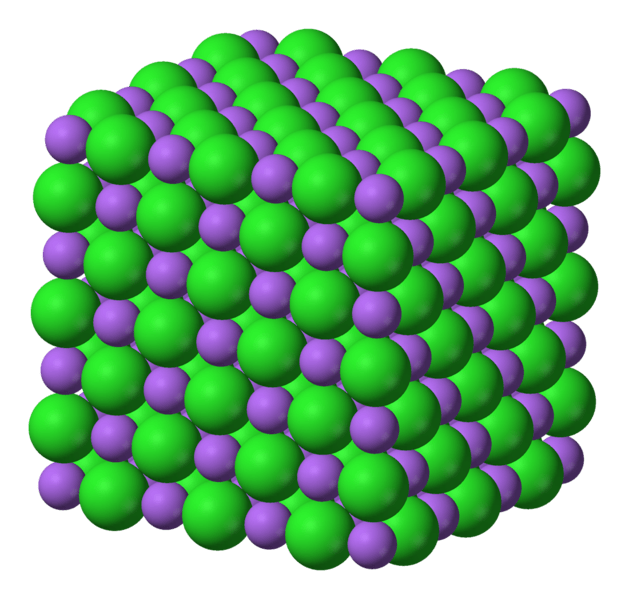
Which state of matter does this picture show?

1

Solid

2

Liquid

3

Gas

90

Multiple Choice

When particles are heated they,

1

expand and move apart

2

expand and move together

3

contract and move apart

4

contract and move together

91

Multiple Choice

Question image

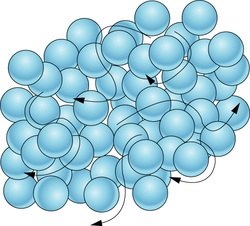
What state of matter does this picture show?

1

Solid

2

Liquid

3

Gas

92

Multiple Choice

Question image

Which state of matter does this picture show?

1

Solid

2

Liquid

3

Gas

93

Multiple Choice

Question image

What is happening in this picture of water boiling?

1

Molecules are speeding up

2

Molecules are slowing down

94

Multiple Choice

Question image

What is happening in this picture of water boiling?

1

Molecules are speeding up

2

Molecules are slowing down

95

Multiple Choice

What is the symbol for Thermal Energy?
1
Q
2
t
3
m
4
C

96

media

97

media

98

Multiple Choice

Increasing the mass of an object will increase its temperature

1

True

2

False

99

Multiple Select

Which of the following will increase the thermal energy of an object. (May be more than one answer)

1

increasing the temperature

2

increasing the mass

3

reducing the mass

4

reducing the temperature

100

media

101

media

102

media

103

media

104

media

105

Match

Match the following

Specific Heat Capacity

Temperature

Thermal Energy

Convection

Conduction

the amount of energy it takes to raise the temperature of a substance

the average amount of kinetic energy in particles

the total amount of kinetic energy in particles

the movement of fluids (gases and liquids) due to temperature differences

the transfer of thermal energy through collisions of particles when objects touch

106

media

107

Fill in the Blank

If you want the temperature to go up quickly, you should choose a substance with a (high/low) specific heat.

108

How much heat is needed to raise a 0.30 kg piece of aluminum from 30℃ to 150℃?

​Formula: Q = mcΔ​T

Solving Specific Heat Problems

Some text here about the topic of discussion

Question image
The specific heat of aluminum is 0.21 cal/g°C.  How much heat(Q) is released when a 10 g piece of aluminum foil is taken out of the oven and cools from 100° to 50°?
1
105 J
2
10.5 J
3
1.05 J

Show answer

Auto Play

Slide 1 / 108

MULTIPLE CHOICE