
Properties of Matter

Presentation
•
Science
•
7th Grade
•
Practice Problem
•
Easy
Standards-aligned

Boaz Rottet
Used 6+ times
FREE Resource
19 Slides • 3 Questions
1
Learners can:
use a model to describe how the particles in matter form atoms, elements, and compounds
use the periodic table of the elements to determine the number of protons, neutrons, and electrons in an atom of an element
relate magnetism and conductivity to properties of matter
Vocabulary: chemical, chemistry, property
2
3
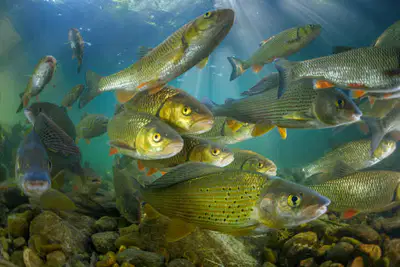
Imagine being a fish!
4




5

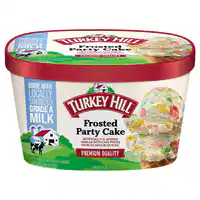
Here is a picture of Theo and Mr. Rottet taking a casual afternoon stroll.
Look at the picture and consider what makes up the things in the picture!
6


ATOMS
7

Label the parts of an Atom QuizPurposeGamesPurposeGamesPurposeGames
You can open this webpage in a new tab.
8
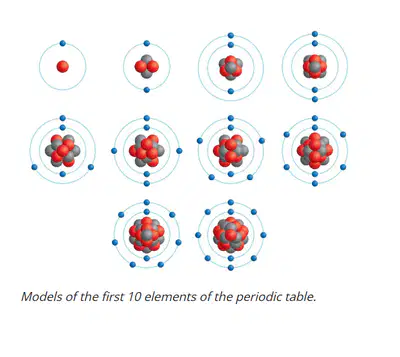
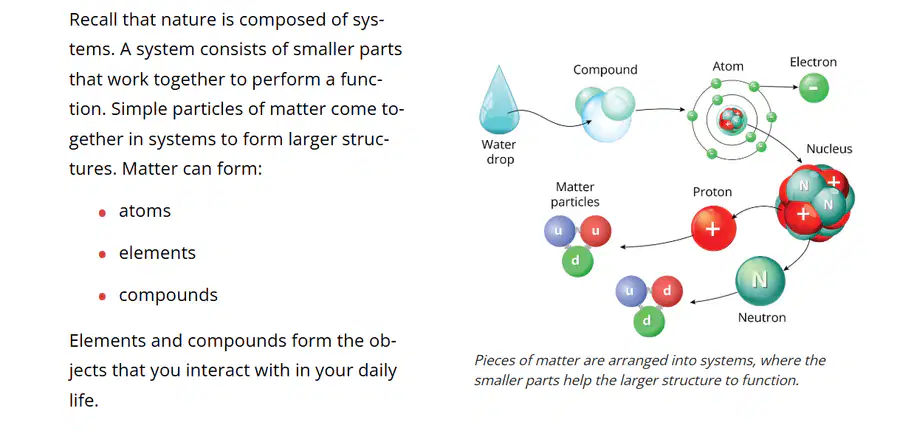
Look around at the objects that surround you. Your laptop, clothing, and furniture are all composed of matter. All matter is composed of atoms. Recall that an atom is the smallest complete unit of matter.
Atoms are composed of even smaller units:
protons
neutrons
electrons
Protons and neutrons compose a solid central nucleus. Electrons orbit the nucleus in the electron cloud.
9
Matter
Matter is anything that has mass and takes up space. All of the objects that you interact with each day are composed of matter. The study of matter is called chemistry. A chemist is a scientist who studies chemistry. In this unit, you will be a chemist.
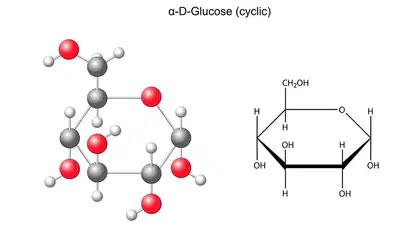
A chemical is a substance that always has the same atoms arranged in the same way. For example, glucose is a sugar that plants produce during photosynthesis. Glucose is a chemical that always contains:
6 carbon atoms;
12 hydrogen atoms; and
6 oxygen atoms.
The chemical structure of glucose is always the same.
10
Poll
Would you ever knowingly drink a chemical?
Yes
No
11
Many people assume that a chemical is an artificial product made by humans. Statements on product packages such as “chemical free” send a message that a product that contains chemicals is dangerous or poor quality.
However, a chemical is any substance that is always made of the same atoms. The water you drink each day is a chemical. All of the food you eat is made of chemicals. Your body is composed of chemicals. Chemicals occur naturally all around you.

12
13
Match
Match the following
Matter
Atom
Elements
Compounds
Has mass and takes up space
Made of protons, neutrons, and electrons
Atoms of the same type
Two or more different atoms bond
Has mass and takes up space
Made of protons, neutrons, and electrons
Atoms of the same type
Two or more different atoms bond
14
In this unit, you will learn about how atoms combine to form compounds.

15
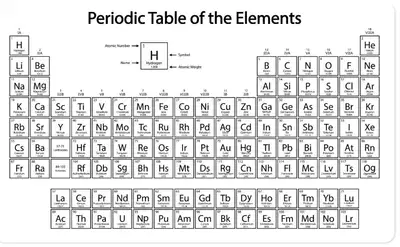
Periodic Table
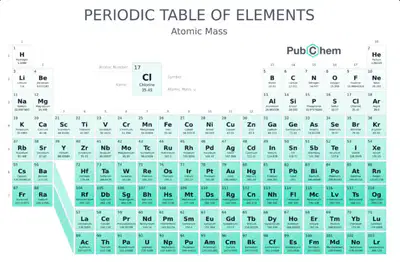
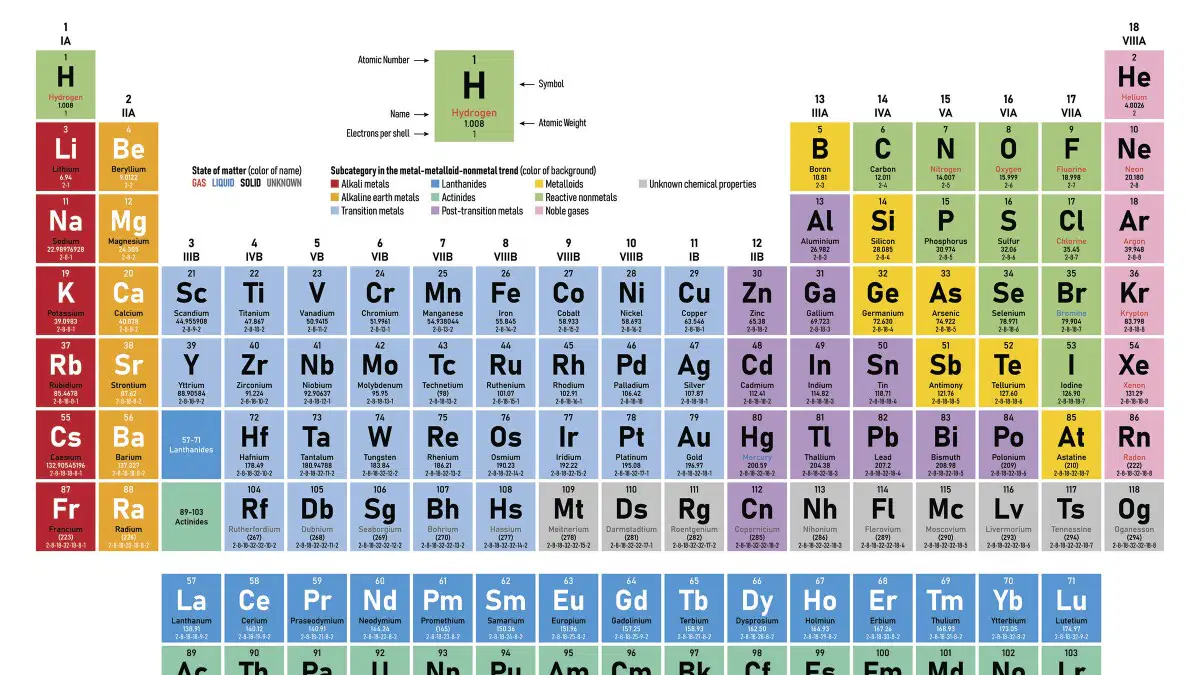
Recall that the periodic table is a chart that organizes all of the known elements. The elements are arranged according to their characteristics.
The image to the right shows the periodic table that is included in your curriculum kit. Locate this periodic table. You will use the laminated periodic table throughout this unit.
16
17
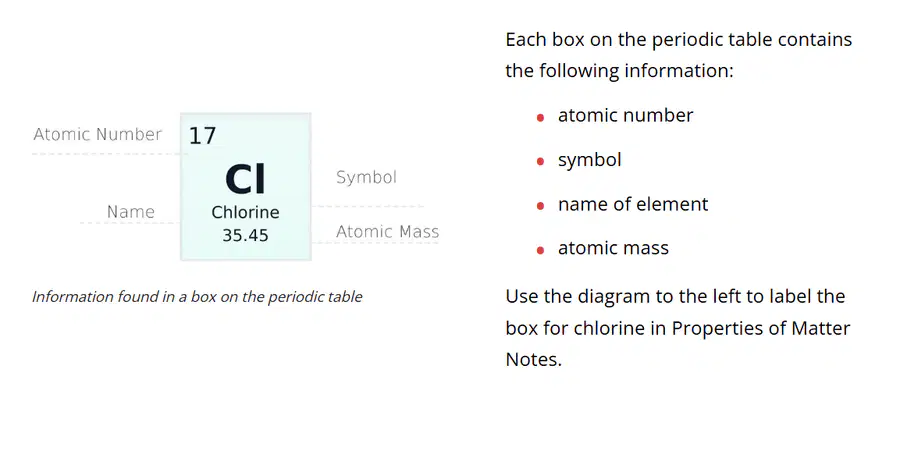
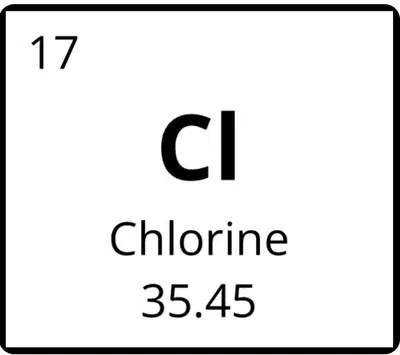
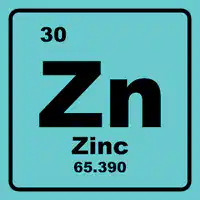
You can calculate the number of protons, neutrons, and electrons of an element using the information on the periodic table.
The number of protons is equal to the atomic number.
The number of electrons is usually equal to the atomic number.
The number of neutrons is the atomic mass minus the atomic number, rounded to the nearest whole number.
Elements are arranged on the periodic table according to their characteristics. Elements in the same column have similar characteristics to each other.
18
Properties
A property is a characteristic of a substance. Some common properties of matter include:
mass
temperature
color
electrical conductivity
magnetism
19
20
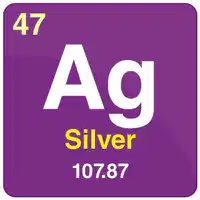
How many protons does an atom of this element have? ______________________
How many electrons does an atom of this element have?___________________
How many neutrons does an atom of this element have?_____________________
21
How many protons does an atom of this element have? ______________________
How many electrons does an atom of this element have?___________________
How many neutrons does an atom of this element have?_____________________
22
Match
Match the following Match each element to the number of protons an atom of that element contains.
Boron
Sodium
Fluorine
Hydrogen
5
11
9
1
5
11
9
1
Learners can:
use a model to describe how the particles in matter form atoms, elements, and compounds
use the periodic table of the elements to determine the number of protons, neutrons, and electrons in an atom of an element
relate magnetism and conductivity to properties of matter
Vocabulary: chemical, chemistry, property
Show answer
Auto Play
Slide 1 / 22
SLIDE
Similar Resources on Wayground

19 questions
The Distribution of Earth's Resources
Presentation
•
7th Grade
16 questions
Protecting land
Presentation
•
7th Grade
17 questions
Natural Selection Review
Presentation
•
7th - 8th Grade
20 questions
States of Matter Review
Presentation
•
3rd Grade
14 questions
Lymphatic System
Presentation
•
7th Grade
18 questions
Graph Types and Uses
Presentation
•
7th - 8th Grade
17 questions
Sound Waves
Presentation
•
7th Grade
19 questions
Apex 3.3 - Periodic Table Mini-Lesson
Presentation
•
7th Grade
Popular Resources on Wayground
10 questions
Safety Day 2026 – Student Review

Quiz
•
9th Grade
21 questions
Continents and Oceans
Quiz
•
6th Grade
20 questions
Parts of Speech
Quiz
•
5th Grade
16 questions
Subject & Predicate
Quiz
•
5th Grade
25 questions
Multiplication Facts
Quiz
•
5th Grade
12 questions
Map Skills
Quiz
•
3rd Grade
22 questions
Continents and Oceans
Quiz
•
5th Grade
15 questions
Rounding Decimals
Quiz
•
5th Grade
Discover more resources for Science
10 questions
Exploring Chemical and Physical Changes

Interactive video
•
6th - 10th Grade
14 questions
Week 1 Falcon Flex Fast and Curious
Quiz
•
7th Grade
42 questions
Explore Plate Tectonics and Boundaries
Quiz
•
7th Grade
21 questions
Waves and Wave Properties
Quiz
•
6th - 8th Grade
16 questions
Photosynthesis and Cellular Respiration Review
Quiz
•
7th Grade
20 questions
Food Webs + Energy Pyramids
Quiz
•
7th Grade
9 questions
Biology: Cell Structure
Interactive video
•
7th Grade
8 questions
Diffusion and Osmosis Review
Presentation
•
6th - 8th Grade