

Systems in Environmental Science

Presentation
•
Science
•
9th Grade
•
Hard

Joseph Anderson
FREE Resource
6 Slides • 15 Questions
1
2

Earths Interacting Systems
-A system is a collection of interdependent parts enclosed within a defined boundary
-Inputs into Earth’s interconnected systems include energy, information, and matter.
-Feedback loops regulate systems.There are 2 main types:
Negative feedback loops: Result in
stabilization
of a system
Ex. Predator vs Prey
Positive feedback loops:
Result in a
system moving
to an extreme
Ex. Erosion
Predator-prey cycles are negative feedback loops. If prey populations rise, predator populations can rise in response, causing prey populations to fall. Then predator populations may decline, allowing prey populations to rise again, and so on.
Negative feedback loop
3
Multiple Choice
A thermostat in a central heating system can determine the temperature of your living room. It switches the air conditioner on when the temperature increases to a predetermined level and shuts it off when it cools to another level. The room temperature remains within a comfortable level regardless of the temperature outside.
Positive Feedback Loop
Negative Feedback Loop
4
Multiple Choice
A ________________ feedback loop makes a system more stable.
Positive
Neutral
Negative
Circular
5
Multiple Choice
A _________________ feedback loop moves a system to an extreme.
Positive
Neutral
Circular
Negative
6
Multiple Choice
In a positive feedback loop, each action creates a consequence that _____________________ the other action.
decreases
has no effect on
amplifies
7
Multiple Choice
In a negative feedback loop, each action creates a consequence that _____________________ the other action.
decreases
has no effect on
amplifies
8
Multiple Choice
An avalanche had snow, debris and most of the mountainside sliding down the hill. What kind of feedback is shown in this example?
Positive Feedback mechanism
Hormone
Homeostatic state
Negative feedback mechanism
9
Multiple Choice
A wolf population is introduced into an ecosystem, causing the deer population to decrease. The wolf population decreases as the deer population decreases, allowing the deer to begin to increase again. This is an example of what type of feedback?
Neutral
Ecosystem
Positive
Negative
10
Multiple Choice
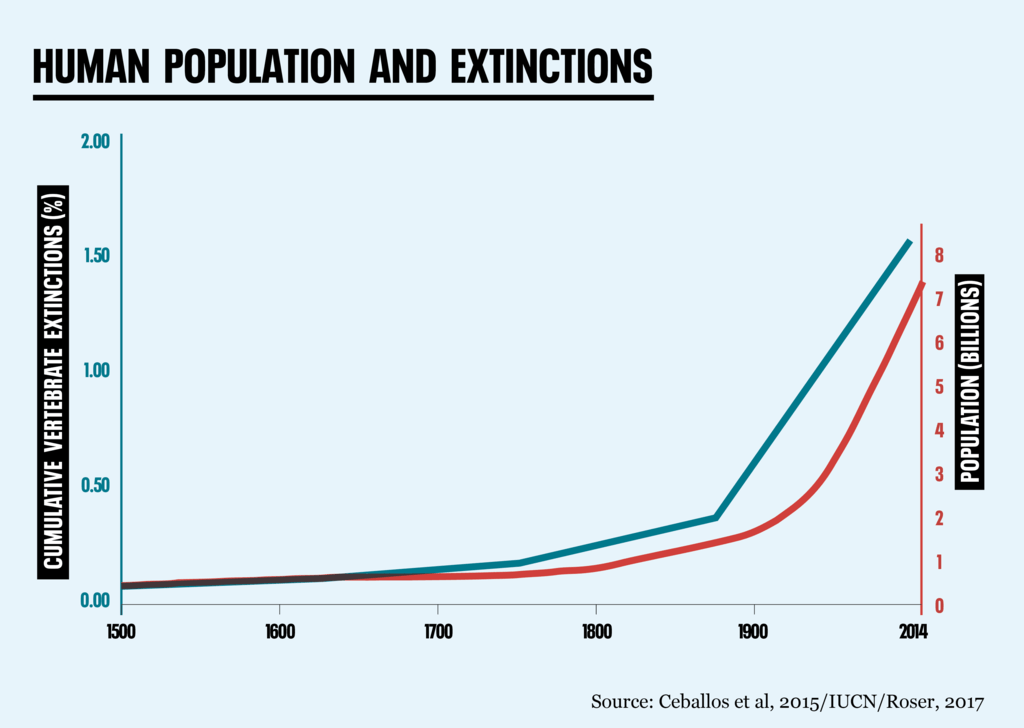
Is the graph showing positive or negative feedback?
Positive
Negative
11
Multiple Choice

12
Multiple Choice
Which of the following would be considered a positive feedback loop?
Body regulating its temperature
Erosion
Blood sugar regulation
The AC in your house making the house colder when it gets too hot
13
Multiple Choice
Which of the following would be considered a negative feedback loop?
Predator vs prey
Erosion
deforestation
14
Multiple Choice
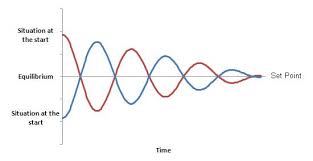
Does the graph show positive or negative feedback?
Positive, because when the red line shifts, the blue one does also
Negative, because the blue line starts below equilibrium
Negative, because the two actions are keeping each other near equilibrium
Both positive and negative because the graph moves up and down
15


Spheres of Function
•Earth can be divided into spheres that are defined
according to their location and function.
Lesson 3.2 Systems in Environmental Science
16
Multiple Choice
Which of Earth's spheres includes the inner and outer cores, and upper and lower mantles?
Atmosphere
Biosphere
Geosphere
Hydrosphere
17

The Geosphere
•Crust: Thin, cool, rocky outer “skin”
•Mantle: Very hot and mostly solid
•Core: Outer core is molten metal, inner core
is solid metal
Lesson 3.3 Earth’s Spheres
•Rocks and minerals on and below Earth’s surface:
18

•Biosphere: The part of Earth in which living and
nonliving things interact
•Atmosphere: Contains the gases that organisms
need, such as oxygen; keeps Earth warm enough
to support life
The Biosphere and Atmosphere
Lesson 3.3 Earth’s Spheres
19

The Hydrosphere
•Consists of Earth’s water
•Most of Earth’s water (97.5%) is salt water.
•Only 0.5% of Earth’s water is unfrozen fresh water
usable for drinking or irrigation.
•Earth’s available fresh water includes surface water
and ground water.
Lesson 3.3 Earth’s Spheres
Did You Know?If it is depleted, groundwater can
take hundreds or even thousands of years to
recharge completely.
20
Multiple Choice
Which of the following describes an interaction between the biosphere and geosphere?
21
Fill in the Blanks
The Earth's sphere that includes all of the water
Show answer
Auto Play
Slide 1 / 21
SLIDE
Similar Resources on Wayground

17 questions
Let's separate mixtures
Presentation
•
9th Grade
16 questions
The Scientific Method and Experimental Design
Presentation
•
9th Grade
16 questions
The Theory of Evolution
Presentation
•
8th Grade
18 questions
Unit 03 - Chemical Bonding - Types of Bonds
Presentation
•
9th Grade
16 questions
Mars
Presentation
•
KG - 8th Grade
16 questions
3.4.b Reasons for Seasons (Review)
Presentation
•
9th - 10th Grade
13 questions
Climate Change
Presentation
•
9th Grade
19 questions
DNA Structure and Function
Presentation
•
9th Grade
Popular Resources on Wayground
10 questions
How much do you know about our Portrait of an Eagle?

Quiz
•
10th Grade
10 questions
Fast Food Slogans
Quiz
•
6th - 8th Grade
21 questions
Continents and Oceans
Quiz
•
6th Grade
20 questions
Parts of Speech
Quiz
•
5th Grade
16 questions
Subject & Predicate
Quiz
•
5th Grade
25 questions
Multiplication Facts
Quiz
•
5th Grade
12 questions
Map Skills
Quiz
•
3rd Grade
22 questions
Continents and Oceans
Quiz
•
5th Grade
Discover more resources for Science
10 questions
Exploring Chemical and Physical Changes

Interactive video
•
6th - 10th Grade
20 questions
Atomic Structure
Quiz
•
9th Grade
10 questions
Decoding the Periodic Table of Elements
Interactive video
•
6th - 10th Grade
10 questions
Exploring the Periodic Table
Interactive video
•
6th - 10th Grade
22 questions
Periodic Table Review
Quiz
•
9th - 12th Grade
20 questions
Observation vs. Inference
Quiz
•
7th - 9th Grade
10 questions
Exploring the States of Matter
Interactive video
•
6th - 10th Grade
10 questions
Exploring Physical and Chemical Changes
Interactive video
•
6th - 10th Grade