Artificial and Natural Selection
Presentation
•
Biology
•
9th - 12th Grade
•
Hard

Joseph Anderson
FREE Resource
28 Slides • 44 Questions
1
Natural Selection, Artificial Selection, Speciation, Ecology
Mr. Jones
2
3
Open Ended
Explain how descent with modification, common descent, and natural selection are related.
4
5
6
7
8
9
Open Ended
Why does genetic drift have a greater effect on smaller populations than larger ones?
10
11
12
13
14
Open Ended
Explain how the environment influences natural selection.
15
16
17
Open Ended
Explain how the birds became different species.
18
19
20
21
22
Open Ended
Explain how isolation can lead to the evolution of new species. Give an example.
23
24
Multiple Choice
The study of the interactions between organisms and their environment is:
Ecology
Microbiology
Biology
Evolution
25
Multiple Choice
The formation of new and distinct species in the course of evolution
artificial selection
speciation
breeding
non-random mating
26
Multiple Choice
When members of the SAME species interact with one another they form a
population
community
organism
ecosystem
27
Multiple Choice
The endangered seabird the marbled murrelet, in California, is dependent upon Sequoia forests and trees for survival. What might happen to the marbled murrelet population if the sequoia population went extinct?
the population of marbled murrelet would remain the same
the population of marbled murrelet would increase
The marbled murrelet would go extinct
the marbled murrelet would be placed on the threatened species list
28
Multiple Choice
All living things in a given area, living and non-living.
Ecosystem
Biotic
Community
Species
29
Multiple Choice
The rabbits and squirrels in an area are a part of the same
population
community
30
Multiple Choice
Whether a fossil formed before or after another fossil is described by its
relative age
absolute age
fossil record
radioactive age
31
Multiple Choice
Groups of rabbits that live in the same area make up a
species
population
32
Multiple Choice
Which of the following has the levels of organization in order from smallest to largest?
Biosphere, Ecosystem, Community, Population, Species, Organism
Organism, Species, Community, Ecosystem, Biosphere
Organism, Species, Community, Population, Ecosystem, Biosphere
Biosphere, Ecosystem, Community, Population, Organism, Species
33
Multiple Choice
A slight change in a rabbit's ability to hear its predators better and help it survive is
an adaptation.
an acquired trait.
a vestigial structure.
an isolation.
34
Multiple Choice
The non-living parts of the environment such as rocks, air, temperature, sunlight, and water
Abiotic
Biotic
Habitat
Community
35
Multiple Choice
The living or once living organisms in an ecosystem
Biology
Abiotic
Biotic
Ecology
36
Multiple Choice
If a scientist in New Zealand was studying how a group of herbivores interacted with a group of omnivores, and all of their abiotic surroundings, what level of ecology would she be studying?
Community
Population
Species
Ecosystem
Biome
37
Multiple Choice
Which of the following scenario best describes an ecosystem?
A pack of wolves that live in the same area
A single protist
Rabbits hopping around trees burrowing through soil
Birds, mice, and trees inhabiting the same area
38
Vocabulary
Biotic vs Abiotic
Population
Community
Ecosystem
Autotroph vs Heterotroph
Habitat vs Niche
39
40
Multiple Select
Below is a list of factors in an ecosystem. Select all the abiotic factors.
Shelter
Water
Protists
Sunlight
Prokaryotes
41
Multiple Choice
The most important abiotic factors when studying biomes are...
Food and Water
Water and Sunlight
Temperature and Oxygen
Water and Temperature
42
Multiple Choice
Why are advantageous traits more likely to be passed onto offspring?
Because organisms with those traits are more likely to survive and reproduce.
Because they come from recessive alleles.
Because they come from dominant alleles.
Because the trait is an acquired (learned) phenotype.
43
44
Multiple Choice
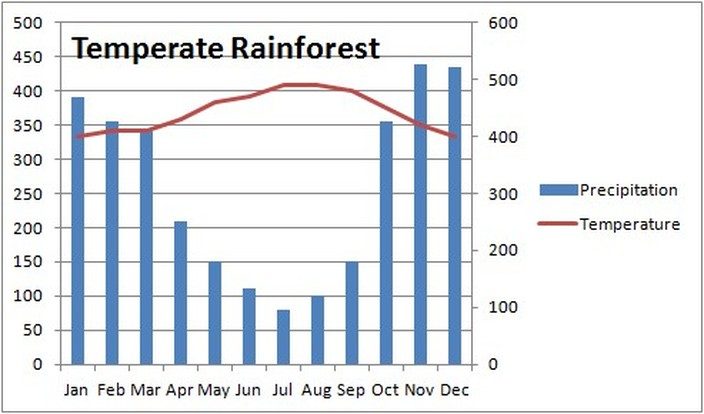
Which biome is characterized by low temperatures and low amounts of rainfall?
tundra
desert
temperate deciduous forest
tropical rain forest
45
Multiple Choice
46
47
Multiple Choice
Predict which moth would increase in population
light
dark
48
Multiple Choice
What can happen to a species over time if most of the organisms have an advantage, for example, good camouflage?
The population would increase.
The population would decrease.
The population may become extinct.
49
50
Predator-Prey Relationship
A predator is an organism that eats another organism.
The prey is the organism which the predator eats.
Predator and prey often coevolve together.
51
Multiple Choice
An organism that is killed and eaten by another organism
Predator
Prey
Competition
Adaptation
52
Multiple Choice
Why are advantageous traits more likely to be passed on to future generations?
Because they are more likely to survive and reproduce.
Because they come from recessive alleles.
Because they come from dominant alleles.
53
Multiple Choice
What ecological relationship is depicted between Pumba (warthog) and the bugs?
Competition, because pumba is in competition with the bugs for food sources
Mutualistic, because Pumba and the bugs benefit each other
Predator-Prey, because Pumba is a predator that consumes bug as prey
54
Multiple Choice
Why did the populations of peppered moths in England change from light to dark after the Industrial Revolution?
Light moths were easy to see against sooty trees and were eaten.
The birds that ate the dark moths were killed by soot.
Dark moths were produced by industrial processes.
Light moths were killed by soot.
55
Multiple Choice
The pearlfish receives protection from predators by living inside a sea cucumber. The sea cucumber is not affected during this interaction. This ecological relationship is known as -
predator-prey because the pearlfish is prey to the sea cucumber
mutualism because only the pearlfish benefits in this ecological relationship
parasitism because the pearlfish causes harm to the host sea cucumber
commensalism because only the pearlfish benefits while the sea cucumber is not affected
competition because the sea cucumber and pearlfish often fight for living space
56
Multiple Choice
A pair of red, male kangaroos are seen fighting over a potential mate. The ecological relationship between the two male kangaroos shown is -
Commensalism
Mutualism
Predator-Prey
Competition
57
Multiple Choice
Read the following scenario and determine which ecological relationship is depicted -
Mistle toe plants are common house decorations around the holidays. Mistle toes are plants that attach themselves to hosts such as a tree. Once attached, the mistletoes begin to tap into the vascular system of trees and draws out vital nutrients and water from the host tree. The host tree is harmed over time and may result in stunted growth.
Predator-Prey
Parasitism
Commensalism
Mutualism
58
Multiple Choice
A feeder fish usually follows behind sharks to pick up food scraps that they leave behind. The fish gets food and the shark is unaffected. This is an example of:
Mutualism
Commensalism
Parasitism
Decomposition
59
Multiple Choice
Which of the following is true about competition?
Controls population size
Ensures everyone eats
Keeps everyone happy
Is only between 2 men
60
Multiple Choice
______________ occurs when more than one individual or population tries to use the same limited resource.
Niche
Predator-prey
Availability
Competition
61
Multiple Choice
A relationship in which one organism benefits and the other is unaffected.
mutualism
parisitism
symbiosis
commensalism
62
63
Multiple Choice
True or False. In this energy pyramid, the consumers on each level only get about 10 percent of energy that the trophic level before it has stored.
True
False
64
Multiple Choice
What makes an energy pyramid different than a food web or chain?
It shows energy flowing from the top of the chain and downward.
The tropic levels are the opposite
It shows the amount of energy in each trophic level
It shows specific predator/prey relationships
65
Food Webs
Be able to take organisms and construct an accurate food web
Be able to accurately show the flow of energy throughout an ecosystem
66
Multiple Choice
What do the arrows in the food chain indicate about the flow of energy in an ecosystem?
Energy is continuously recycled by the organisms in an ecosystem.
Energy flows in one direction in an ecosystem, from producers to consumers.
More of the available energy in an ecosystem is given to large animals than to small animals.
Organisms at the end of the food chain receive more energy than those at the beginning.
67
Multiple Choice
How do consumers get their energy?
laying in the sun
eating other organisms
providing food for other organisms
surviving in an ecosystem
68
Multiple Choice
What might happen if you remove a primary consumer from the ecosystem?
There would be more food for secondary consumers.
The number of primary consumers would increase.
The number of plants would increase.
The number of secondary consumers would increase.
69
Multiple Choice
In this energy pyramid, what is the proper name for ANY ORGANISM ABOVE THE PRODUCER LEVEL?
decomposers
consumers
producers
omnivores
70
Carrying Capacity and Limiting Factors
Carrying capacity (K) - the maximum population size that can be supported in a particular area without destroying the habitat.
Limiting factors - resources or other factors in the environment that can lower the population growth rate. They determine the carrying capacity of a population.
71
72
Multiple Choice
What happens if a population grows past its carrying capacity?
The population keeps growing
The population starts to die off
The entire species will go extinct
The carrying capacity just increases
Natural Selection, Artificial Selection, Speciation, Ecology
Mr. Jones
Show answer
Auto Play
Slide 1 / 72
SLIDE

Similar Resources on Wayground
65 questions
Biology EOC part 1: Molecular and Cellular bio.
Lesson
•
9th - 12th Grade
67 questions
Blood Vessels and Blood Pressure
Lesson
•
9th - 12th Grade
70 questions
Phylum Mollusca Notes
Lesson
•
10th - 12th Grade
64 questions
Proportional Parts in Triangles
Lesson
•
9th - 12th Grade
65 questions
AP Gene Expression from Gene to Protein
Lesson
•
9th - 12th Grade
70 questions
TSIA2 Boot Camp - Unlocking Word Meaning
Lesson
•
9th - 12th Grade
66 questions
WG Unit 7 - Europe Cultural and Economic Characteristics
Lesson
•
9th - 12th Grade
64 questions
VUS 9
Lesson
•
9th - 12th Grade
Popular Resources on Wayground
15 questions
Fractions on a Number Line
Quiz
•
3rd Grade
14 questions
Boundaries & Healthy Relationships
Lesson
•
6th - 8th Grade
13 questions
SMS Cafeteria Expectations Quiz
Quiz
•
6th - 8th Grade
20 questions
Equivalent Fractions
Quiz
•
3rd Grade
25 questions
Multiplication Facts
Quiz
•
5th Grade
12 questions
SMS Restroom Expectations Quiz
Quiz
•
6th - 8th Grade
20 questions
Main Idea and Details
Quiz
•
5th Grade
10 questions
Pi Day Trivia!
Quiz
•
6th - 9th Grade
Discover more resources for Biology
20 questions
Cladogram Practice
Quiz
•
10th Grade
20 questions
DNA & Protein Synthesis
Quiz
•
9th Grade
21 questions
Cell Cycle and mitosis
Quiz
•
9th - 10th Grade
27 questions
Evolution
Quiz
•
9th - 12th Grade
20 questions
Food Chains and Food Webs
Quiz
•
7th - 12th Grade
38 questions
Mitosis & Meiosis
Quiz
•
9th - 12th Grade
15 questions
Monohybrid Cross Practice
Quiz
•
7th - 9th Grade
20 questions
24-25 Unit 6 Lessons 1-3
Quiz
•
9th - 12th Grade