

Human Evolution Lesson

Presentation
•
Science
•
9th - 12th Grade
•
Hard

Joseph Anderson
FREE Resource
60 Slides • 15 Questions
1


Environmental Science
Unit 4 Evolution
Cycle 2 | Week 6
2

Does evolution state the humans came from apes?

3

4

What does this chart represent?

5

6

7

8

What causes rapid evolution? Examples?

9

10

What are some examples of natural selection?

11

12

What type of variations do you observe in these mussels?

13

What are some resources that organisms would compete for?

14


What are some ways humans "adapt" to their surroundings?
15

16

What happens to the species with the better traits?

17

What kind of variations do humans have?

18

19

What do you think of when you see the word, "mutation?"

20

21

How would a mutation be a benefit? A harm? Give examples.

22
Multiple Choice
What is evolution?
The loss of a species (A species dies out)
The change of traits in species overtime
A species preys on another species
The change of a carnivore into an herbivore
23
Multiple Choice
According to evolution what happens to the frequency of traits in a population of species overtime?
The frequency of traits randomly increases
The frequency of traits never changes
The frequency of advantageous traits increases overtime
The frequency of traits decrease overtime
24
Multiple Choice
Which statement best describes the rate of evolution?
It is always a slow process
It usually is a slow process but it can occur quickly as well
It is usually a fast process but it can occurs slowly as well
It is always a fast process
25
Multiple Choice
What is a common ancestor?
A selective pressure that led to the formation of all the species on Earth
An organism from which all the organisms on Earth descended from
An organism which all the organisms on Earth strive to become
An organism that lives on a different planet as well
26
Multiple Choice
What is an adaptation?
A characteristic that an organism acquires during its life
A favorable trait, which helps an organism survive
An unfavorable trait, which hurts the chances of survival
A trait that makes an organism "less fit"
27
Multiple Choice
Which organisms are more likely to survive, reproduce and pass their traits to offspring?
Organisms that are well-adapted to the environment
Organisms that are not well-adapted to the environment
Organisms that reproduce very quickly
Organisms that are less fit
28

29

30

How do humans change the environment?

31

32

What was the industrial revolution?

33

What advantage do the light colored moths have against the dark colored moths?

34

35

36

37
38

39

What better traits would allow an organism to compete better?

40

Which one of these do humans compete for?

41

42
Multiple Choice
Which of the following is a resource that organisms compete for?
Water
Space
Mates
All of the above
43
Multiple Choice
Why do organism compete with each other for resources?
There is an unlimited supply of resources
There is a limited supply of resources
Organisms produce more offspring than can survive
Both B and C
44

45
46

47

What environment would a fossil be best preserved in?

48

49

50

51
*

52

53
Multiple Choice
Fossils are an important piece of evidence for evolution because:
They show that organisms have changed over time on Earth
They demonstrate that organisms have become more and more complex
They suggest there are similarities between ancient and present organisms
All of the above
54

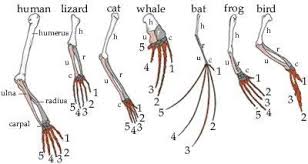
If organisms have the same body plan, does that mean they came from the same ancestor?

55

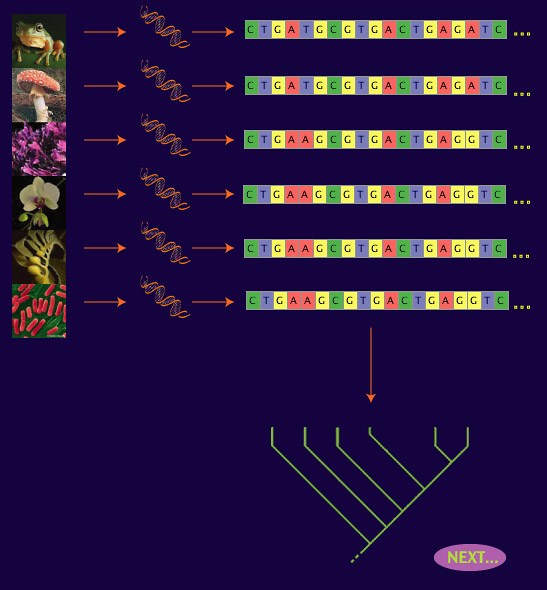
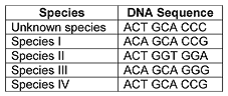
What organism do humans share the most DNA with?

56

57
Multiple Choice
58
Multiple Choice
59

What do all of these embryos have in common?

60

61


Does this mean that humans, cats, birds, and whales all shared a common ancestor?
62

63

64
Multiple Choice
65

66


Do butterflies, bees, and bats all share a common ancestor because they have wings?
67

What are some examples of vestigial structures? Search them up!

68

69
Multiple Choice
How do vestigial structures provide evidence for evolution?
Shows that organisms have new and unique structures show up over time, which has no relation to the organisms they descended from
Shows that organisms inherited structures from ancestors, since the structure has lost much or all of its original size and function over time
70
Multiple Choice
Which structures do NOT imply evolutionary relationships?
Homologous structures
Analogous structures
Vestigial structures
All of the structures above imply evolutionary relationships
71
Multiple Choice
Which structure implies "loss of function" or evolutionary divergence from a species with a past function (that is no longer needed)?
Homologous structures
Analogous structures
Vestigial structures
All of the above
72

73

74

75

Environmental Science
Unit 4 Evolution
Cycle 2 | Week 6
Show answer
Auto Play
Slide 1 / 75
SLIDE
Similar Resources on Wayground

66 questions
SS Chem Unit 4 Lesson
Presentation
•
9th - 12th Grade
70 questions
Review (Whole Year w/ Slides)
Presentation
•
KG - University
72 questions
Atoms and Elements Lesson
Presentation
•
9th - 12th Grade
70 questions
Unit 5 Test Remediation
Presentation
•
9th - 12th Grade
69 questions
Properties of Chemical Reactions
Presentation
•
9th - 12th Grade
69 questions
Types of Chemical Reactions
Presentation
•
9th - 12th Grade
68 questions
Balancing and Identifying Chemical Reactions: A Review
Presentation
•
8th - 12th Grade
69 questions
Part 3 EOC Review
Presentation
•
10th Grade
Popular Resources on Wayground
10 questions
Safety Day 2026 – Student Review

Quiz
•
9th Grade
21 questions
Continents and Oceans
Quiz
•
6th Grade
20 questions
Parts of Speech
Quiz
•
5th Grade
16 questions
Subject & Predicate
Quiz
•
5th Grade
25 questions
Multiplication Facts
Quiz
•
5th Grade
12 questions
Map Skills
Quiz
•
3rd Grade
22 questions
Continents and Oceans
Quiz
•
5th Grade
15 questions
Rounding Decimals
Quiz
•
5th Grade
Discover more resources for Science
10 questions
Exploring Chemical and Physical Changes

Interactive video
•
6th - 10th Grade
20 questions
Atomic Structure
Quiz
•
9th Grade
10 questions
Exploring the Electromagnetic Spectrum for Middle School Science
Interactive video
•
6th - 10th Grade
10 questions
Exploring Force and Motion Concepts
Interactive video
•
6th - 10th Grade
10 questions
Exploring Air Masses and Weather Fronts
Interactive video
•
6th - 10th Grade
14 questions
Periodic Trends
Interactive video
•
11th Grade
10 questions
Exploring the States of Matter
Interactive video
•
6th - 10th Grade
10 questions
Exploring Forces: Net Force, Normal Force, Gravity, and Friction
Interactive video
•
6th - 10th Grade