Search Header Logo
Introduction to Atomic Theory

Introduction to Atomic Theory

Assessment

Presentation

Chemistry

11th Grade

Hard

Created by

Joseph Anderson

FREE Resource

16 Slides • 44 Questions

1

Timeline and Scientists

media

2

Democritus (400 B.C. / Greece)

Known For: naming the atom
Atomos: means uncuttable in Greek

Experiment: Guessed (no scientific data)

Atomos

3

Multiple Choice

Question image
Who was the first person to describe matter as "atoms"?
1
Democritus
2
Dalton
3
Thomson
4
Rutherford

4

Aristotle (384 B.C. to 322 B.C.)

Said all materials on Earth were not made of atoms, but of the four elements, Earth, Fire, Water, and Air.

His theory held true for the next 2000 years.

media

5

Open Ended

Why do you think Aristotle's theory of the atom was more accepted than Democritus' theory?

6

Multiple Choice

Which of the following scientists was the first to consider atoms made up matter?

1

Democritus

2

Aristotle

3

Dalton

4

Chadwick

7

John Dalton (1808 / England)


Known For: Atoms were indivisible (cannot be divided)

4 Postulates (laws/rules)
See next slide

Billiard Ball or Solid Sphere Model

media

8

Dalton's Contributions

  1. ​Elements consist of indivisible small particles (atoms).

  2. All atoms of the same element are identical; different elements have different types of atom.

  3. Atoms can't be created nor destroyed. (Law of Conservation of Mass)

  4. Compounds are formed when atoms of different elements join in simple ratios to form molecules (Law of Definite Proportions).

9

Multiple Choice

What scientist first developed 4 rules for atomic theory, and helped kick start modern chemistry?
1
J.J. Thomson
2
Ernest Rutherford
3
John Dalton
4
Democritus

10

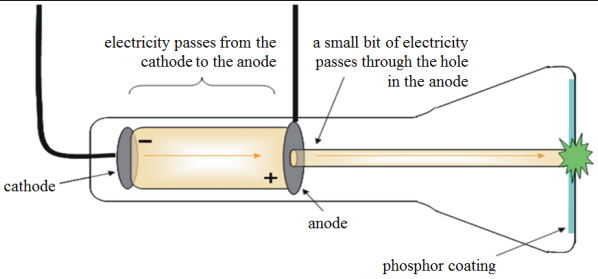
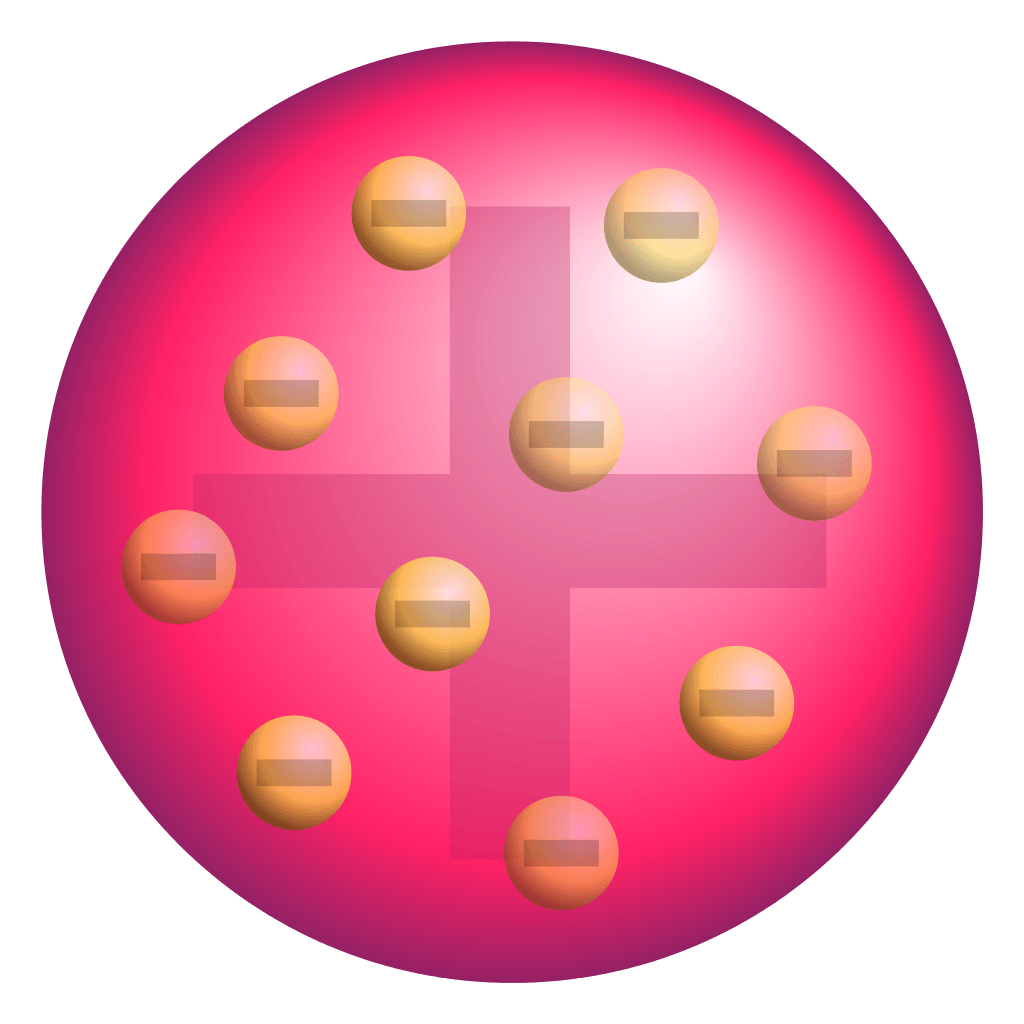
J.J. Thomson (1897 / England)


Known For: electrons were smaller particles of an atom and were negatively charged.

Experiment:
Cathode Ray Tube Experiment

Plum Pudding or Chocolate Chip

media
media

11

12

Multiple Choice

Question image
J.J. Thomson provided evidence that an atom...
1
is the smallest particle of matter
2
contains negatively charged particles
3
has an overall negative charge
4
has an overall positive charge

13

Multiple Select

Question image

What were J. J. Thomson's three contributions to the atomic theory?

1

Discovered the electron

2

Discovered the nucleus -did the gold foil experiment

3

Used the cathode ray tube in his discovery

4

Created a model of the atom with electrons moving around the nucleus in fixed orbits

5

Created the "plum pudding" model of the atom

14

Multiple Choice

J. J. Thomson's model of the atom includes all BUT ONE of these features. That is

1

electrons revolved around the positive nuclear sphere.

2

the positive atomic charge is spherically distributed.

3

electrons radiated throughout the positive sphere.

4

an atom contains both positive and negative charges.

15

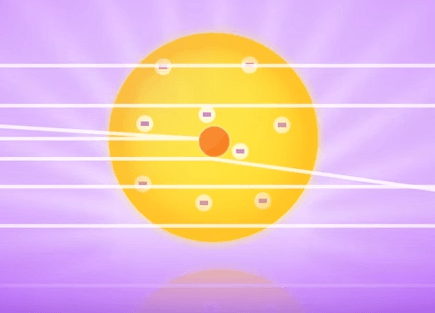
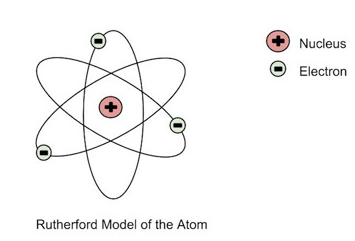
Ernest Rutherford (1911 / England)


Known For: Protons (positive charged) and atoms were mostly empty space

Experiment:
Gold Foil Experiment
1. What was expected


2. What actually happened

Nuclear Model

media
media

16

Vocabulary

Alpha particles (a)

Particles consisting of two protons and two neutrons tightly bound together (this is a Helium atom - He).

17

18

Categorize

Options (10)

Atomos

Uncuttable

Question image

Uncuttable

Question image
Question image

Billiard ball model or Solid Sphere model

Discovered electrons

Cathode Ray Tube

Plum Pudding

all matter is composed of 4 elements.

4 postulates

Organize these options into the right categories

Democritus (3)
Aristotle (2)
Dalton (2)
J.J. Thomson (3)

19

Multiple Choice

The smallest particle into which an element can be divided and still be the same substance
1
neutron
2
atom
3
electron

20

Multiple Choice

Which of the following scientists was the first to determine the existence of electrons?

1

Dalton

2

Thomson

3

Bohr

4

Chadwick

21

Multiple Choice

Which scientists introduced to the idea of a nucleus in the atom using the gold foil experiment?

1

Democritus

2

Aristotle

3

Thomson

4

Rutherford

22

Multiple Choice

Question image
Rutherford discovered the...
1
electron
2
proton
3
neutron
4
nucleus

23

Multiple Choice

Question image
Rutherford's gold foil experiment provided evidence that...
1
negative and positive charges are spread evenly throughout the atom.
2
alpha particles have a positive charge.
3
gold is not a dense as previously thought.
4
there is a dense positively charged nucleus at the center of an atom.

24

Multiple Choice

A tiny but very dense, positively charged portion of the atom that holds most of the atomic mass
1
Electron Shells
2
Orbitals
3
Electron Cloud
4
Nucleus

25

Niels Bohr (1913 / England)


Known For:
1. Determining that electrons have distinct amounts of energy.
2. Electrons absorb energy and jump to higher energy levels. (unstable)
3. Electrons release energy in the form of light when they go back to the original orbital. (stable)

Experiment:
Emissions Spectrum (color of light)


"Planetary model"

media

26

27

Multiple Choice

Which scientist theorized electrons orbit the nucleus in the atom like planets around the sun?

1

Rutherford

2

Chadwick

3

Dalton

4

Bohr

28

Multiple Choice

Niels Bohr suggested that electrons.......
1
are found in specific orbits
2
electrons are scattered throughout the atom
3
electrons move according to their energy level
4
electrons are positive

29

Multiple Choice

Question image
Whose model is most similar to the solar system?
1
Bohr
2
Thomson
3
Rutherford
4
Dalton

30

Multiple Choice

According to the model Bohr created, electrons orbit the nucleus in defined locations known as

1

carapaces

2

integuments

3

cartridges

4

shells

31

Erwin Schrödinger (1926 / Austria)


A.K.A.: Modern Model of the Atom

Known For: Quantum mechanics

electrons can only exist in specified energy states

Experiment:
mathematical equations


"Electron Cloud model"

media

32

James Chadwick (1932 / England)


Known For: Discovered neutrons

neutral particles in the nucleus of an atom

Experiment:
mathematical equations (atom was too heavy with just protons)


"Quantum model" or Modern Model of the Atom

media
media

33

Summary of Current Atom Model

​Subatomic Particle

​Charge

​Relative Mass (amu)

​Location

​Proton

​+1

​1

​in the nucleus

Neutron​

-1​

1​

in the nucleus​

Electron​

0​
(neutral/no charge)

1/1840​

outside the nucleus​

media

34

Multiple Choice

Which particle does not contribute mass to the atom?
1
Proton
2
Neutron
3
Electron
4
Nucleus

35

Multiple Choice

The three main subatomic particles are electrons, protons and ____________.
1
photons
2
neurons
3
neutrons
4
quarks

36

Theories

​Dalton’s Atomic Theory: Dalton

  1. All matter is composed of atoms.

  2. Atoms of a given element are identical

    • Today: Not true - there are isotopes

  3. Atoms cannot be divided, created, or destroyed

    • Technically, no, but there are smaller parts (p, n, and e)

  4. Atoms of different elements combine in simple whole number ratios to form chemical compounds.

  5. In chemical reactions, atoms are separated, rearranged, or combined.


Quantum Theory
1. Atoms are made of smaller particles

2. Atoms of the same element (isotopes) can vary in mass (neutrons)

37

Multiple Choice

The conservation of ___ explains the process of nuclear decay reactions.
1
mass
2
definite
3
multiple

38

Multiple Choice

Question image

Which scientist introduced the atom model shown?

1

Dalton

2

Thomsom

3

Rutherford

4

Heisenberg

39

Multiple Choice

Which of the following is NOT included in our modern day model of the atom?

1

Protons and Neutrons in the center

2

Electrons orbit in energy levels like planets around the sun

3

The atom is mostly empty space.

4

Electrons can be found in orbitals outside the nucleus

40

Multiple Choice

Which of the following represents our modern day model of the atom?

1
2
3
4

41

Multiple Choice

Which of the following models is considered the Plum Pudding Model?

1
2
3
4

42

Multiple Choice

Question image
Who's model is this?
1
Thomson
2
Rutherford
3
Democritus
4
Bohr

43

Multiple Choice

Which experiment listed below did Thomson use to discover electrons?

1

Cathode Ray Tube

2

Oil Drop Experiment

3

Cat Experiment

4

Gold Foil Experiment

44

Multiple Choice

What is the name of our modern day model of the atom?

1

Plum Pudding Model

2

Electron Orbit Model

3

Pool Ball Model

4

Quantum Mechanical Model

45

Multiple Choice

Who was the first contributor to the atomic theory?

1

John Dalton

2

Ernest Rutherford

3

J.J. Thomson

4

Democritus

5

Niels Bohr

46

Multiple Select

Question image

What were Ernest Rutherford's three contributions to atomic theory?

1

Discovered that the atom is mostly empty space

2

Discovered the nucleus- did the gold foil experiment

3

Used the cathode ray tube in his discovery

4

Discovered the electron

5

Discovered that the proton had a positive charge

47

Multiple Choice

Who proposed that the atom consists mostly of empty space?
1
Bohr
2
Dalton
3
Rutherford
4
Chadwick

48

Multiple Choice

How did Rutherford discover the proton?
1
Cathode tube ray experiment
2
Gold Foil Experiment
3
Planetary Model
4
Plum Pudding Model

49

Multiple Choice

Question image
Who believed the atom was a solid sphere?
1
JJ Thompson
2
Rutherford and Dalton
3
Rutherford
4
Democritus and Dalton 

50

Multiple Choice

Discoverer of the neutron?
1
Jimmy
2
Chadwick
3
Charleston
4
Rutherford

51

Multiple Choice

Question image

What explains the path of the cathode ray in the image above?

1

Gravity pulls the particles down.

2

The particles are repelled by the positive electrode.

3

The particles are attracted towards the negative electrode.

4

The particles are deflected away from the negative electrode and attracted to the positive electrode.

52

Multiple Choice

Question image
This is a model of what was thought be an atom after what experiment?
1
Cathode Ray Tube Experiment
2
Gold Foil Experiment
3
Plum Pudding Model
4
Planetary Model

53

Multiple Choice

Question image
This is a model of what was thought be an atom after what experiment?
1
Cathode Ray Tube Experiment
2
Gold Foil Experiment
3
Plum Pudding Model
4
Planetary Model

54

Multiple Choice

Sir J.J. Thompson discovered the electron in 1897. How did Thompson explain the overall neutral charge of the atom?

1

Electrons are present all over the atom, even in the nucleus.

2

Electrons alternate between positive and negative charges.

3

Negative electrons were inside a cloud of positive charge.

4

Electrons travel around the nucleus at great speeds.

55

Multiple Choice

In the famous gold foil experiment, radioactive particles were fired at a very thin sheet of gold foil. Most of the particles passed straight through the gold foil. Only about 1 in every 8000 particles were deflected. The gold foil experiment showed the researchers that the atom is made mostly of

1

protons

2

electrons

3

neutrons

4

empty space

56

Multiple Choice

These particles are found in the nucleus of the atom.

1

protons only

2

protons and electrons

3

electrons only

4

protons and neutrons

57

Multiple Choice

Subatomic particles with a positive charge
1
neutrons
2
atomic mass
3
protons
4
isotopes

58

Multiple Choice

Subatomic particles that are neutral in charge
1
Neutrons
2
Protons
3
Nucleus 
4
Electrons

59

Multiple Choice

Subatomic particles with a negative charge

1

Electrons

2

Neutrons

3

Protons

4

Quarks

60

Multiple Choice

Niels Bohr suggested that electrons.......
1
are found in specific orbits
2
electrons are scattered throughout the atom
3
electrons move according to their energy level
4
electrons are positive

Timeline and Scientists

media

Show answer

Auto Play

Slide 1 / 60

SLIDE