
Chemical Reactions: Types.1

Presentation
•
Science
•
10th Grade
•
Practice Problem
•
Medium
Standards-aligned

Pip Smith
Used 1+ times
FREE Resource
19 Slides • 27 Questions
1

2

3
Multiple Choice
Which part of a chemical equation indicates the number of molecules involved in the reaction?
Coefficient
Subscript
Chemical Formula
Yield
4

5
6

write this down
7
Multiple Choice
Which of the following is NOT a type of chemical reaction listed previously?
Synthesis reaction
Decomposition reaction
Neutralization reaction
Combustion reaction
8

write this down
9
Multiple Select
Select all the correct statements about synthesis reactions.
They always produce a single product.
They involve two or more reactants.
They can only occur with elements, not compounds.
They are also known as combination reactions.
10
Fill in the Blanks
In a synthesis reaction, two or more substances react to produce a
Type answer...
11
Open Ended
Explain the difference between a synthesis reaction and a decomposition reaction, using examples if possible.
12

13
14
Multiple Choice
Which of the following best represents the synthesis of sodium chloride?
2Na(s) + Cl2(g) → 2NaCl(s)
NaCl(s) → Na(s) + Cl2(g)
2NaCl(s) + O2(g) → 2Na2O(s) + Cl2(g)
Na(s) + Cl2(g) → NaCl2(s)
15

write this down
16
Fill in the Blanks
Predict the product of the reaction: Mg(s) + F2(g) →
17

write this down
18
Multiple Choice
Which of the following best describes a decomposition reaction?
A reaction in which two elements combine to form a compound.
A reaction in which a single compound breaks down into two or more elements or new compounds.
A reaction in which two compounds exchange ions.
A reaction in which an element displaces another from a compound.
19
20
Multiple Choice
Based on the experiment shown, what energy source is being used to initiate the decomposition reaction?
Electricity
Light
Heat
Sound
21

22
Open Ended
Explain the process of decomposition of copper carbonate as shown in the diagram. What are the products formed?
23

24
Multiple Choice
Which of the following are possible products when a metal carbonate undergoes decomposition?
Metal oxide and carbon dioxide
Metal and oxygen
Metal hydroxide and water
Metal oxide and water
25

write this down
26
Fill in the Blanks
Fill in the blank: The decomposition of Zn(OH)2(s) produces ZnO and
Type answer...
27

write this down
28
Open Ended
Compare and contrast decomposition reactions and single displacement reactions. Provide an example of each.
29

30
Multiple Choice
Which metal is the most reactive according to the activity series shown?
Lithium
Potassium
Calcium
Aluminum
31
32

33
Multiple Choice
Which of the following statements about the thermite reaction is correct?
Aluminum displaces iron from iron(III) oxide because it is more reactive.
Iron displaces aluminum from aluminum oxide because it is more reactive.
Iron(III) oxide is reduced to iron by magnesium.
Aluminum is less reactive than iron.
34
Open Ended
Explain how the activity series of metals helps predict the outcome of the thermite reaction demonstrated in the experiment.
35

36
Fill in the Blanks
In the reaction Zn(s) + HCl(aq) →
Type answer...
37
Open Ended
How confident do you feel about identifying the different parts of a chemical equation after this lesson?
38
Multiple Choice
What is the role of the coefficient (number that comes before the formula) in a chemical equation?
It shows the number of molecules or atoms involved in the reaction.
It indicates the type of chemical reaction.
It represents the yield of the reaction.
It identifies the subscript in the formula.
39
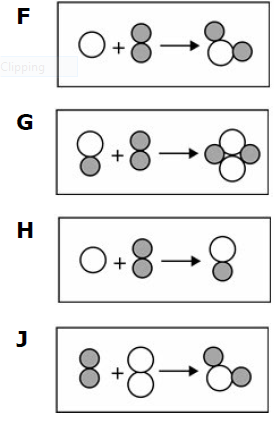
Multiple Choice
40
Multiple Choice
H2 + O → H2O
41
Multiple Choice
42
Multiple Choice
Based on the activity series, will this reaction occur?
Ni + HCl →
Yes
No
43
Multiple Choice
44
Multiple Choice
Without balancing the final equation, predict the products for the synthesis reaction: Li + Cl2 → ?
LiCl2
LiCl
Li2Cl2
Li2Cl
45
Multiple Choice
Without balancing the final equation, predict the products for the synthesis reaction: Li + Cl2 → ?
LiCl2
LiCl
Li2Cl2
Li2Cl
46
Multiple Choice
How many products are in a synthesis reaction?
there are never any products
only one product
there are seven products
Show answer
Auto Play
Slide 1 / 46
SLIDE
Similar Resources on Wayground

42 questions
Thermal Energy & the Kinetic Molecular Theory
Presentation
•
10th Grade
40 questions
Magnetism Lesson 1
Presentation
•
10th Grade
41 questions
Atoms to Ions
Presentation
•
10th Grade
38 questions
Unit 1 Adventures on the Mississippi
Presentation
•
10th Grade
37 questions
Physical Science 17.4
Presentation
•
10th Grade
38 questions
Genetics Terms part 2
Presentation
•
9th - 10th Grade
40 questions
Ionic Bonding Lesson
Presentation
•
10th Grade
39 questions
Cyber Security Lesson 1
Presentation
•
10th Grade
Popular Resources on Wayground
10 questions
Safety Day 2026 – Student Review

Quiz
•
9th Grade
21 questions
Continents and Oceans
Quiz
•
6th Grade
20 questions
Parts of Speech
Quiz
•
5th Grade
16 questions
Subject & Predicate
Quiz
•
5th Grade
25 questions
Multiplication Facts
Quiz
•
5th Grade
12 questions
Map Skills
Quiz
•
3rd Grade
22 questions
Continents and Oceans
Quiz
•
5th Grade
15 questions
Rounding Decimals
Quiz
•
5th Grade
Discover more resources for Science
10 questions
Exploring Chemical and Physical Changes

Interactive video
•
6th - 10th Grade
10 questions
Exploring the Electromagnetic Spectrum for Middle School Science
Interactive video
•
6th - 10th Grade
10 questions
Exploring Force and Motion Concepts
Interactive video
•
6th - 10th Grade
10 questions
Exploring Air Masses and Weather Fronts
Interactive video
•
6th - 10th Grade
10 questions
Exploring the States of Matter
Interactive video
•
6th - 10th Grade
10 questions
Exploring Forces: Net Force, Normal Force, Gravity, and Friction
Interactive video
•
6th - 10th Grade
10 questions
Differentiating Thermal Energy and Temperature
Interactive video
•
6th - 10th Grade
10 questions
Exploring the States of Matter and Thermal Energy
Interactive video
•
6th - 10th Grade