

ecology

Presentation
•
Biology
•
9th - 12th Grade
•
Easy

Kirk Minton
Used 1+ times
FREE Resource
42 Slides • 31 Questions
1
Ecology
By Kirk Minton
2
Ecology
Check For Understanding:
Food Chains, Food Webs, and Trophic Pyramids

3
ecology

4

5
Vocabulary
Biotic vs Abiotic
Population
Community
Ecosystem
Autotroph vs Heterotroph
Habitat vs Niche

6

7
Multiple Choice
1 living thing is called an ______________--
population
ecosystem
organism
8

9
Multiple Choice
If a scientist in New Zealand was studying how a group of herbivores interacted with a group of omnivores, and all of their abiotic surroundings, what level of ecology would she be studying?
Community
Population
Species
Ecosystem
Biome
10

11
Multiple Choice
many living and non-living things living together is called an _______________
ecosystem
organism
community
population
12

13
Multiple Choice
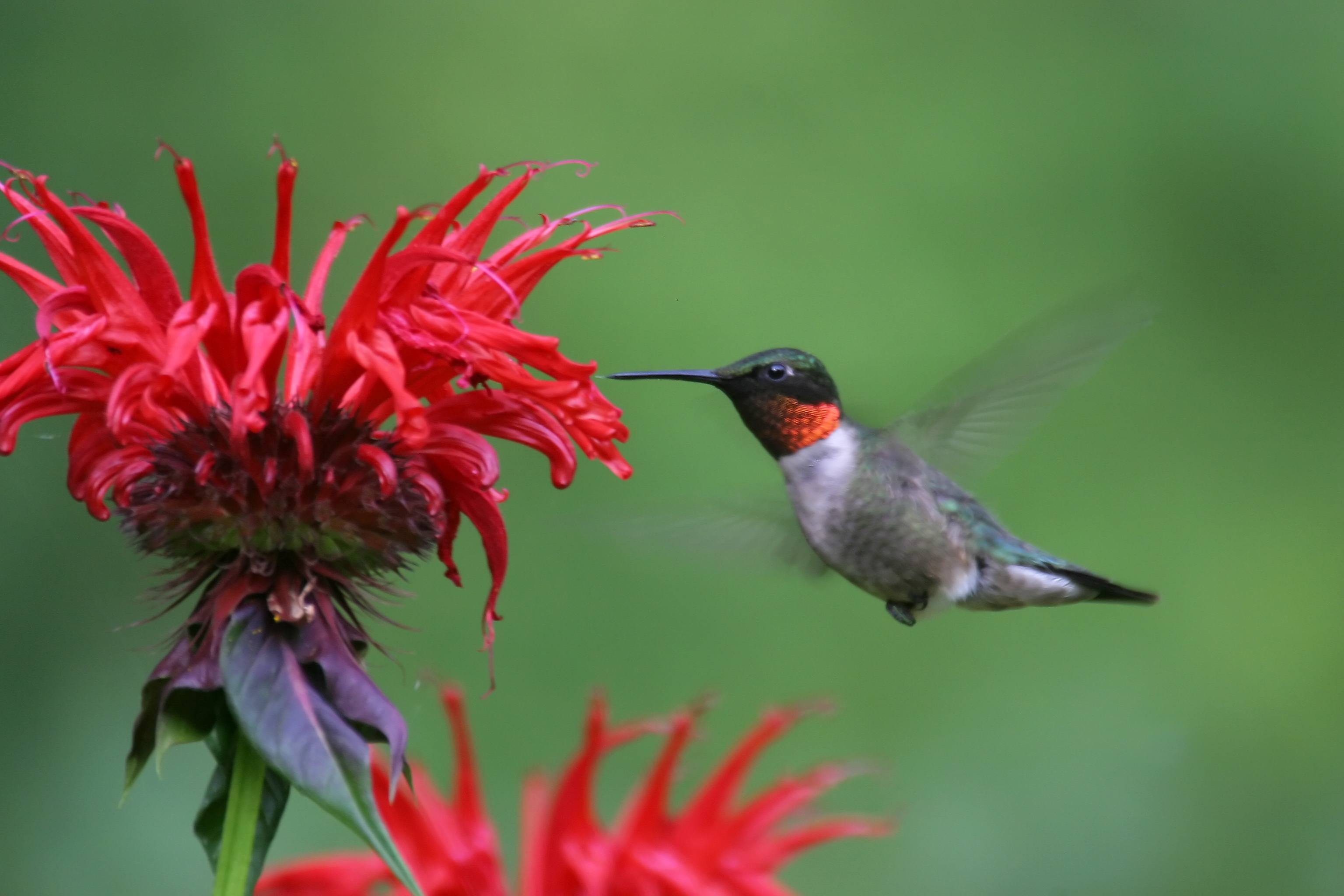
Ruby-throated hummingbirds live in woodland areas, but also frequent gardens where flowering plants are plentiful. They hover to feed on flowers, nectar, and sap. During this floral feeding process, the birds pollinate many plants. These tiny birds are omnivores, sometimes feeding on insects and spiders.
Habitat of an autotroph
Niche of an autotroph
Niche of a heterotroph
Habitat of a heterotroph
14

15
Multiple Choice
many turtles living together is called a ______________
ecosystem
population
coomunity
organism
16

17
Interactions
Biotic-Biotic interaction
Abiotic-Biotic interaction
Competitive Exclusion Principle
Carrying Capacity

18

19
Multiple Choice
all living things together in one area is called a ____________
community
population
ecosystem
20
Multiple Choice
Researchers have found that a local squirrel population fluctuates from year to year, increasing one year and decreasing the next. Which of the following factors would cause the squirrel population to grow?
the birth rate is equal to the death rate
emigration is greater than immigration
the death rate is higher than the birth rate
the birth rate is greater than the death rate
21
Open Ended
What was one example of a biotic-biotic interaction and an abiotic-biotic interaction from the clip.
22
Multiple Choice
Two species of finches are in competition for the limited resources of an ecosystem. One species eats fruit and the second species eats seeds. If a third species of herbivore finches moves into the area, how will the ecosystem change?
Resources will be more abundant.
Water will become more available.
The climate of the ecosystem will change.
Fruit and seed resources will become less abundant.
23
Multiple Choice
plants are called _________ because they produce food for us.
consumers
producers
prey
24
Multiple Choice
A population of flat-tailed horned lizards was found in a geographically isolated area. In 2002, the size of the population was about 25,500. In 2004, the size of the population was about 32,800. Which of the following statements explains the change in the size of the lizard population from 2002 to 2004?
The birth rate was greater than the death rate.
The emigration rate was greater than the birth rate.
The death rate was greater than the immigration rate.
The emigration rate was greater than the immigration rate.
25
Open Ended
Can two species occupy the exact same niche at the exact same time?
Use the Competitive Exclusion Principle to justify your answer.
26
27
Multiple Choice
humans and animals are _________ because we need to eat food for energy.
producers
prey
consumers
population
28

29

30

31
Multiple Choice
an animal that hunts other animals is called a ____________
prey
predator
producer
herbivore
32

33
Open Ended
Use your understanding of carrying capacity to explain what is happening in the graph between lynx and rabbits.
34

35
Multiple Choice
an animal that is hunted and eaten by other animals is called ________
prey
predator
producer
36

37
Food Webs
Be able to take organisms and construct an accurate food web
Be able to accurately show the flow of energy throughout an ecosystem

38

39
Multiple Choice
an animal or person that eats only meat.
herbivore
omnivore
carnivore
producer
40

41
Multiple Choice
What is the PRODUCT of the process used by producers that is passed on as energy throughout an ecosystem?
photosynthesis
Sun
glucose
carbon dioxide
water
42
Multiple Choice
Which of the following graphs shows a population of organisms with a carrying capacity?
43
Multiple Choice
an animal or person that eats only plants.
herbivore
omnivore
carnivore
producer
44
Multiple Choice
Which of the following is an exponential graph?
45
Trophic Pyramids
Be able to accurately place and label organisms that belong at each level
Be able to use the Rule of 10% to calculate energy available at each level

46
Multiple Choice
Define "carrying capacity"
any factors in an environment that are limited
when population increases slowly at first then grow at an accelerated rate
minimum number of individuals of a species that an environment can support
maximum number of individuals of a species that an environment can support
47
Multiple Choice
an animal or person that eats both meat and plants.
herbivore
omnivore
carnivore
producer
48
Multiple Choice
Define "limiting factor"
anything that constrains a population's size and slows or stops it from growing
when population increases slowly at first then grow at an accelerated rate
minimum number of individuals of a species that an environment can support
maximum number of individuals of a species that an environment can support
49
Multiple Choice
If there are 100 KJ of energy available at the secondary consumer level, how many KJ of energy are available at the producer level?
10 KJ
1,000 KJ
10,000 KJ
1 KJ
50
Multiple Choice
Which of the following is NOT a density dependent limiting factor?
competition
parasitism
disease
natural disaster
51
Open Ended
Why are autotrophs so crucial to an ecosystem?
Support your answer with QUANTITATIVE data and use these vocabulary words:
Rule of 10%
Producers
Primary consumers
Secondary consumers
Tertiary consumers
52

53

54

55

56

57

58

59

60

61

62

63

64

65

66

67

68

69
Multiple Choice

70
Multiple Choice
71
Multiple Choice
72
Multiple Choice
73
Questions?
Ecology
By Kirk Minton
Show answer
Auto Play
Slide 1 / 73
SLIDE
Similar Resources on Wayground

68 questions
Ecological Relationships
Presentation
•
9th - 12th Grade
68 questions
Photosynthesis
Presentation
•
9th - 12th Grade
70 questions
Unit 7 EOC Review Notes and Key
Presentation
•
9th - 12th Grade
65 questions
Science of Water
Presentation
•
9th - 12th Grade
66 questions
Using the subjunctive in context
Presentation
•
9th Grade - University
64 questions
Informal Commands
Presentation
•
9th - 12th Grade
69 questions
Reflexive Verbs - Spanish
Presentation
•
9th - 12th Grade
68 questions
Class Review # 3
Presentation
•
9th - 12th Grade
Popular Resources on Wayground
11 questions
Hallway & Bathroom Expectations

Quiz
•
6th - 8th Grade
10 questions
HCS SCI 03 Summer School Assessment 2
Quiz
•
3rd Grade
11 questions
Home Scope
Quiz
•
7th - 8th Grade
12 questions
2026 TAP Technology in the Classroom
Presentation
•
Professional Development
15 questions
HCS SCI 05 Summer School Assessment 2 Review
Quiz
•
5th Grade
15 questions
HCS SCI 04 Summer School Review 2
Quiz
•
4th Grade
59 questions
Geometry Unit 3 Review
Quiz
•
9th - 12th Grade
14 questions
FAST ELA READING SMAPLE TEST MATERIALS

Passage
•
3rd Grade