Class Review # 3
Presentation
•
Biology
•
9th - 12th Grade
•
Medium
+8
Standards-aligned
Ms. Tariche
Used 4+ times
FREE Resource
4 Slides • 64 Questions
1
DNA Replication
2
3
4
Fill in the Blanks
5
Multiple Choice
The DNA molecule is a complex polymer. What is the name of the building blocks (monomers) that come together to form a DNA molecule?
nucleotides
fatty acids
aminoacids
monosaccharides (simple sugars)
6
Match
A
B
C
Phosphate group
Pentose sugar (5 - carbon sugar)
Nitrogen base
Phosphate group
Pentose sugar (5 - carbon sugar)
Nitrogen base
7
Multiple Choice
What are the correct base pair rules in DNA?
A-T and C-G
A-C and T-G
A-G and C-T
A-A, C-C, G-G, and T-T
8
Drag and Drop
9
Multiple Choice
Which statement best describes the primary function of DNA replication?
To ensure daughter cells have a complete copy of the DNA
To prevent mutations from occurring in cells
To provide genetic variation within specific organisms
to allow prokaryotic cells to undergo meiosis
10
Multiple Choice
DNA is replicated during the ___ stage before mitosis.
G1
S
G2
Cytokinesis
11
Multiple Choice
What is the first step in DNA replication?
DNA unzips
bases are added
sugar and phosphate are added
sugar and bases are added
12
Multiple Choice
The enzyme that unzips DNA during replication is called:
helicase
zipase
DNA polymerase
ligase
13
Drag and Drop
Because you are reusing the old, or parent, DNA strand DNA replication is said to be
14
Multiple Choice
each one with two original strands
each one with two new strands
each one with one new strand and one original strand
one with two new strands and the other with two original strands
15
Multiple Choice
Which enzyme is responsible for adding the free nucleotides to the replicating DNA?
DNA Helicase
DNA Ligase
DNA polymerase
RNA Polymerase
16
Match
Match the Following: Base Pairing Rule
A
C
T
G
T
G
A
C
T
G
A
C
17
Match
Match the following: Base Pairing Rule
Adenine
Cytosine
Thymine
Guanine
Thymine
Guanine
Adenine
Cytosine
Thymine
Guanine
Adenine
Cytosine
18
Multiple Choice
Choose the correct complementary nucleotide sequence for the following:
TTT - GTC - CCC
CCC - TGA - AAA
AAA - CAG - GGG
TTT - CAT - GGG
GGG - TGA - CCC
19
Multiple Choice
Choose the correct complementary nucleotide sequence for the following:
AAA - GTA - CCC
CCC - TGA - AAA
AAA - CAG - GGG
TTT - CAT - GGG
GGG - TGA - CCC
20
Fill in the Blanks
21
Multiple Choice
You are given the DNA strand 5'ATGCTCAGCTGA3'. What is the corresponding DNA strand?
5'UACGAGUCGACU3'
5'TACGAGTCGACT3'
3'UACGAGUCGACU5'
3'TACGAGTCGACT5'
22
Multiple Choice
it is very small and very complicated
it's in everything
it serves as the blueprint for traits of all living things
because we eat it every day for energy
23
Multiple Choice
How many nucleotides equal 1 amino acid?
1
2
3
4
24
Multiple Choice
The DNA sequence ATCAGCGCTGGC is part of a gene. How many amino acids are coded for by this message?
4
8
12
20
25
Multiple Choice
nuclei --> RNA --> cytoplasm
ribosomes --> proteins --> DNA
genes --> nuclei --> ribosomes
DNA --> RNA --> proteins
26
Multiple Choice
DNA --> mRNA --> Proteins.
The first arrow represents which one of the following processes?
Translation
Transcription
Replication
Mutation
27
Multiple Choice
DNA --> mRNA --> Proteins.
The second arrow represents which one of the following processes?
Translation
Transcription
Replication
Mutation
28
Multiple Choice
The process by which the genetic code of DNA is copied into a strand of mRNA is called
translation
transcription
transformation
replication
29
Multiple Choice
What is the process of converting mRNA message into protein?
replication
transcription
translation
mitosis
30
Multiple Choice
RNA is double-stranded and contains the base thymine
RNA is single-stranded and contains the base uracil
RNA is longer than DNA and uses five bases to encode information
RNA is made in the nucleus of eukaryotic cells and stays there to carry out its functions
31
Multiple Choice
GCUAUA
CGATAT
CGAUAU
GCUTUT
32
Multiple Choice
RNA contains uracil and deoxyribose
RNA contains ribose and thymine
RNA contains uracil and ribose
RNA contains adenine and ribose
33
Multiple Choice
cytosine
guanine
thymine
uracil
34
Multiple Choice
TRANSCRIBE this DNA sequence: TACGTTACT
AUGCAAUGA
ATGCAATGA
AUGGATUGA
TACGTTACT
35
Multiple Choice
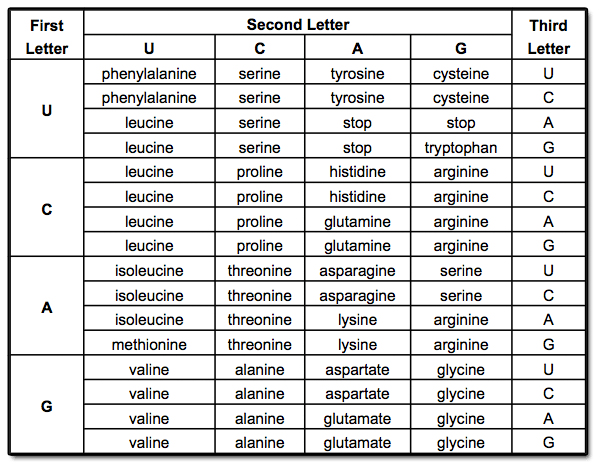
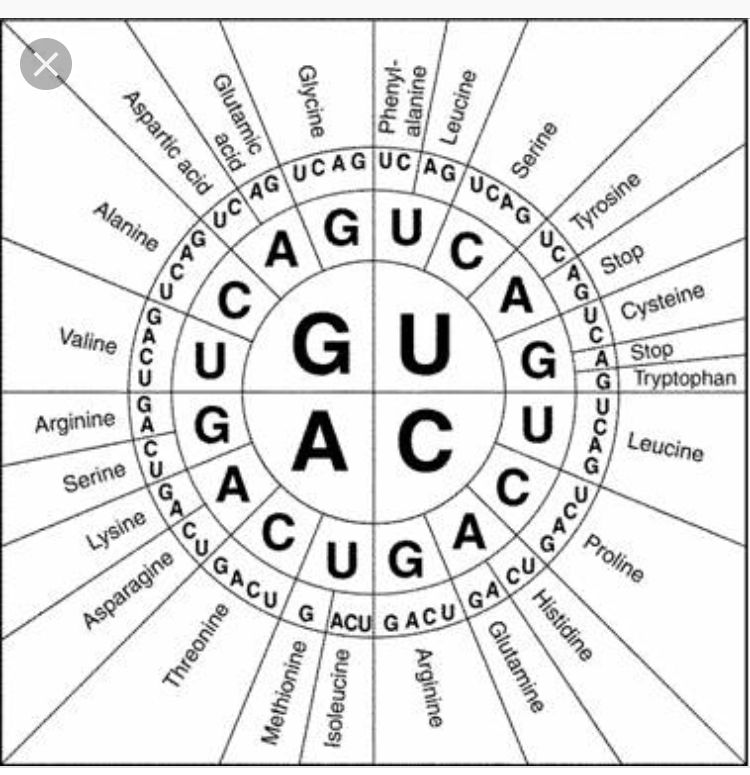
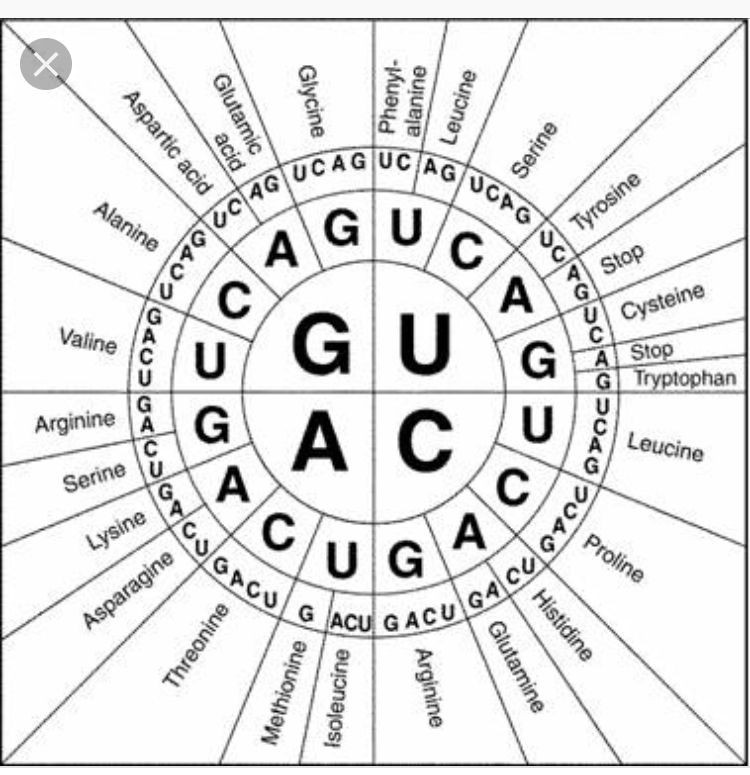
TRANSLATE this RNA sequence: AUGCAAUGA
Met-Glu-Stop
Met-His-Stop
Thr-Glu-Stop
Thr-Pro-Stop
36
Multiple Choice
Phenylalanine
Tyrosine
Leucine
Stop codon
37
Multiple Choice
Met-Pro-Ala-Val
Met-Pro-Val
Tyr-Gly-His
Tyr-Gly-Arg-His
38
Multiple Choice
Which amino acid is made from the RNA codon GCU?
Alanine
Leucine
Serine
Tyrosine
39
Multiple Choice
carry amino acids to the ribosomes
carry ribosomes to the ER
carry mRNA out of the nucleus
carry glucose to mitochondria
40
Multiple Choice
mRNA
tRNA
RNA
DNA
41
Multiple Choice
Where does Translation occur?
Across the Cell Membrane
in the Mitochondria
Ribosomes in the Cytoplasm
In the Nucleus
42
Multiple Choice
Where does Transcription occur?
Across the Cell Membrane
in the Mitochondria
Ribosomes in the Cytoplasm
In the Nucleus
43
Match
DNA molecule
RNA molecule (general diagram)
tRNA
rRNA
mRNA
DNA molecule
RNA molecule (general diagram)
tRNA
rRNA
mRNA
44
Multiple Choice
cytosine
adenine
guanine
thymine
45
Match
Mutation
Point mutation
Frameshift mutation
Silent mutation
Chromosomal mutation
a change in the DNA sequence
a type of mutation where one to few bases are substituted with different bases
a type of mutation caused by adding or deleting bases, affecting all the codons after the change
a type of mutation that doesn't result in a change in the amino acid sequence (same protein)
a type of mutation where large sections of the chromosome are affected
a change in the DNA sequence
a type of mutation where one to few bases are substituted with different bases
a type of mutation caused by adding or deleting bases, affecting all the codons after the change
a type of mutation that doesn't result in a change in the amino acid sequence (same protein)
a type of mutation where large sections of the chromosome are affected
46
Multiple Choice
T-G-A-C-C-A
T-G-A-G-C-A
Substitution
Deletion
Insertion
Frameshift
47
Multiple Choice
Yes
No
48
Multiple Choice
They change all of the codons from the mutation on down the line, which changes the amino acid sequence
They insert things that an organism doesn't need.
They often delete things that organisms need.
Insertion and deletions are not any more harmful than substitution mutations.
49
Multiple Choice
The order of amino acids dictates what shape the protein will fold into.
It is not important. The protein folding chamber will force the protein to fold into the correct shape.
50
Multiple Choice
The mutated DNA segment is TTCGCAAG. This is an example of ___ mutation.
Substitution
Deletion
Insertion
Inversion
51
Multiple Choice
Chemical or physical agents in the environment that may cause mutations are called:
mutants
mutagens
chromosomal mutations
missense mutations
52
Multiple Choice
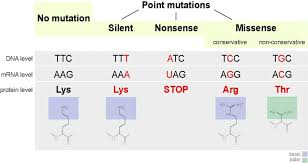
If a point mutation does not change the order of the amino acid sequence, this is called a:
nonsense mutation
silent mutation
missense mutation
frameshift mutation
53
Multiple Choice
If a mutation codes for "stop" in the amino acid chain, this is called a:
nonsense mutation
missense mutation
silent mutation
frameshift mutation
54
Multiple Choice
If UCU is changed to UCC, this is a _______________________________.
silent mutation
missense mutation
nonsense mutation
frameshift mutation
55
Multiple Choice
Mutations can be beneficial because they increase genetic _____________________ and can make the individual and species more likely to survive.
diseases
complications
disorders
diversity
56
Multiple Choice
Why did scientists edit the genes of bacteria to produce insulin?
Because the bacteria were diabetic
Because bacteria have simple DNA that is easier to manipulate, making it easy to produce insulin in a lab
Because bacteria's complex DNA was perfect for insulin production
Because insulin has no use outside of a lab setting
57
Multiple Choice
Which of these is the correct definition of genetic modification/genetic engineering?
Choosing individuals to mate based on desired characteristics
Observing genetic changes in populations over time based on adaptive traits
Extracting stem cells to differentiate into specialized tissues
Altering the DNA of an organism at the molecular level
58
Multiple Choice
What does transgenic mean?
An organism that can change its genes at will
A stem cell that can differentiate into anything
An organism that has had another species' DNA put in it
A bacteria that reproduces asexually
59
Multiple Choice
Transgenic
Transplanted
Transducted
Plasmid
60
Multiple Choice
A company that creates hair dye would most likely employ a bio-technician for which job?
researching trends
developing new colors
creating cost effective packaging
developing a product that will be safe for consumers
61
Multiple Choice
Which is a concern of scientists when genetically modifying plants?
Plants will pass on diseases to animals.
There will be a decrease in biodiversity.
Plants will have a longer growing season.
There will be a decrease in revenue for pesticide manufacturers.
62
Multiple Choice
Which application of biotechnology is of greatest economic benefit to North Carolina?
development of livestock that are more domesticated
development of livestock that produce higher quality meat
development of crops that can be grown in extremely dry environments
development of crops that can be grown in extremely low temperatures
63
Multiple Choice
Which use of biotechnology most benefits North Carolina agriculture?
producing human vaccines
producing disease resistant crops
producing new medicines from bacteria
producing enzymes to eliminate pollutants
64
Multiple Choice
Which best describes a controversial issue associated with the use of genetically modified crops?
the use of genetically modified crops to increase potential yield
the short term use of genetically modified crops in famine stricken countries
the development of genetically modified crops which are resistant to herbicides
the long term effects which may arise from the use of genetically modified crops
65
Multiple Choice
Bacteria cells can be used to produce insulin for the treatment of diabetes in humans. Which best explains how the bacteria cells are able to produce insulin for humans?
The bacteria have been grown on a petri dish containing insulin.
The bacteria have been genetically engineered to contain the DNA needed to produce insulin.
The bacteria have been exposed to radioactivity to create mutant strains capable of producing insulin.
The bacteria have been grown on a petri dish containing sugar; the bacteria produce insulin in response to the sugar.
66
Multiple Select
What type of job could a person who studies biotechnology in college have?
Create new medicines and vaccines
Create disease/pest resistant crop varieties
Work in a forensic lab testing crime scene evidence
Create environmentally friendly ways to clean up pollution
67
Multiple Choice
Which is most important when investigating ethical issues in biotechnology?
cost of the technology
advantage of the technology
public opinion of the technology
benefits of the technology outweighing the harm
68
Central Dogma of Molecular Biology
DNA Replication
Show answer
Auto Play
Slide 1 / 68
SLIDE

Similar Resources on Wayground
61 questions
The Odyssey Background Information
Presentation
•
9th - 12th Grade
60 questions
Area Formulas for Polygons & Circles
Presentation
•
9th - 12th Grade
66 questions
Briggs 12B Plant Systems
Presentation
•
9th Grade - University
61 questions
Absolute Value Lesson, Examples, & Real World Problems
Presentation
•
9th - 12th Grade
62 questions
Invertebrates
Presentation
•
9th - 12th Grade
61 questions
Chapter 10 Mitosis
Presentation
•
9th Grade - University
65 questions
AP Biology Unit 7: Natural Selection Review
Presentation
•
9th - 12th Grade
62 questions
The Nitrogen Cycle
Presentation
•
9th - 12th Grade
Popular Resources on Wayground
20 questions
STAAR Review Quiz #3
Quiz
•
8th Grade
20 questions
Equivalent Fractions
Quiz
•
3rd Grade
6 questions
Marshmallow Farm Quiz
Quiz
•
2nd - 5th Grade
20 questions
Main Idea and Details
Quiz
•
5th Grade
20 questions
Context Clues
Quiz
•
6th Grade
20 questions
Inferences
Quiz
•
4th Grade
19 questions
Classifying Quadrilaterals
Quiz
•
3rd Grade
12 questions
What makes Nebraska's government unique?
Quiz
•
4th - 5th Grade
Discover more resources for Biology
14 questions
Ecological Succession: Primary and Secondary
Quiz
•
9th Grade
20 questions
Structure & DNA Replication Quiz
Quiz
•
9th Grade
50 questions
Biology EOC Review
Quiz
•
9th Grade
33 questions
Module C - Virus vs Cells, Biomolecules & Enzymes
Quiz
•
9th Grade
25 questions
photosynthesis and cellular respiration
Quiz
•
9th Grade
25 questions
STAAR Evolution Vocabulary
Quiz
•
9th Grade
20 questions
Food Chains and Food Webs
Quiz
•
7th - 12th Grade
20 questions
Genetics 2026
Quiz
•
10th Grade