

Learning About the Universe

Presentation
•
Science
•
8th Grade
•
Practice Problem
•
Medium
+8
Standards-aligned

Barbara White
Used 25+ times
FREE Resource
12 Slides • 19 Questions
1

Middle School

2
Explain how the sun's gravity keeps all the planets and other objects in orbit.
Use data from space probes to determine the size and composition of solar system objects.
Describe how tools like the Hubble Telescope have led to important scientific discoveries.
Compare the different categories of objects in the solar system, like planets and comets.


3
Key Vocabulary
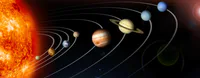
Solar System
The solar system consists of the Sun and all the celestial objects gravitationally bound to it.
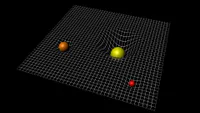
Gravitational Pull
Gravitational pull is the invisible force of attraction that exists between any two objects with mass.

Scale Property
A scale property is a characteristic of an object or system used for size and distance comparison.

Orbital Radius
The orbital radius is the average distance of an object from the star it orbits, like the Sun.
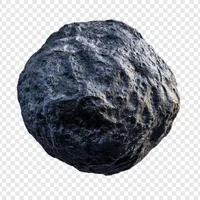
Asteroid
An asteroid is a small, rocky body that orbits the Sun, mostly found between Mars and Jupiter.
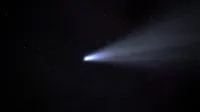
Comet
A comet is a celestial object made of ice and dust that develops a tail as it nears the Sun.
4
Key Vocabulary
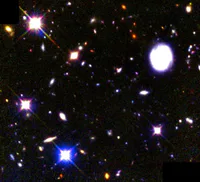
Universe
The universe includes all of space and everything in it, from the smallest particles to the largest galaxies.
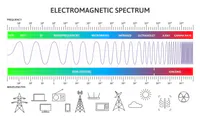
EM Radiation
Electromagnetic radiation is a form of energy that travels through space in the form of waves.

Telescope
A telescope is an essential instrument used by astronomers to observe and study very distant objects in space.

Space Probe
A space probe is an uncrewed spacecraft sent to explore and gather scientific data about celestial bodies.
5
The Solar System and Gravity
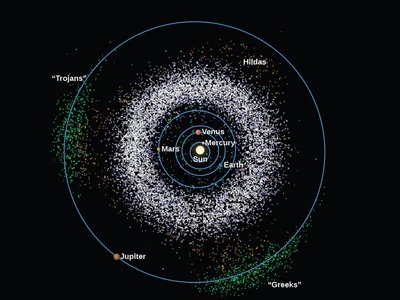
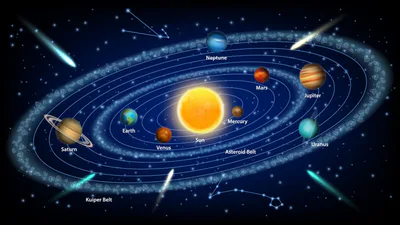
The solar system includes the sun, planets, moons, and asteroids orbiting it.
The sun's powerful gravitational pull holds all these objects in their orbit.
We analyze data to find patterns and differences among these celestial objects.
6
Multiple Choice
What is the primary force that holds the planets, moons, and asteroids in their orbits within the solar system?
The sun's powerful gravitational pull
The magnetic fields of the planets
The light emitted from the sun
The rotation of the planets on their axis
7
Multiple Choice
Which statement best describes the relationship between the sun and the other objects in the solar system?
The sun is at the center, and its gravity keeps other objects orbiting it.
The planets are at the center, and their gravity keeps the sun in orbit.
All objects in the solar system move randomly without a central point.
The moons and asteroids orbit the sun, while the planets orbit the moons.
8
Multiple Choice
When scientists analyze data from a newly discovered celestial object, they observe it follows a consistent orbital path around the sun. What is the most logical conclusion they can draw?
The object is likely part of the solar system and is held in orbit by the sun's gravity.
The object is generating its own gravity and will form a new solar system.
The object is not affected by the sun's gravity and will pass through the solar system.
The object must be a moon that has escaped a planet's orbit.
9
Visible Light
The universe is all of space, which we study by observing the energy objects emit.
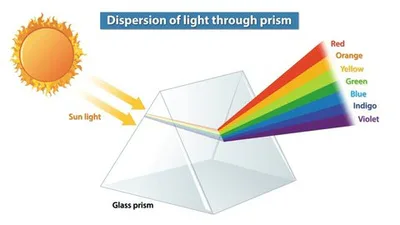
Visible light is the part of the electromagnetic spectrum that human eyes are able to see.
When passed through a prism, it separates into a spectrum of colors and different wavelengths.
Invisible Waves
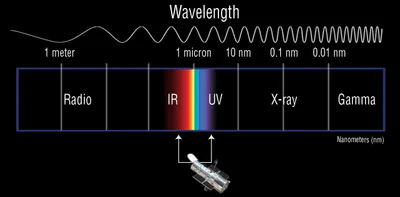
This emitted energy is the raw data scientists analyze to understand the properties of celestial objects.
Other invisible forms of energy, like radio waves, are also part of this important spectrum.
Specialized instruments must be used to detect these waves and complete our understanding of an object.
10
Multiple Choice
What is the primary method scientists use to gather data about objects in the universe?
By traveling to the objects in rockets.
By observing the energy that objects in space emit.
By studying the effects of gravity on Earth.
By looking at the colors of the sky during sunset.
11
Multiple Choice
Why must scientists use specialized instruments in addition to standard telescopes to study the universe?
Visible light is not a form of energy.
Some energy, like radio waves, is invisible to human eyes.
Specialized instruments are used to create energy.
All celestial objects only emit visible light.
12
Multiple Choice
An astronomer observes a celestial object using only an optical telescope that sees visible light, but their data seems incomplete. What is the best explanation for this?
The object is likely emitting invisible waves that the optical telescope cannot detect.
The object is too far away for any energy to reach the telescope.
The prism inside the telescope is not working correctly.
The object must not be emitting any energy at all.
13
Tools of Astronomy: Telescopes
Telescopes make distant objects appear larger and brighter by collecting and focusing light.
Optical telescopes use mirrors or lenses to focus visible light from space.
Radio telescopes have large dishes to detect radio waves from celestial objects.
14
Multiple Choice
What is the primary function of a telescope?
To make distant objects appear larger and brighter by collecting and focusing light.
To measure the exact distance between Earth and other planets.
To send communication signals to satellites orbiting Earth.
To create detailed maps of the Earth's surface from space.
15
Multiple Choice
What is the fundamental difference between an optical telescope and a radio telescope?
The type of energy they are designed to collect and focus.
Optical telescopes use dishes and radio telescopes use mirrors.
Only radio telescopes can make objects appear brighter.
Only optical telescopes can be used to observe objects in space.
16
Multiple Choice
An astronomer needs to study a celestial object that does not emit visible light but is a known source of radio waves. Which instrument is the correct choice for this task and why?
A radio telescope, because the object is emitting radio waves.
An optical telescope, because it can detect all forms of energy.
A radio telescope, because radio waves are a form of visible light.
An optical telescope, because it uses mirrors to see things that are not visible.
17
Tools of Astronomy: Space Probes
Uncrewed spacecraft designed to explore planets, moons, and other celestial bodies.
They gather data on an object's layers, surface, and composition.
Orbiters circle a body, while landers touch down to analyze materials directly.
18
Multiple Choice
What is the main purpose of a space probe?
To transport astronauts to other planets
To launch communication satellites into Earth's orbit
To observe Earth's weather patterns from space
To explore celestial bodies and gather data without a crew
19
Multiple Choice
What is the key difference in how orbiters and landers study celestial bodies?
An orbiter is crewed, while a lander is uncrewed.
An orbiter studies a planet's layers, while a lander studies its surface.
An orbiter circles a celestial body, while a lander makes contact with its surface.
An orbiter is used for deep space, while a lander is used for nearby moons.
20
Multiple Choice
If scientists want to determine the specific chemical composition of soil on a distant moon, which tool would be the most effective to send?
An orbiter, because it can map the entire surface from above.
A lander, because it can directly analyze surface materials.
An orbiter, because it can measure the object's atmospheric layers.
A lander, because it can orbit the planet to find the best landing spot.
21
Asteroids
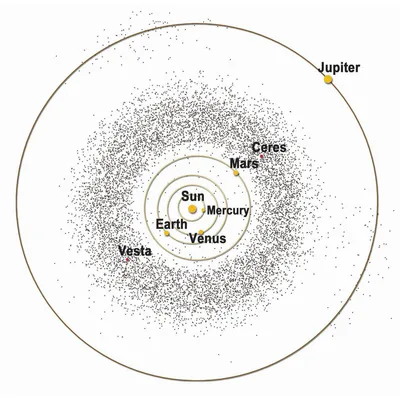
Asteroids are celestial bodies that are primarily composed of rock and metal.
They are typically found orbiting the sun in the asteroid belt between Mars and Jupiter.
Their surfaces are generally solid, irregular in shape, and covered with craters.
Comets
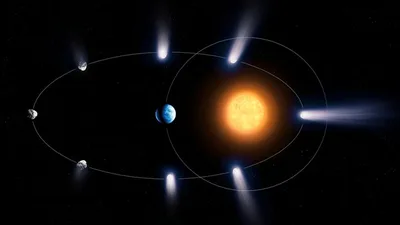
Comets are celestial bodies made up of ice, dust, and frozen gases.
They have long, elliptical orbits that originate in the cold, outer solar system.
As a comet nears the sun, it develops a glowing coma and a long tail.
22
Multiple Choice
Which statement correctly identifies the primary difference in composition between asteroids and comets?
Asteroids are primarily made of rock and metal, while comets are made of ice, dust, and frozen gases.
Asteroids are primarily made of ice and gas, while comets are made of rock and metal.
Asteroids have long tails, while comets have cratered surfaces.
Asteroids orbit in the outer solar system, while comets are found between Mars and Jupiter.
23
Multiple Choice
What is the relationship between a comet's orbit and its appearance?
Its orbit brings it closer to the sun, causing the ice and gas to heat up.
It begins to rotate more rapidly as it travels through space.
It enters the asteroid belt and collides with other objects.
Its rocky surface begins to melt and glow.
24
Multiple Choice
A scientist discovers a new object orbiting the sun. It is located between Mars and Jupiter and has a solid, irregular surface covered with craters. What is the most logical conclusion about this object?
It is an asteroid, due to its solid, cratered surface and its location in orbit.
It is a comet, because it will develop a tail as it gets closer to Jupiter.
It is an asteroid, because it is composed primarily of ice and frozen gases.
It is a comet, because it is located between the orbits of two planets.
25
Engineering Enables Science
Engineering provides scientists with powerful new tools for exploration and data collection.
Deep-space probes like Voyager led to major discoveries about our solar system.
Advanced telescopes allow scientists to observe distant stars and galaxies in great detail.
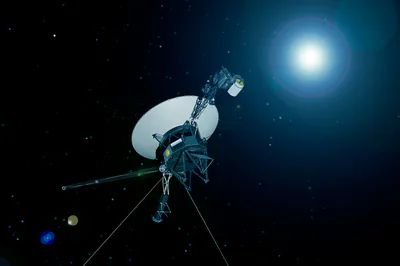
Science Drives Engineering
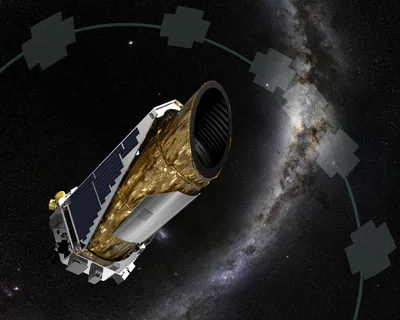
Scientific questions challenge engineers to design and build innovative new technologies.
The scientific goal to find planets outside our solar system spurred new designs.
This led to the development of new engineered systems like the Kepler Telescope.
26
Multiple Choice
What is the fundamental relationship between science and engineering?
They have a partnership where each field helps the other advance.
Science is the process of building technology, while engineering is the study of nature.
Engineering is a branch of science focused only on building telescopes and probes.
They are completely separate fields that do not influence each other.
27
Multiple Choice
How does engineering directly support the work of scientists?
By creating new tools and technologies for observation and data collection.
By asking the questions that engineers are required to answer.
By providing the scientific laws that engineers must follow.
By funding the development of new engineering projects.
28
Multiple Choice
Based on the examples of the Kepler Telescope and Voyager probes, what is a logical conclusion about the connection between science and engineering?
A scientific question about the natural world will likely lead to the development of a new technology.
An engineering breakthrough is required before a new scientific question can be asked.
Scientists and engineers will likely disagree on the best way to explore other planets.
The Kepler Telescope is the only tool that can be used to find planets outside our solar system.
29
Misconception | Correction |
|---|---|
All planets in the solar system are alike. | Planets vary in size, from small, rocky worlds to large gas giants. |
All telescopes are the same. | Telescopes are specialized to detect different types of light, like visible or radio waves. |
Humans have traveled to many planets. | Humans have only walked on the Moon; probes explore other planets. |
The 'Space Race' was only about landing on the Moon. | It included the first satellite and the first human in orbit. |
30
The sun's gravity holds our solar system of planets, moons, and asteroids together.
Scientists study celestial objects using telescopes and space probes to analyze their radiation.
Asteroids are rocky, inner solar system objects; comets are icy, outer system objects.
Engineering and science work together, leading to milestones like Sputnik I and Apollo 11.
31
Poll
On a scale of 1-4, how confident are you about the concepts covered in today's review?
1
2
3
4
Middle School
Show answer
Auto Play
Slide 1 / 31
SLIDE
Similar Resources on Wayground

23 questions
Continental Drift
Presentation
•
8th Grade
26 questions
8th Grade 1-7: Using Graphs in Science
Presentation
•
8th Grade
27 questions
Moon Phases
Presentation
•
8th Grade
24 questions
Forces that Shape the Earth
Presentation
•
8th Grade
24 questions
Continental Drift and Plate Tectonics Lesson
Presentation
•
8th Grade
24 questions
The Nature of Science
Presentation
•
8th Grade
25 questions
Water Quality EOG Review
Presentation
•
8th Grade
23 questions
Properties of Stars
Presentation
•
8th Grade
Popular Resources on Wayground
10 questions
How much do you know about our Portrait of an Eagle?

Quiz
•
10th Grade
10 questions
Fast Food Slogans
Quiz
•
6th - 8th Grade
21 questions
Continents and Oceans
Quiz
•
6th Grade
20 questions
Parts of Speech
Quiz
•
5th Grade
16 questions
Subject & Predicate
Quiz
•
5th Grade
25 questions
Multiplication Facts
Quiz
•
5th Grade
12 questions
Map Skills
Quiz
•
3rd Grade
22 questions
Continents and Oceans
Quiz
•
5th Grade
Discover more resources for Science
20 questions
Scientific Method and Variables
Quiz
•
8th Grade
20 questions
Scientific method and variables
Quiz
•
8th Grade
27 questions
Counting Atoms - Subscripts
Quiz
•
8th Grade
20 questions
Claim, Evidence and Reasoning (CER)
Quiz
•
6th - 8th Grade
18 questions
Counting Atoms
Quiz
•
7th - 8th Grade
20 questions
Elements, Compounds and Mixtures
Quiz
•
8th Grade
10 questions
Exploring Chemical and Physical Changes

Interactive video
•
6th - 10th Grade
10 questions
Decoding the Periodic Table of Elements
Interactive video
•
6th - 10th Grade