

Law of Conservation of Mass

Presentation
•
Science
•
6th - 8th Grade
•
Practice Problem
•
Easy
Standards-aligned

Barbara White
Used 152+ times
FREE Resource
9 Slides • 9 Questions
1
Law of Conservation of Mass
Middle School

2
Learning Objectives
Define the Law of Conservation of Mass.
Differentiate between open, closed, and isolated systems.
Explain the relationship between reactants and products in a chemical reaction.
Apply the Law of Conservation of Mass to calculate the mass of substances.


3
Key Vocabulary
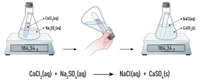
Reactants
These are the substances that are present at the start of a chemical reaction.
Products
Products are the new substances that are formed as a result of a chemical reaction.
Open System
An open system is a system that allows both matter and energy to freely enter or exit.
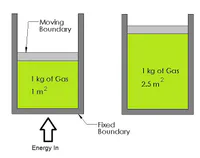
Closed System
A closed system is a system where matter cannot enter or exit, but energy may be exchanged.
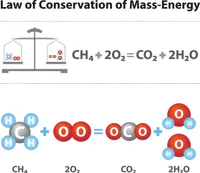
Isolated System
An isolated system is a system where neither matter nor energy can enter or exit its surroundings.
4
What is the Law of Conservation of Mass?
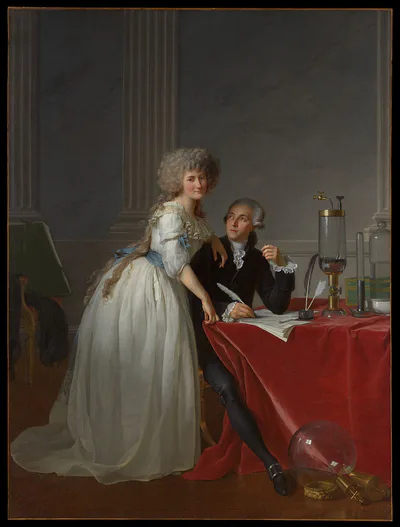
Chemist Antoine Lavoisier discovered this fundamental principle of chemistry.
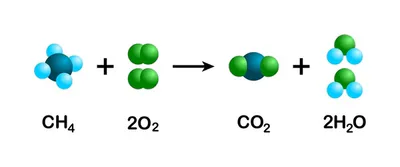
Mass is not created or destroyed during any chemical reaction.
The total mass of substances before and after a reaction is the same.
Atoms are simply rearranged to form completely new substances.
5
Multiple Choice
What does the Law of Conservation of Mass state?
Mass is neither created nor destroyed in a chemical reaction.
Mass is only conserved in physical changes.
The mass of products is always greater than the mass of reactants.
Mass can be created during a chemical reaction.
6
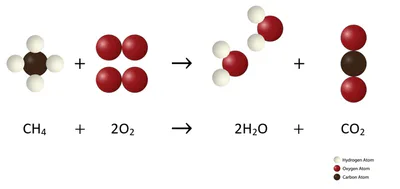
Reactants and Products
In a chemical reaction, the starting substances are called the reactants.
The new substances that are formed in a reaction are the products.
The total mass of reactants equals the total mass of the products.
The formula is: Mass(reactants) = Mass(products).
7
Multiple Choice
In a chemical reaction, if the total mass of the reactants is 50 grams, what must be the total mass of the products?
50 grams
25 grams
100 grams
It cannot be determined.
8
Types of Systems
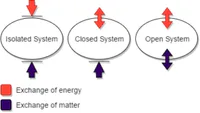
Open System
Allows both matter and energy to move in and out of the system.
An example is a pot of boiling water without a lid on it.
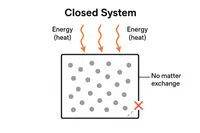
Closed System
Allows energy to be exchanged with the surroundings, but not any matter.
A cup of hot coffee with a secure lid is a good example.
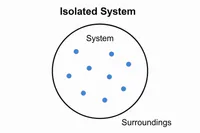
Isolated System
Prevents any exchange of matter or energy with the surrounding environment.
A sealed, insulated container is designed to be an isolated system.
9
Multiple Choice
A sealed bottle of soda is an example of which type of system?
Closed System
Open System
Isolated System
Reactive System
10
Applying the Law of Conservation of Mass
Use the formula Mass(reactants) = Mass(products) to find an unknown mass in a reaction.
If 10 g of hydrogen makes 90 g of water (H2O), how much oxygen was used?
Solution: 10 g + ? = 90 g. The reaction used 80 g of oxygen.
If 10.3 g of aluminum and 100.0 g of bromine react, the product's mass is 110.3 g.
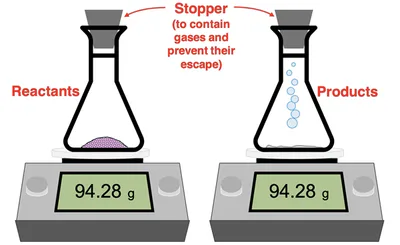
11
Multiple Choice
You react 10.3 g of aluminum with 100.0 g of liquid bromine. What is the total mass of the product formed?
110.3 g
10.3 g
100.0 g
89.7 g
12
Common Misconceptions
Misconception | Correction |
|---|---|
When baking, ingredients are destroyed, leading to less mass. | Baking is a chemical reaction. Mass is converted into new substances, not lost. |
Chemical reactions create new matter. | Reactions only rearrange existing atoms. No new matter is created, just conserved. |
When wood burns to ash, mass seems to be lost. | This occurs in an open system. Mass escapes as smoke and other gases. |
13
Multiple Choice
Why is it easier to observe the Law of Conservation of Mass in a closed system compared to an open system?
Because matter cannot escape from a closed system.
Because energy is constant in a closed system.
Because reactions happen faster in a closed system.
Because open systems do not follow the law.
14
Multiple Choice
You burn a 20g piece of paper in an open dish. The remaining ash only has a mass of 1g. How can you explain the 'lost' 19g of mass?
The mass was converted into gases and smoke that escaped.
The mass was destroyed by the fire.
The Law of Conservation of Mass does not apply to burning.
The scale must be broken.
15
Multiple Choice
You mix 30g of substance A with 15g of substance B in a sealed container. A chemical reaction occurs that produces a gas. What will be the total mass of the sealed container and its contents after the reaction?
45g
Less than 45g
More than 45g
It depends on the gas produced.
16
Multiple Choice
Based on the Law of Conservation of Mass, predict the outcome if you could capture all the steam from a pot of boiling water and weigh it.
The mass of the steam would equal the mass of the water that boiled away.
The mass of the steam would be greater than the mass of the water.
The mass of the steam would be less than the mass of the water.
Mass cannot be predicted in this scenario.
17
Summary
The Law of Conservation of Mass states that mass is never created or destroyed.
The total mass of reactants must equal the total mass of the products.
Reactions can occur in open, closed, or isolated systems.
In open systems, mass can seem to disappear if gases are allowed to escape.
18
Poll
On a scale of 1-4, how confident are you about the concepts covered in today's review?
1
2
3
4
Law of Conservation of Mass
Middle School
Show answer
Auto Play
Slide 1 / 18
SLIDE
Similar Resources on Wayground

16 questions
Earth’s Atmosphere
Presentation
•
6th - 8th Grade
13 questions
HOMEWORK Newton's Law - Identify Which Law Applies
Presentation
•
6th - 8th Grade
13 questions
Food Webs and Energy Pyramid Review
Presentation
•
6th - 8th Grade
12 questions
Scientific Method
Presentation
•
6th - 8th Grade
14 questions
Models of Elements, Compounds, and Mixtures
Presentation
•
6th - 8th Grade
14 questions
The Basics of Electricity
Presentation
•
6th - 8th Grade
15 questions
DNA Notes_Day1_2021
Presentation
•
6th - 8th Grade
11 questions
Nervous System Review
Presentation
•
6th - 8th Grade
Popular Resources on Wayground
6 questions
PRIDE Always and Everywhere
Presentation
•
12th Grade
20 questions
Lab Safety Quiz

Quiz
•
6th Grade
26 questions
KOR Review Kahoot Questions
Quiz
•
8th Grade
21 questions
Continents and Oceans
Quiz
•
6th Grade
12 questions
Unit Zero lesson 2 cafeteria
Presentation
•
9th - 12th Grade
20 questions
Parts of Speech
Quiz
•
5th Grade
10 questions
Riddles Riddles fun Riddles
Quiz
•
6th - 12th Grade
16 questions
Subject & Predicate
Quiz
•
5th Grade
Discover more resources for Science
20 questions
Lab Safety Quiz
Quiz
•
6th Grade
20 questions
Lab Safety
Quiz
•
5th - 8th Grade
20 questions
Scientific Method and Variables
Quiz
•
8th Grade
20 questions
Scientific method and variables
Quiz
•
8th Grade
27 questions
Counting Atoms - Subscripts
Quiz
•
8th Grade
10 questions
6.6D - Relative Density Review
Quiz
•
6th Grade
10 questions
Scientific Method and Variables
Quiz
•
6th Grade
14 questions
Science Variables
Quiz
•
7th Grade