Search Header Logo
  1. Resource Library
  2. Math
  3. Probability And Statistics
  4. 5.1 Probability: What Are The Chances
5.1 Probability: What are The Chances

5.1 Probability: What are The Chances

Assessment

Presentation

Mathematics

9th - 12th Grade

Practice Problem

Hard

CCSS
HSS.CP.A.1

Standards-aligned

Created by

Jeffrey Reed

FREE Resource

10 Slides • 13 Questions

1
media

2

media

3

Multiple Choice

Which of the following best describes the concept of randomness in probability?

1

A process where outcomes are completely predictable

2

A process where outcomes occur without a predictable pattern

3

A process where all outcomes are equally likely and known in advance

4

A process where outcomes are determined by skill rather than chance

4

Open Ended

Why is understanding probability important in real-life situations?

5

media

6

media

7

Open Ended

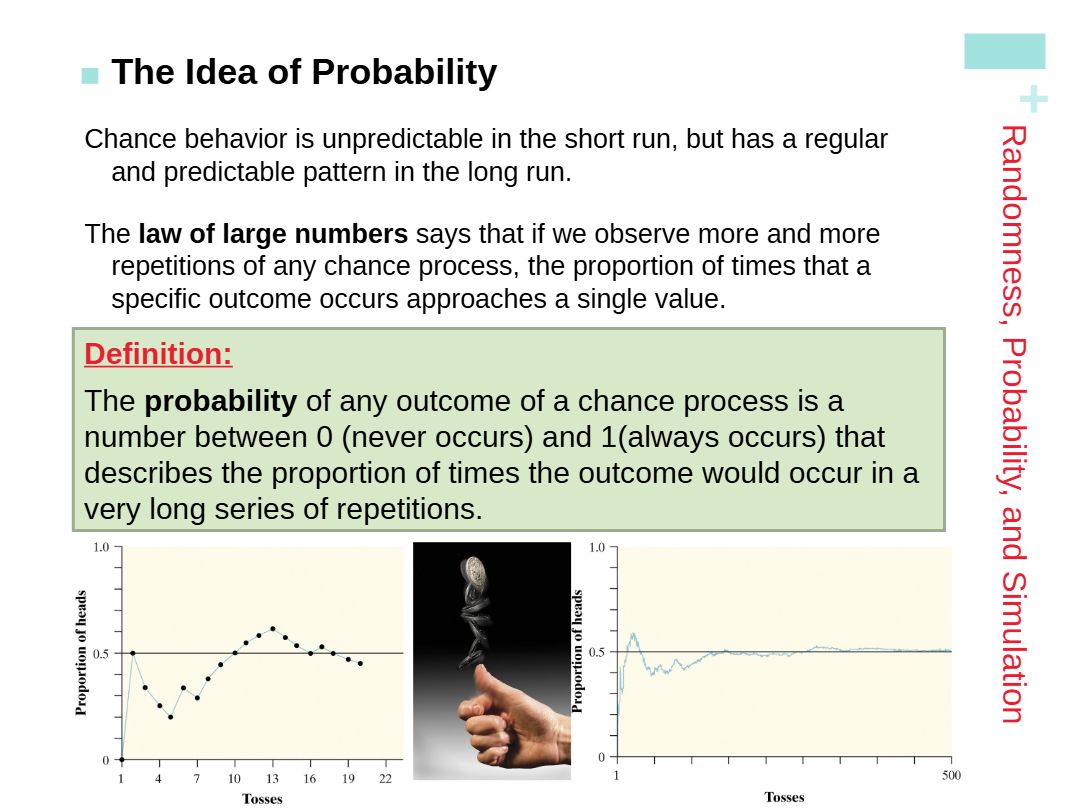
Explain the difference between chance behavior in the short run and the long run, as described in the lesson.

8

Multiple Choice

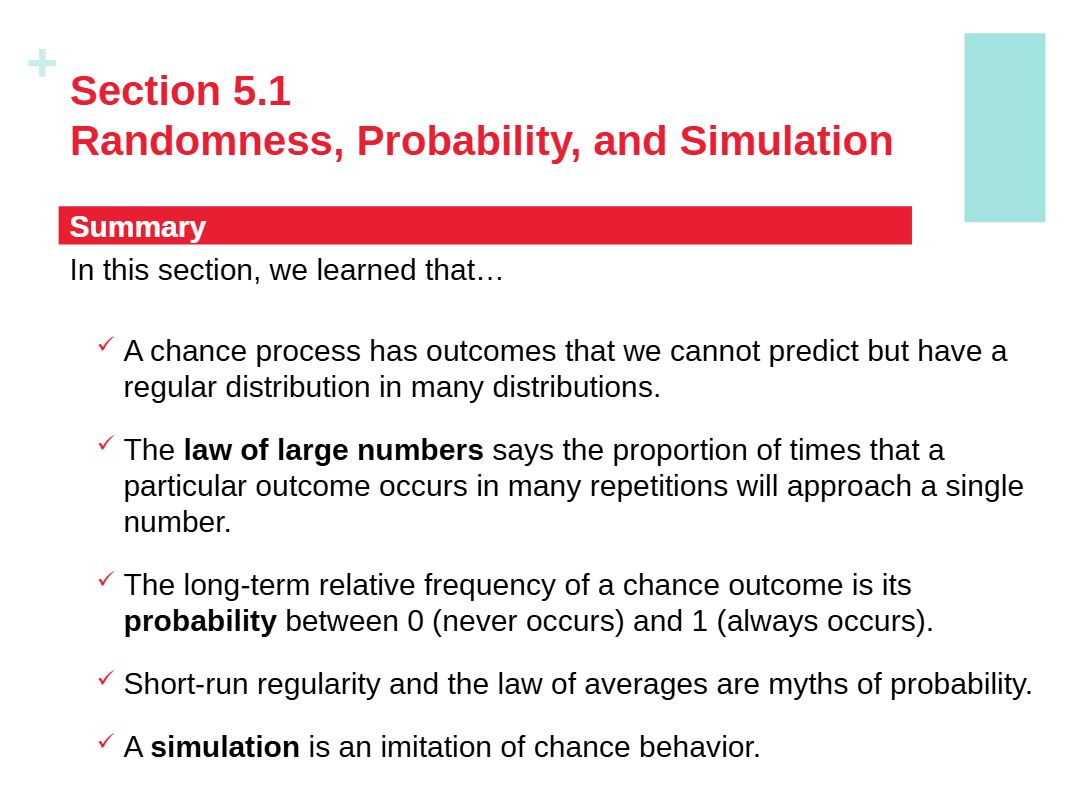
According to the law of large numbers, what happens to the proportion of times a specific outcome occurs as the number of repetitions increases?

1

It becomes less predictable

2

It approaches a single value

3

It fluctuates randomly

4

It always becomes zero

9

media

10

Multiple Select

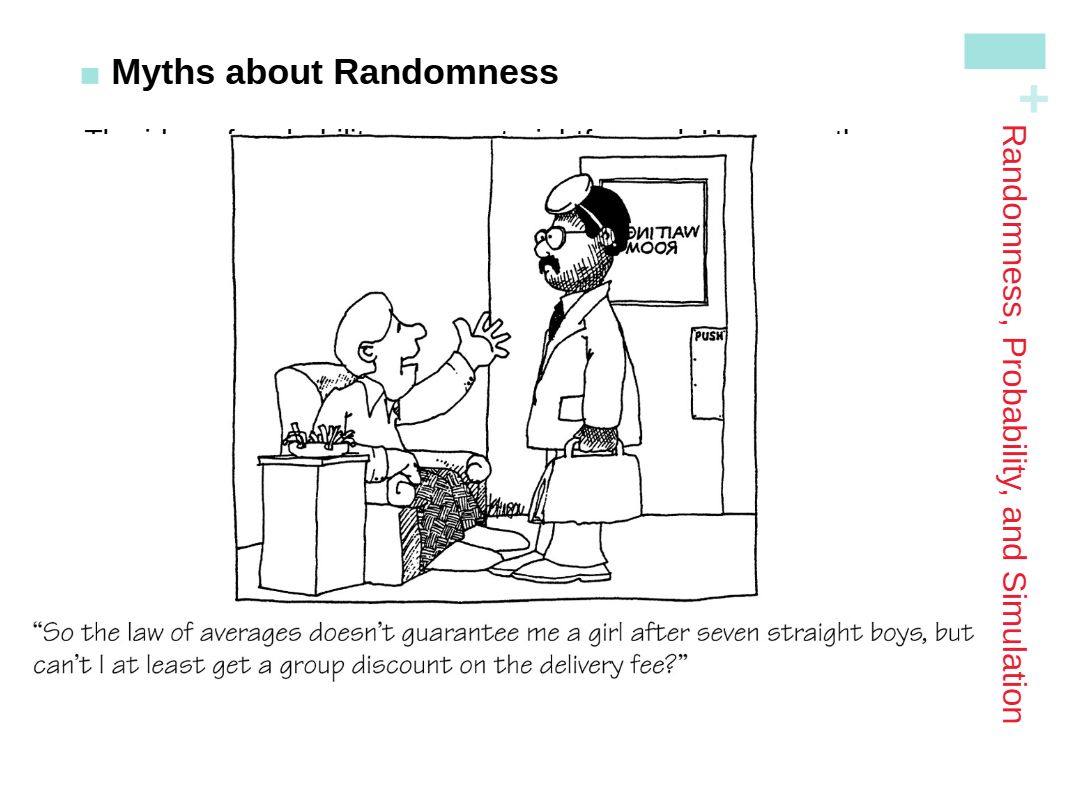
Which of the following statements are myths about randomness?

1

The law of averages guarantees a specific outcome after a streak.

2

Random events are independent of previous outcomes.

3

Probability describes the proportion of times an outcome occurs in the long run.

4

A streak of similar outcomes means a different outcome is due next.

11

media

12

Open Ended

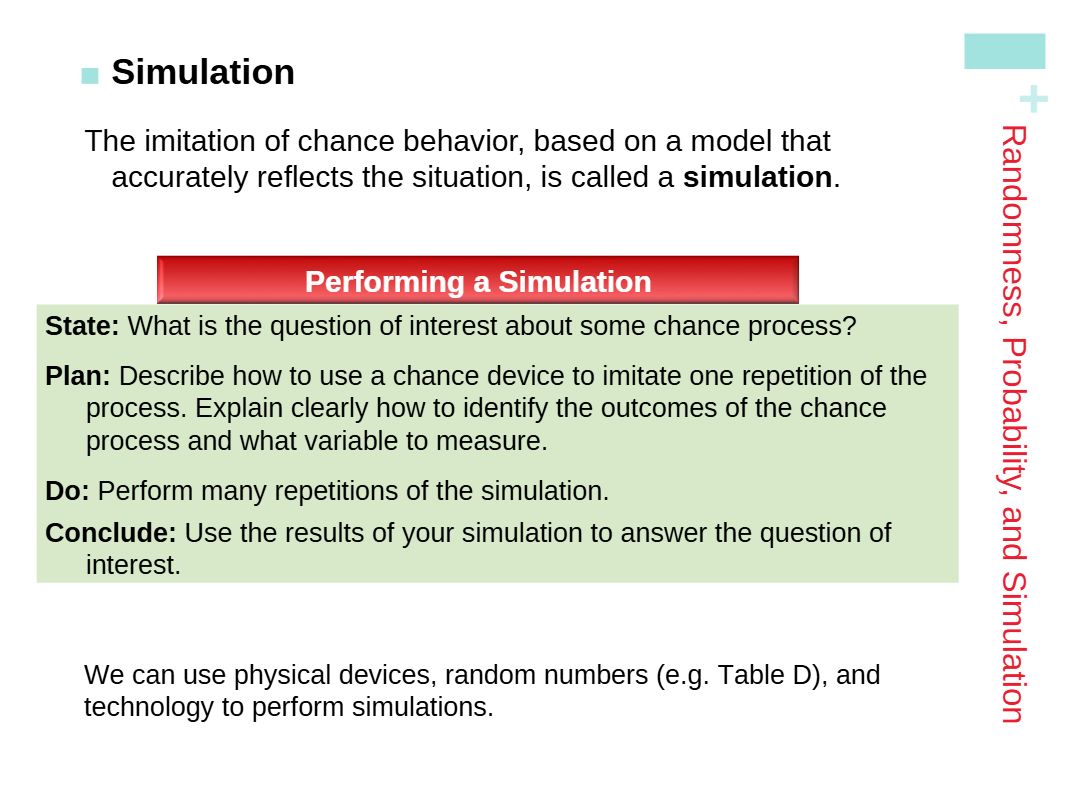
Describe how you would use a simulation to estimate the probability of an event in a real-world context not discussed in the slides. Be specific about the steps you would take.

13

Fill in the Blanks

14

media

15

Multiple Choice

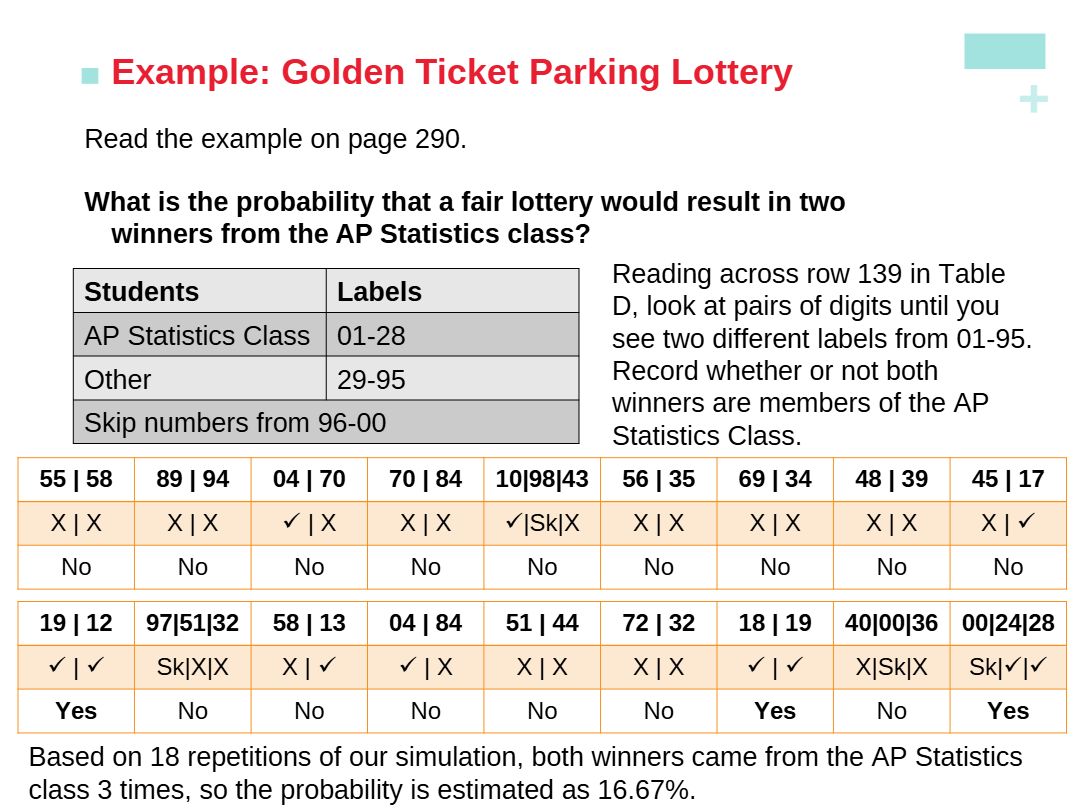
Based on the Golden Ticket Parking Lottery simulation, what is the estimated probability that both winners are from the AP Statistics class?

1

3%

2

16.67%

3

50%

4

28%

16

media

17

media

18

Multiple Choice

Which of the following statements best describes the law of large numbers?

1

It states that the probability of an event is always 0 or 1.

2

It says that the proportion of times a particular outcome occurs in many repetitions will approach a single number.

3

It means that every outcome in a chance process is equally likely.

4

It suggests that short-run regularity can predict long-term outcomes.

19

media

20

Multiple Choice

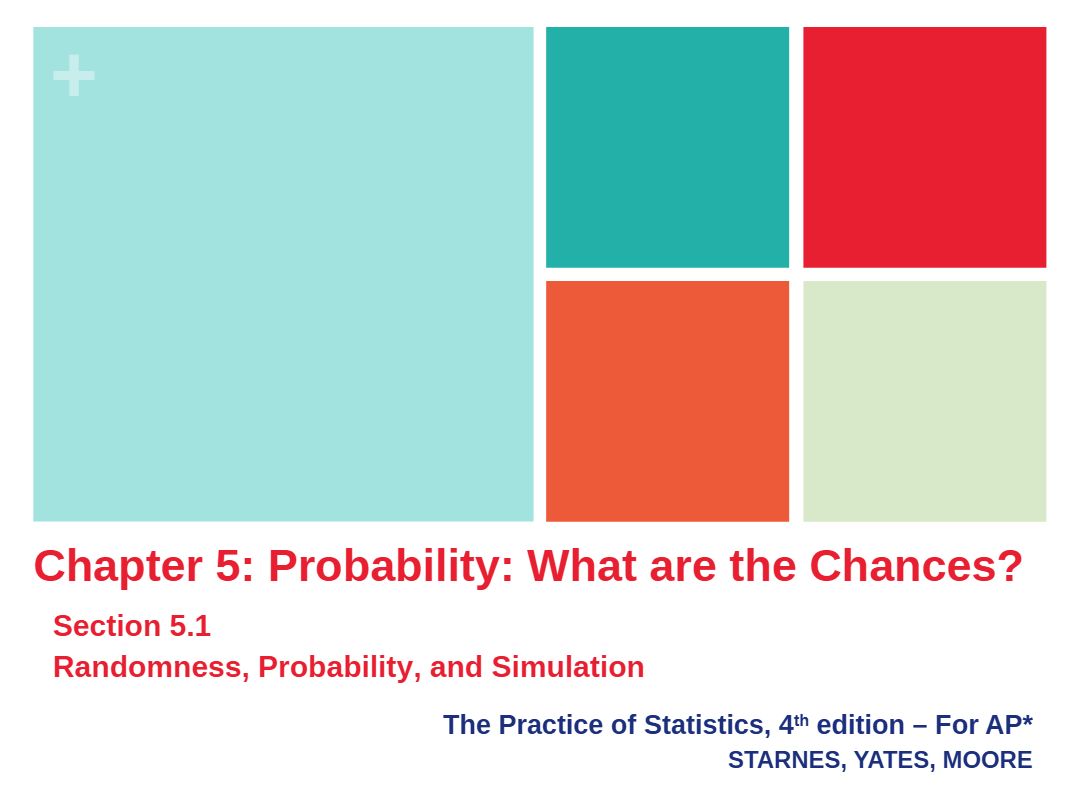
Which of the following topics is NOT covered in Chapter 5: Probability: What Are the Chances?

1

Randomness, Probability, and Simulation

2

Probability Rules

3

Conditional Probability and Independence

4

Descriptive Statistics

21

Open Ended

What is one real-life situation where understanding probability could help you make a better decision?

22

Multiple Choice

Question image
About 7% of men in the United States have some form of red-green color blindness.  Suppose we want to simulate randomly selecting 4 U.S. adult males to determine the probability that at least one is red-green color-blind.  Which of these are correct assignments of digits for this simulation?  
1
0-7 = color-blind, 8-9 = not color-blind
2
1-6 = color-blind, 7-10 = not color-blind
3
01-07 = color-blind, 08-99&00 = not color-blind 
4
00-10 = color-blind, 11-99 = not color-blind

23

Multiple Choice

Question image

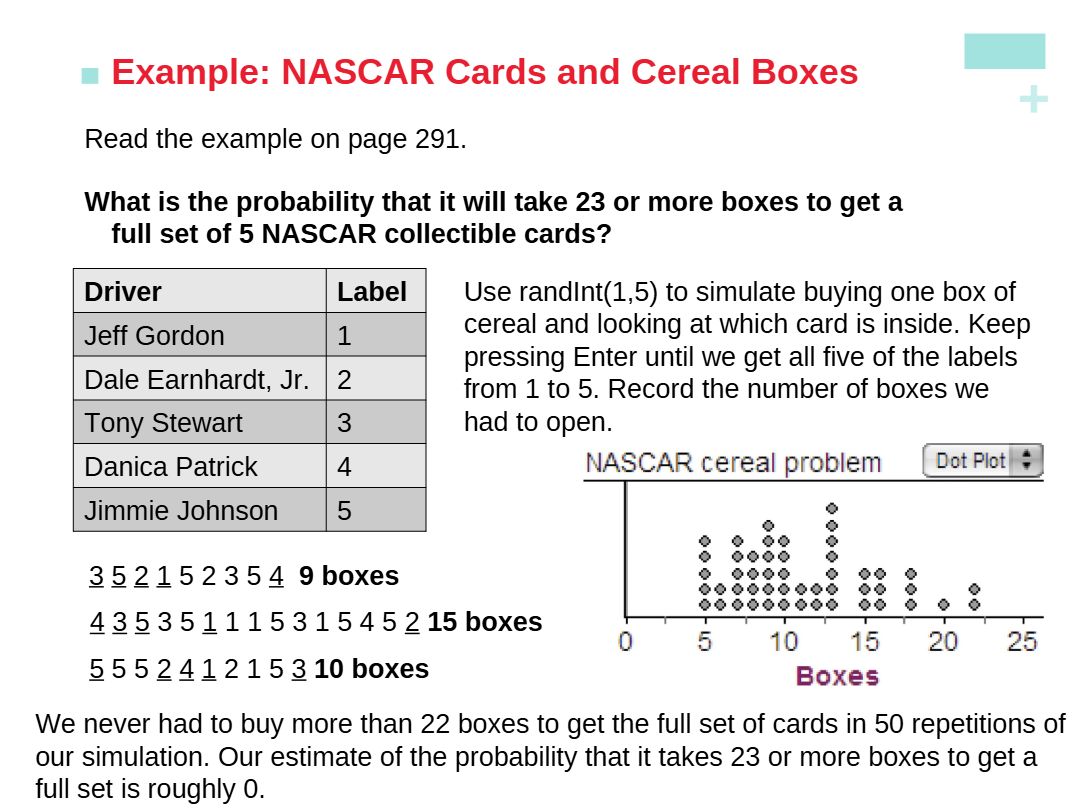
A game at a carnival has 4 colors on a wheel, as seen in the diagram. Each section of the wheel is the same size. Lori wants to design a computer simulation to study how many spins it takes to land on each color once. Using the digits 0 through 9, she will assign a digit to each section of the wheel. Which option describes how the digits can be assigned?

1

Assign the digit 0 to blue; 1 to yellow, 2 to red, and 3 to green.

2

Assign the digit 4 to blue, 3 to yellow, 2 to red, and 1 to green.

3

Assign the digits 0,1, and 2 to blue; 3, 4, and 5 to yellow; 6,7, and8 to red; and 9 to green.

4

Assign the digits 0,1,2, and 3 to blue; 4,5, and 6 to yellow; 7 and 8 to red; and 9 to green.

media

Show answer

Auto Play

Slide 1 / 23

SLIDE