

F'25 Artificial Selection

Presentation
•
Science
•
6th - 8th Grade
•
Practice Problem
•
Easy
+4
Standards-aligned

Adriane Davis
Used 4+ times
FREE Resource
20 Slides • 19 Questions
1
2
3
Dropdown

4
5
6
7
8
Multiple Choice
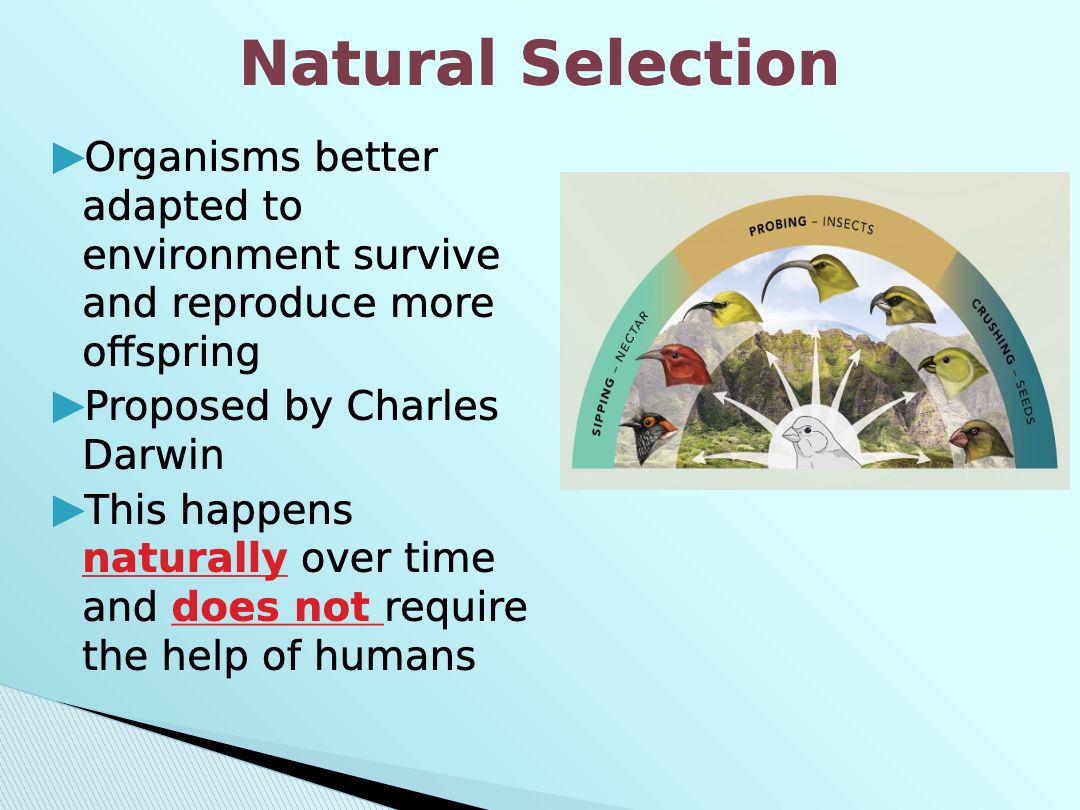
Which of the following statements best describes the difference between natural selection and artificial selection?
Natural selection is driven by environmental factors, while artificial selection is driven by human choices.
Artificial selection happens without human intervention, while natural selection requires humans.
Natural selection always produces more desirable traits than artificial selection.
Artificial selection was proposed by Charles Darwin, while natural selection was not.
9
10
Open Ended
Describe one example of natural selection and one example of artificial selection, using information from the lesson.
11
Multiple Select
Which of the following are characteristics of artificial selection?
Man-made selection to breed desirable traits
Requires human intervention
Also known as selective breeding
Occurs naturally without human help
12
13
Multiple Choice
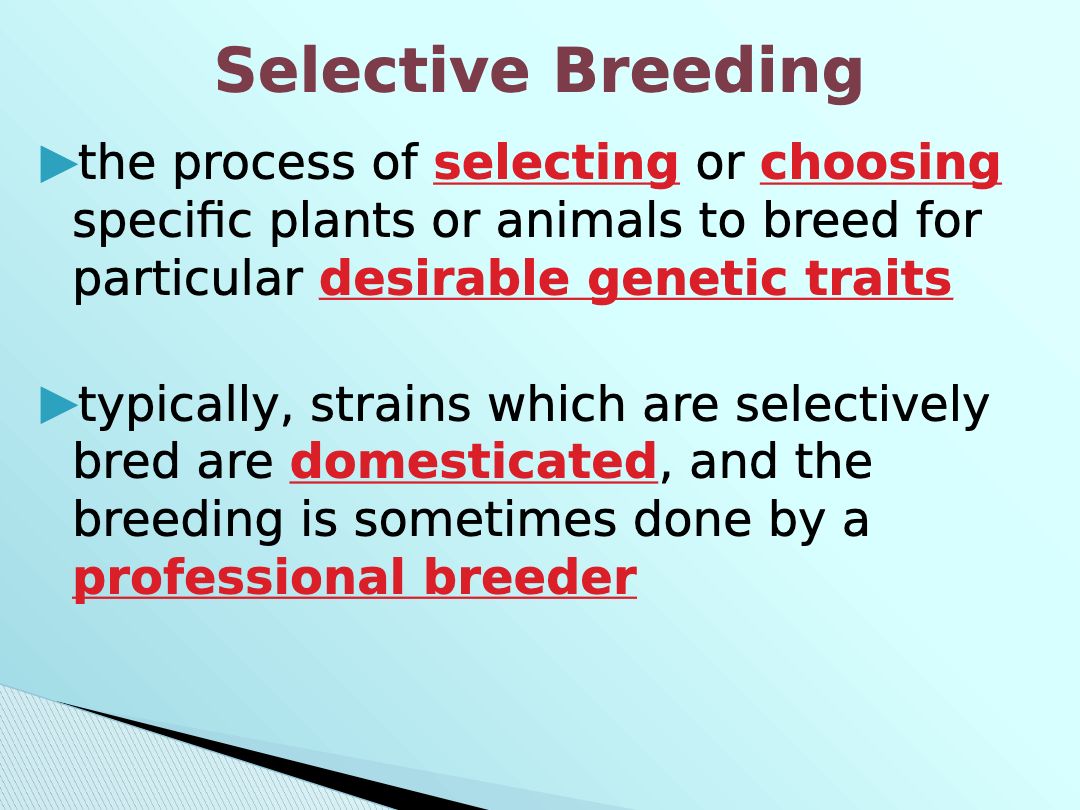
What is the main purpose of selective breeding in agriculture and animal husbandry?
To produce organisms with desirable genetic traits
To allow random mating among organisms
To increase the number of wild species
To prevent domestication of animals
14
15
Multiple Choice
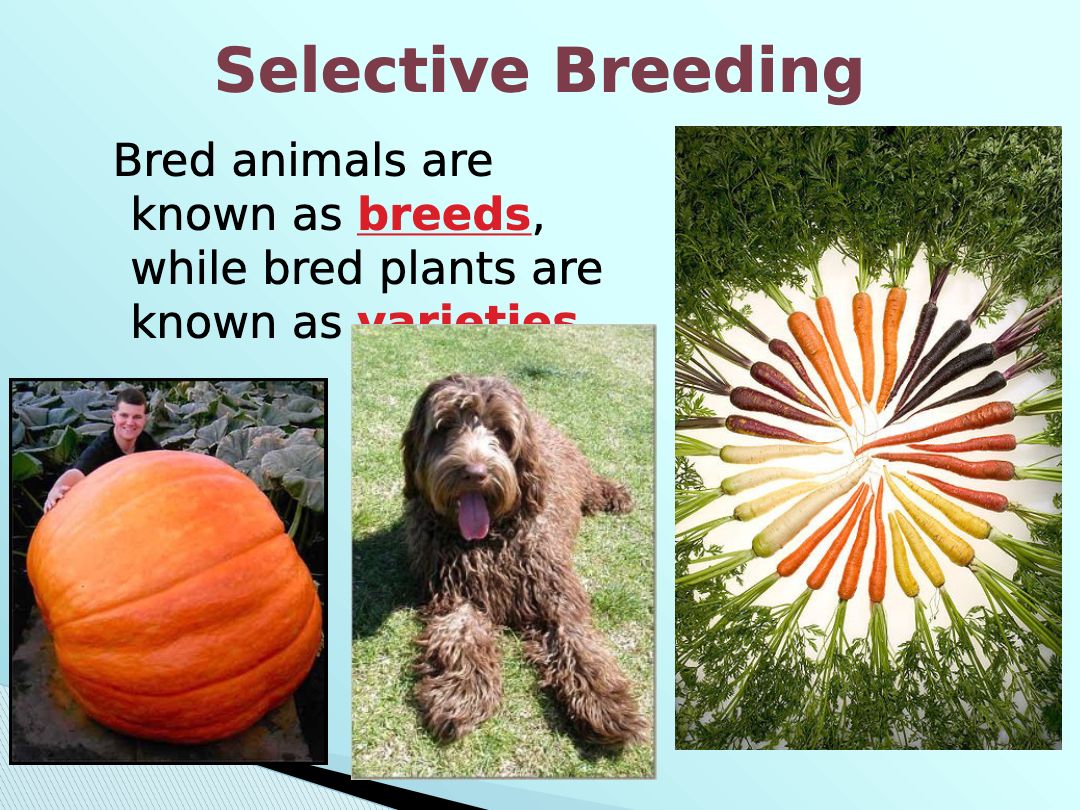
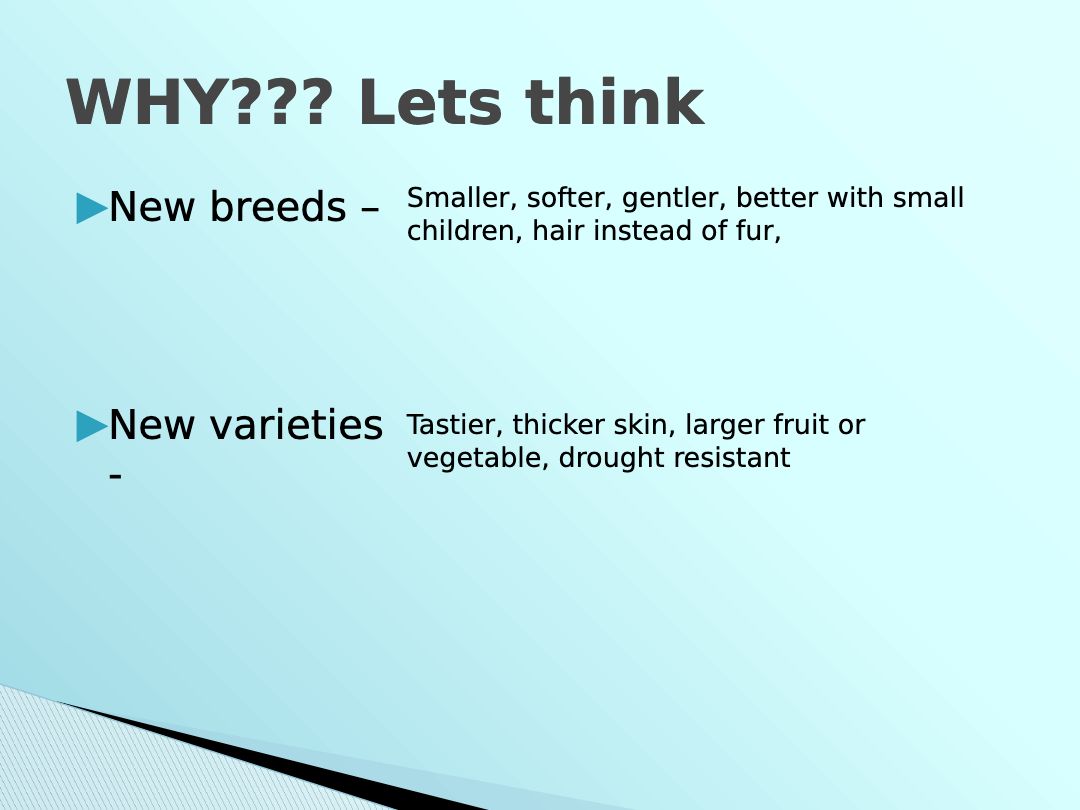
What are some reasons for creating new breeds and new varieties of plants or animals?
To make animals smaller and gentler, and plants tastier and more drought resistant
To increase the number of wild species
To eliminate all genetic mutations
To reduce biodiversity
16
17
Multiple Choice
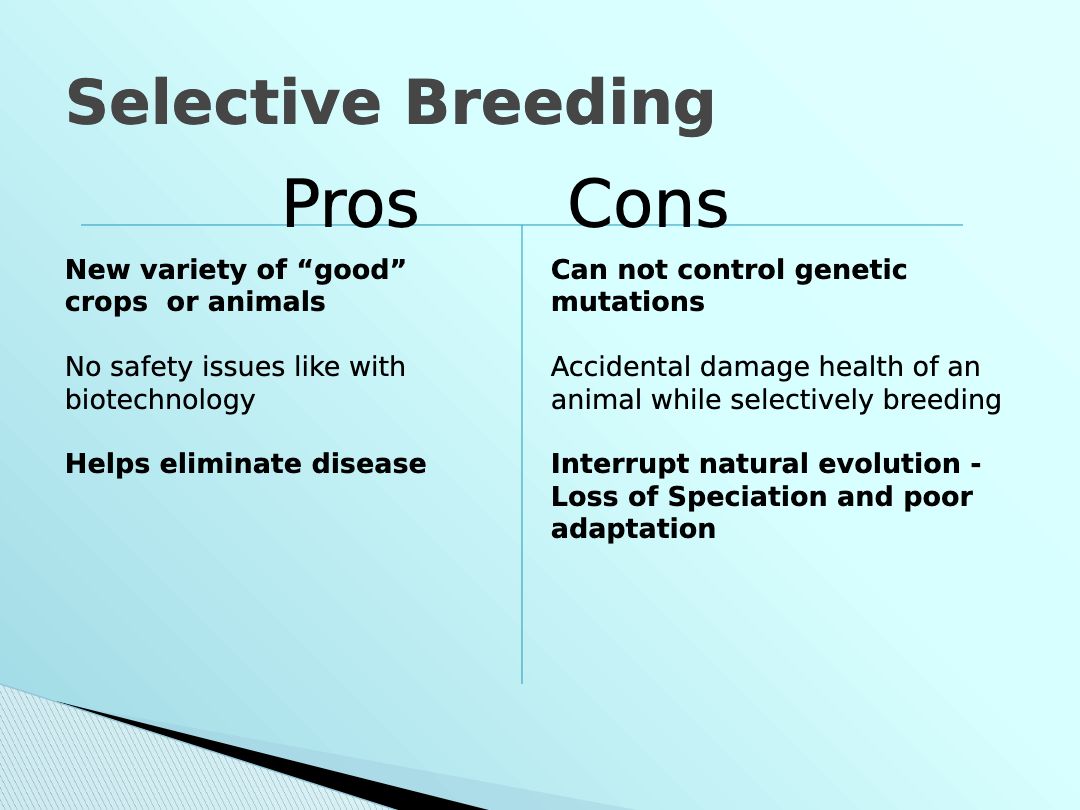
Which of the following are possible negative consequences of selective breeding?
Loss of speciation and poor adaptation
Increased biodiversity
Complete control over genetic mutations
Guaranteed health of all animals
18
Fill in the Blank
Type answer...
19
Open Ended
Explain one advantage and one disadvantage of selective breeding based on the information provided.
20
21
22
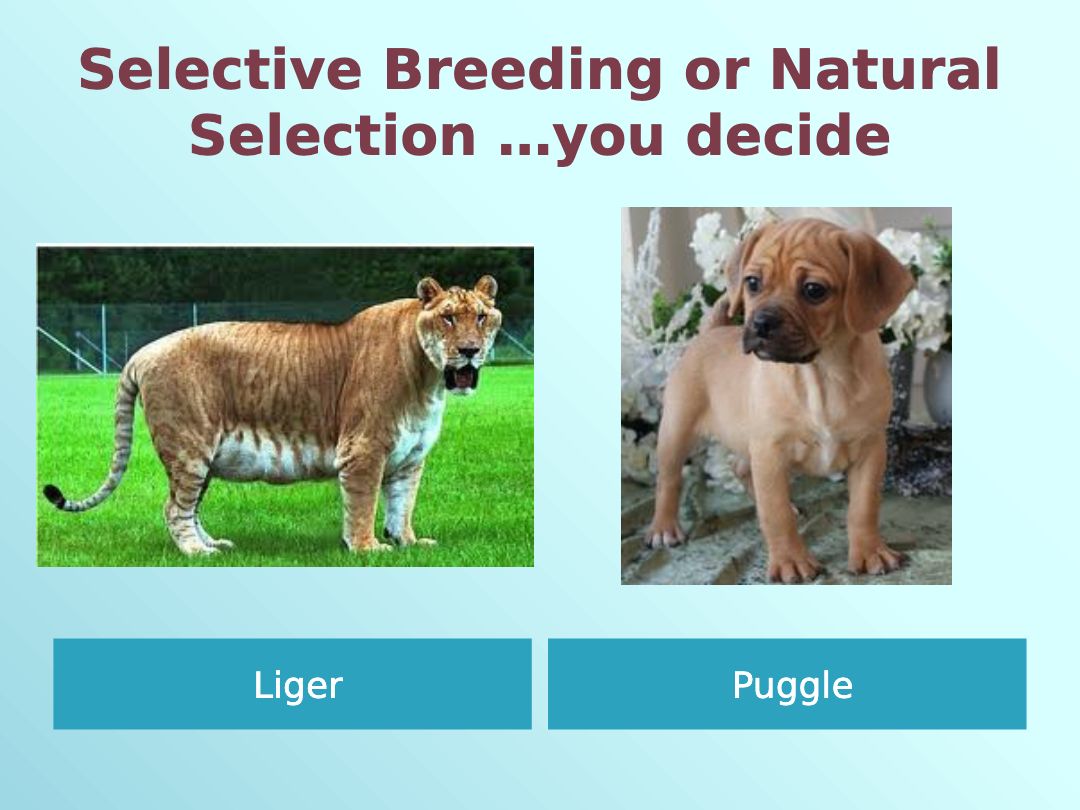
23
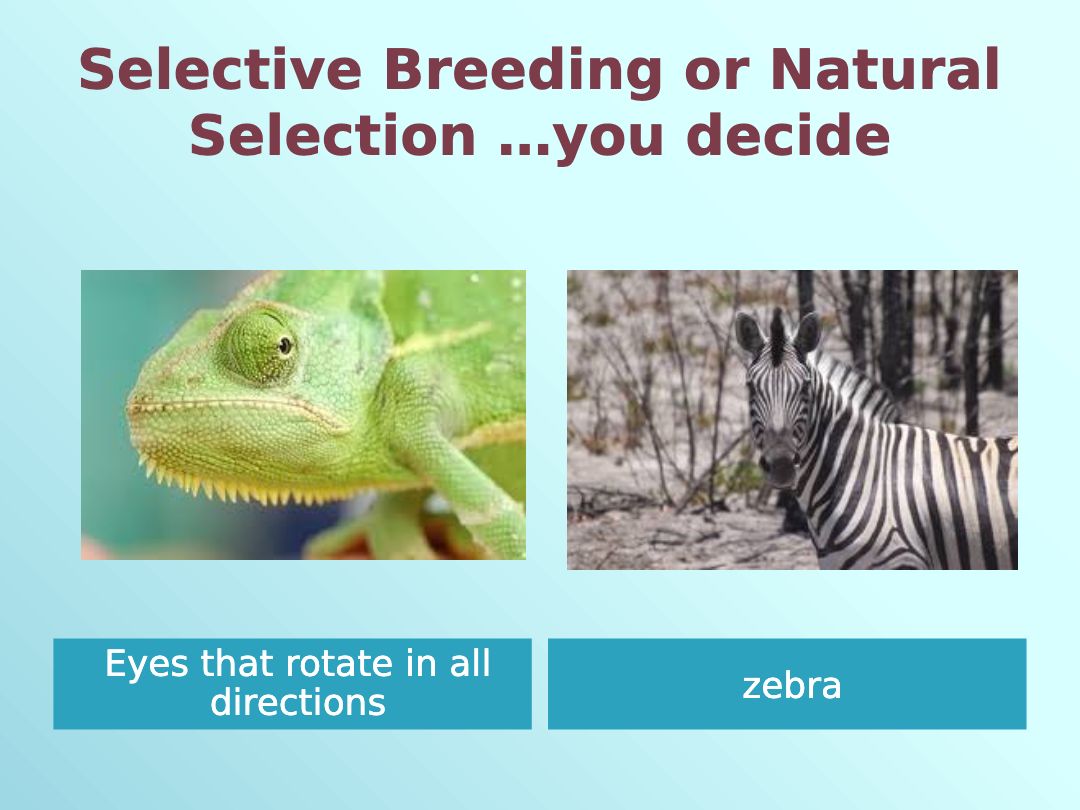
24
Open Ended
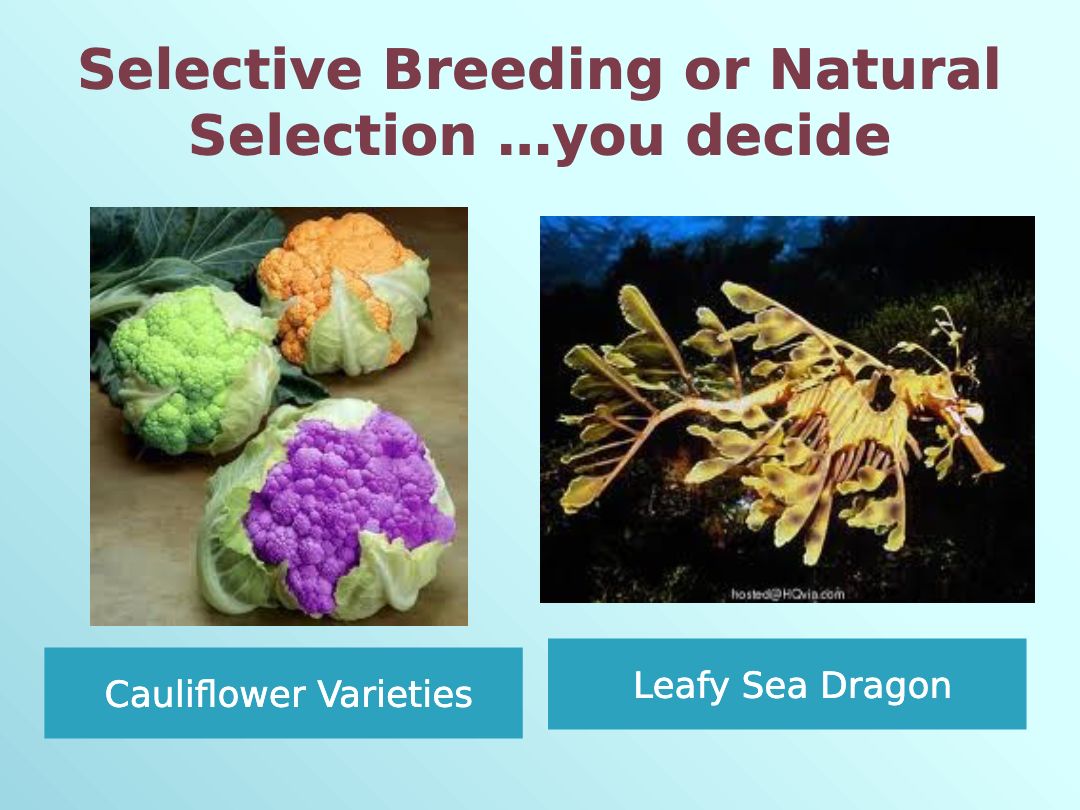
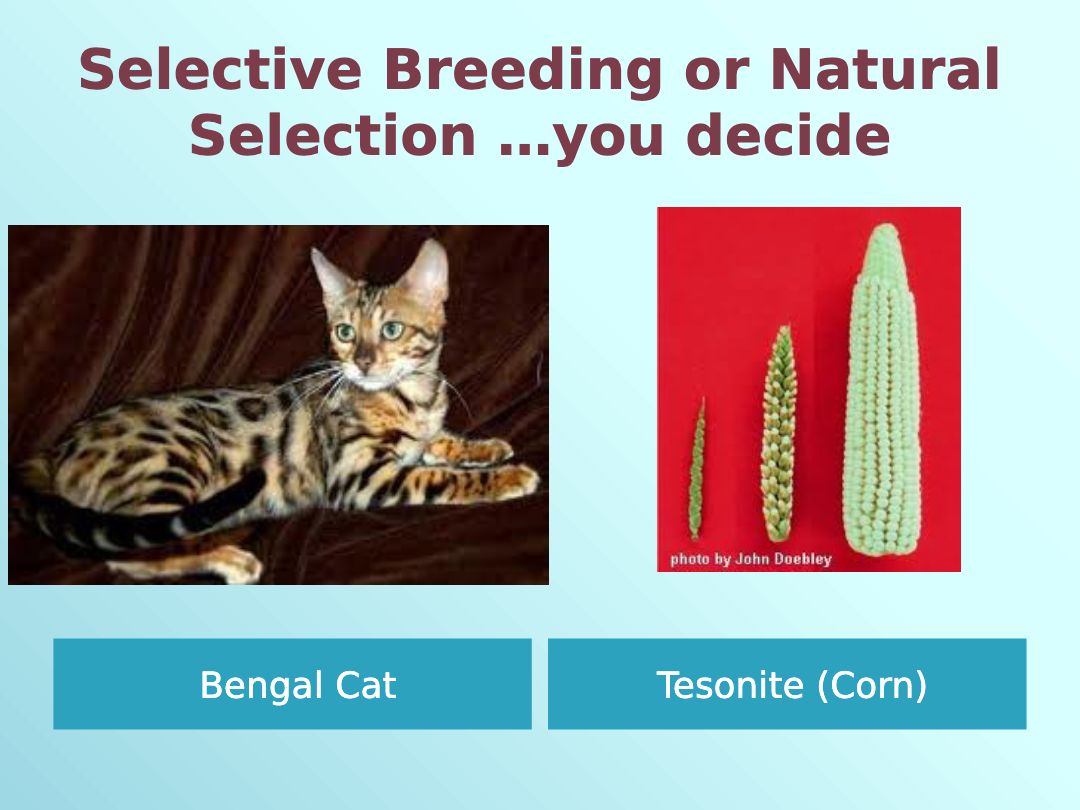
How can you distinguish between traits that are a result of selective breeding and those that are a result of natural selection? Use examples from the images to support your answer.
25
Multiple Choice
Based on the images, which of the following are most likely the result of selective breeding rather than natural selection?
Cauliflower varieties, Bengal Cat, Liger, Puggle
Leafy Sea Dragon, Zebra, Eyes that rotate in all directions, Bengal Cat
Tesonite (Corn), Zebra, Leafy Sea Dragon, Puggle
Cauliflower varieties, Zebra, Liger, Eyes that rotate in all directions
26
27
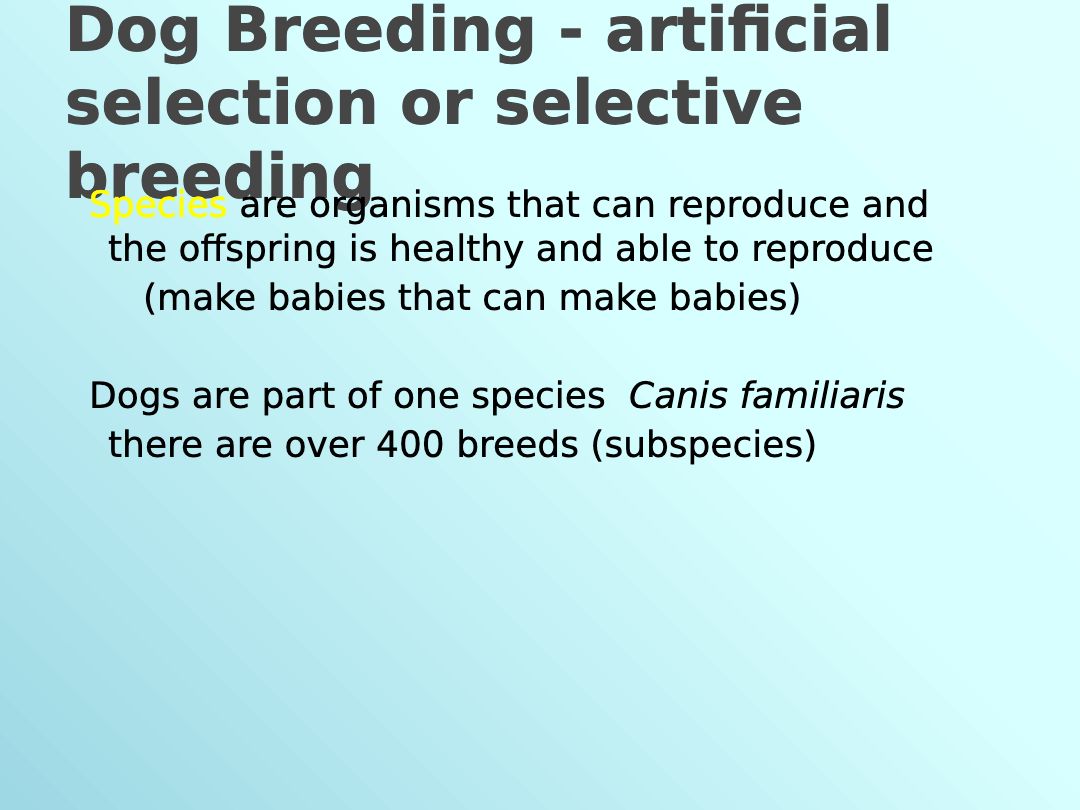
28
Multiple Choice
Which process is described as organisms reproducing to produce healthy offspring that can also reproduce?
Natural selection
Artificial selection
Genetic drift
Mutation
29
30
Open Ended
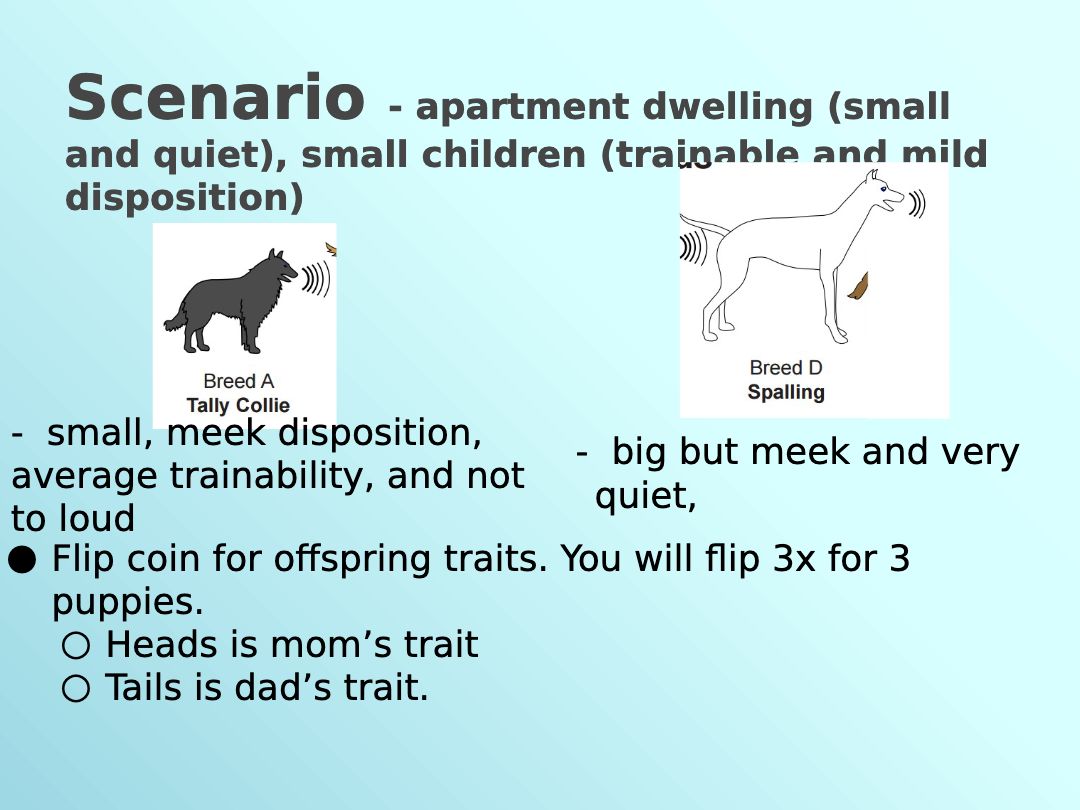
Why might someone want to selectively breed two different dog breeds for a family living in an apartment with small children?
31
32
Multiple Choice
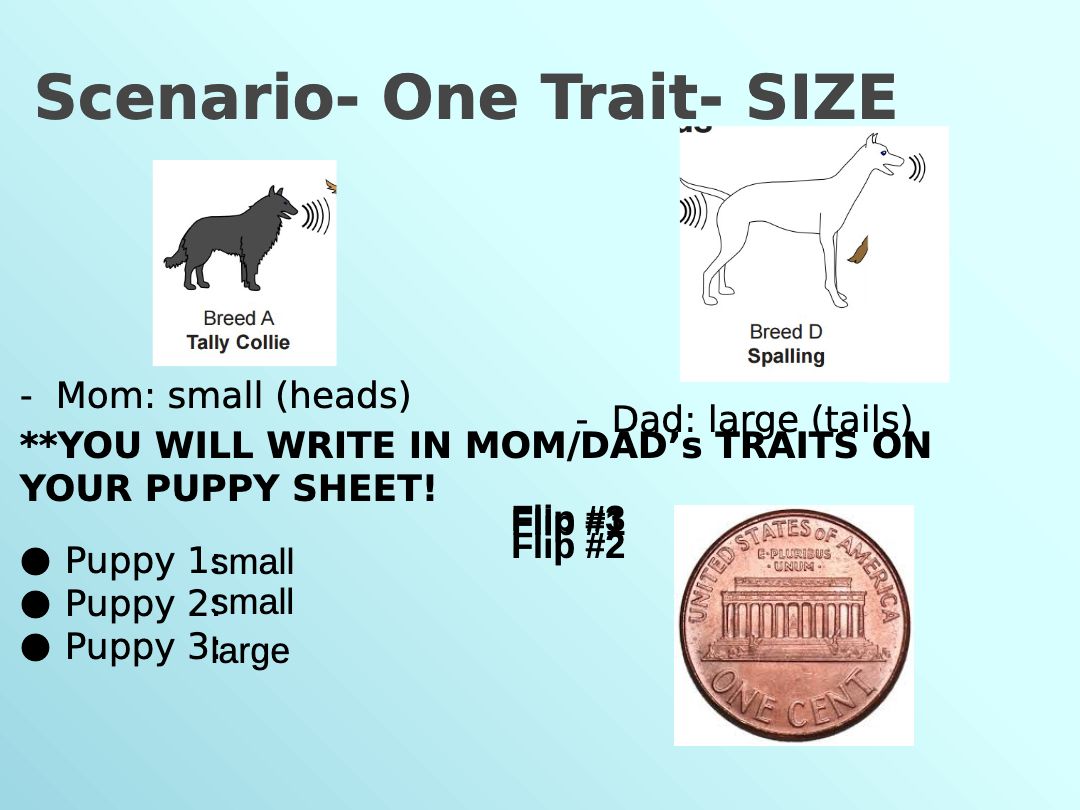
Based on the scenario with Breed A (Tally Collie) and Breed D (Spalling), which traits are most likely to be inherited by the puppies if heads is mom’s trait and tails is dad’s trait?
All puppies will be small
All puppies will be large
Some puppies will be small, some will be large
Puppies will have random sizes unrelated to parents
33
34
Open Ended
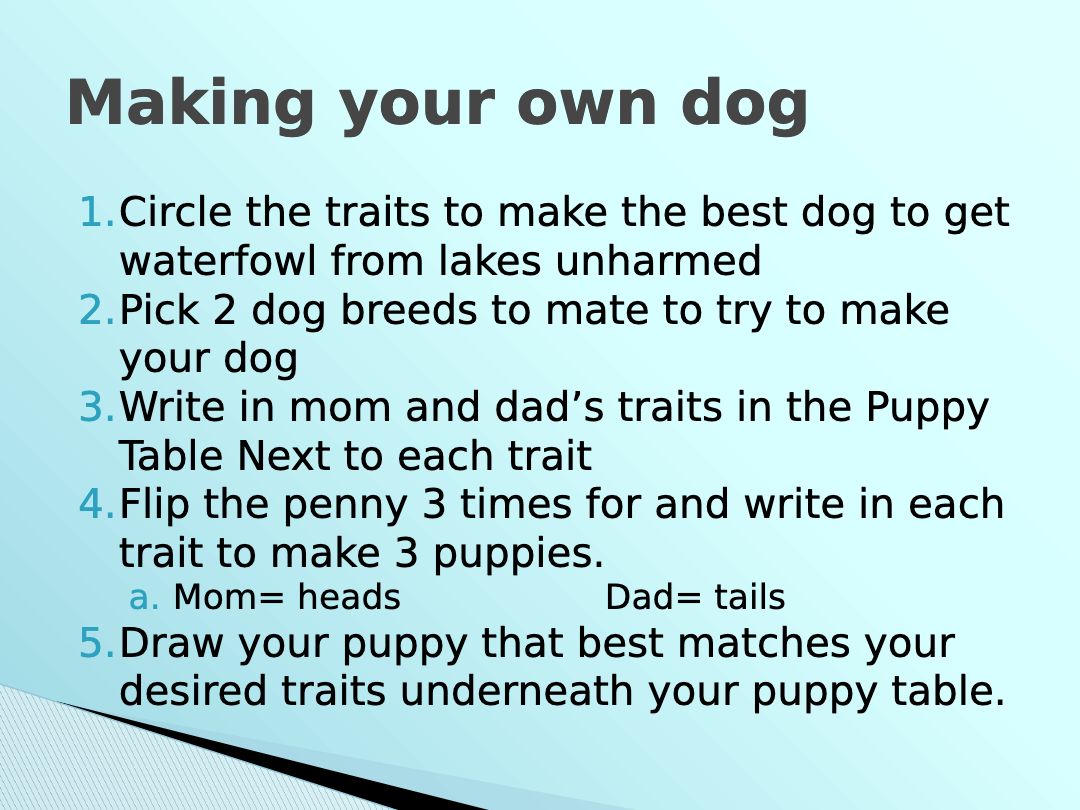
List two steps involved in making your own dog according to the instructions provided.
35
36
Multiple Choice
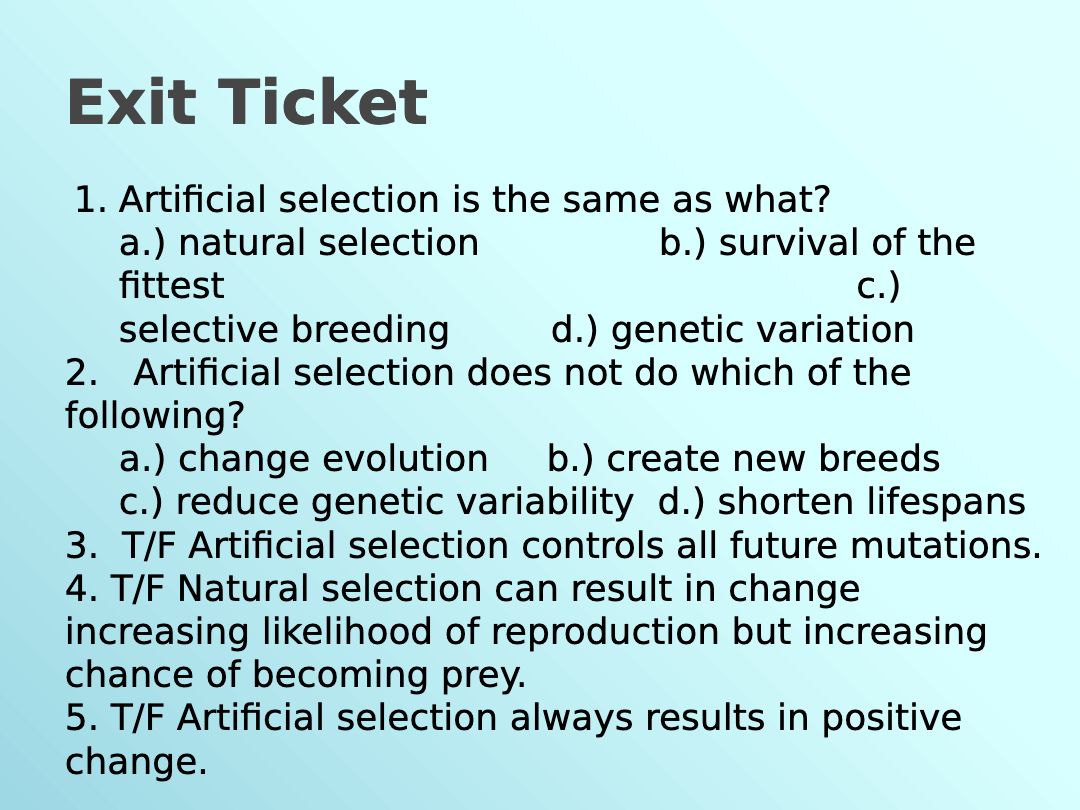
Artificial selection does not do which of the following?
Change evolution
Create new breeds
Reduce genetic variability
Shorten lifespans
37
Fill in the Blank
Type answer...
38
Multiple Choice
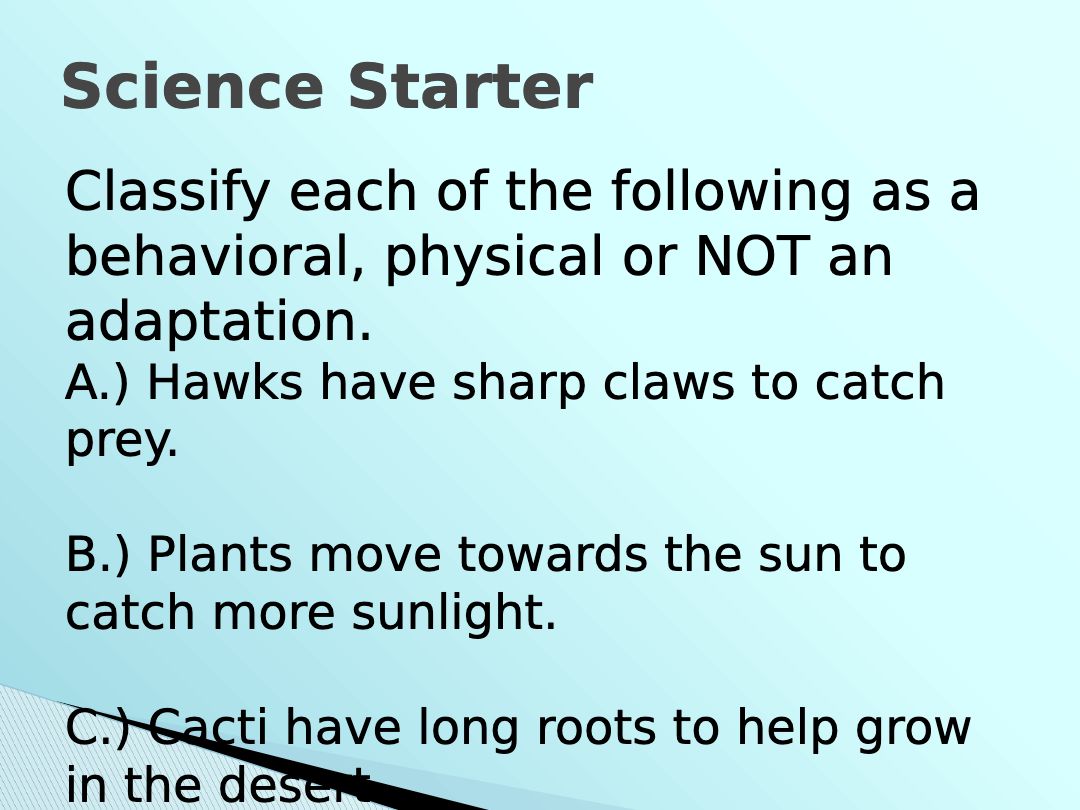
Which of the following is an example of a behavioral adaptation?
Hawks have sharp claws to catch prey.
Plants move towards the sun to catch more sunlight.
Cacti have long roots to help grow in the desert.
Rocks erode due to wind.
39
Open Ended
What is one new thing you learned about adaptations from today's lesson?
Show answer
Auto Play
Slide 1 / 39
SLIDE
Similar Resources on Wayground

33 questions
U1M2L2 Theory of Natural Selection & Adaptations PT1
Presentation
•
7th - 8th Grade
37 questions
Unit 1 Recovery
Presentation
•
6th - 8th Grade
30 questions
TCi lesson 6 (and 5)
Presentation
•
6th - 8th Grade
32 questions
TCI Darwin Lesson
Presentation
•
6th - 8th Grade
33 questions
Watersheds
Presentation
•
7th Grade
35 questions
Chemical Interactions
Presentation
•
6th - 8th Grade
33 questions
Homeostasis and Cellular Processes
Presentation
•
7th Grade
35 questions
Reaction
Presentation
•
6th - 8th Grade
Popular Resources on Wayground
10 questions
5.P.1.3 Distance/Time Graphs

Quiz
•
5th Grade
10 questions
Fire Drill
Quiz
•
2nd - 5th Grade
20 questions
Equivalent Fractions
Quiz
•
3rd Grade
22 questions
School Wide Vocab Group 1 Master
Quiz
•
6th - 8th Grade
20 questions
Main Idea and Details
Quiz
•
5th Grade
20 questions
Context Clues
Quiz
•
6th Grade
20 questions
Inferences
Quiz
•
4th Grade
12 questions
What makes Nebraska's government unique?
Quiz
•
4th - 5th Grade
Discover more resources for Science
8 questions
Amoeba Sister Asexual vs Sexual Reproduction

Interactive video
•
8th Grade
19 questions
Introduction to Properties of Waves
Presentation
•
6th - 8th Grade
16 questions
Interactions within Ecosystems
Presentation
•
6th - 8th Grade
10 questions
Exploring the Layers of the Earth
Interactive video
•
6th - 10th Grade
16 questions
Photosynthesis and Cellular Respiration Review
Quiz
•
7th Grade
20 questions
Abiotic & Biotic Factors
Quiz
•
7th Grade
15 questions
Punnett Squares
Quiz
•
6th Grade
10 questions
Exploring the Evolution of Cell Theory
Interactive video
•
7th Grade