Search Header Logo
6.9A Pt. III

6.9A Pt. III

Assessment

Presentation

Science

8th Grade

Practice Problem

Easy

NGSS
MS-ESS1-1, MS-ESS1-2, MS-ESS2-6

Standards-aligned

Created by

Katarina Peralez

Used 4+ times

FREE Resource

11 Slides • 17 Questions

1
media

2

media

3

Multiple Choice

Question image

Which  of the following best describes the tilt of the earth during the spring and fall equinoxes?

1
The earth is tilted away from the sun (Northern hemisphere)
2
The earth is tilted neither toward or away from the sun (tilt is side to side)
3
The earth is tilted toward the sun (Northern hemisphere)
4
The earth is not tilted during spring and fall

4

media

5

Fill in the Blanks

6

media

7

Multiple Choice

Question image

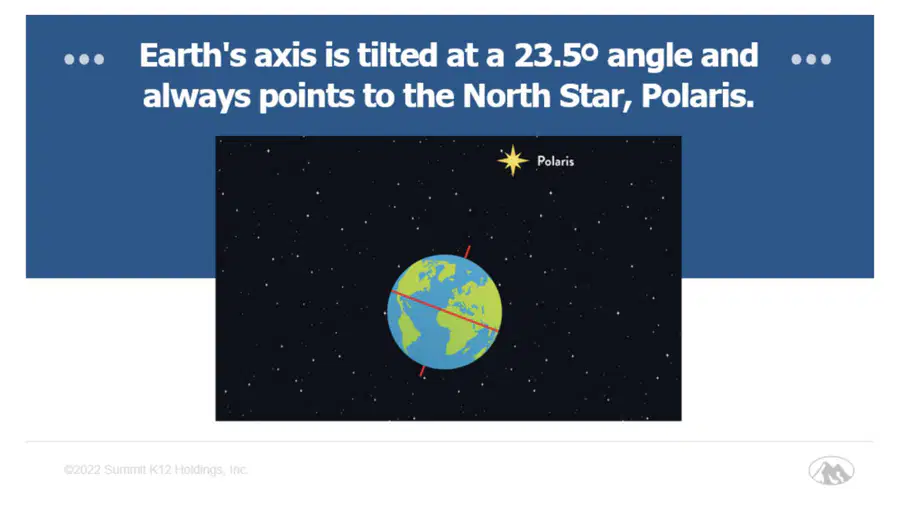
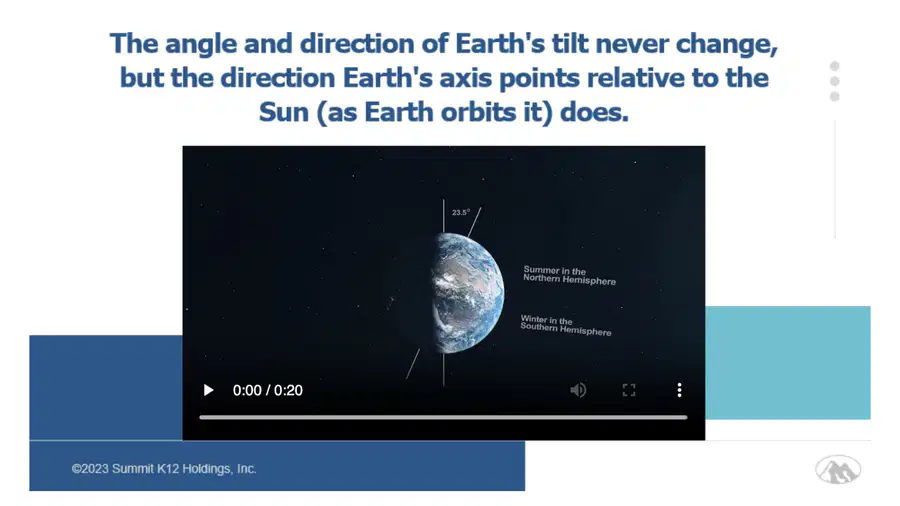
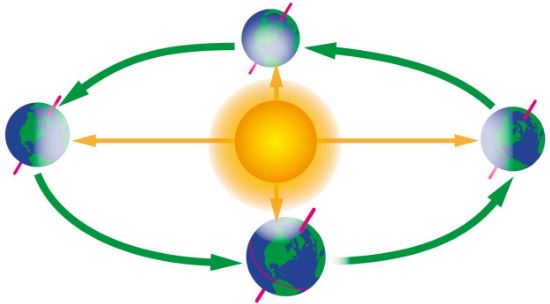
Charlie drew the diagram below to show that Earth’s axis of rotation is not perpendicular, but tilted.

Which of the following does the tilt of the axis of rotation best explain?

1

Why Earth has tides

2

How long an Earth day is

3

How long an Earth year is

4

Why Earth has seasons

8

media

9

Multiple Choice

Question image

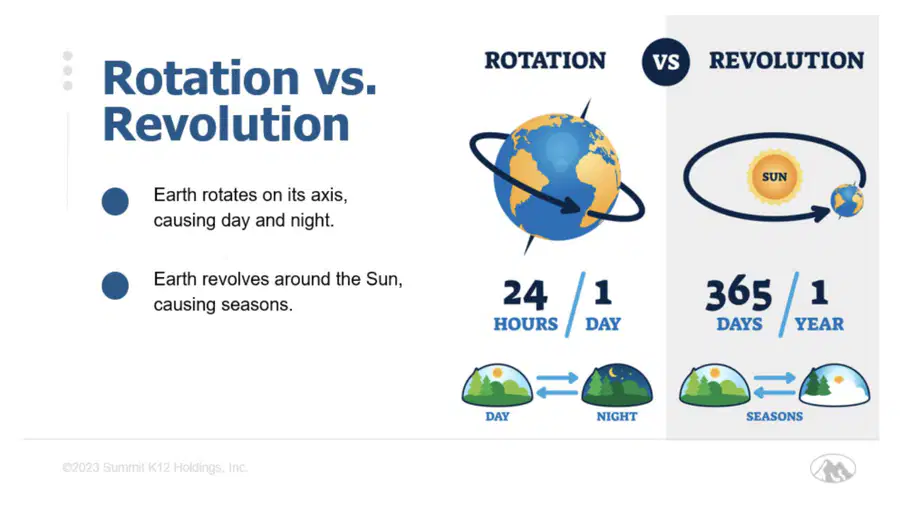
A teacher demonstrates the day and night cycle to a group of students using a globe and a lamp. Students are asked to write a valid conclusion about how the day and night cycle occurs naturally on Earth.

1

The sun rotates on its axis once approximately every 30 days.

2

The sun revolves around the Earth approximately every 365

days.

3

The Earth rotates on its axis once approximately every 24 hours.

4

The moon revolves around the Earth once approximately every

28 days.

10

media

11

Fill in the Blanks

media image

12

media

13

Fill in the Blanks

media image

14

media

15

Multiple Select

Question image

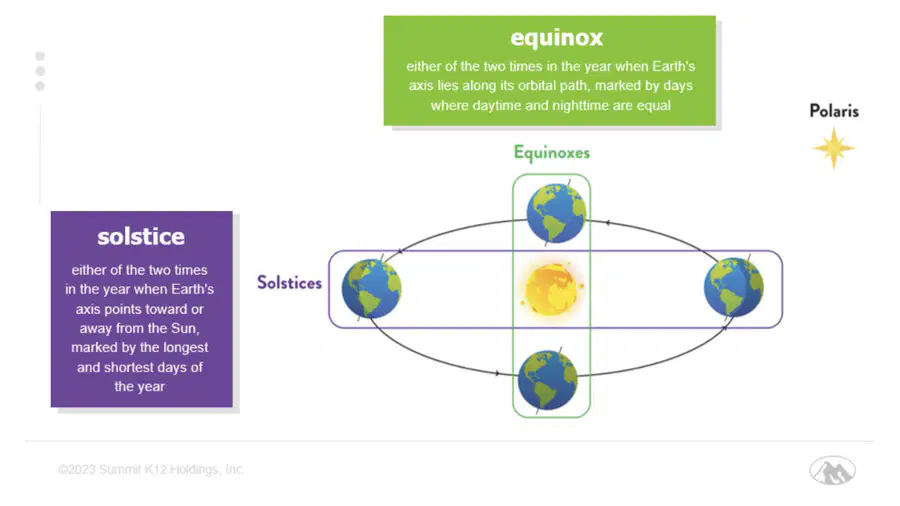
During which two seasons do both hemispheres receive equal sunlight and therefore, we have what is called an equinox?

1

Spring

2

Summer

3

Fall

4

Winter

16

media

17

Multiple Choice

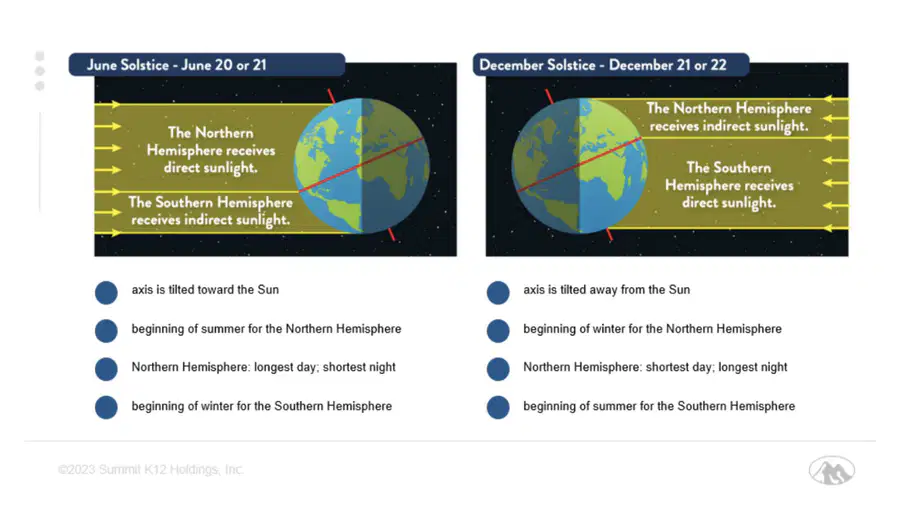
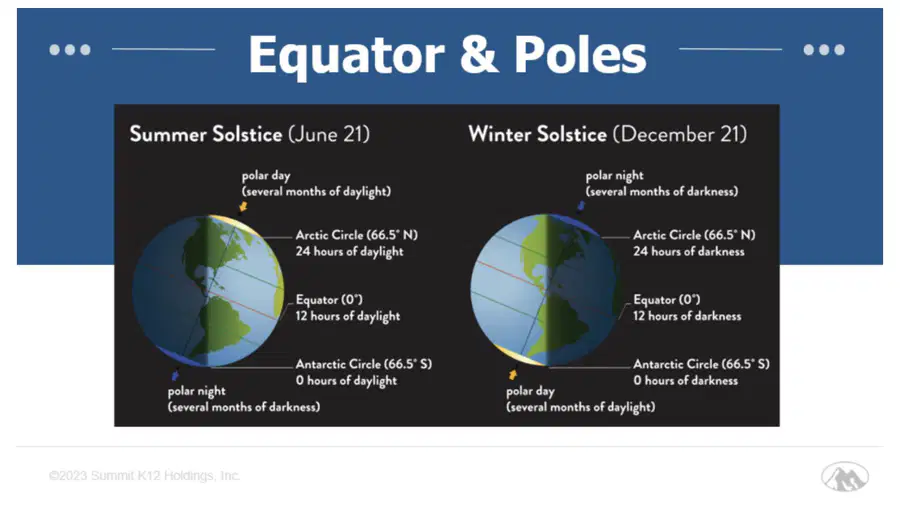
What happens during the June Solstice?

1

The Northern Hemisphere receives indirect sunlight.

2

The Southern Hemisphere receives direct sunlight.

3

The axis is tilted away from the Sun.

4

The Northern Hemisphere experiences the shortest day.

18

media

19

Multiple Choice

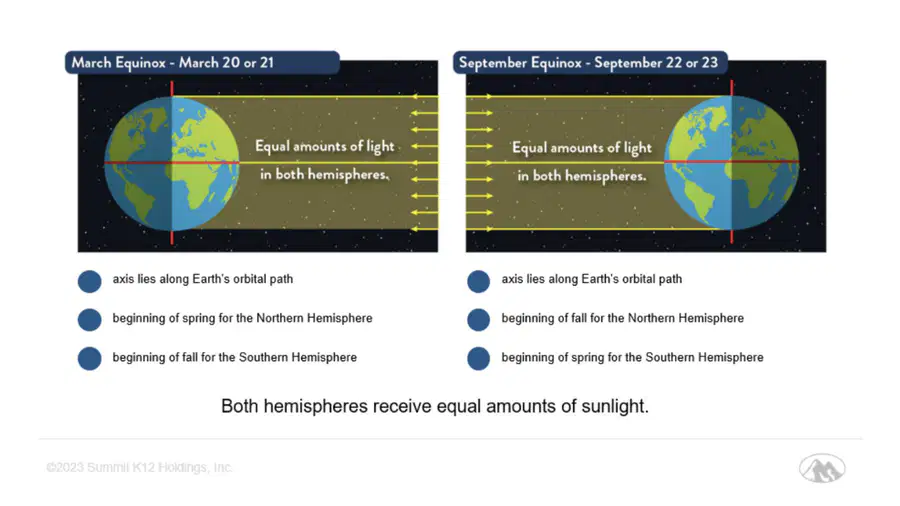
What are the key differences between the March Equinox and the September Equinox?

1

The March Equinox marks the beginning of spring in the Northern Hemisphere and fall in the Southern Hemisphere.

2

The September Equinox marks the beginning of spring in the Northern Hemisphere and fall in the Southern Hemisphere.

3

Both equinoxes have equal amounts of light in both hemispheres.

4

The March Equinox occurs on March 20 or 21, while the September Equinox occurs on September 22 or 23.

20

media

21

Multiple Choice

What are the differences in daylight hours at the Equator during the Summer Solstice and Winter Solstice?

1

24 hours of daylight in summer

2

12 hours of daylight in winter

3

0 hours of daylight in summer

4

12 hours of daylight in summer

22

Multiple Choice

The EARTH REVOLVES around the:
1
Sun
2
Moon
3
The Earth doesn't revolve
4
The sun rotates

23

Multiple Choice

Day and night is caused by the _____________ of earth on its axis.
1
revolution
2
orbit
3
rotation
4
space

24

Multiple Choice

What motion of the Earth takes 365 days?
1
Rotation
2
Tilting 
3
Revolution
4
Spinning

25

Multiple Choice

Question image
What happens when the area in which you live tilts away from the sun?
1
It is summer.
2
It is spring.
3
It is winter.
4
It is fall.

26

Multiple Choice

Question image
Why is it warmer in the summer?
1
Closer to the sun
2
More direct light from Earth's tilt
3
Stronger light from the sun
4
Earth spins slower

27

Multiple Choice

Question image

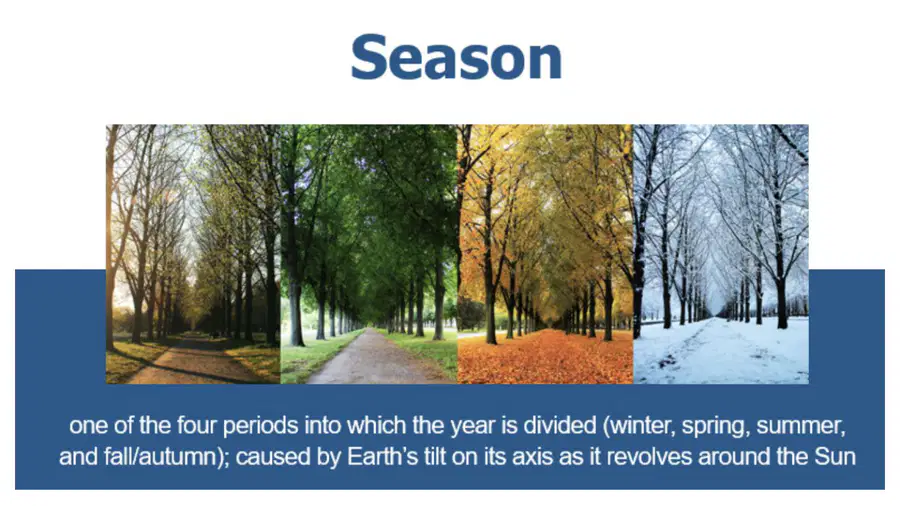
What season is the northern hemisphere experiencing in the photo?

1

Fall

2

Spring

3

Winter

4

Summer

28

Multiple Choice

DOL
When it is summer in the Northern Hemisphere, what season is occurring in the Southern Hemisphere, and why?

1

Summer, because both hemispheres receive the same amount of sunlight.

2

Winter, because the Southern Hemisphere is tilted away from the Sun.

3

Fall, because the Southern Hemisphere gets less sunlight for only a few days.

4

Spring, because the Earth’s orbit causes equal sunlight worldwide.

media

Show answer

Auto Play

Slide 1 / 28

SLIDE