

Unit 3 Review

Presentation
•
Science
•
9th - 12th Grade
•
Medium
+3
Standards-aligned
Ivana Grant
Used 1+ times
FREE Resource
10 Slides • 62 Questions
1
By Ivana Grant
2
STATION 1. DNA STRUCTURE AND REPLICATION
DNA stores genetic instructions.
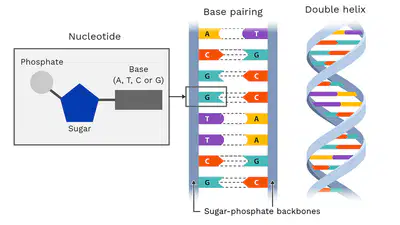
DNA is built from nucleotides.
Each nucleotide has:
• A sugar
• A phosphate
• A nitrogen base
A pairs with T.
C pairs with G.
Base pairing using hydrogen bonds keeps the double helix stable.
3
Labeling
Correctly label the nucleotide
sugar (deoxyribose)
nitrogen-base
DNA
phosphate
4
Match

Match the following DNA base pairs.
Adenine pairs with
Thymine pairs with
Cytosine pairs with
Guanine pairs with
Thymine
Adenine
Guanine
Cytosine
Thymine
Adenine
Guanine
Cytosine
5
Base Pairing
A bonds with T through two hydrogen bonds.
C bonds with G through three hydrogen bonds.
The order of bases forms the genetic code.
The bases on one strand decide the bases on the other strand.
Chargaff's Rule: %A = %T and %G = %C in any organism
6
Multiple Choice
If 35% of an organism's DNA is thymine, what is the percentage of guanine?
7
Multiple Choice

Which of the following are the missing data for percentage of Thymine, Guanine and Cytosine for Psyduck?
30%; 19%; 21%
19%; 30%; 21%
19%; 21%; 30%
21%; 30%; 19%
8
Multiple Choice
A sample of DNA is collected from an organism. It is analyzed and determined that 20% of the DNA is made up of the base adenine. Using this information, determine the amount of the three remaining bases for this sample.
9
Multiple Choice
Which strand is complementary to:
3’ TAC GGC ATA TTT 5’?
3’ ATG CCG TAT AAA 5’
5’ ATG CCG TAT AAA 3’
3’ AAC CGT TTA CCC 5’
5’ AAA TAG CCG TAT 3’
10
Match

Match the DNA sequence codon with the complimentary sequence
TAC
AGT
CTT
GCG
ATG
TCA
GAA
GCG
ATG
TCA
GAA
11
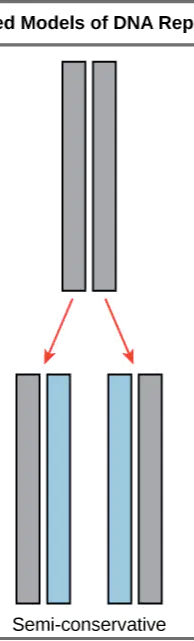
DNA Replication (Semi-Conservative)
When: S phase of cell cycle (before cell division)
Why: So each daughter cell gets a complete copy of DNA
How it works:
Helicase unzips/unwinds the double helix
Each original strand serves as a template
DNA polymerase adds complementary nucleotides
Result: 2 DNA molecules, each with 1 old strand + 1 new strand
12
Match
Match the following: Steps of DNA Replication
1. Unzipping
2. Priming
3. Building and Extending
4. Gluing
Helicase unzips DNA helix
Primase marks starting point for DNA polymerase
DNA polymerase builds new DNA strands in 5' to 3' direction
Ligase joins DNA fragments together
Helicase unzips DNA helix
Primase marks starting point for DNA polymerase
DNA polymerase builds new DNA strands in 5' to 3' direction
Ligase joins DNA fragments together
13
Match
Match the following: Enzymes to Functions
Helicase
DNA Polymerase
Ligase
Primase
enzyme unzips DNA like a zipper, creating two single strands of DNA
Builder enzyme that synthesizes new strands of DNA by adding DNA nucleotides
Enzyme that joins or glues fragments of new DNA together
Enzyme that creates a starting point for DNA polymerase
enzyme unzips DNA like a zipper, creating two single strands of DNA
Builder enzyme that synthesizes new strands of DNA by adding DNA nucleotides
Enzyme that joins or glues fragments of new DNA together
Enzyme that creates a starting point for DNA polymerase
14
Multiple Choice

15
Multiple Choice
At what point in the cell cycle does DNA replication occur and why?
Before a cell divides, to provide each of the two resulting cells with a complete set of DNA instructions
Before a cell divides, to provide each of the two resulting cells with an incomplete set of DNA instructions
During cell division, to provide each of the two resulting cells with an incomplete set of DNA instructions
After a cell divides, to provide each of the two resulting cells with a complete set of DNA instructions
16
Multiple Choice
What will the matching DNA sequence be on a strand that reads AAGCTAT?
17
Multiple Choice
Before a cell divides, it must duplicate its DNA. Which of the following best describes DNA replication?
The two strands separate, and an exact copy of each original strand is synthesized
The two strands separate, and a complementary strand is synthesized from each original strand
The two strands separate, and an exact copy of one original strand is synthesized
The two strands separate, and a complementary strand is synthesized from one of the original strands
18
Multiple Choice
If a molecule was introduced that interfered with the normal function of the enzyme helicase, which of the following would be the MOST likely effect during replication?
DNA could not unwind for replication to proceed
Fragments of DNA could not be joined together
New DNA nucleotides could not be added to the growing strand
RNA primers could not be replaced with DNA nucleotides
19
Universal Genetic Code (SC.912.L.16.9)
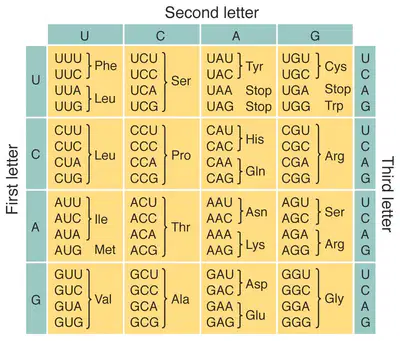
ALL organisms use the same genetic code
The same mRNA codons code for the same amino acids in bacteria, plants, humans, etc.
Why? Common ancestry - all life shares the same "language"
This is why: Scientists can insert human genes into bacteria to make insulin!
DNA has T (thymine), RNA has U (uracil)
DNA replication makes DNA, not RNA or protein
If given one DNA strand, write the complement using A↔T, G↔C
20
Multiple Choice
The genetic code is considered universal; what does this mean?
An amino acid can be specified by more than one codon.
Each codon codes for the same amino acid in nearly all organisms.
Each codon corresponds to a unique amino acid.
The sequence of bases in all organisms is the same.
21
Multiple Choice
What is the significance of the genetic code being universal?
It allows for the transfer of genes between different species.
It means that all organisms have identical DNA sequences.
It implies that all organisms have the same number of chromosomes.
It suggests that all organisms have the same metabolic pathways.
22
Multiple Choice
Why is the genetic code described as 'degenerate'?
Because it is flawed and often leads to errors in protein synthesis.
Because multiple codons can encode the same amino acid.
Because it is different in every organism.
Because it is not used by all living organisms.
23
Multiple Choice
Which statement BEST explains how the genetic code is universal?
DNA sequences are unique for each species
The nucleotide ratios in the DNA molecule are different between species
The shape of a DNA molecule is the same in different species
A DNA sequence codes for the same proteins in different species
24
Multiple Choice
Why can bacteria recognize a human gene and then produce a human protein?
DNA replication in bacteria and humans is the same
Bacterial cells contain the same organelles as human cells
The basic components of DNA are the same in humans and bacteria
Bacterial cells and human cells contain the same kind of chromosomes
25
Central Dogma: DNA → RNA → Protein
TRANSCRIPTION (DNA → mRNA)
Where: Nucleus
What: DNA is copied into mRNA
Base pairing: A→U, T→A, G→C, C→G
Result: mRNA leaves nucleus and goes to ribosome

26
Multiple Choice
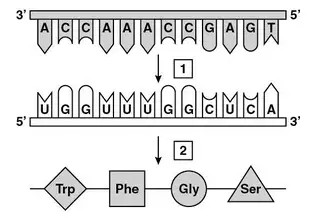
Which statement BEST describes what occurs during step 1?
A new rRNA strand is replicated during translation.
A new mRNA strand is produced during transcription.
A complementary DNA strand is produced during replication.
.A new set of amino acids are coded for by tRNA during protein formation.
27
Multiple Choice
Transcription goes from:
DNA to DNA
DNA to Protein
DNA to RNA
None of the above
28
Multiple Choice
Transcribe the DNA to RNA:
G A C - C T A - A G T
G A C - C T A - A G T
C U G - G A U - U C A
C T G - G A T- T C A
29
Multiple Choice

What protein is UCC
Ser
STOP
Thr
Tyr
30
Multiple Choice
Transcribe the DNA to RNA:
A A G - C T G - T A G
A A G - C T G - T A G
A A G - C T G - T A G
U U C - G A C - A U C
31
Multiple Choice
32
Multiple Choice
What is the result of transcription?
The synthesis of RNA from protein
The synthesis of protein from RNA
The synthesis of protein from DNA
The synthesis of RNA from DNA
33
Multiple Choice
RNA polymerase _____.
links together the chain of RNA nucleotides during transcription
creates proteins
reads the DNA code to be transcribed
34
Multiple Select
Messenger RNA (mRNA) works to ____.
codes genetic information from DNA
conveys it to ribosomes
duplicates DNA for mitosis
creates proteins
35
Multiple Choice
How do the functions of DNA and RNA differ?
DNA directs protein transport, while RNA aids in energy production
DNA aids in energy production, while RNA directs protein transport
DNA stores genetic information, while RNA transfers genetic information for protein synthesis
DNA transfers genetic information for protein synthesis, while RNA stores genetic information
36
Central Dogma: DNA → RNA → Protein
TRANSLATION (mRNA → Protein)
Where: Ribosome (in cytoplasm)
What: mRNA is read in codons (3 bases = 1 amino acid)
tRNA's job: Brings amino acids to the ribosome
Result: Chain of amino acids = protein
37
Multiple Choice
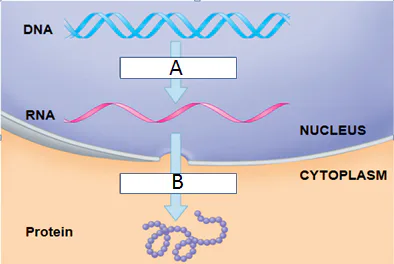
Which of the following identifies the process shown at point A?
38
Multiple Choice
What is the result of translation?
The synthesis of RNA from protein
The synthesis of protein from RNA
The synthesis of protein from DNA
The synthesis of RNA from DNA
39
Match

RNA Transcription
RNA Translation
mRNA
tRNA
rRNA
DNA to mRNA
mRNA code builds protein
carries code from DNA in nucleus to ribosome
brings amino acid to mRNA
part of ribosomal structure
DNA to mRNA
mRNA code builds protein
carries code from DNA in nucleus to ribosome
brings amino acid to mRNA
part of ribosomal structure
40
Match
Match the following to where they occur
nucleus
cytoplasm
nuclear pore
transcription
translation
mRNA leaves through
transcription
translation
mRNA leaves through
41
Multiple Choice
If a cell suddenly stopped producing transfer RNA, which of the following processes would be immediately affected?
mutation
replication
transcription
translation
42
Multiple Choice

This process is called:
Translation
Transcription
DNA Replication
43
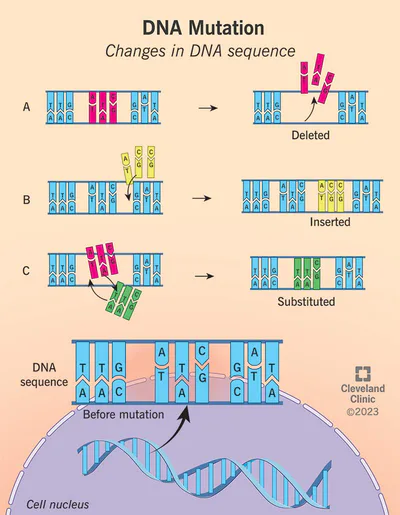
Types of Mutations
Point or Substitution
One base is changed
Effect: Depends on whether the amino acid changes
Silent
Base changes but the amino acid stays the same
Effect: No change to the protein
Frameshift (Insertion or Deletion)
A base is added or removed
Effect: Large change. All codons after the mutation shift.
Key Points
• Mutations in gametes can pass to offspring
• Mutations in body cells do not pass to offspring
• Some mutations do not change the phenotype
44
Multiple Choice
What mutation has occurred here?
T-G-A-C-C-A
T-G-A-G-C-A
Substitution
Deletion
Insertion
Frameshift
45
Multiple Choice
ATTTGAGCC- Original
ATTGAGCC - Mutated
The example above is an example of a
Insertion- Frameshift
Deletion- Substitution
Deletion -Frameshift
All of the above
46
Multiple Choice
Why are insertion and deletion (frameshift) mutations so harmful?
They change all of the codons from the mutation on down the line, which changes the amino acid sequence
They insert things that an organism doesn't need.
They often delete things that organisms need.
Insertion and deletions are not any more harmful than substitution mutations.
47
Multiple Choice

Which mutation will cause translation to stop?
Mutations 1 and 3 only
Mutation 1 only
Mutation 2 only
Muations 1, 2, 3
48
Multiple Choice
49
Multiple Choice
Would a mutation in the DNA of a skin cell be passed on to an organism's offspring?
Yes, because any change to the DNA is passed on to the offspring
Maybe. Sex cells only use half of the body's genetic code. It might get the copy of a gene that wasn't mutated.
No. Only mutations that occur in the gametes (sex cells) are passed on to the offspring
Without knowing the animal, it would be hard to tell whether or not the mutation would be passed on.
50
Multiple Choice
A single change in DNA base pair that changes one amino acid it codes for
silent
missense
nonsense
51
Multiple Choice
A single change in DNA base pair that results in a STOP codon
silent
missense
nonsense
52
Multiple Choice
A single change in DNA base pair that does not change the amino acid it codes for
silent
missense
nonsense
53
Multiple Choice
Mutations in an organism's DNA may be either beneficial or harmful. Which statement best describes the concept of DNA mutation?
DNA mutation is an alteration in DNA replication that always results in phenotypic change
DNA mutation is a change in the way that genes reproduce themselves, which may or may not affect phenotypic characteristics
DNA mutation is a change in the gene sequence, which sometimes results in phenotypic change. Mutations can be due to environmental factors, heredity, or a mistake in DNA replication
DNA mutation is an alteration in the nucleus of a cell that makes certain genes unable to be copied
54
Multiple Choice
DNA mutations can be present in a gene for many reasons. Which of the following does NOT describe a reason genetic mutation may exist in a gene?
When a cell dies, the DNA in the cell's nucleus can mutate
Exposure to chemicals or radiation can cause mutation in DNA
Mutations in DNA can be passed down from a parent to a child
Polymerase can make a mistake in matching nucleotides during replication
55
Multiple Choice
Which mutation is most likely to create a phenotype change: CCC to CCG, UAU to UAA, GGU to GGG, or ACU to ACA?
56
Multiple Choice
A mutation deletes one base early in the gene. What is the effect on the protein?
57
Mendelian Genetics (Monohybrid Crosses)
Allele: Different versions of a gene (T or t)
Dominant: Allele that masks the recessive (capital letter: T)
Recessive: Allele that is masked (lowercase letter: t)
Genotype: Genetic makeup (TT, Tt, tt)
Phenotype: Physical appearance (tall or short)
Homozygous: Two identical alleles (TT or tt)
Heterozygous: Two different alleles (Tt)
58
Multiple Choice

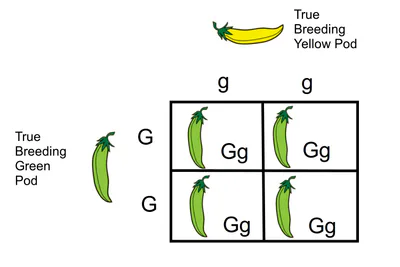
In the punnett square below, what belongs in the missing square
59
Multiple Choice
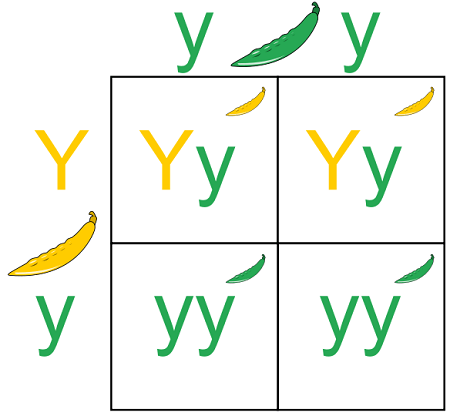
What are the expected phenotypes of the offspring if two hybrid tall (Tt) pea plants are crossed?
1/4 will be short, 3/4 will be tall
2/4 will be short, 2/4 will be tall
3/4 will be short, 1/4 will be tall
4/4 will be short, 0/4 will be tall
60
Multiple Choice
61
Multiple Choice

62
Multiple Choice
63
Multiple Choice
64
Multiple Choice
65
Multiple Choice
66
Multiple Choice

B = brown fur b = white fur
In the Punnett square, what is the probability for white fur?
0%
25%
50%
75%
67
Multiple Choice
68
Multiple Choice

69
Multiple Choice
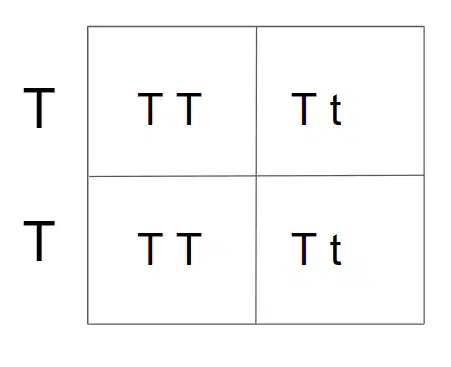
The mother's genotype is provided. Based on the probable offspring, what is the father's genotype?
Heterozygous
Homozygous dominant
Homozygous recessive
Tall
70
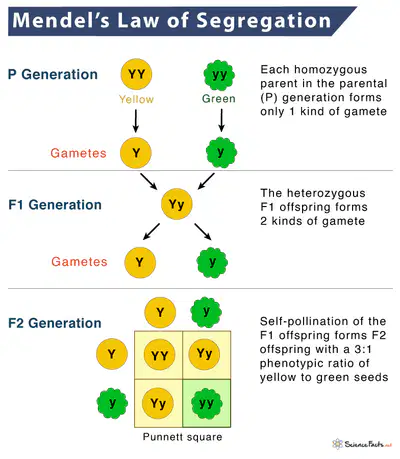
Mendel's Law of Segregation
Each parent has 2 alleles for each trait
During gamete formation (meiosis), alleles separate
Each gamete gets only 1 allele
Offspring get 1 allele from each parent
71
Multiple Choice
If a dominant allele is present, the trait will always appear in the organism.
Law of Segregation
Law of Dominance
Law of Independent Assortment
72
Multiple Choice

By Ivana Grant
Show answer
Auto Play
Slide 1 / 72
SLIDE
Similar Resources on Wayground

65 questions
Solar vs Lunar Eclipse
Presentation
•
9th - 12th Grade
69 questions
Types of Reactions
Presentation
•
9th - 12th Grade
69 questions
Property Changes in Chemical Reactions
Presentation
•
9th - 12th Grade
69 questions
Chemical Mixer
Presentation
•
9th - 12th Grade
69 questions
Introduction to Chemical Reaction
Presentation
•
9th - 12th Grade
64 questions
Unit 11 Waves & Electromagnetic Spectrum
Presentation
•
9th - 12th Grade
69 questions
Waves
Presentation
•
8th - 11th Grade
67 questions
The Nitrogen Cycle and the Phosphorus Cycle
Presentation
•
9th - 12th Grade
Popular Resources on Wayground
10 questions
Safety Day 2026 – Student Review

Quiz
•
9th Grade
21 questions
Continents and Oceans
Quiz
•
6th Grade
20 questions
Parts of Speech
Quiz
•
5th Grade
16 questions
Subject & Predicate
Quiz
•
5th Grade
25 questions
Multiplication Facts
Quiz
•
5th Grade
12 questions
Map Skills
Quiz
•
3rd Grade
22 questions
Continents and Oceans
Quiz
•
5th Grade
15 questions
Rounding Decimals
Quiz
•
5th Grade
Discover more resources for Science
10 questions
Exploring Chemical and Physical Changes

Interactive video
•
6th - 10th Grade
20 questions
Atomic Structure
Quiz
•
9th Grade
10 questions
Exploring the Electromagnetic Spectrum for Middle School Science
Interactive video
•
6th - 10th Grade
10 questions
Exploring Force and Motion Concepts
Interactive video
•
6th - 10th Grade
10 questions
Exploring Air Masses and Weather Fronts
Interactive video
•
6th - 10th Grade
14 questions
Periodic Trends
Interactive video
•
11th Grade
10 questions
Exploring the States of Matter
Interactive video
•
6th - 10th Grade
10 questions
Exploring Forces: Net Force, Normal Force, Gravity, and Friction
Interactive video
•
6th - 10th Grade