

Bio Matter and Energy Review (1B, 2, 4.1, 5.2, 5.3, 5.4)

Presentation
•
Biology
•
9th - 12th Grade
•
Easy
+22
Standards-aligned

James Franks
Used 2+ times
FREE Resource
70 Slides • 117 Questions
1
BIOLOGY: MATTER & ENERGY REVIEW
Essential Questions:
How do the structures of macromolecules determine their functions in living systems?
How do photosynthesis and cellular respiration transform energy for use by organisms?
What roles do enzymes play in regulating energy flow and chemical reactions?
How do energy and matter move through food chains and biogeochemical cycles?
How did early chemical reactions on Earth give rise to the first energy-using cells?
2
Standard 1B Basic Review
1B1 - Macromolecules
1B2 - Enzymes
3
BIO.1B.1 Develop and use models to compare and contrast the structure and function of carbohydrates, lipids, proteins, and nucleic acids (DNA and RNA) in organisms.
BIO.1B.2 Design and conduct an experiment to determine how enzymes react given various environmental conditions (i.e., pH, temperature, and concentration). Analyze, interpret, graph, and present data to explain how those changing conditions affect the enzyme activity and the rate of the reactions that take place in biological organisms.
4
Identify the elements that makeup macromolecules
Carbohydrates - CHO 1:2:1
Lipids - CHO
Proteins - CHON
Nucleic Acids - CHOPN
5
Match
Match the following
CHOPN
CHO
CHON
CHO 1:2:1
nucleic acid
lipid
protein
carbohydrates
nucleic acid
lipid
protein
carbohydrates
6
Multiple Choice
Which macromolecule contains phosphorus? (Always true, not Sometimes true)
Carbohydrates
Lipids
Nucleic Acids
Proteins
7
Multiple Select
Which TWO macromolecules contain nitrogen? (Always True, not Sometimes)
Carbohydrates
Lipids
Nucleic Acids
Proteins
8
Identify the monomers for macromolecules:
Carbohydrates - monosaccharides
Lipids - fatty acids
Proteins - amino acids
Nucleic Acids - nucleotides
9
Labeling
Match the Monomer to its Macromolecule.
Lipid
Protein
Nucleic Acid
Carbohydrate
10
Match
Match the following
fatty acid
amino acid
nucleotide
monosaccharide
lipids
proteins
nucleic acids
carbohydrates
lipids
proteins
nucleic acids
carbohydrates
11
Identify the main functions of the macromolecules
Carbohydrates - main source of energy for cell
structures like cell walls, exoskeleton, short-term energy
Lipids - long-term energy storage
waterproofing; insulation; cushioning; chemical messenger
Proteins - speed up chemical reactions
fight infections; structures like bone, muscle, hair, nails; transport; chemical messengers
structure determine function
Nucleic Acids - store and transmit genetic information
make proteins
12
Match
Match the following
long-term energy
speed up chemical reactions
store genetic information
main source of energy for cells
lipids
proteins
nucleic acids
carbohydrates
lipids
proteins
nucleic acids
carbohydrates
13
Identify Important Macromolecules
Carbohydrates
glucose - main short-term energy for cell
starch - plant energy storage
glycogen - animal energy storage
cellulose - plant cell wall
chitin - fungi cell wall and insect exoskeleton
Lipids (do not dissolve in water)
fats - long-term energy storage
fats - insulation
fats - cushion organs
phospholipid - main part of cell membrane
wax - waterproof
steroids - chemical messenger
cholesterol - stabilize cell membrane
14
Identify Important Macromolecules
Proteins (most diverse)
enzymes - speed up chemical reactions (metabolism)
antibodies - fight infections
hormones - chemical messengers
insulin, glucagon
transport proteins - move substances through cell membrane
movement - muscles,
structures - bones, horns, collagen, spider silk
Nucleic Acids
DNA - store genetic information
RNA - make proteins
15
Identify the macromolecule by structure:

Carbohydrates
Lipids
Proteins
Nucleic Acids
16
Match
Carbohydrates
Proteins
Nucleic Acids
Lipids
Carbohydrates
Proteins
Nucleic Acids
Lipids
17
Identify the macromolecule monomer by structure:
monosaccaride
fatty acid
amino acid
nucleotide
CHO 1:2:1
Hexagon or Pentagon
CHO
Chain of Carbons, very few Oxygens
CHON
NCC
CHOPN
Phosphate
Sugar
Nitrogen Base
18
Match
monosaccharide
amino acid
nucleotide
fatty acid
monosaccharide
amino acid
nucleotide
fatty acid
19
Identify the macromolecule monomer by structure:

Carbohydrates
Starch, Glycogen, Cellulose, Chitin
Lipid
Phospholipid
Protein
Polypeptide Chain
Nucleic Acid
DNA
Starch
Phospholipid
Polypeptide
Chain
DNA
20
Match
Match the structures
Phospholipid
Polypeptide Chain
Carbohydrate
DNA
Phospholipid
Polypeptide Chain
Carbohydrate
DNA
21
Identify the macromolecule monomer by structure:
Carbohydrates
Starch, Glycogen, Cellulose, Chitin
Lipid
Steroid
Protein
Finished / Folded Protein
Nucleic Acid
RNA


Hexagons
Pentagons
Chicken-wire fence

RNA
steroid
glycogen
folded protein
22
Identify the macromolecule monomer by structure:
Carbohydrates
Starch, Glycogen, Cellulose, Chitin
Lipid
Steroid
Protein
Nucleic Acid
RNA
Hexagons
Pentagons
Chicken-wire fence

Amino Acid + Amino Acid
23
Compare DNA and RNA
DNA
Deoxyribose sugar
Adenine bonds with Thymine
Double-stranded
Stores genetic information in the order of the nucleotides
RNA
Ribose sugar
Adenine bonds with Uracil
Single-stranded
Makes proteins

24
Drag and Drop
Molecule A: Contains Carbon, Hydrogen, and Oxygen in a 1:2:1 ratio (often shaped like a ring). This is a
Molecule B: Contains Carbon, Hydrogen, Oxygen, Nitrogen, and Phosphorus (has a sugar-phosphate backbone). This is a
25
Categorize
deoxyribose sugar
ribose sugar
Thymine
Uracil
Double stranded
Single stranded
Organize these options into the right categories
26
Enzymes are reusable proteins that speed up chemical reactions by
lowering the activation energy needed for a reaction to start
Enzymes are SPECIFIC to one reaction, as its active site only fits one substrate.
27
Multiple Choice
Enzymes are catalysts that speed up chemical reactions. Why is a specific enzyme, like lactase, unable to break down a different sugar, like sucrose?
The enzyme is used up after one reaction and cannot be used again.
The active site of the enzyme changes shape to fit any substrate.
The shape of the enzyme's active site is specific and only fits the shape of lactose.
Enzymes only work at very high temperatures which destroys sucrose.
28
Drag and Drop
29
Label the Enzyme Diagram

substrate, products, active site, enzyme, enzyme-substrate complex (ESC)
Substrate
Active Site
Products
ESC - Enzyme-Substrate Complex
Enzyme
30
Labeling
Label the enzyme diagram
products
active site
substrate
enzyme
31
Enzyme reaction rate is affected by:
Concentration of sSubstrates
enzyme reaction rate increases as substrate concentration increases (more substrates are available) until all enzymes are being used

saturation
32
A proteins shape determines its function
Enzymes are proteins
Enzymes have an optimum pH and temperature in which they work best
Outside of these conditions, the enzyme's active site changes shape and the enzyme stops working correctly.
33
Independent
"I change" - the part being tested
For enzymes, it is the pH or temperature
Dependent
"data" - what gets measured
For enzymes, it is the reaction rate or enzyme activity
34
X-axis
pH
Temperature
Y-axis
Enzyme Activity
Reaction Rate

pH or Temperature
Enzyme Activity or Reaction Rate
35
pH - how acidic or basic the enzymes environment
enzymes have a specific pH in which they work best (optimum)


Denature
outside of the optimum pH, the enzymes active site deforms and can no longer function properly and stops working
Human Enzymes
Pepsin (proteins) Stomach - 2
Amylase (sugar) - Mouth - 7
Trypsin (proteins) Small Intestines - 8
Hemoglobin oxygen)- Blood - 7.4
optimum pH
denatured
denatured
36
Multiple Choice

37
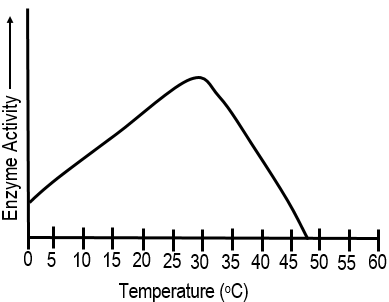
Temperature - the temperature of the enzymes environment
enzymes have a specific temperature in which they work best (optimum)
enzyme reaction rates increase as temperature increases until the optimum temperature is reached
Denature - above the optimum temperature, the enzyme stops working

optimum temperature
38
Multiple Choice
39
Standard 2 Basic Review - Cellular Energy
2.1 - ATP-ADP Cycle
ATP, ADP, structure, energy storage, energy release, ATP-ADP cycle
2.2 - Photosynthesis
Reactants, products, light reactions, Calvin cycle, diagram
2.3 - Cellular Respiration
Reactants, products, glycolysis, Krebs cycle, ETC, diagram
2.4 Aerobic and Anaerobic Respiration
Aerobic respiration, anaerobic respiration, reactants, products, alcoholic fermentation, lactic acid fermentation
40
Multiple Choice

41
ATP is the energy currency used to do work in a cell
Active Transport
Protein pumps, endocytosis, exocytosis
Moving organelles
Muscle contraction
Making macromolecules
Bioluminescence

42
ATP - adenosine triphosphate
adenine nitrogen base
ribose sugar
3 phosphate groups
high energy stored between the 2nd and 3rd phosphate groups
ADP - adenosine diphosphate
adenine nitrogen base
ribose sugar
2 phosphate groups
low energy


43
Categorize
low energy
high energy
3 phosphates
2 phosphates
adenine
ribose
Compare ATP and ADP
44
Storing Energy in ATP - add a phosphate to ADP
ADP + P + Energy from Food > ATP
Releasing Energy from ATP - remove a phosphate from ATP
ATP > ADP + P + Energy for Cellular Work


45
Dropdown
Releasing Energy from ATP →
46

Label the ATP Molecule
ATP
Adenine
Ribose
Phosphate Groups
High-Energy Bond
47
Labeling
Label the ATP molecule
adenine
high-energy bond
ribose sugar
phosphate groups
48
Label the ATP-ADP Cycle

Energy from Food
Energy for Cellular Work
ATP
ADP
Phosphate
49
Labeling
Label the ATP-ADP Cycle
Food Energy
ATP
phosphate
ADP
Cell Work Energy
50
Multiple Choice

The diagram shows a molecule of ATP. Which statement correctly explains how energy is released from this molecule for cellular work?
Energy is released when the bond between the adenine and ribose is broken.
Energy is released when the bond between the second and third phosphate group is broken.
Energy is released when a third phosphate group is added to the chain.
Energy is released when the ribose sugar is broken down into glucose.
51
The purpose of photosynthesis is to store energy in food
glucose, sugar, carbohydrates
Photosynthesis occurs in the chloroplast
The purpose of respiration is to store energy in ATP
Most respiration occurs in the mitochondria


52
Dropdown
Photosynthesis occurs in the
The purpose of respiration is to store energy in
Most respiration occurs in the
53
6CO2 + 6H20 + light → C6H12O6 + 6O2
Carbon dioxide + Water + light energy→ Glucose + Oxygen

54
Match
Match the molecules to their formulas.
CO2
H2O
C6H12O6
O2
carbon dioxide
water
glucose
oxygen
carbon dioxide
water
glucose
oxygen
55
Reorder
Place the photosynthesis formula in order:
carbon dioxide +
water +
light energy →
glucose +
oxygen
56

Reactants
Carbon Dioxide CO2
Water H20
Light Energy
Products
Glucose C6H12O6
Sugar/Carbohydrates
Oxygen O2
57
Categorize
glucose
oxygen
carbon dioxide
water
light energy
Choose the reactants and products of photosynthesis.
58
Light Reactions
light dependent reactions
Light energy used to split water, release oxygen, and create energy carriers ATP & NADPH
Calvin Cycle
light independent reactions
Energy carriers ATP and NADPH convert carbon dioxide into glucose

59
Reorder
Place the stages of photosynthesis in order (start with light).
light energy
light reactions
Calvin cycle
60
Dropdown
The Calvin Cycle is also known as
61
Dropdown
In the Calvin Cycle,
62
Dropdown
In the Calvin Cycle,
63

Light Energy
Water
Oxygen
Carbon Dioxide
Glucose
Light
Reactions
Calvin
Cycle
ATP
NADPH
64
Labeling
Label the Photosynthesis diagram.
carbon dioxide
LIGHT REACTIONS
light energy
oxygen
water
glucose
CALVIN CYCLE
65
Aerobic Respiration
requires oxygen
starts in cytoplasm, finishes in the mitochondria
Reactants
Glucose and Oxygen
Products
36 ATP
Carbon Dioxide
Water
Anaerobic Respiration
fermentation
does not require oxygen
only in cytoplasm
Reactants
Glucose
Products
2 ATP
Carbon Dioxide and Alcohol or
Lactic Acid
The Purpose of Cellular Respiration is to Store Energy in ATP
66
Categorize
reactant is glucose
does not use oxygen
uses oxygen
makes 36 ATP
makes 2 ATP
fermentation
Compare Aerobic and Anaerobic Respiration
67
Drag and Drop
68
C6H12O6 + 6O2 → 6CO2 + 6H20 + 36 ATP
Glucose + Oxygen → Carbon dioxide + Water + ATP energy

69
Reorder
Place the aerobic respiration formula in order:
glucose +
oxygen →
carbon dioxide +
water +
ATP energy
70

Reactants
Glucose - C6H12O6
Oxygen - O2
Products
Carbon Dioxide - CO2
Water - H20
ATP energy
71
Categorize
glucose
oxygen
carbon dioxide
water
ATP
Choose the reactants and products of aerobic cellular respiration.
72
Glycolysis
splitting sugar
Glucose is split
makes 2 ATP, Pyruvate, and NADH
in the cytoplasm
ETC
electron transport chain
oxygen is used
energy from NADH, FADH2 is used
makes 34 ATP
in the mitochondria
Glycolysis > Krebs Cycle > ETC (electron transport chain)
Krebs Cycle
citric acid cycle
Pyruvate is broken down
makes 2 ATP
makes energy carriers NADH & FADH2
in the mitochondria
73
Reorder
Place the stages of aerobic respiration in order.
Glycolysis
Krebs Cycle
ETC
74
Categorize
does not uses oxygen
glucose is reactant
pyruvate is reactant
oxygen is used
makes 34 ATP
occurs in the cytoplasm
powered by energy carriers from the other stages
Compare the Stages of Aerobic Respiration
75

Water
H2O
GLYCOLYSIS
KREBS
CYCLE
ETC
2 ATP
2 ATP
34 ATP
Oxygen
O2
Glucose
NADH
FADH2
Carbon Dioxide
CO2
Pyruvate
Pyruvic Acid
76
Labeling
Label the Aerobic Respiration Diagram
2 ATP (Gly.)
2 ATP (Kr.)
34 ATP
glucose
GLYCOLYSIS
KREBS
ETC
77
Alcoholic Fermentation
Plants and Yeast
Does not use oxygen
Reactant
Glucose
Products
2 ATP
Carbon Dioxide
breads rise
Alcohol
alcoholic drinks, fuel
Lactic Acid Fermentation
Animals and Bacteria
Does not use oxygen
Reactant
Glucose
Products
2 ATP
Lactic Acid
fermented food products like yogurt, pickles, sour cream, some cheeses
burning feeling in muscles
78
Dropdown
The lactic acid produced by lactic acid fermentation is also known as
79
Categorize
does not use oxygen
makes 2 ATP
one product is lactic acid (lactate)
one product is carbon dioxide
one product is alcohol
can occur in plants and yeast
can occur in animals and bacteria
reactant is glucose
Compare the kinds of Fermentation
80
Drag and Drop
81
Standard 4.1 Review: Chemical and Organic Evolution
BIO.4.1 Use models to differentiate between organic and chemical evolution, illustrating the steps leading to aerobic heterotrophs and photosynthetic autotrophs.
82
Multiple Choice
Which statement is true about cellular respiration?
It produces glucose, which provides energy for the cell.
It produces ATP, which stores energy that is used by the cell.
It produces carbon dioxide, which combines with hydrogen to form sugar.
It produces oxygen, which combines with hydrogen to prevent cell poisoning.
83
Chemical Evolution
The process of non-living inorganic chemicals on early Earth reacting to form the first simple organic molecules (like amino acids, RNA, and lipids).
When: Before life existed.
The chemical "building blocks of life"
Organic Evolution
The process of the first simple living cells changing over time into more complex organisms (like eukaryotes and multicellular life).
When: After life began.
First cells evolve and result in the diversity of all life on Earth.
Chemical evolution had to happen first so that
organic evolution had the parts (cells) to get started.
84
Dropdown
Organic evolution involves
85
Reorder
Place the evolution of chemicals and cells in order.
Inorganic Chemicals
Organic Chemicals
Simple Cells
Complex Cells
86
Reorder
Place the evolution of chemicals and cells in order.
Inorganic Chemicals
Organic Chemicals
Prokaryotic Cells
Eukaryotic Cells
87
Inorganic chemicals in the atmosphere (methane CH4, ammonia NH3, hydrogen H2, water vapor H2O - but no free oxygen O2) interact to form Organic chemicals using lightning, volcanic activity, and UV radiation as energy
Experiment: Miller-Urey used inorganic chemicals to form amino acids using sparks for energy
RNA is believed to be first organic molecule to self-replicate
4.1 Describe the Formation of Organic Chemicals

Amino Acids
88
Reorder
Place the evolution of chemicals and cells in order.
Inorganic Chemicals
Organic Chemicals
Pre-Cells
True Cells
89
4.1 Describe the First True Cell
Prokaryotic
no nucleus or membrane-bound organelles
Heterotrophic
must consume something for food
Anaerobic
does not use oxygen to make energy - used fermetation
Unicellular
made of only one cell

Pre-cells self-replicate, forming the first true cells
First cells were anaerobic heterotrophic prokaryotic bacteria cells
90
Drag and Drop
was made of only one cell (
did not use oxygen (
and consumed chemicals from its environment (
91
Large Anaerobic Heterotrophs
Consumes chemicals from its environment for food
Releases carbon dioxide
Photosynthetic Autotrophs
Uses light energy to create food
Use carbon dioxide for photosynthesis
Releases oxygen
Very similar to chloroplasts
Aerobic Heterotrophs
Uses oxygen to create ATP energy
Very similar to mitochondria
Anaerobic Heterotrophs > Photoautotrophs > Aerobic Heterotrophs
92
Reorder
Place the evolution of prokaryote metabolism in order. (anaerobic bacteria first)
Anaerobic Bacteria
Photosynthetic Bacteria
Aerobic Bacteria
93
Reorder
Scientists hypothesize that the first life forms on Earth were simple, single-celled organisms. According to the theory of chemical evolution, place the sequence into the order.
Inorganic molecules
Organic monomers (amino acids)
Protocells
First living cells
94
Drag and Drop
95
Step 1: Nucleus forms in large anaerobic prokaryotes when cell membrane infolds around DNA/chromosomes
Large Anaerobic Heterotroph >
Prokaryotes
Nucleus >

FIRST CELL
ANAEROBIC HETEROTROPHIC
PROKARYOTIC
CELL MEMBRANE FOLDS INWARD
NUCLEUS IS FORMED
96
Step 2: Large anaerobic heterotrophic prokaryotes engulf aerobic bacteria, forming aerobic eukaryotes
Engulfed aerobic bacteria evolve into mitochondria
Aerobic eukaryotes evolve into animal cells
Large Anaerobic Heterotroph >
Prokaryotes
Aerobic Eukaryotes >
(mitochondria)

Nucleus >
ANAEROBIC HETEROTROPHIC CELL
ENGULFS
AEROBIC BACTERIA CELL
AEROBIC BACTERIA CELL
EVOLVES INTO
MITOCHONDRIA
AEROBIC HETEROTROPHIC CELL
EVOLVES INTO
ANIMAL CELLS
97
Step 3: Some aerobic eukaryotes engulf photosynthetic bacteria, forming photosynthetic eukaryotes
Engulfed photosynthetic bacteria evolve into chloroplasts
Photosynthetic eukaryotes evolve into plant cells
Large Anaerobic Heterotroph >
bacteria
Aerobic Eukaryotes >
(mitochondria)
Photosynthetic Eukaryotes
(chloroplasts)

Nucleus >
AEROBIC HETEROTROPHIC CELL
ENGULFS
PHOTOSYNTHETIC BACTERIA CELL
PHOTOSYNTHETIC BACTERIA CELL
EVOLVES INTO
CHLOROPLAST
PHOTOSYNTHETIC EUKARYOTES
EVOLVE INTO
PLANT CELLS
98
Drag and Drop
Step 2: Large anaerobic heterotrophic prokaryotes engulf aerobic bacteria, forming aerobic eukaryotes that evolved into
Engulfed aerobic bacteria are
Step 3: Some aerobic eukaryotes engulf photosynthetic bacteria, forming photosynthetic eukaryotes that evolved into
Engulfed photosynthetic bacteria are
99

100
Reorder
Place the formation of the cell parts in order.
Nucleus
Mitochondria
Chloroplast
101
Reorder
Place the evolution of eukaryotic cells in order.
Nucleus Forms in Anaerobic prokaryote
Anaerobic prokaryote engulfs aerobic bacteria
Aerobic eukaryote engulfs photosynthetic bacteria
Photosynthetic eukaryotes evolve into plant cells
102
Reorder
Place the formation of the cells in order
Anaerobic Prokaryote
Aerobic Eukaryote
Photosynthetic Eukaryote
103

Anaerobic Heterotroph > Aerobic Eukaryote > Photosynthetic Eukaryote
Bacteria
Animal
Plant
104
The consumed aerobic heterotrophic bacteria cell cell became mitochondria
Evidence: Mitochondria
have a double membrane
reproduce by binary fission
have their own bacteria-style ribosomes
have circular DNA that is similar to bacteria DNA

The consumed photoautotrophic bacteria cell became chloroplasts
Evidence: Chloroplasts
have a double membrane
reproduce by binary fission
contain bacteria-style ribosomes
have circular DNA that is similar to cyanobacteria DNA - a bacteria that performs photosynthesis
105
Multiple Choice
Some scientists believe that mitochondria in eukaryotic cells originally evolved from free-living aerobic bacteria. Over time, these bacteriabecame part of larger cells and helped provide energy.
Which piece of evidence BEST supports this theory?
Mitochondria and bacteria both have double membranes
Mitochondria and bacteria both carry out photosynthesis
Mitochondria have cell walls like bacteria do
Mitochondria are found only in plant cells
106
Standard 5.2 Review: Biogeochemical Cycles
BIO.5.2 Analyze models of the cycling of matter (e.g., carbon, nitrogen, phosphorus, and water) between abiotic and biotic factors in an ecosystem and evaluate the ability of these cycles to maintain the health and sustainability of the ecosystem.
BIO.5.3 Analyze and interpret quantitative data to construct an explanation for the effects of greenhouse gases on the carbon dioxide cycle and global climate.
107
BIO.5.2 Analyze models of the cycling of matter (e.g., carbon, nitrogen, phosphorus, and water) between abiotic and biotic factors in an ecosystem and evaluate the ability of these cycles to maintain the health and sustainability of the ecosystem.
BIO.5.3 Analyze and interpret quantitative data to construct an explanation for the effects of greenhouse gases on the carbon dioxide cycle and global climate.
BIO.5.7 Investigate and evaluate factors involved in primary and secondary ecological succession using local, real world examples.
108
Matter Cycles
Matter (not energy) is recycled in ecosystems between abiotic (nonliving) and biotic (living) parts of the environment.

109
Water Cycle
Abiotic to Biotic: Plants take in water from soil; animals drink water
Biotic to Abiotic: Transpiration, excretion, and respiration release water vapor
Water moves by evaporation, condensation, precipitation, runoff, and infiltration

Water INTO Living Things
Root Absorption - water is taken in by plants - abiotic > biotic
Drinking - animals take in water
Water OUT of Living Things
Transpiration - water vapor is released from the leaves of plants - biotic > abiotic
Exhalation, Perspiration, Urination - water is released from animals - biotic > abiotic
110
Multiple Choice

Analyze the diagram.
Based on the water cycle, which component is the direct result of both abiotic and biotic processes?
Evaporation from lakes
Condensation forming clouds
Transpiration from plant leaves
Precipitation as rain or snow
111
Multiple Choice

Analyze the diagram.
What is the role of transpiration in the water cycle?
Transporting water underground to aquifers
Releasing water vapor into the atmosphere from plant leaves
Causing clouds to form from rising warm air
Producing precipitation that returns water to the land
112
Nitrogen Cycle
Nitrogen OUT of the Atmosphere
Nitrogen Fixation - Nitrogen Fixing Bacteria in soil or root nodules convert nitrogen gas → ammonia; Abiotic → Biotic
Nitrification - Nitrifying bacteria convert ammonia → nitrites → nitrates (NO₃⁻) which plants can use
Nitrogen INTO Living Things
Assimilation - Plants absorb nitrates from soil to build proteins and DNA - Abiotic > Biotic
Consumption - Animals eat plants, gaining nitrogen - Biotic > Biotic
Nitrogen OUT of Living Things
Decomposition - Decomposers break down dead organisms and waste → release ammonia into soil - Biotic → Abiotic
Nitrogen INTO the Atmosphere
Denitrification - Denitrifying bacteria convert nitrates → Nitrogen gas, returning it to atmosphere - Abiotic → Biotic

Bacteria
Bacteria
Bacteria
Bacteria
Bacteria
113
Multiple Choice
Nitrogen gas (N2) makes up the majority of Earth's atmosphere, but plants cannot use it directly from the air. Which organisms are primarily responsible for "fixing" nitrogen into a form plants can use?
Decomposers like fungi
Photosynthetic algae
Nitrogen-fixing bacteria found in soil and roots
Herbivores that eat plants
114
Multiple Choice
Which of the following is not a role of bacteria in the nitrogen cycle?
Converting atmospheric nitrogen into a usable form for plants
Breaking down dead organisms and releasing ammonium into the soil
Transforming nitrates back into nitrogen gas
Absorbing carbon dioxide during photosynthesis
115
Multiple Choice
Which of the following is not a role of bacteria in the nitrogen cycle?
Converting atmospheric nitrogen into a usable form for plants
Breaking down dead organisms and releasing ammonium into the soil
Transforming nitrates back into nitrogen gas
Absorbing carbon dioxide during photosynthesis
116
Multiple Choice

117
Multiple Choice

Analyze the diagram.
Antibiotics in soil can kill bacteria involved in key nitrogen cycle processes.
Which outcome is most likely if nitrogen-fixing bacteria are reduced?
Decreased nitrogen fixation, reducing the amount of usable nitrogen in the soil
Increased nitrogen gas returning to the atmosphere through denitrification
More nitrogen compounds in the soil due to reduced reliance on nitrogen-fixing bacteria
Higher nitrogen fixation, causing excess nitrogen to be released into the atmosphere
118
Multiple Choice
Atmospheric nitrogen has to be combined with other elements, or fixed, in order to be used by plants.
Lightning is one way that nitrogen is fixed. When lightning occurs, the extreme heat breaks the bonds in nitrogen molecules, allowing nitrogen to combine with oxygen and form nitrogen oxides.
In what way is most of the nitrogen fixed by lightning made available for use by plants?
It is moved by the wind toward dry areas.
It is incorporated into the exoskeletons of flying insects that eat plants.
It is inhaled and exhaled by birds roosting in trees during rainstorms.
It is carried by rain to the soil.
119
Multiple Choice
Atmospheric nitrogen has to be combined with other elements, or fixed, in order to be used by plants.
Lightning is one way that nitrogen is fixed. When lightning occurs, the extreme heat breaks the bonds in nitrogen molecules, allowing nitrogen to combine with oxygen and form nitrogen oxides.
In what way is most of the nitrogen fixed by lightning made available for use by plants?
It is moved by the wind toward dry areas.
It is incorporated into the exoskeletons of flying insects that eat plants.
It is inhaled and exhaled by birds roosting in trees during rainstorms.
It is carried by rain to the soil.
120
Multiple Choice

Analyze the diagram.
Which component is a direct component of abiotic and biotic activities in this cycle?
nitrates
nitrites
ammonium
atmospheric nitrogen
121
Phosphorus Cycle
Phosphorus OUT of Abiotic Sources
Weathering - Rain and wind break down rocks → release phosphate (PO₄³⁻) into soil and water
Abiotic → Abiotic
Phosphorus INTO Living Things
Absorption / Assimilation - Plants absorb phosphate from soil through roots - Abiotic → Biotic
Consumption - Animals eat plants → phosphorus moves up the food chain - Biotic → Biotic
Animals drink water with dissolved phosphate in it
Phosphorus OUT of Living Things
Decomposition - Decomposers break down dead plants/animals → return phosphorus to soil or sediments - Biotic → Abiotic
Phosphorus INTO Abiotic Sources
Sedimentation - In water, phosphate settles and forms new rock layers over time

122
Multiple Choice

Analyze the diagram.
What is the role of weathering of rocks in the phosphorus cycle?
It allows phosphorus to cycle between the atmosphere and organisms
It transforms phosphorus into nitrogen for plant uptake
It releases phosphate into the soil where it becomes available to plants
It stores phosphate in the form of fossil fuels for long-term energy use
123
Multiple Choice

Phosphorus is an essential nutrient for living organisms, often absorbed by plants from the soil in the form of phosphate. Some soil bacteria help break down organic material to release phosphorus into forms that plants can use.
How would increased use of antifungal or antibacterial chemicals in agriculture most likely affect the phosphorus cycle?
By decreasing the breakdown of organic material, leading to lower phosphate availability for plants
By speeding up rock weathering and increasing phosphate levels in groundwater
By eliminating the need for decomposers in releasing phosphorus from rocks
By causing phosphorus to cycle more rapidly between the biosphere and the geosphere
124
Multiple Choice

Analyze the diagram.
Based on the diagram, which component is a direct result of abiotic and biotic interactions in the phosphorus cycle?
Phosphate in animal tissues
Phosphate released by weathered rocks
Phosphate in decomposers
Phosphate absorbed by plant roots
125

Eutrophication
Overuse of fertilizer (nitrogen / phosphate) or animal waste dissolves in rainwater and runoff occurs into ponds and lakes
This leads to rapid algae growth (algal bloom) and depletion of oxygen in pond killing aquatic life

126

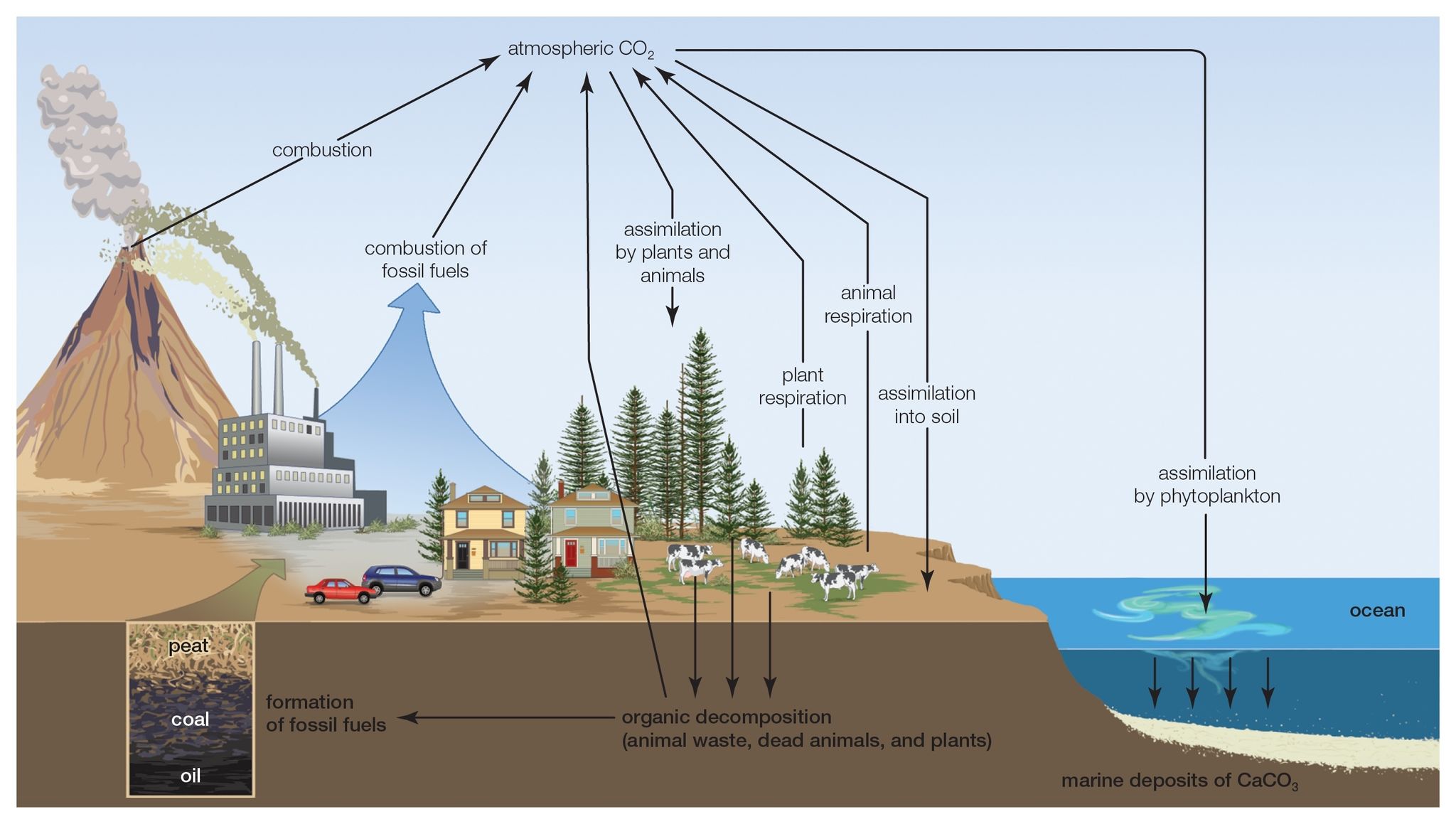
Carbon Cycle
Carbon OUT of the Atmosphere
Photosynthesis - plants convert CO₂ in the air into glucose - biotic > abiotic
Oceans absorb CO₂ from the air
Carbon INTO the Atmosphere
Respiration - all organisms convert glucose into CO₂ in the air - biotic > abiotic
Burning Fossil Fuels adds more CO₂ to the air
Decomposition adds more CO₂ to the air - biotic > abiotic
Deforestation reduces the number of trees that can absorb CO₂
Consumption - animals eating moves carbon through the food web - biotic > biotic
127
Multiple Choice

Analyze the diagram.
What is the role of photosynthetic organisms in the carbon cycle?
Breaking down carbon compounds and releasing methane into the atmosphere
Converting atmospheric carbon dioxide into organic molecules
Storing carbon in inorganic rock formations
Releasing carbon dioxide by feeding on dead organisms
128
Labeling
Label the diagram with the correct process that is occurring in the carbon cycle
Cellular Respiration
Photosynthesis
Combustion
Fossil Fuels
129
Multiple Choice
130
Multiple Choice
Analyze the diagram.
Plants play a key role in the carbon cycle by removing carbon dioxide from the atmosphere through photosynthesis and storing carbon in their tissues.
How would a large-scale reduction in plant populations most likely affect the carbon cycle?
By increasing atmospheric carbon dioxide levels due to decreased photosynthesis
By reducing the amount of carbon stored in fossil fuels underground
By increasing the number of decomposers that remove carbon from the atmosphere
By causing an immediate increase in the amount of carbon fixed by animals
131
Multiple Choice
Analyze the diagram.
Based on the carbon cycle, which component is a direct result of both biotic and abiotic processes in the environment?
Carbon dioxide in the atmosphere
Glucose in plant tissues
Limestone (calcium carbonate) in sediment
Fossil fuel formation underground
132
Greenhouse gases are gases that trap heat in the Earth's atmosphere
Carbon dioxide (CO2 - main one), methane, water vapor
Greenhouse Effect is the warming of the Earth caused by greenhouse gases.
Necessary for life to exist on Earth!

133
Evidence - Carbon Dioxide measurements taken over time compared to the Earth's temperature
As carbon dioxide levels increase, the temperature of the Earth increases.

Excess greenhouse gases cause climate change
Increasing Carbon Dioxide in the Atmosphere Increases Global Temperatures
134
Multiple Choice
Which greenhouse gas is most commonly associated with climate change discussions due to its significant role in trapping heat in Earth’s atmosphere?
135
Multiple Choice
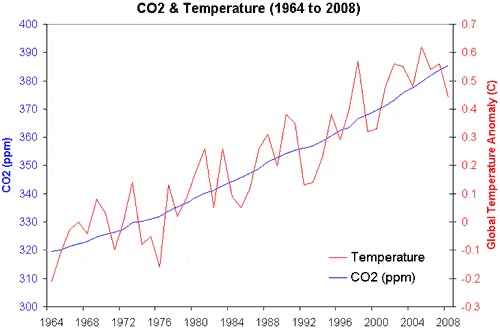
The graph below shows CO2 emissions and temperatures from 1909 to 1949. What conclusion is best supported by the graph?
136
PRODUCERS (autotrophs)
organisms that use energy from the sun to make food (plants)
convert light energy (Sun) into chemical energy (sugar)
has the most energy available and greatest biomass
plants, cyanobacteria, algae
CONSUMERS (heterotrophs)
organisms that get energy by eating other organisms
animals; most bacteria, fungi

137
PRIMARY
CONSUMERS
Herbivores - only eat producers (plants)
cows, rabbits, and deer
TERTIARY
CONSUMERS
eat secondary consumers
Carnivores
Top Predator
Top Consumer
Has least available energy
SECONDARY CONSUMERS
eat primary consumers
Omnivores - eat plants and animals
Carnivores - only eat animals

138
Dropdown
Producer =
Primary Consumer =
Secondary Consumer =
139
Multiple Choice
How do decomposers help other organisms in an ecosystem?
They break down dead organisms and add nutrients back to the soil that plants use.
They use the sunlight to make their own food that other organisms eat for energy.
They help disperse seeds for plant growth.
Decomposers do not help other organisms in an ecosystem.
140
Food Chain
simple linear diagram showing the flow of energy in an ecosystem
Arrow points in the direction energy is moving
Food Web
complex diagram that shows many interweaving food chains


Sun
Producer
Primary
Consumer
Secondary
Consumer
Tertiary
Consumer
Quaternary
Consumer

141
Multiple Choice
In a food web, arrows point from one organism to another. What does the direction of the arrow represent?
It points to the organism that is being eaten.
It points to the organism that receives the energy.
It points from the predator to the prey.
It points from the consumer to the producer.
142
Hotspot
Click the food chain that has the correct arrows.
143

144

Producer
Sun
Primary
Consumer
Quaternary
Consumer
Tertiary
Consumer
Secondary
Consumer
145


A Trophic Level is each step in a food chain or food web
Indicates how many times energy is transferred or how much biomass is available


Level 0
Sun
Main energy source for life
Light Energy
Level 1
Producers
Most available energy and biomass
Level 2
Primary Consumers
Level 3
Secondary Consumers
Level 4
Tertiary Consumers
Least available energy and biomass
146
Labeling
Label the trophic levels.
4
5
2
3
1
0
147

Trophic Level 1 - Bottom
Always producers
Most available energy and biomass
Trophic Level 4/5 - Top
Always predator
Least available energy and biomass
Energy and Biomass
decrease as you move to next level
only 10% is transferred to next level
the rest is used or lost
148
Dropdown
The Apex Predator always found at the
149
Dropdown
The apex predator has the
150
Dropdown

151

← Move decimal one time to the left as you go up a level
.
152

Producers - 50,000J
Primary Consumers - 5,000 J
Secondary Consumers - 500 J
Tertiary Consumers - 50 J
153
Labeling
Label the transfer of energy correctly on the energy pyramid.
5 J
50 J
500 J
5,000 J
50,000 J
154
Questions
155
Multiple Choice
156
Multiple Choice
157
Multiple Choice
Enzymes speed up chemical reactions by _____________.
158
Multiple Choice
159
Multiple Choice
What element do proteins contain that carbohydrates and lipids don't contain?
160
Multiple Choice
161
Multiple Choice
162
Multiple Choice
163
Multiple Choice
164
Hotspot
Click on the temperature that this enzyme is having optimum activity.
165
Multiple Choice
166
Labeling
Match the molecule to its Category
Nucleic Acid
carbohydrate
Lipid
Protein
167
Labeling
Label the enzyme, substrate, and active site.
Substrate
Enzyme
Active Site
168
Multiple Choice
169
Multiple Choice
A molecule of ATP contains three phosphate groups.
Why are these three phosphate groups important to living organisms?
Releasing a phosphate group from ATP releases energy that can be used by a cell
Adding a phosphate group to ATP stores additional energy needed by a cell
Adding a phosphate group to ATP releases energy that can be used by a cell
Storing energy in these three groups is very stable for long term use
170
Hotspot
Click the high-energy bond in the ATP diagram.
171
Labeling
Label the ATP-ADP Cycle
Food Energy
ATP
Cell Work Energy
phosphate
ADP
172
Multiple Choice
Which of the following statements is true about photosynthesis?
Photosynthesis uses oxygen and water to produce glucose and carbon dioxide
Photosynthesis uses carbon dioxide and oxygen to produce glucose and water
Photosynthesis uses glucose and water to produce oxygen and carbon dioxide
Photosynthesis uses water and carbon dioxide to produce glucose and oxygen
173
Multiple Choice
Which statement is true about cellular respiration?
It produces glucose, which provides energy for the cell.
It produces ATP, which stores energy that is used by the cell.
It produces carbon dioxide, which combines with hydrogen to form sugar.
It produces oxygen, which combines with hydrogen to prevent cell poisoning.
174
Multiple Choice
What are the products of photosynthesis?
carbon dioxide and water
oxygen and water
carbon dioxide and sugars
oxygen and glucose
175
Multiple Choice

The diagram shows how a plant interfaces with its environment in various ways. Which series of steps in the diagram best represents photosynthesis?
A + B → C + D + E
C + D + E → A + B
B + C + E → A + D
B + D + E → A + C
176
Match
Match the reactants and products of photosynthesis
reactants
products
energy source
carbon dioxide, water
glucose, oxygen
light
carbon dioxide, water
glucose, oxygen
light
177
Labeling
Label the reactants and products of photosynthesis in the diagram.
water
light energy
carbon dioxide
oxygen
glucose
178
Labeling
Label the stages of photosynthesis in the diagram.
light reactions
calvin cycle
179
Multiple Choice
Which of the following describes how aerobic and anaerobic respiration are different?
Aerobic respiration requires energy, but anaerobic respiration doesn’t
Aerobic respiration requires oxygen, but anaerobic respiration doesn’t
Anaerobic respiration requires oxygen, but aerobic respiration doesn’t
Anaerobic respiration requires energy, but aerobic respiration doesn’t
180
Multiple Choice

Study the diagram.
Which process is represented by the question mark?
photosynthesis
fermentation
aerobic respiration
chemosynthesis
181
Multiple Choice
Compare the energy formed by of anaerobic respiration (fermentation) to that of aerobic respiration?
Aerobic respiration results in less energy.
Aerobic respiration results in more energy.
Each process results in equal amounts of energy.
Each process results in variable amounts of energy.
182
Multiple Choice
Which of the following statements is true about aerobic cellular respiration?
Aerobic cellular respiration uses oxygen and glucose to produce water and carbon dioxide
Aerobic cellular respiration uses carbon dioxide and oxygen to produce glucose and water
Aerobic cellular respiration uses glucose and water to produce oxygen and carbon dioxide
Aerobic cellular respiration uses water and carbon dioxide to produce glucose and oxygen
183
Labeling
Label the stages aerobic respiration in the diagram.
ETC
KREBS
GLYCOLYSIS
184
Labeling
Label the reactants and products of aerobic respiration in the diagram.
glucose
2 ATP
34 ATP
185
Multiple Choice

A student investigates muscle fatigue by measuring the concentration of lactic acid in the blood of an athlete during a 10-minute exercise session. The data is shown in the graph below.
Based on the trends in the graph, which statement best explains the cellular process occurring between minute 2 and minute 5?
he muscle cells had sufficient oxygen and produced large amounts of ATP through the Krebs cycle.
The muscle cells ran out of glucose and began breaking down lipids for energy.
The muscle cells experienced an oxygen deficit and switched to anaerobic respiration to produce ATP.
The muscle cells stopped producing ATP entirely, causing the lactic acid to accumulate as a waste product.
186
Drag and Drop

Tube A: Water + Indicator (Control)
Tube B: Water + Indicator + Snail
Tube C: Water + Indicator + Elodea (Aquatic Plant)
Tube D: Water + Indicator + Snail + Elodea
The student places all tubes under a bright light for 24 hours.
In Tube B (Snail only), the water will turn yellow because the snail performs
187
Multiple Choice

A biologist is studying two species of single-celled organisms, P. aurelia and P. caudatum, in a controlled lab environment.
Experiment 1: Each species is grown in a separate test tube with unlimited food. Both populations grow rapidly and then level off.
Experiment 2: Both species are grown together in the same test tube with a limited food supply. The population of P. aurelia increases, while the population of P. caudatum declines to zero.
Which conclusion is best supported by the results of Experiment 2?
P. caudatum evolved into a new species to avoid competition.
The two species entered a mutualistic relationship to share the food source.
The carrying capacity of the test tube increased, allowing P. aurelia to grow larger than it did in Experiment 1.
P. aurelia outcompeted P. caudatum for the limited resources, leading to the competitive exclusion of P. caudatum.
BIOLOGY: MATTER & ENERGY REVIEW
Essential Questions:
How do the structures of macromolecules determine their functions in living systems?
How do photosynthesis and cellular respiration transform energy for use by organisms?
What roles do enzymes play in regulating energy flow and chemical reactions?
How do energy and matter move through food chains and biogeochemical cycles?
How did early chemical reactions on Earth give rise to the first energy-using cells?
Show answer
Auto Play
Slide 1 / 187
SLIDE
Similar Resources on Wayground

192 questions
Untitled Lesson
Presentation
•
12th Grade
185 questions
Evolution 1-the Origin of life
Presentation
•
9th - 12th Grade
185 questions
Medical Terminology Chapter 10 Nervous System
Presentation
•
11th Grade
182 questions
Anatomical Terms
Presentation
•
9th - 12th Grade
183 questions
WHI Review
Presentation
•
10th - 12th Grade
181 questions
PSYCHOLOGY
Presentation
•
12th Grade
181 questions
List and Trim
Presentation
•
University
Popular Resources on Wayground
10 questions
Safety Day 2026 – Student Review

Quiz
•
9th Grade
21 questions
Continents and Oceans
Quiz
•
6th Grade
20 questions
Parts of Speech
Quiz
•
5th Grade
16 questions
Subject & Predicate
Quiz
•
5th Grade
25 questions
Multiplication Facts
Quiz
•
5th Grade
12 questions
Map Skills
Quiz
•
3rd Grade
22 questions
Continents and Oceans
Quiz
•
5th Grade
15 questions
Rounding Decimals
Quiz
•
5th Grade
Discover more resources for Biology
20 questions
Cell organelles and functions
Quiz
•
10th Grade
20 questions
Cell Transport
Quiz
•
9th - 12th Grade
25 questions
photosynthesis and cellular respiration
Quiz
•
9th Grade
20 questions
Cell Cycle
Quiz
•
9th Grade
8 questions
DNA vs. RNA
Presentation
•
9th - 12th Grade
14 questions
Ecological Succession: Primary and Secondary
Quiz
•
9th Grade
20 questions
Macromolecules
Quiz
•
10th Grade
20 questions
Characteristics of Life
Quiz
•
9th - 10th Grade