

Bond Polarity

Presentation
•
Science
•
9th - 12th Grade
•
Practice Problem
•
Easy
Standards-aligned

Courtney Johnson
Used 1+ times
FREE Resource
14 Slides • 10 Questions
1
2
Multiple Select
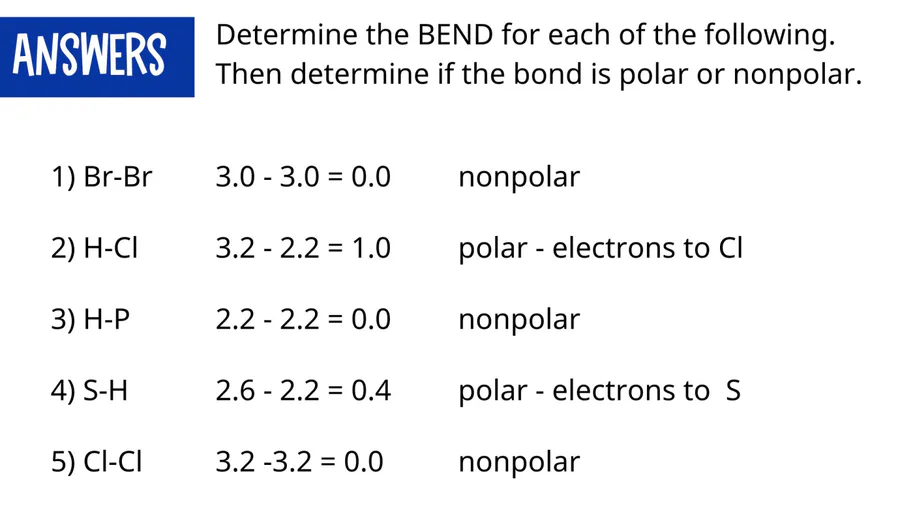
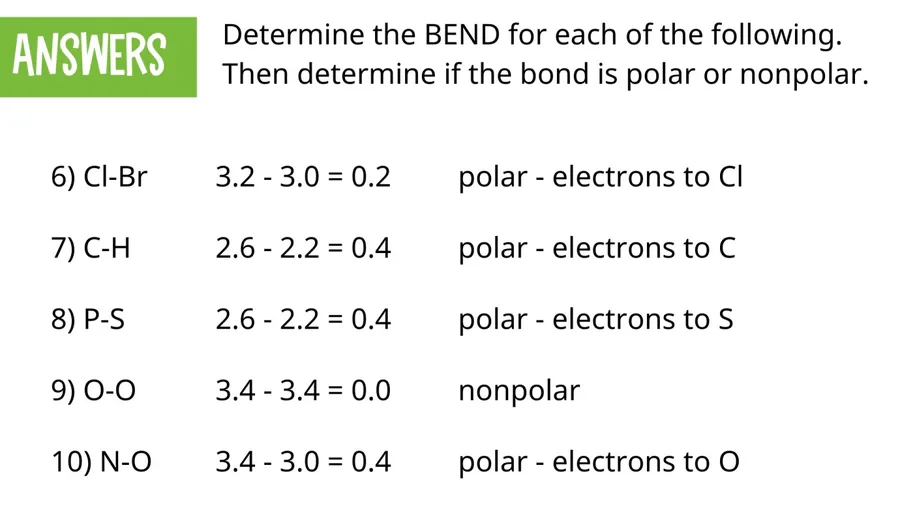
Given the electronegativity values, which of the following bonds is polar with electrons pulled toward sulfur?
S-H
P-S
Cl-Cl
O-O
3
4
Multiple Choice
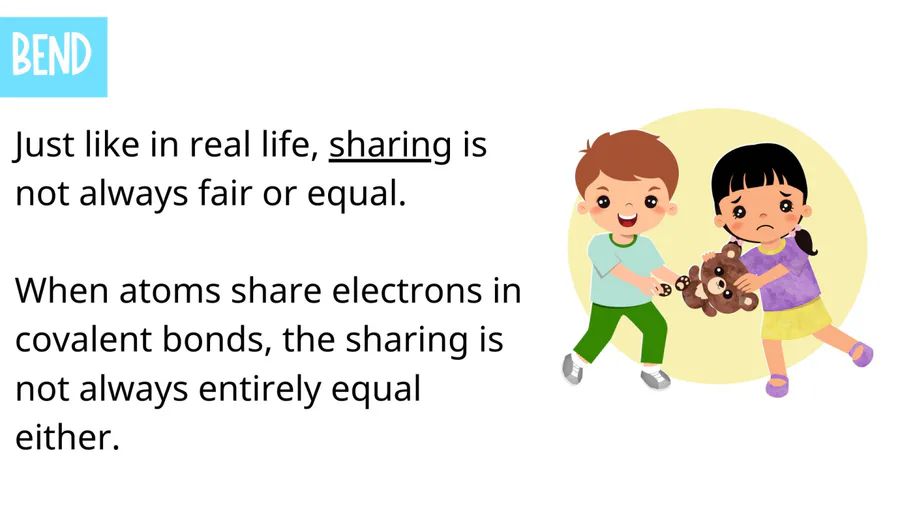
Why do atoms not always share electrons equally in covalent bonds?
Because atoms have different electronegativities
Because atoms are always identical
Because electrons are always shared equally
Because covalent bonds are always polar
5
6
Multiple Choice
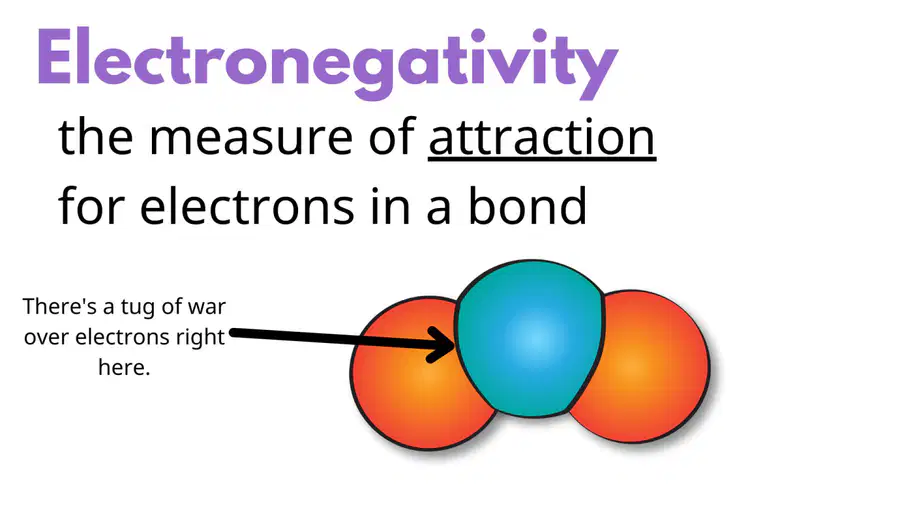
What does the term 'electronegativity' refer to in the context of chemical bonding?
The ability of an atom to lose electrons
The measure of attraction for electrons in a bond
The number of protons in an atom
The energy required to break a bond
7
8
9
Fill in the Blanks
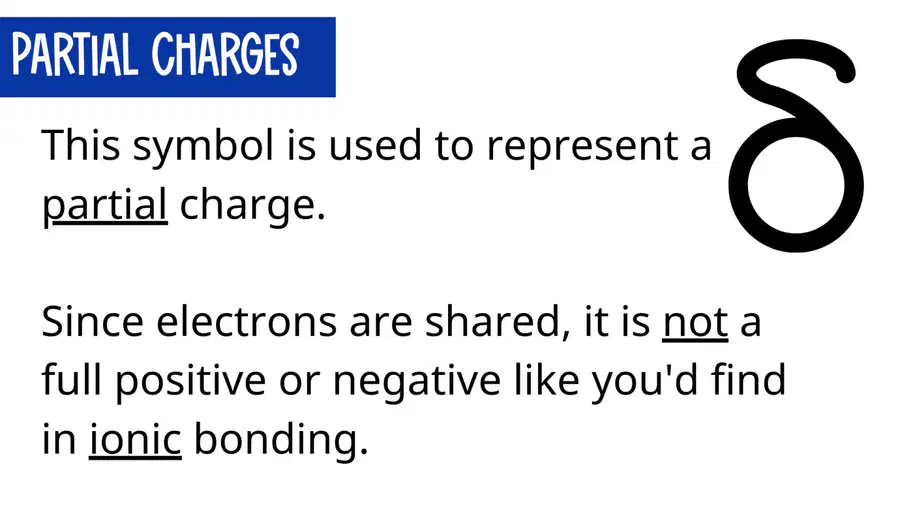
The symbol
Type answer...
10
11
12
Multiple Choice
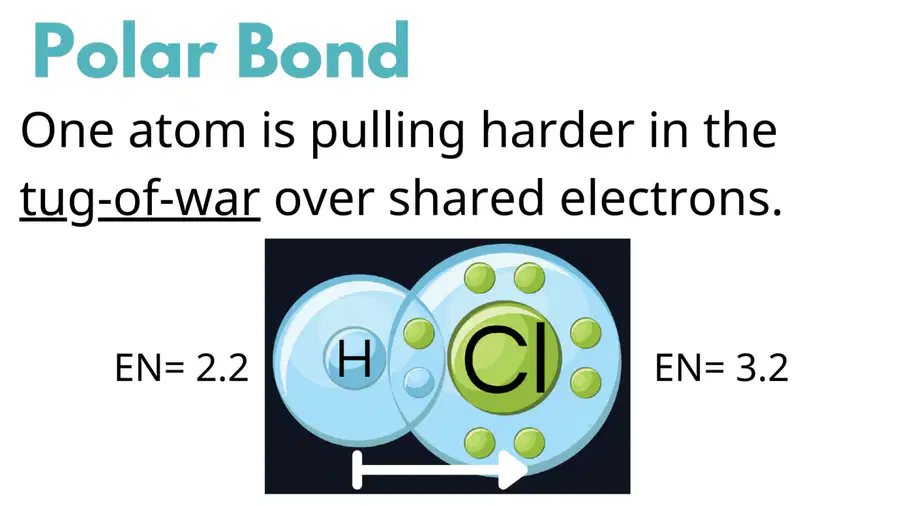
In a polar bond between hydrogen and chlorine, which atom has the higher electronegativity value?
Hydrogen
Chlorine
Both have the same electronegativity
It depends on the environment
13
14
Multiple Select
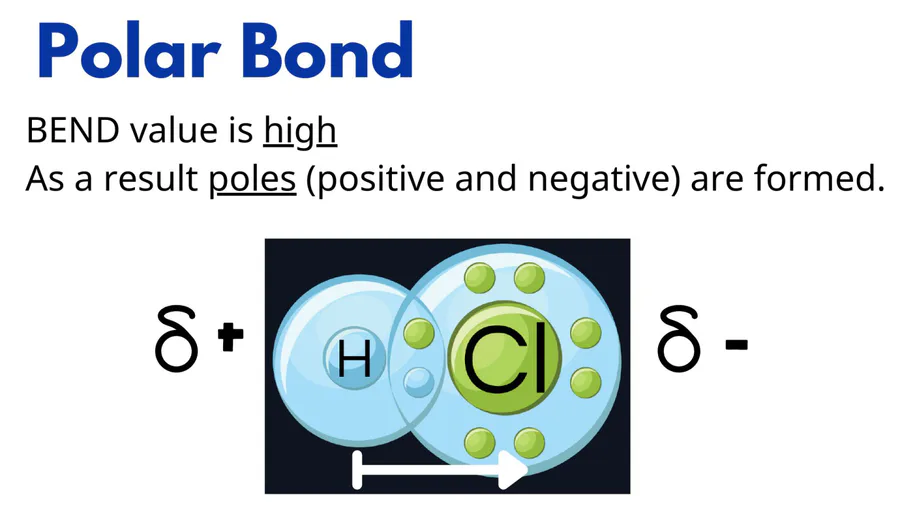
Which of the following statements about polar bonds is/are correct?
Polar bonds involve unequal sharing of electrons between two atoms.
Polar bonds always occur between identical atoms.
Polar bonds result in the formation of partial charges.
Polar bonds never create poles in a molecule.
15
16
Multiple Choice
Which of the following best describes a nonpolar bond?
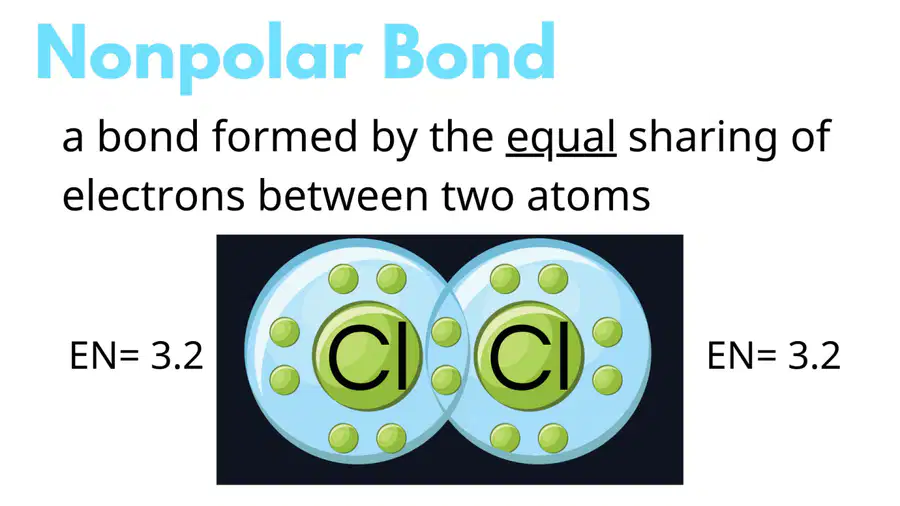
A bond formed by the equal sharing of electrons between two atoms
A bond formed by the unequal sharing of electrons between two atoms
A bond formed by the transfer of electrons from one atom to another
A bond formed by the attraction between ions
17
18
Fill in the Blanks
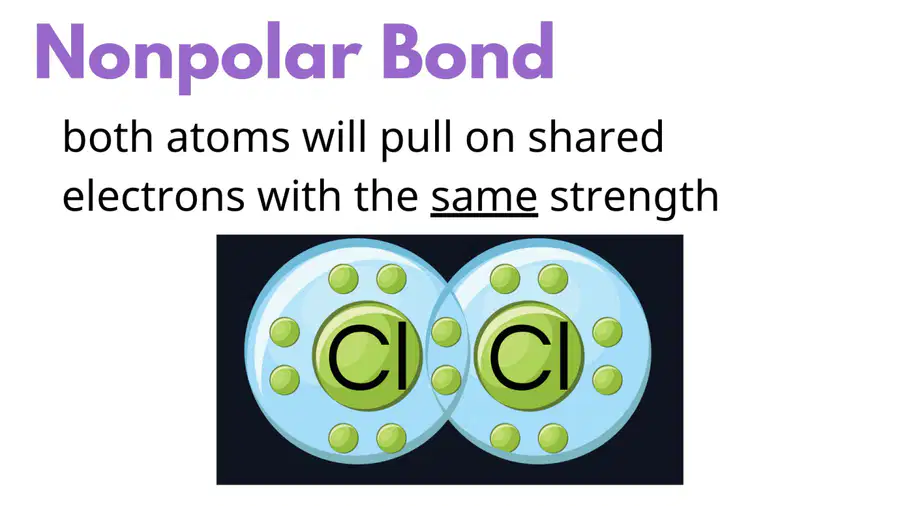
Fill in the blank: In a nonpolar bond, both atoms pull on shared electrons with the
Type answer...
19
20

21
22
23
Multiple Choice
Which of the following pairs of atoms will form a nonpolar bond?
Br-Br
H-Cl
S-H
N-O
24
Multiple Choice
Why is the sharing of electrons in covalent bonds not always equal?
Because atoms have different electronegativities
Because atoms are always identical
Because electrons are always shared equally
Because covalent bonds are always polar
Show answer
Auto Play
Slide 1 / 24
SLIDE
Similar Resources on Wayground

18 questions
Blood Spatter
Presentation
•
9th - 12th Grade
18 questions
Disease District Assessment Review 25/26
Presentation
•
9th - 12th Grade
18 questions
Plants
Presentation
•
6th - 8th Grade
20 questions
The Ozone Layer
Presentation
•
9th - 12th Grade
17 questions
Water Pollution
Presentation
•
9th - 12th Grade
17 questions
Composition and Physiology of Blood
Presentation
•
9th - 12th Grade
21 questions
Naming Ionic Compounds
Presentation
•
9th - 12th Grade
19 questions
Balanced & Unbalanced Forces
Presentation
•
9th - 12th Grade
Popular Resources on Wayground
10 questions
Impact of 9/11 and the War on Terror

Interactive video
•
10th - 12th Grade
21 questions
Continents and Oceans

Quiz
•
6th Grade
5 questions
9/11
Interactive video
•
9th Grade
20 questions
Parts of Speech
Quiz
•
5th Grade
16 questions
Subject & Predicate
Quiz
•
5th Grade
10 questions
Riddles Riddles fun Riddles
Quiz
•
6th - 12th Grade
21 questions
Lab Safety
Quiz
•
10th Grade
6 questions
PRIDE in the Hallways and Bathrooms
Presentation
•
12th Grade
Discover more resources for Science
10 questions
Exploring Chemical and Physical Changes
Interactive video
•
6th - 10th Grade
20 questions
Atomic Structure
Quiz
•
9th Grade
30 questions
Atomic Structure and Periodic Table Review
Quiz
•
10th Grade
21 questions
Cell Organelles
Quiz
•
9th Grade
20 questions
Observation vs. Inference
Quiz
•
7th - 9th Grade
20 questions
ELEMENTS, COMPOUNDS, AND MIXTURES
Quiz
•
9th Grade
10 questions
Physical and Chemical Changes
Quiz
•
5th - 10th Grade
43 questions
1st SW Vocab Biology
Quiz
•
9th Grade