

7.7 Capitalism, Communism, and the Industrial Revolution - WH

Presentation
•
History
•
9th - 12th Grade
•
Practice Problem
•
Easy

Teresa Cobb
Used 3+ times
FREE Resource
37 Slides • 23 Questions
1
2

3
Multiple Choice
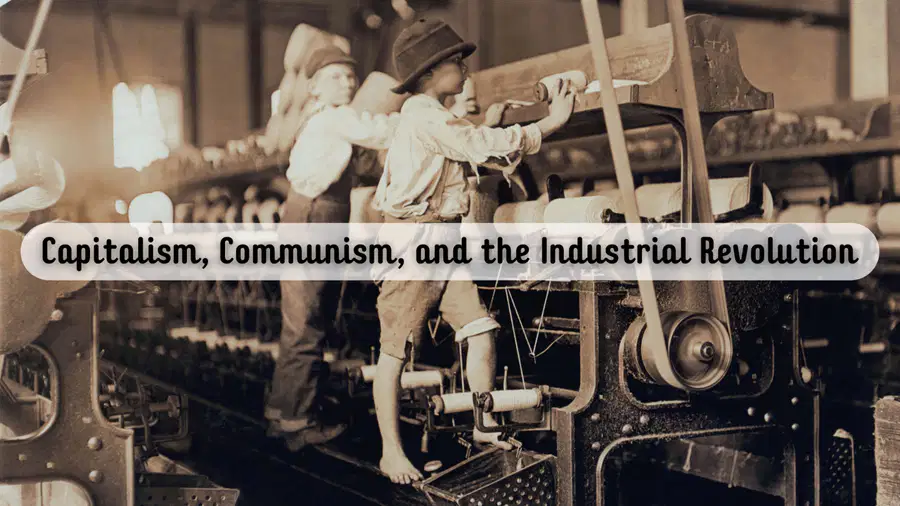
How did the nature of trade and business change with the rise of capitalism after the 1500s?
Trade became more localized and controlled by religious authorities.
Long-distance trade became less risky and more common due to new financial systems.
Wealth continued to be measured mainly in land and tribute.
Governments maintained strict control over all business activities.
4
5
Multiple Choice
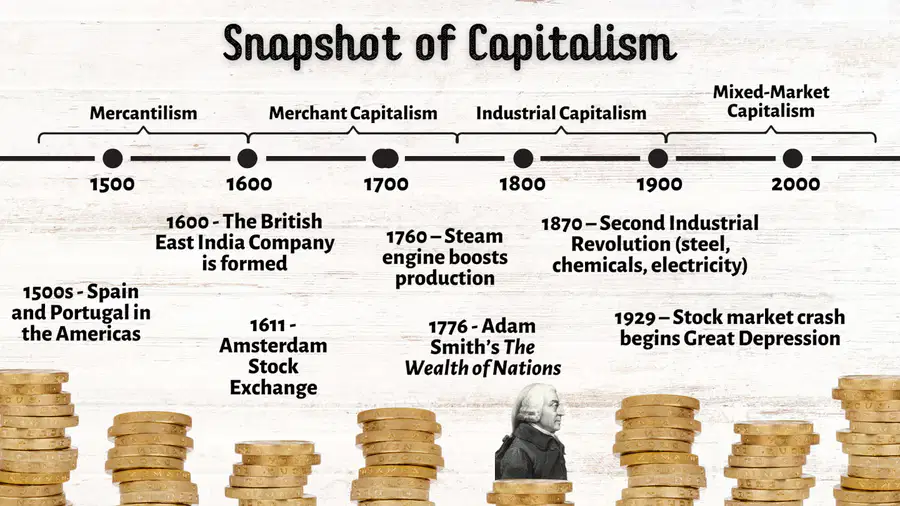
Based on the timeline, what major developments contributed to the evolution of capitalism from the 1500s to the 1900s?
The rise of feudalism and agricultural expansion.
The formation of joint-stock companies, industrial revolutions, and the development of stock exchanges.
The decline of trade and business activities.
The end of all government involvement in economics.
6

7
8
Multiple Choice
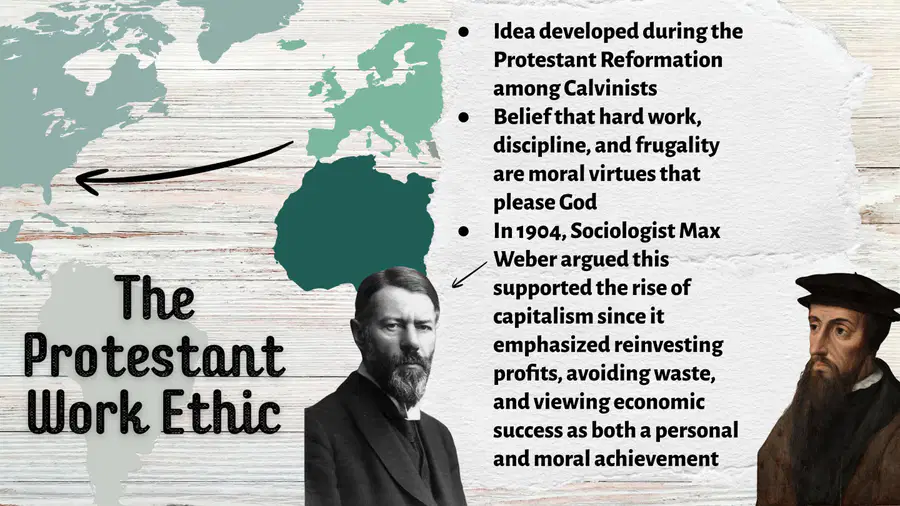
Which of the following statements about the Protestant Work Ethic is correct?
It discouraged reinvesting profits and economic success.
It developed during the Industrial Revolution.
It emphasized hard work, discipline, and frugality as moral virtues.
It was unrelated to the rise of capitalism.
9
10
Multiple Choice
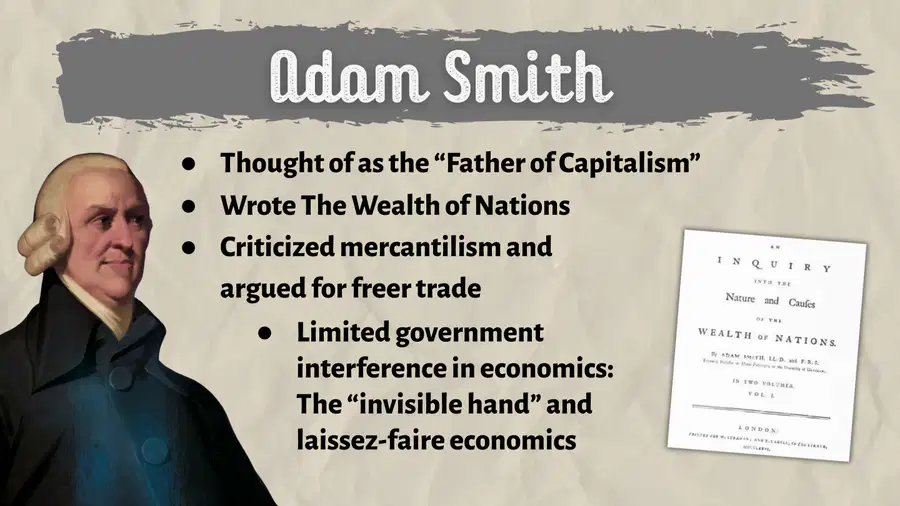
Adam Smith is known for advocating which economic principle?
Government control of trade
The invisible hand and laissez-faire economics
Strict mercantilism
Prohibition of stock exchanges
11
12
Fill in the Blanks
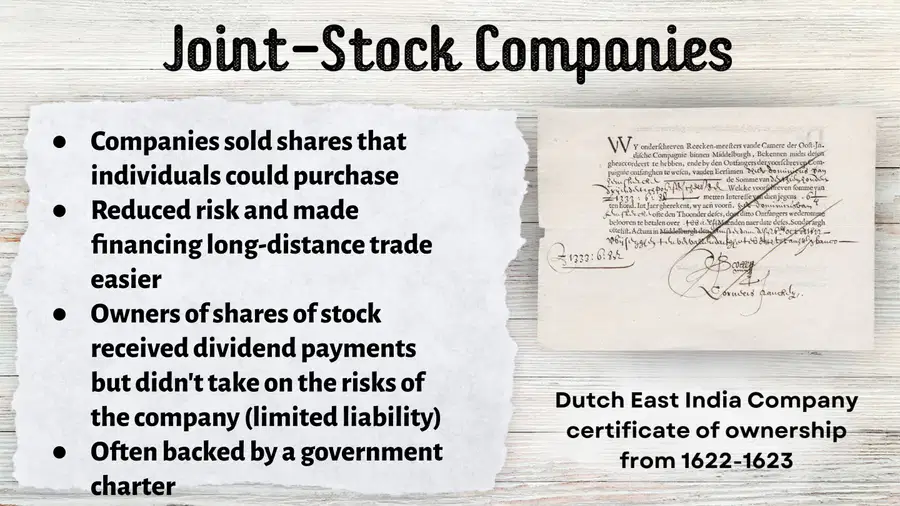
Companies that sold shares to individuals and reduced risk for investors are known as
13
14
Multiple Choice
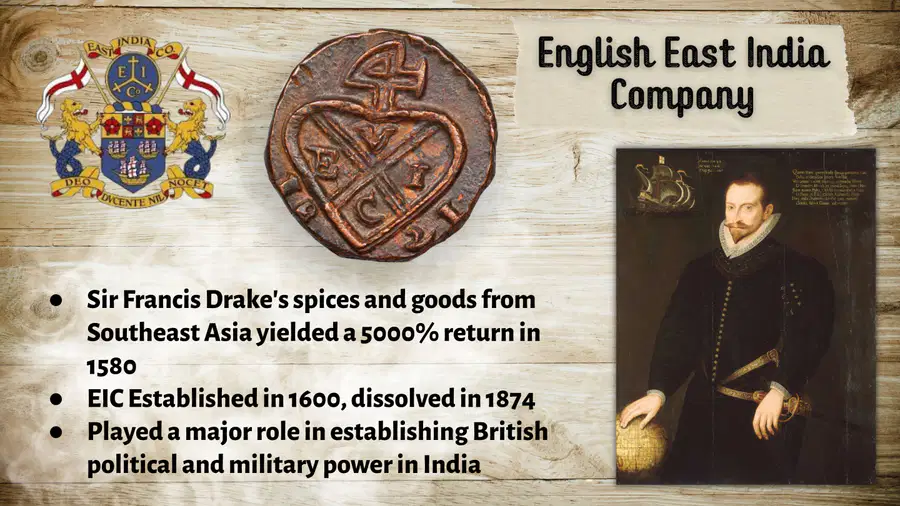
Which of the following statements best explains the significance of the English East India Company in British history?
It was a minor trading company with little influence.
It played a major role in establishing British political and military power in India.
It was dissolved shortly after its creation.
It focused only on trade within Europe.
15

16
17
Multiple Choice
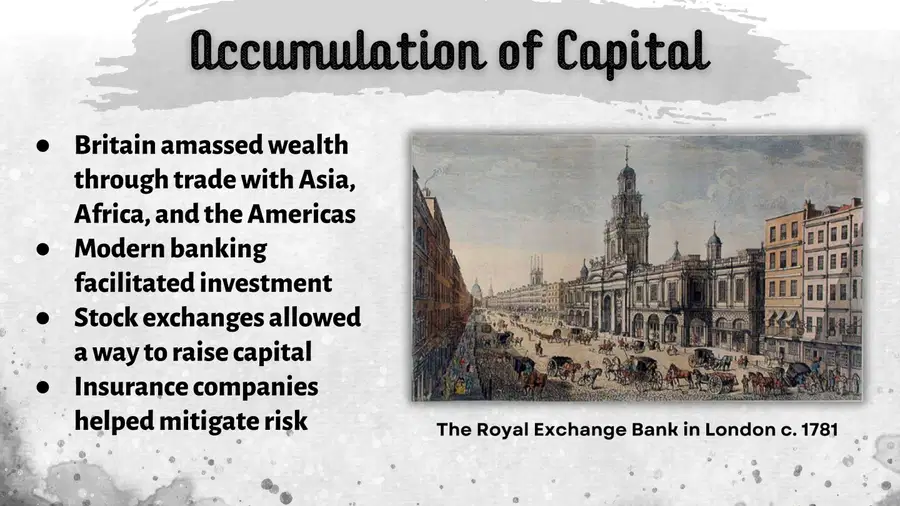
Which of the following factors contributed to the accumulation of capital in Britain during the 18th century?
Decline of trade with Asia and Africa
Modern banking and stock exchanges
Isolation from global markets
Lack of investment opportunities
18
19
Fill in the Blanks
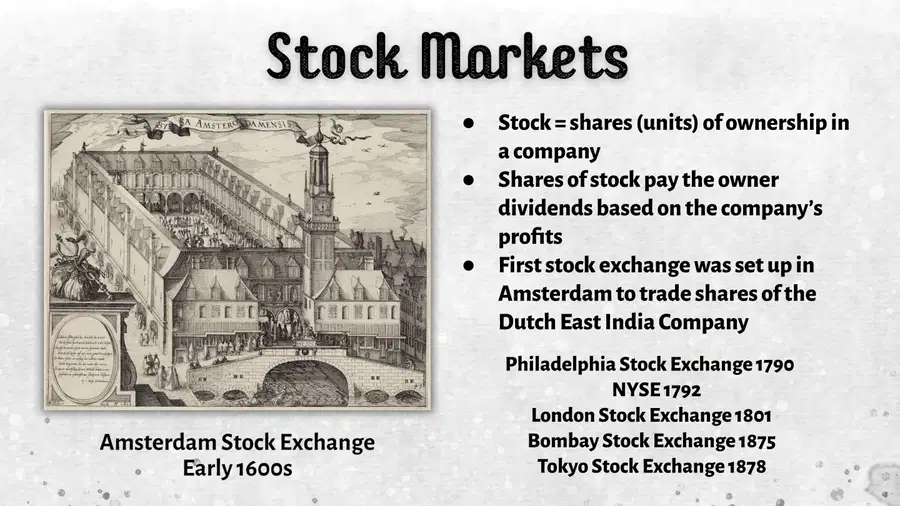
The first stock exchange was set up in
20
21
22
Multiple Choice
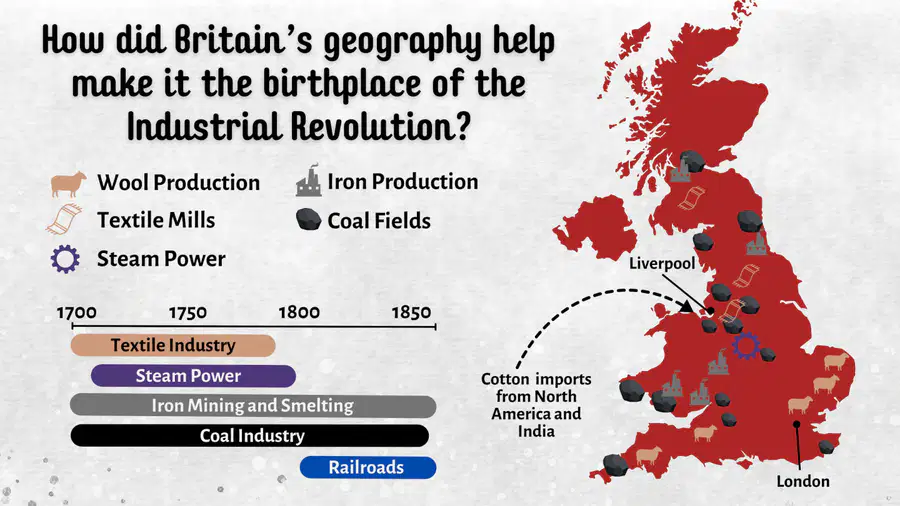
Which of the following geographic features most directly contributed to Britain becoming the birthplace of the Industrial Revolution?
Deserts and arid land
Abundant coal fields and iron production
Tropical rainforests
High mountain ranges
23
24
Multiple Choice
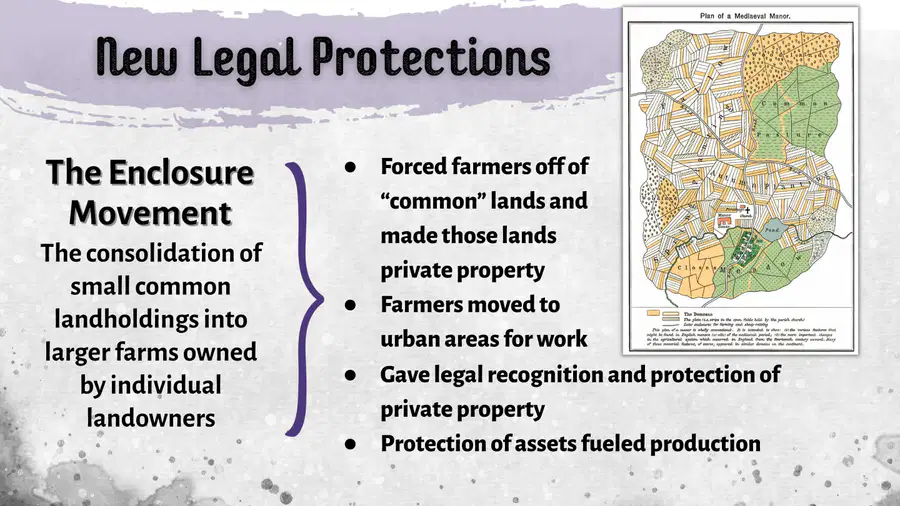
Which of the following was a direct effect of the Enclosure Movement on farmers?
Farmers gained more common land
Farmers moved to urban areas for work
Farmers received government subsidies
Farmers became landless peasants
25

26
27
Multiple Choice
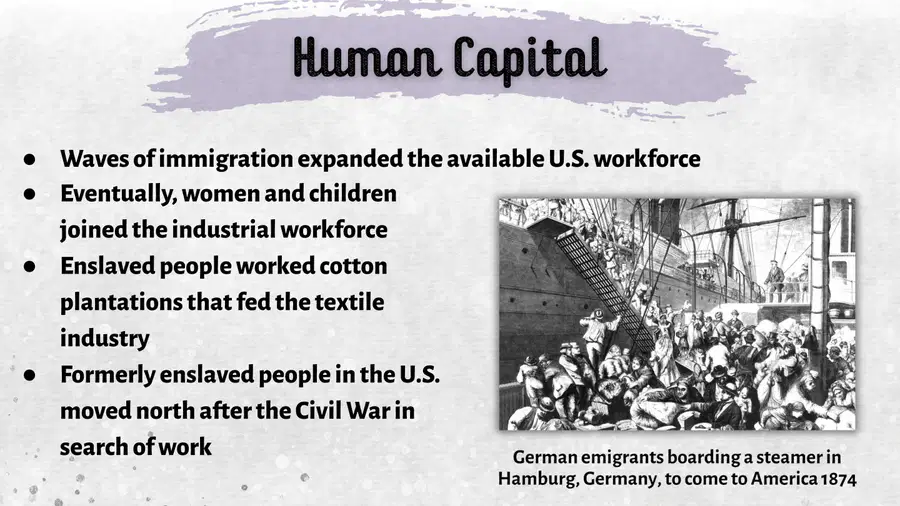
Which groups contributed to the expansion of the U.S. workforce during the Industrial Revolution?
Only men
Immigrants, women, and children
Only enslaved people
Only factory owners
28
29
Fill in the Blanks
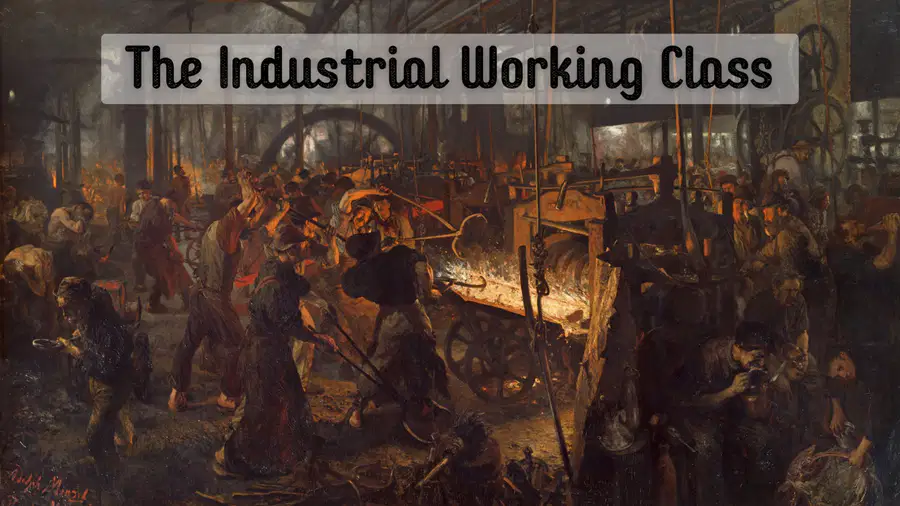
The Industrial Working Class mainly worked in
30
31
32
Multiple Choice
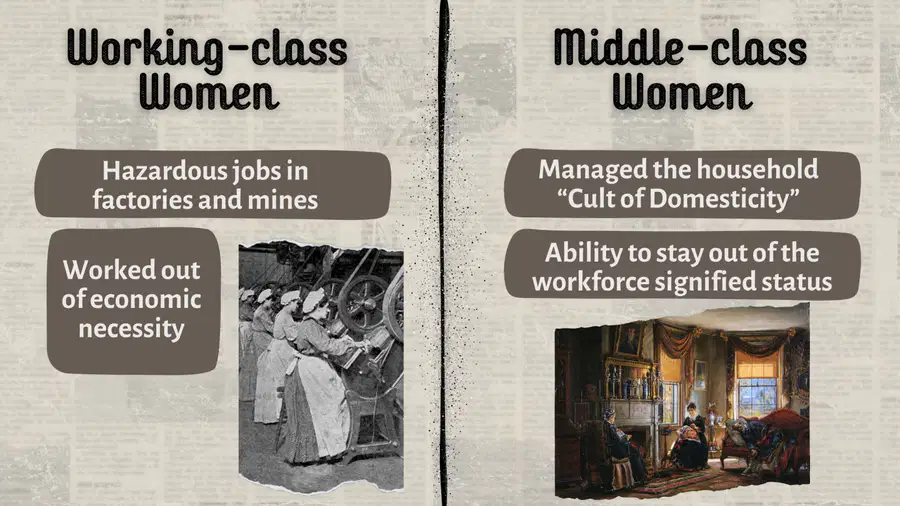
Which of the following best describes the role of middle-class women during the Industrial Revolution?
Worked hazardous jobs in factories
Managed the household and stayed out of the workforce
Worked out of economic necessity
Led political movements
33
34
Multiple Choice
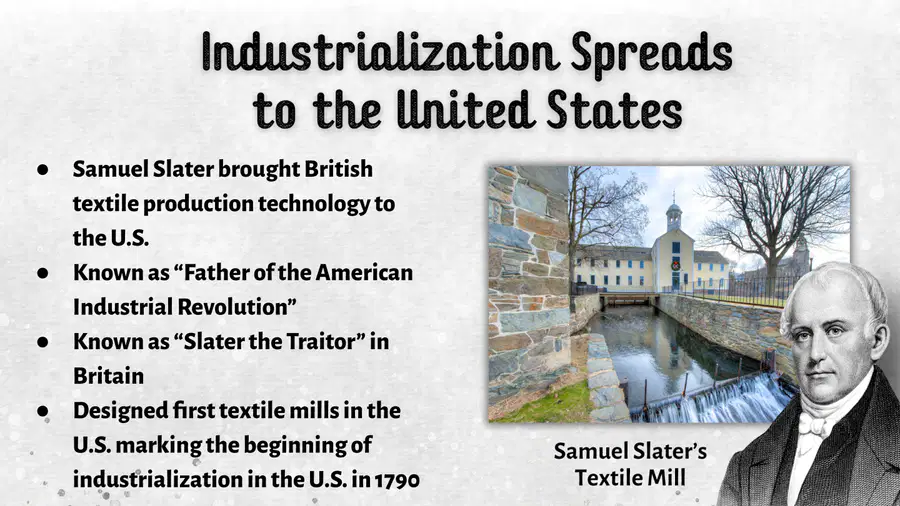
Who is known as the 'Father of the American Industrial Revolution' and what technology did he bring to the United States?
Eli Whitney; Interchangeable parts
Samuel Slater; Textile production technology
Henry Ford; Assembly line
Thomas Edison; Electricity
35
36
Multiple Choice
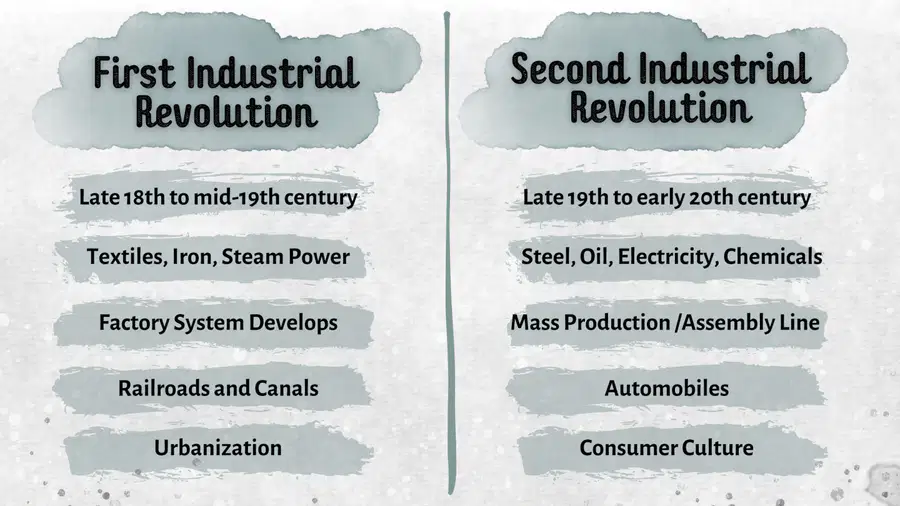
Which of the following were key developments during the First Industrial Revolution?
Textiles, Iron, Steam Power
Steel, Oil, Electricity
Automobiles
Consumer Culture
37
38
Fill in the Blanks
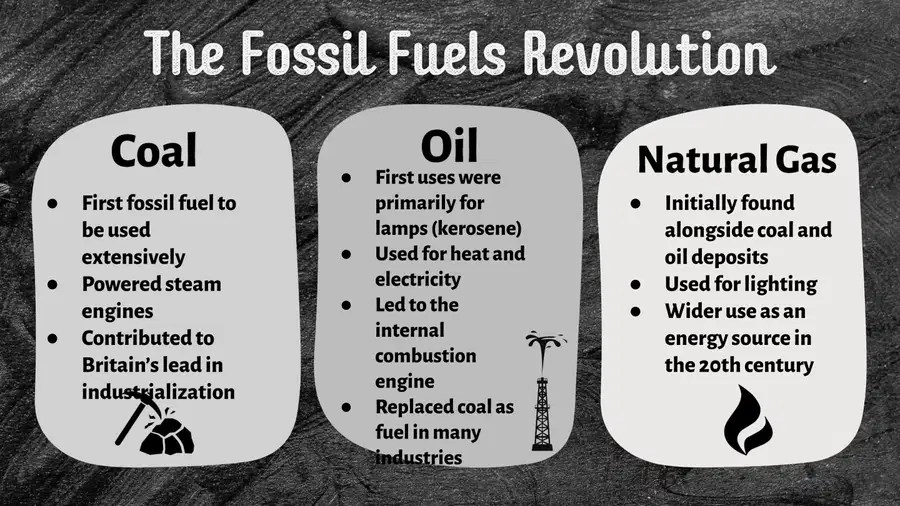
Coal was the first fossil fuel to be used extensively during the Industrial Revolution. It powered
39
40
41
Multiple Choice
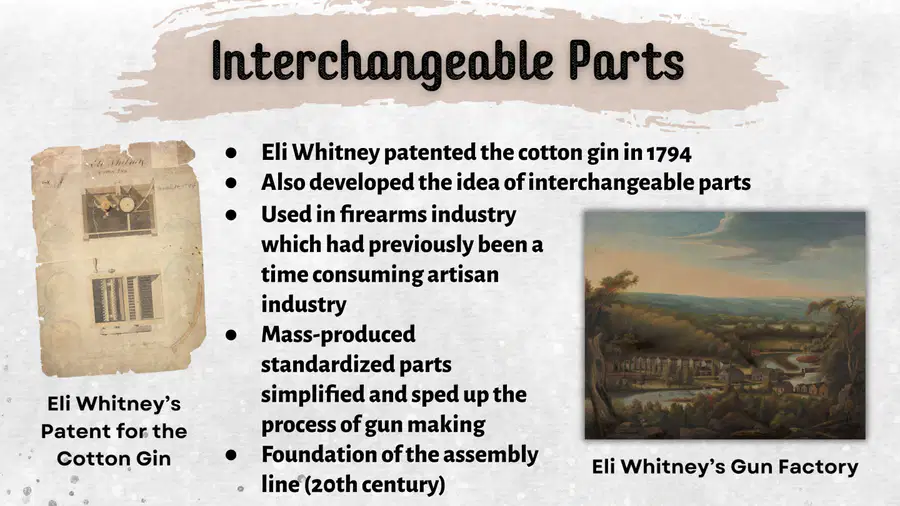
What was the significance of Eli Whitney's idea of interchangeable parts for manufacturing?
It made products more expensive.
It slowed down production.
It simplified and sped up manufacturing.
It eliminated the need for factories.
42
43

44
Drag and Drop
45

46

47

48
49
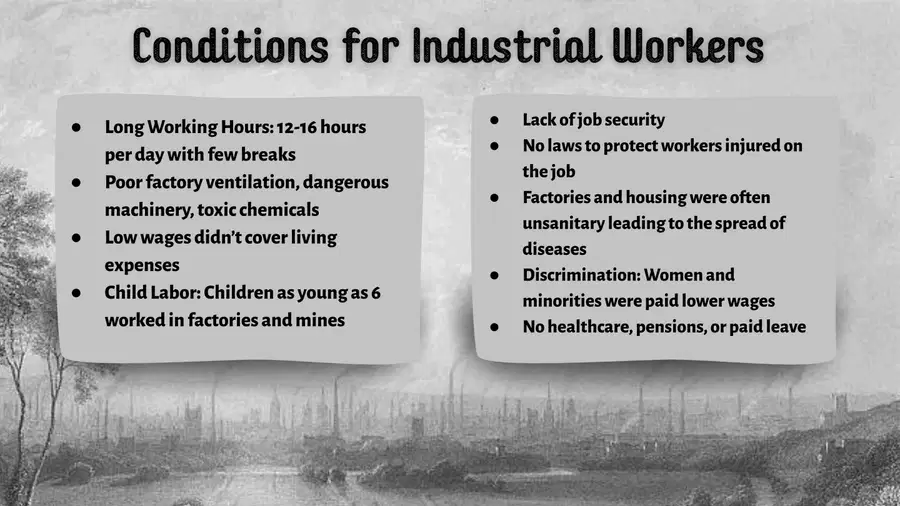
Draw
quickly sketch one example of the working conditions for industrial workers during the Industrial Revolution.
50
51
Multiple Choice
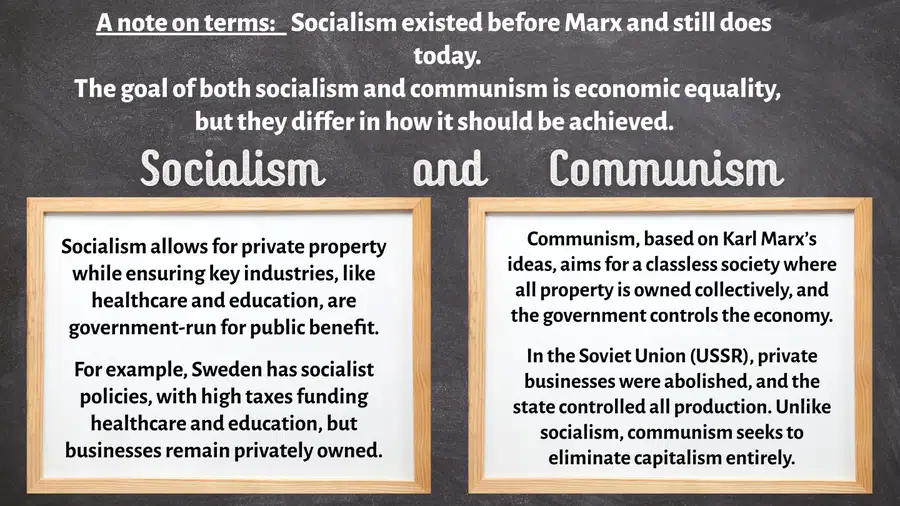
What is the goal of both socialism and communism
To eliminate all forms of government
To create a society based on individual wealth accumulation
Economic equality,
but they differ in how it should be achieved.
To establish a monarchy with absolute power
52
53

54

55
Open Ended
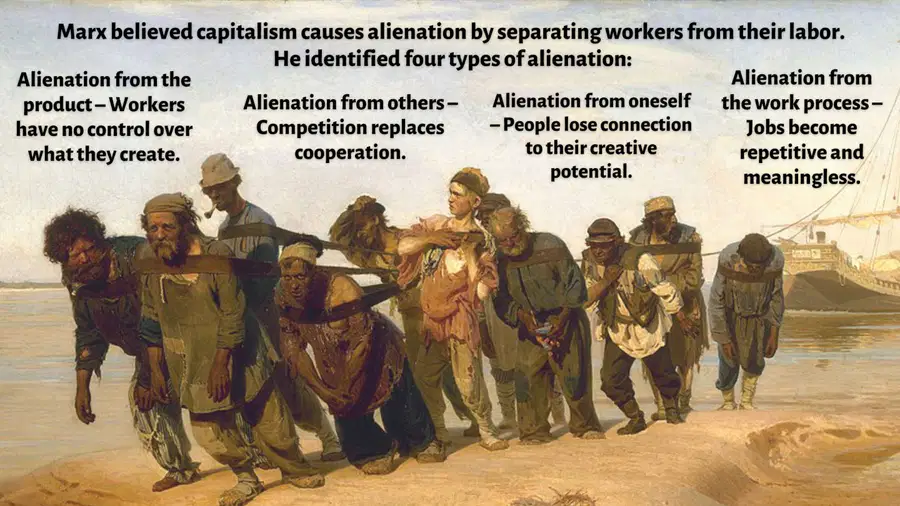
Do you agree or disagree with Marx's statement: "Capitalism treats a person's time like a commodity - a thing that can be bought and sold"
Type agree or disagree! Spelling Counts!!
agree
or
disagree
56
57

58
Dropdown
59

60
Multiple Choice
What prevented children from working in the factories before the age of 10?
The Industrial Safety Act of 1875
The Factory Owners’ Protection Act of 1882
The Child Labor Tax of 1878
The Education Act of 1880
Show answer
Auto Play
Slide 1 / 60
SLIDE
Similar Resources on Wayground

56 questions
10th grade 5th theme - QUESTION TAGS
Presentation
•
9th - 12th Grade
52 questions
Key Features of Quadratic Functions
Presentation
•
9th - 12th Grade
54 questions
Gilded Age
Presentation
•
9th - 12th Grade
53 questions
Biomolecules
Presentation
•
9th - 12th Grade
55 questions
Social Reforms of the Progressive Era
Presentation
•
9th - 12th Grade
54 questions
Supreme Court 2023
Presentation
•
9th - 12th Grade
55 questions
Frases útiles en la clase
Presentation
•
9th - 12th Grade
56 questions
สรุปบทเรียนการแทรกสอดและการเลี้ยวเบนของแสง
Presentation
•
KG
Popular Resources on Wayground
10 questions
Safety Day 2026 – Student Review

Quiz
•
9th Grade
21 questions
Continents and Oceans
Quiz
•
6th Grade
20 questions
Parts of Speech
Quiz
•
5th Grade
16 questions
Subject & Predicate
Quiz
•
5th Grade
25 questions
Multiplication Facts
Quiz
•
5th Grade
12 questions
Map Skills
Quiz
•
3rd Grade
22 questions
Continents and Oceans
Quiz
•
5th Grade
15 questions
Rounding Decimals
Quiz
•
5th Grade
Discover more resources for History
25 questions
The American Revolution
Quiz
•
7th - 10th Grade
15 questions
The Bill of Rights
Quiz
•
8th - 12th Grade
15 questions
Ancient Rome
Quiz
•
7th - 10th Grade
16 questions
Students of Civics Unit 2: The Constitution
Quiz
•
7th - 11th Grade
10 questions
Exploring the 7 Principles of the Constitution

Interactive video
•
6th - 10th Grade
10 questions
Significance of the Declaration of Independence
Interactive video
•
6th - 10th Grade
22 questions
Beginning of WW2 Quiz
Quiz
•
9th Grade
10 questions
Exploring the Age of Exploration
Interactive video
•
6th - 10th Grade