7.10B Volcanoes
Presentation
•
Science
•
6th - 8th Grade
•
Easy
+6
Standards-aligned
Katarina Peralez
Used 4+ times
FREE Resource
10 Slides • 31 Questions
1
2
3
Open Ended
What are some natural processes that could have contributed to the formation of this volcano?
4
5
6
7
Multiple Choice
What is the difference between magma and lava?
Magma is molten material beneath Earth's surface, while lava is magma that has reached the surface.
Magma is solid rock, while lava is liquid.
Magma is found only at plate boundaries, while lava is found everywhere.
Magma is cooler than lava.
8
9
Multiple Choice
How do volcanoes form at plate boundaries?
Magma rises through cracks in the crust at plate boundaries and erupts as lava, forming volcanoes.
Earthquakes cause cracks in the crust and volcanoes form.
Rainwater seeps into the ground and causes eruptions.
Wind erosion creates openings for magma to escape.
10
11
Fill in the Blank
12
Multiple Choice
Explain the process by which a hot spot leads to the formation of a supervolcano.
A supervolcano forms when a plate remains over a stationary hot
spot long enough for a massive magma chamber to accumulate.
13
14
Open Ended
Why do people live near volcanoes despite the dangers?
15
Multiple Select
Which of the following are economic benefits of living near active volcanoes?
Fertile soil for crops
Tourism
Local energy source
Frequent earthquakes
16
17
Multiple Choice
Which of the following best explains how plate tectonics contribute to the formation of volcanoes?
Molten material from Earth's mantle rises through cracks at plate boundaries, forming volcanoes.
Volcanoes form only at the center of tectonic plates, away from boundaries.
Volcanoes are created by the cooling of magma on the ocean floor, far from plate boundaries.
Volcanoes form when plates move apart and create mountains.
18
19
Multiple Select
Which of the following are reasons why people choose to live near volcanoes?
Fertile soil for farming
Access to valuable minerals
Tourism opportunities
Low risk of eruptions
20
Multiple Choice
21
Multiple Choice
22
Multiple Choice
23
Multiple Choice
24
Multiple Choice
25
Multiple Choice
26
Multiple Choice
27
Multiple Choice
28
Multiple Choice
The area around the pacific plate where boundaries form is called...
death ring
fire zone
ring of fire
zone of fire
29
Multiple Choice
30
Multiple Choice
31
Multiple Choice
32
Multiple Choice
33
Multiple Choice
34
Multiple Choice
35
Multiple Choice
36
Multiple Choice
37
Multiple Choice
Fossil records indicate that the continents were once connected. How do fossil records support this claim?
We have been able to transport the same types of fossils from one continent to another.
Fossils of the same organism have been found on continents that are now separated by oceans.
Some continents contain fossils of many different types of organisms.
38
Multiple Choice
One piece of evidence for Plate Tectonics is that--
some continents appear to fit together like a puzzle.
we have video footage of the plates actually moving.
all continents have formed from volcanic eruptions.
the continents are no longer moving.
39
Multiple Choice
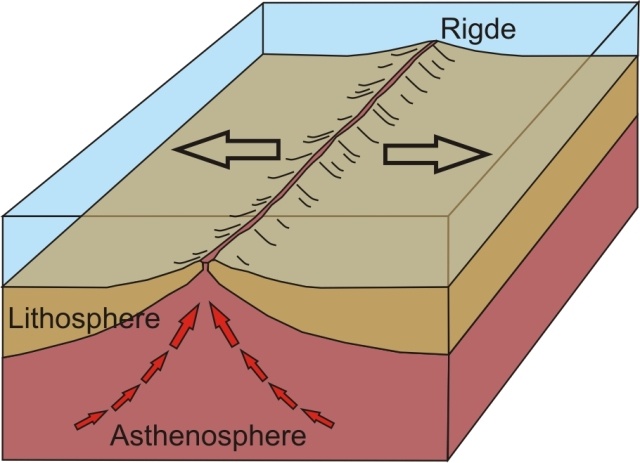
Younger crust being found near mid-ocean ridges supports the idea of Plate Tectonics because---
this indicates that new crust is being formed over time, pushing old crust outward.
this indicates that volcanoes are able to take place in different places on the Earth.
this indicates that new crust is never formed.
this indicates that the continents are stationary.
40
Multiple Choice
At first, a lack of evidence for continental drift prevented many scientists from believing a single supercontinent called _________ existed.
Glossopteris
Pangaea
Gondwanaland
Mesosaurus
41
Multiple Choice
What do the fossils of tropical plants found on islands in the Arctic Ocean indicate about the climate?
The Arctic Ocean has always been cold.
The climate was once warm enough to support tropical plants.
The Arctic Ocean was once a desert.
The climate has never changed in the Arctic region.
Show answer
Auto Play
Slide 1 / 41
SLIDE

Similar Resources on Wayground
36 questions
Levels of Organization - Cells to Biome
Presentation
•
KG
37 questions
Elements of the Earth
Presentation
•
5th - 8th Grade
37 questions
Substances and Mixtures
Presentation
•
6th - 9th Grade
32 questions
2023 TCi Adaptations Lesson 4: Observing Natural Selection...
Presentation
•
6th - 8th Grade
36 questions
Ecological Succession & Human Impact on Ground&Surface water
Presentation
•
7th Grade
35 questions
The Nervous System
Presentation
•
6th - 8th Grade
36 questions
Relationships in the Universe
Presentation
•
6th - 8th Grade
34 questions
Calculating Density
Presentation
•
6th - 8th Grade
Popular Resources on Wayground
10 questions
5.P.1.3 Distance/Time Graphs
Quiz
•
5th Grade
10 questions
Fire Drill
Quiz
•
2nd - 5th Grade
20 questions
Equivalent Fractions
Quiz
•
3rd Grade
22 questions
School Wide Vocab Group 1 Master
Quiz
•
6th - 8th Grade
20 questions
Main Idea and Details
Quiz
•
5th Grade
20 questions
Context Clues
Quiz
•
6th Grade
20 questions
Inferences
Quiz
•
4th Grade
12 questions
What makes Nebraska's government unique?
Quiz
•
4th - 5th Grade
Discover more resources for Science
8 questions
Amoeba Sister Asexual vs Sexual Reproduction
Interactive video
•
8th Grade
19 questions
Introduction to Properties of Waves
Presentation
•
6th - 8th Grade
16 questions
Interactions within Ecosystems
Presentation
•
6th - 8th Grade
10 questions
Exploring the Layers of the Earth
Interactive video
•
6th - 10th Grade
16 questions
Photosynthesis and Cellular Respiration Review
Quiz
•
7th Grade
20 questions
Abiotic & Biotic Factors
Quiz
•
7th Grade
15 questions
Punnett Squares
Quiz
•
6th Grade
10 questions
Exploring the Evolution of Cell Theory
Interactive video
•
7th Grade