

Aquatic Science

Presentation
•
Science
•
9th - 12th Grade
•
Easy
+2
Standards-aligned

Barbara White
Used 1+ times
FREE Resource
25 Slides • 16 Questions
1

Aquatic Science
High School
2
Learning Objectives
Define aquatic science and understand why it is important to study.
Identify the main fields of study within the aquatic sciences.
Describe different aquatic ecosystems and their unique characteristics.
Recognize key figures and technologies that advanced oceanic exploration.


3
Key Vocabulary

Aquatic Science
The study of water environments and the diverse plants, animals, and organisms that inhabit them.

Oceanography
The multi-science study of marine ecosystems, including the geology, chemistry, physics, and biology of the ocean.

Salinity
A measure of the amount of dissolved salts in a body of water, a key factor for classifying ecosystems.

Estuary
A coastal body of brackish water where freshwater from rivers meets and mixes with ocean salt water.

Benthic Zone
The ecological region at the lowest level of a body of water, including its sediment and sub-surface layers.

Chemosynthesis
Producing organic compounds from chemical reactions, often occurring without sunlight in deep ocean environments.
4
What is Aquatic Science?
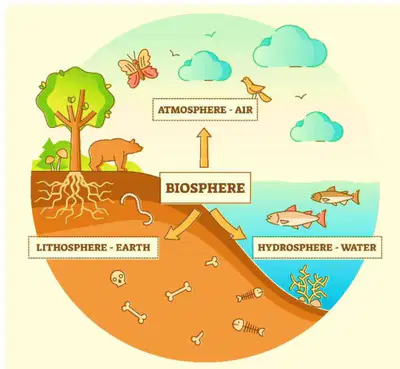
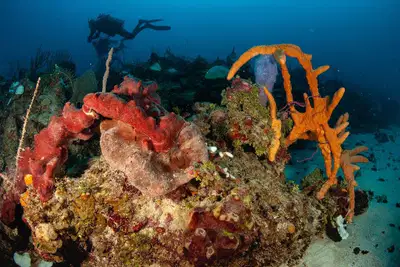
Aquatic science is the study of water environments and all life they support.
It helps us understand our planet, weather systems, and natural resources like food.
The four main areas are physical, geological, chemical, and biological studies of water.
Fields like oceanography, marine biology, and aquaculture are specific branches of aquatic science.
5
Solved Example 1
In 200 B.C., Eratosthenes calculated Earth's circumference as 40,000 km. The actual value is 40,032 km. Calculate the percent error of Eratosthenes's calculation to one decimal place.
Step 1: Analyze and Sketch the Problem
6
Solved Example 1
In 200 B.C., Eratosthenes calculated Earth's circumference as 40,000 km. The actual value is 40,032 km. Calculate the percent error of Eratosthenes's calculation to one decimal place.
Step 2: Solve for the Unknown
7
Solved Example 1
In 200 B.C., Eratosthenes calculated Earth's circumference as 40,000 km. The actual value is 40,032 km. Calculate the percent error of Eratosthenes's calculation to one decimal place.
Step 3: Evaluate the Answer
The calculation shows a very small error, which makes sense as the estimated value was very close to the actual value.
The steps correctly applied the percent error formula. The final answer of 0.1% is a reasonable and small error percentage.
8
Multiple Choice
Which area of aquatic science would primarily study the impact of an oil spill on marine life?
Physical and Geological
Physical and Biological
Chemical and Biological
Geological and Chemical
9
Types of Aquatic Ecosystems

Freshwater Ecosystems
These ecosystems are defined by their very low salt content, or salinity.
They include familiar water bodies like rivers, streams, lakes, and ponds.
Freshwater accounts for only about 2.5% of the total water on Earth.
Transitional Ecosystems
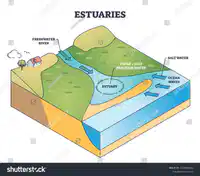
These are unique zones where freshwater from rivers mixes with ocean saltwater.
The resulting mixture is known as brackish water, with moderate salt levels.
A common and important example of this type of ecosystem is an estuary.

Marine Ecosystems
Marine ecosystems are saltwater environments that have a very high salinity.
These vast environments make up about 97% of all the water on Earth.
The largest and most well-known example is the massive open ocean.
10
Solved Example 2
A sample of river water with a total volume of 500 mL contains 0.25 g of dissolved salts. A sample of ocean water, also 500 mL, contains 17.5 g of dissolved salts. Calculate the salinity of both samples in grams per liter (g/L).
Step 1: Analyze and Sketch the Problem
Goal: Calculate the salinity of the river and ocean water samples in g/L.
Knowns (River): Volume = 500 mL, Mass of salt = 0.25 g.
Knowns (Ocean): Volume = 500 mL, Mass of salt = 17.5 g.
Unknowns: Salinity of river water (in g/L), Salinity of ocean water (in g/L).
11
Solved Example 2
A sample of river water with a total volume of 500 mL contains 0.25 g of dissolved salts. A sample of ocean water, also 500 mL, contains 17.5 g of dissolved salts. Calculate the salinity of both samples in grams per liter (g/L).
Step 2: Solve for the Unknown
12
Solved Example 2
A sample of river water with a total volume of 500 mL contains 0.25 g of dissolved salts. A sample of ocean water, also 500 mL, contains 17.5 g of dissolved salts. Calculate the salinity of both samples in grams per liter (g/L).
Step 3: Evaluate the Answer
The calculated salinities of 0.5 g/L for river water and 35 g/L for ocean water are reasonable, as freshwater has very low salinity and ocean water has high salinity.
The units of grams per liter (g/L) are correct for expressing salinity.
13
Multiple Choice
What is the primary abiotic factor used to classify aquatic ecosystems into freshwater, transitional, and marine?
Water Depth
Salinity
Temperature
Sunlight Availability
14
Freshwater: Rivers and Lakes
Streams and Rivers
These bodies of freshwater are characterized by constantly flowing water, which helps to shape the surrounding landscape.
Organisms here have adaptations to anchor themselves and avoid being swept away by the fast-moving current.
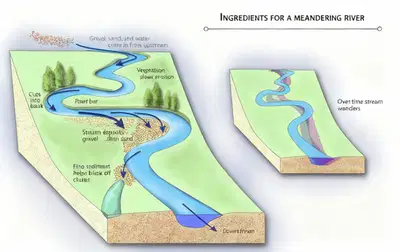
Bends called meanders form from erosion on outer banks and sediment deposits on the slower inner banks.
Lakes and Ponds
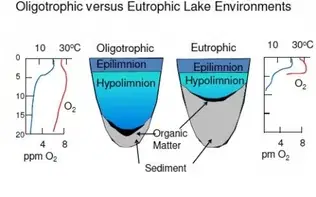
These are large bodies of standing or still freshwater that are not defined by a constant directional flow.
They are often divided into different zones based on how much sunlight is available at various depths.
Lakes low in nutrients are oligotrophic (clear), while high-nutrient lakes are eutrophic (often green with algae).
15
Multiple Choice
What is the name for the curves in a river that are formed by erosion and sediment deposition?
Meanders
Estuaries
Oligotrophs
Benthic zones
16
Freshwater: Lake Zones
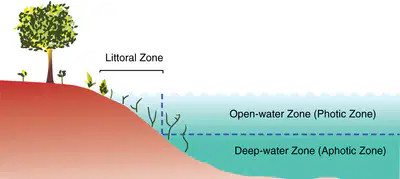
The shallow littoral zone near the shore has rooted plants.
The limnetic zone is the open, sunlit surface water area.
The deep, dark benthic zone is at the bottom of the lake.
17
Multiple Choice
In which zone of a lake would you expect to find the most rooted aquatic plants?
Benthic Zone
Aphotic Zone
Littoral Zone
Limnetic Zone
18
Transitional Ecosystems: Wetlands and Estuaries
Wetlands
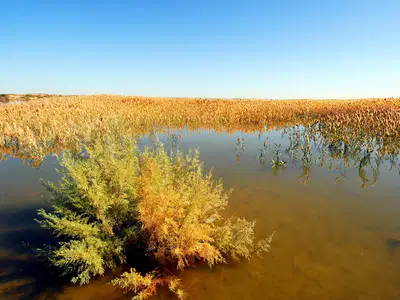
Wetlands are low-lying areas with spongy, water-saturated soil for at least part of the year.
They play a crucial role by helping to filter harmful pollutants from the water.
They also provide a natural buffer against flooding and serve as habitats for many species.
Estuaries
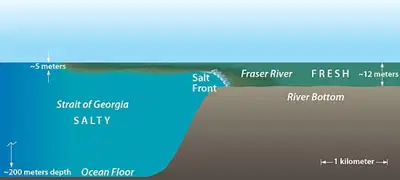
Estuaries are ecosystems where freshwater mixes with saltwater from the ocean, creating brackish water.
These vital areas serve as important nursery grounds for a wide variety of marine life.
They also provide homes for many different species of wildlife, including birds, fish, and mammals.
19
Multiple Choice
What is the primary characteristic of an estuary?
It is where freshwater and saltwater mix.
It is the deepest part of the ocean.
It is a body of fast-flowing freshwater.
It has low nutrient content and clear water.
20
Marine: Ocean Zones by Location
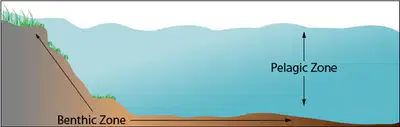
The intertidal zone is where the ocean meets the land.
The pelagic zone is the open ocean water away from the coast.
The benthic zone is the ocean floor, from shallow areas to deep trenches.
21
Multiple Choice
Which ocean zone is exposed to the air at low tide and covered by water at high tide?
Intertidal Zone
Pelagic Zone
Abyssal Zone
Benthic Zone
22
Ocean Zones by Light
Photic Zone
This is the surface layer of the ocean that receives sunlight, allowing photosynthesis to occur.
It extends to about 80 meters deep, and most marine life is concentrated in this zone.
Sunlight enables producers to create food, forming the base of the ocean’s complex food web.
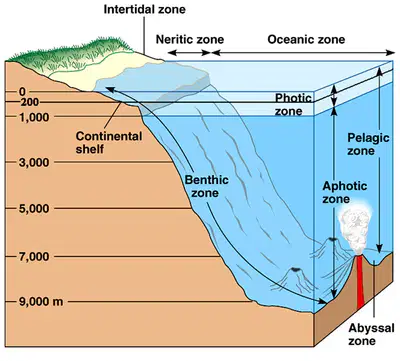
Aphotic Zone
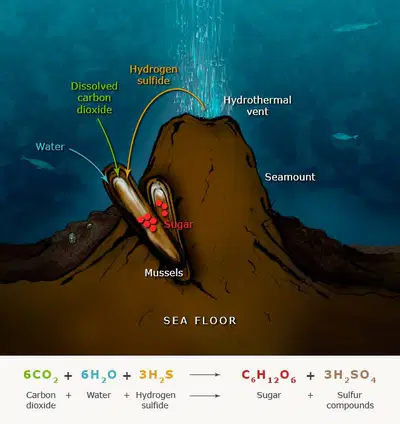
This is the vast, dark part of the ocean where less than 1% of sunlight can penetrate.
Due to the complete absence of sunlight, photosynthesis is not possible in this deep, dark zone.
Organisms here use chemosynthesis or rely on food that drifts down from the photic zone above.
23
Solved Example 4
A research submarine is at a depth of 65 meters. Given that the photic zone ends at 80 meters, what percentage of the photic zone depth has the submarine reached?
Step 1: Analyze and Sketch the Problem
Goal: Find the percentage of the photic zone depth reached by the submarine.
Knowns: Submarine depth = 65 m; Photic zone depth = 80 m.
Unknown: Percentage of depth reached.
Formula: Percentage = (Part / Whole) * 100
24
Solved Example 4
A research submarine is at a depth of 65 meters. Given that the photic zone ends at 80 meters, what percentage of the photic zone depth has the submarine reached?
Step 2: Solve for the Unknown
25
Solved Example 4
A research submarine is at a depth of 65 meters. Given that the photic zone ends at 80 meters, what percentage of the photic zone depth has the submarine reached?
Step 3: Evaluate the Answer
26
Multiple Choice
What process allows organisms to create energy from inorganic chemicals in the deep ocean where there is no sunlight?
Photosynthesis
Chemosynthesis
Decomposition
Respiration
27
A Brief History of Early Marine Exploration
Ancient Egyptians established sea trade, while Phoenicians were expert sailors who circumnavigated Africa.
The Greeks created accurate maps and calculated the Earth’s circumference with remarkable precision.
Aristotle, the 'Father of Marine Biology,' wrote the first texts on marine life.
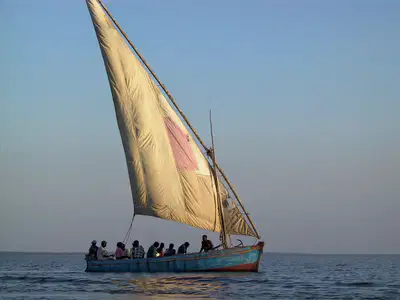
Arab merchants invented the lateen sail, a triangular sail that improved ship navigation.

28
Multiple Choice
Who is considered the 'Father of Marine Biology' for writing the first texts on marine life?
Eratosthenes
Columbus
Herodotus
Aristotle
29
The Age of Exploration and Navigation
The late Middle Ages and Renaissance sparked a great surge in global exploration.
Around 900 A.D., Vikings crossed the Atlantic by navigating with the North Star.
Ferdinand Magellan's expedition was the first to circumnavigate the entire globe.
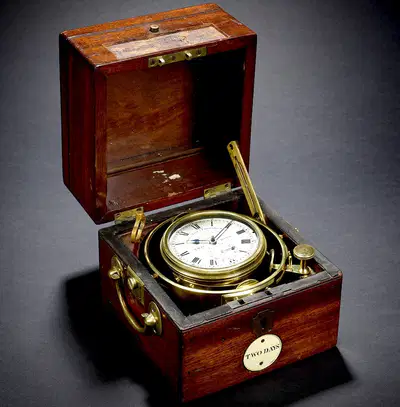
Franklin's Gulf Stream chart and the chronometer were key navigational inventions.

30
Multiple Choice
Which invention was critical for determining longitude at sea and was first used by Captain James Cook?
Chronometer
Gulf Stream Map
North Star Chart
Lateen Sail
31
The Rise of Modern Oceanography (1800s–WWII)
Charles Darwin’s voyage on the HMS Beagle helped establish oceanography as a science.
Lt. Matthew Maury is the 'Father of Modern Oceanography' for his extensive research.
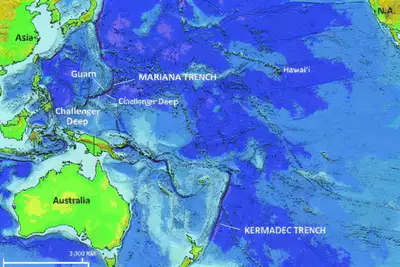
The HMS Challenger expedition discovered the Marianas Trench, the ocean’s deepest part.
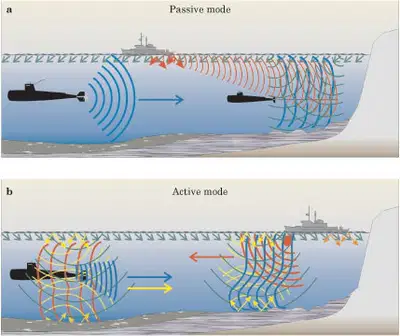
The World Wars spurred the development of SONAR for mapping the ocean floor.
32
Multiple Choice
The HMS Challenger Expedition is famous for which major discovery?
Proving the theory of evolution
Discovering the Marianas Trench
Charting the Gulf Stream
Inventing the chronometer
33
Modern Exploration & Technology
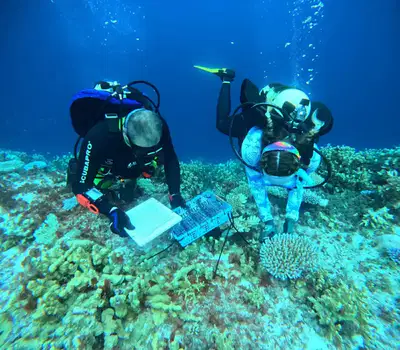
Jacques Cousteau’s invention of SCUBA in 1943 opened up the underwater world.
In 1960, the bathyscaphe Trieste reached the deepest part of the ocean.
The submersible DSV ALVIN discovered 'black smokers' and explored the Titanic wreck.
Modern ROVs and satellites are helping to map the entire ocean floor by 2030.

34
Multiple Choice
Which invention by Jacques Cousteau allowed for widespread direct human exploration of the underwater environment?
Trieste
DSV ALVIN
SCUBA
SONAR
35
Common Misconceptions About Our Oceans
Misconception | Correction |
|---|---|
The deep ocean is lifeless because it lacks sunlight. | Many organisms thrive using chemosynthesis or feeding on descending organic matter. |
All water on Earth is available for human use. | Less than 1% of Earth's total water is easily accessible for consumption. |
Ocean exploration began recently with modern technology. | Ancient civilizations were skilled navigators who explored vast areas thousands of years ago. |
An estuary is just a wide river mouth. | It's a transitional ecosystem where freshwater mixes with saltwater. |
36
Multiple Choice
Based on their primary functions, which two areas of aquatic science would collaborate most closely to study how ocean currents transport pollutants?
Physical and Chemical
Chemical and Biological
Geological and Physical
Biological and Geological
37
Multiple Choice
Compare the limiting factors for life in the limnetic zone of a lake versus the abyssal zone of the ocean.
Both zones are primarily limited by a lack of sunlight.
The limnetic zone is limited by salinity, while the abyssal zone is limited by temperature.
Both zones are primarily limited by a lack of nutrients.
The limnetic zone is limited by nutrients, while the abyssal zone is limited by sunlight and pressure.
38
Multiple Choice
The discovery of chemosynthesis in the deep sea was a major turning point. What previous assumption about life did this discovery challenge?
That all life on Earth ultimately depends on solar energy for survival.
That organisms could not survive the high pressure of the deep ocean.
That the deep ocean floor was a flat, featureless plain.
That single-celled organisms could not exist in extreme environments.
39
Multiple Choice
How did the HMS Challenger expedition significantly advance the field of oceanography?
By systematically collecting biological and geological samples and data from all ocean depths, it established a model for future large-scale, multi-disciplinary research.
By being the first voyage to use SONAR, it revolutionized seafloor mapping for all subsequent expeditions.
By discovering the wreck of the Titanic, it launched the field of underwater archaeology and exploration.
By focusing solely on charting the Marianas Trench, it proved how deep the ocean could be.
40
Summary
Aquatic science is the study of water environments and their importance.
Aquatic ecosystems are classified by salinity into freshwater, transitional, and marine types.
Lakes and oceans are divided into zones based on depth and sunlight.
Ocean exploration has evolved from using stars to modern deep-sea technology.
Technologies like SONAR and SCUBA revolutionized our study of the aquatic world.
Deep-sea life can exist without sunlight through a process called chemosynthesis.
41
Poll
On a scale of 1-4, how confident are you about the concepts covered in today's review?
1
2
3
4
Aquatic Science
High School
Show answer
Auto Play
Slide 1 / 41
SLIDE
Similar Resources on Wayground

36 questions
Unit 3 Lesson 1
Presentation
•
9th Grade - University
38 questions
Succession
Presentation
•
10th - 12th Grade
40 questions
Introduction to Environmental Science Lesson
Presentation
•
9th - 12th Grade
37 questions
Nervous System
Presentation
•
9th - 12th Grade
35 questions
Electron Configuration
Presentation
•
9th - 12th Grade
33 questions
Astronomy
Presentation
•
9th - 12th Grade
36 questions
Protein Synthesis: Transcription and Translation
Presentation
•
9th - 12th Grade
33 questions
Earth Science Review - The Solar System
Presentation
•
9th - 12th Grade
Popular Resources on Wayground
20 questions
Math Review

Quiz
•
3rd Grade
15 questions
Fast food
Quiz
•
7th Grade
20 questions
Context Clues
Quiz
•
6th Grade
20 questions
Inferences
Quiz
•
4th Grade
19 questions
Classifying Quadrilaterals
Quiz
•
3rd Grade
20 questions
Figurative Language Review
Quiz
•
6th Grade
20 questions
Equivalent Fractions
Quiz
•
3rd Grade
10 questions
Identify Fractions, Mixed Numbers & Improper Fractions
Quiz
•
3rd - 4th Grade
Discover more resources for Science
25 questions
Naming Ionic and Covalent Compounds
Quiz
•
9th Grade
40 questions
NCFE Earth and Environmental Science Released Test
Quiz
•
9th - 12th Grade
10 questions
Exploring Weather Influences and Map Reading

Interactive video
•
6th - 10th Grade
20 questions
Human Impact on the Environment Review #2
Quiz
•
9th Grade
20 questions
Balancing Chemical Equations
Quiz
•
9th Grade
61 questions
End of the Year Trivia Fun
Quiz
•
9th Grade
15 questions
Protein synthesis
Quiz
•
9th Grade
30 questions
Environmental Science Final Exam REVIEW
Quiz
•
9th - 12th Grade