

Unit 4 Covalent Standard

Presentation
•
Science
•
10th Grade
•
Medium
Standards-aligned

Lisa Mas
Used 7+ times
FREE Resource
7 Slides • 10 Questions
1
2
Multiple Choice
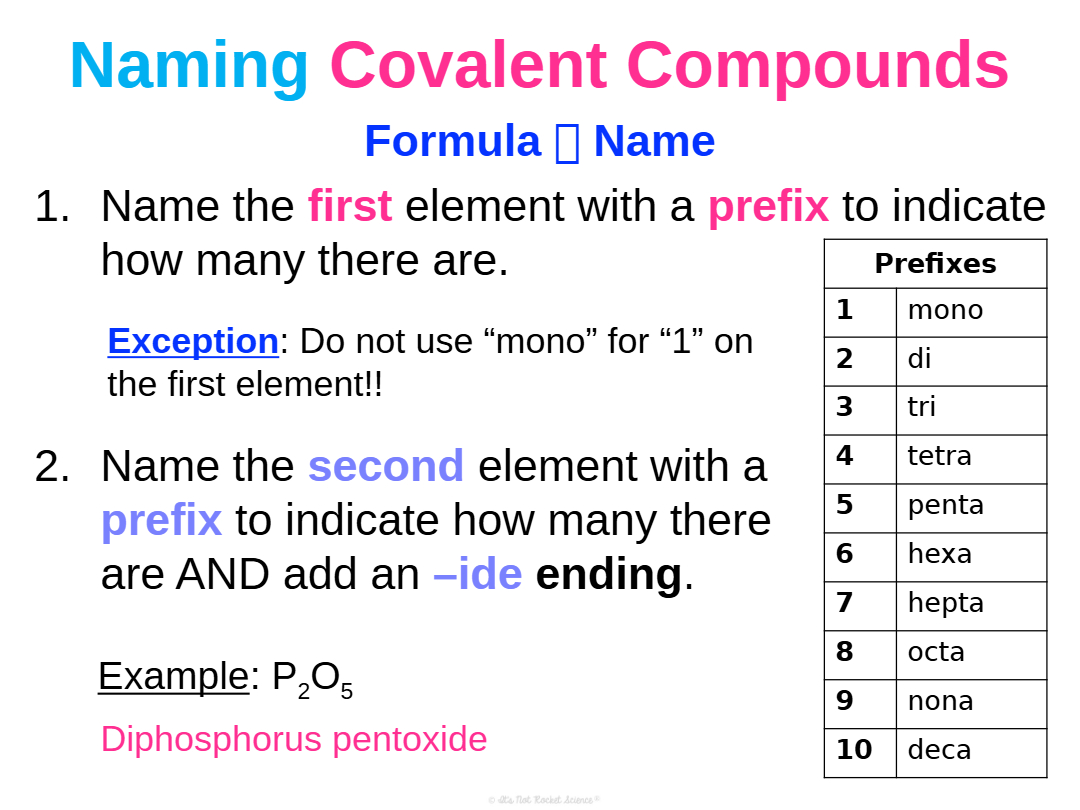
Which of the following rules is an exception when naming covalent compounds?
Do not use 'mono' for '1' on the first element
Always use 'mono' for '1' on the first element
Add an -ide ending to the first element
Never use prefixes
3
Fill in the Blanks
The prefix 'tetra-' is used in naming covalent compounds to indicate the presence of
Type answer...
4
5
Open Ended
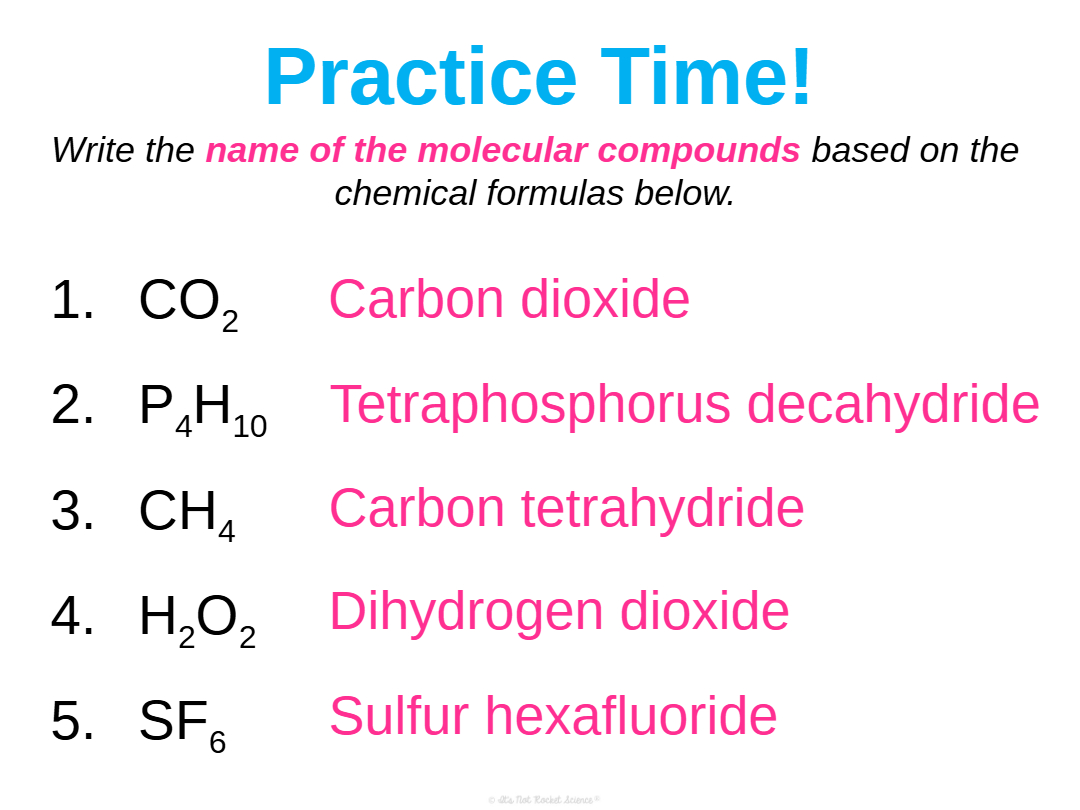
Explain why the name 'dihydrogen dioxide' is used for H2O2 instead of 'hydrogen peroxide' in the context of covalent compound naming rules.
6
Multiple Choice
Select all the correct names for the following formulas: CO2, P4H10, SF6, CH4.
Carbon dioxide, Tetraphosphorus decahydride, Sulfur hexafluoride, Carbon tetrahydride
Carbon monoxide, Tetraphosphorus pentahydride, Sulfur hexafluoride, Carbon tetrahydride
Carbon dioxide, Tetraphosphorus decahydride, Sulfur hexafluoride, Methane
Carbon dioxide, Tetraphosphorus decahydride, Sulfur hexafluoride, Carbon trihydride
7
8
9
Fill in the Blanks
The prefix 'mono' means
Type answer...
10
Open Ended
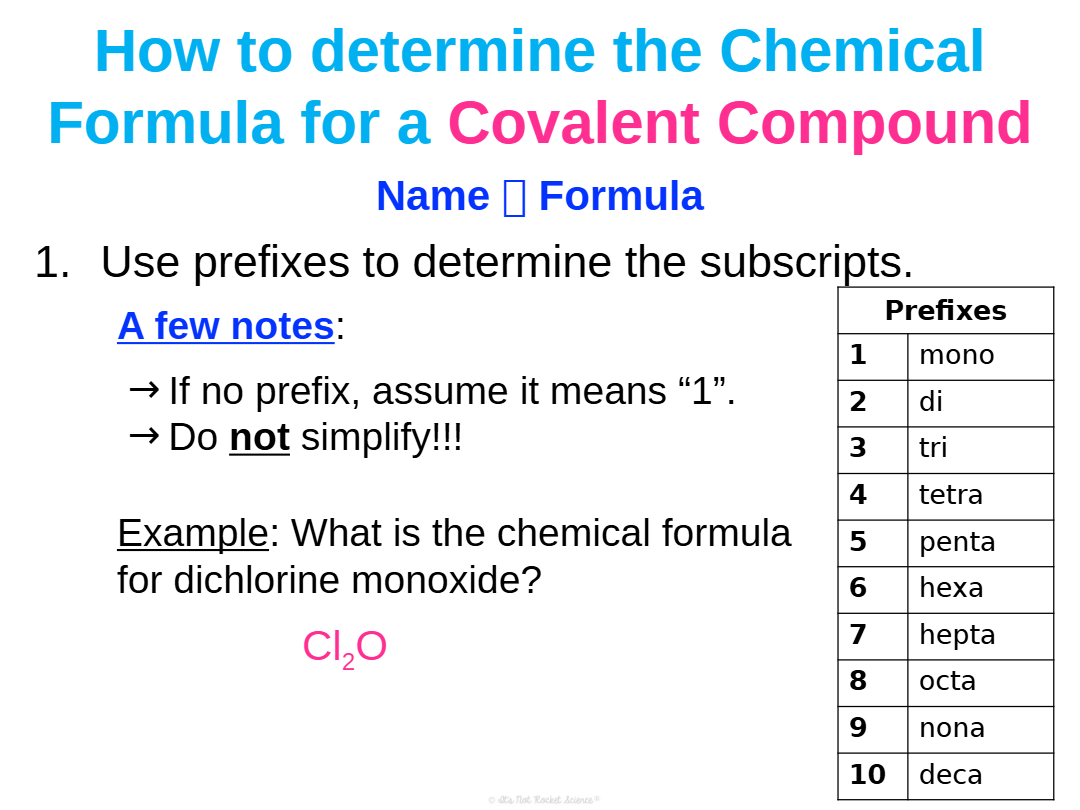
Explain the steps you would take to determine the chemical formula for a covalent compound given its name.
11
Multiple Choice
Which prefix is used to indicate the number 4 in the name of a covalent compound?
tetra
hexa
penta
octa
12
13
Multiple Select
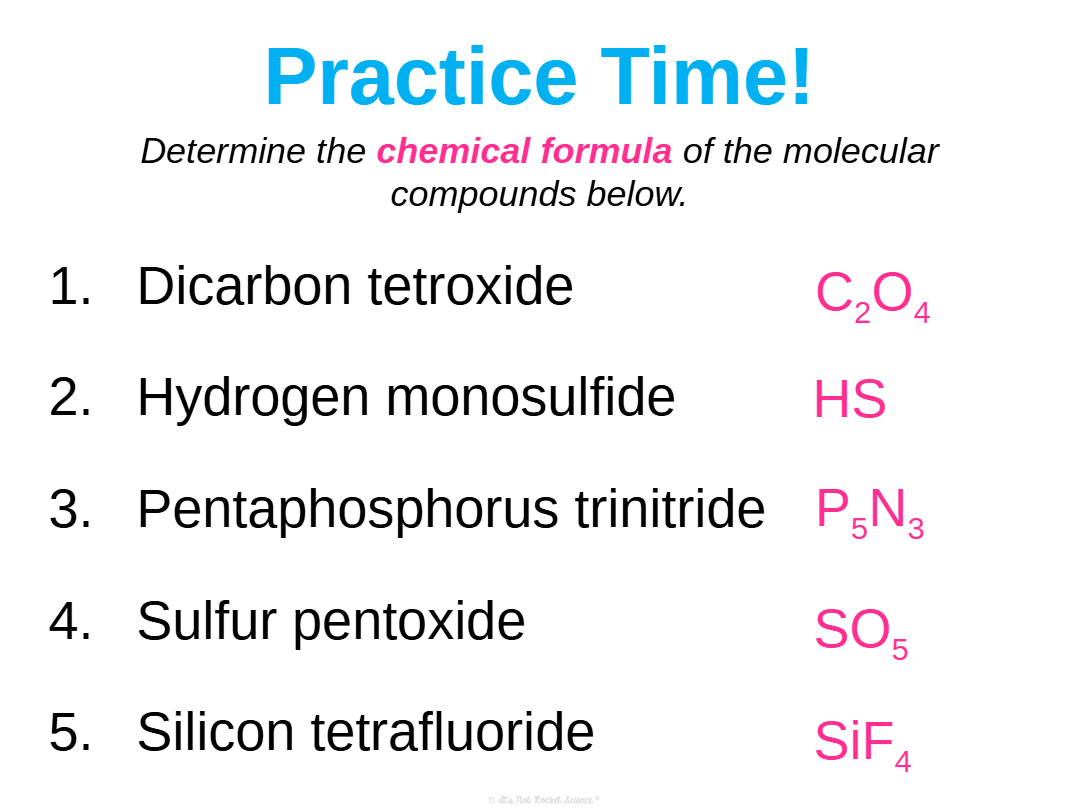
Which of the following are correct chemical formulas for the given names?
C2O4 for dicarbon tetroxide
HS for hydrogen monosulfide
P5N3 for pentaphosphorus trinitride
SO4 for sulfur pentoxide
14
15
16
Fill in the Blanks
Covalent bonds are formed when
Type answer...
17
Open Ended
Summarize the main differences between polar covalent bonds and pure (nonpolar) covalent bonds as explained in the lesson.
Show answer
Auto Play
Slide 1 / 17
SLIDE
Similar Resources on Wayground

16 questions
stoichiometry
Presentation
•
10th Grade
17 questions
Proteins and Nucleic acids
Presentation
•
9th Grade
17 questions
Flame Lab Primer
Presentation
•
10th Grade
12 questions
Isotopes and Ions
Presentation
•
8th - 11th Grade
11 questions
Ch. 4.1 Studying Ecology
Presentation
•
9th Grade
11 questions
Crude Oil and Hydrocarbons
Presentation
•
10th Grade
11 questions
Ch. 12.3 - Limiting Reagent and Percent Yield
Presentation
•
9th - 11th Grade
15 questions
Exothermic and endothermic reactions
Presentation
•
9th Grade
Popular Resources on Wayground
10 questions
How much do you know about our Portrait of an Eagle?

Quiz
•
10th Grade
10 questions
Fast Food Slogans
Quiz
•
6th - 8th Grade
21 questions
Continents and Oceans
Quiz
•
6th Grade
20 questions
Parts of Speech
Quiz
•
5th Grade
16 questions
Subject & Predicate
Quiz
•
5th Grade
25 questions
Multiplication Facts
Quiz
•
5th Grade
12 questions
Map Skills
Quiz
•
3rd Grade
22 questions
Continents and Oceans
Quiz
•
5th Grade
Discover more resources for Science
10 questions
Exploring Chemical and Physical Changes

Interactive video
•
6th - 10th Grade
10 questions
Decoding the Periodic Table of Elements
Interactive video
•
6th - 10th Grade
10 questions
Exploring the Periodic Table
Interactive video
•
6th - 10th Grade
14 questions
Physical and Chemical Changes
Quiz
•
10th Grade
22 questions
Periodic Table Review
Quiz
•
9th - 12th Grade
10 questions
Exploring the States of Matter
Interactive video
•
6th - 10th Grade
10 questions
Exploring Physical and Chemical Changes
Interactive video
•
6th - 10th Grade
21 questions
Macromolecules and Enzymes Study Guide
Quiz
•
9th - 10th Grade