

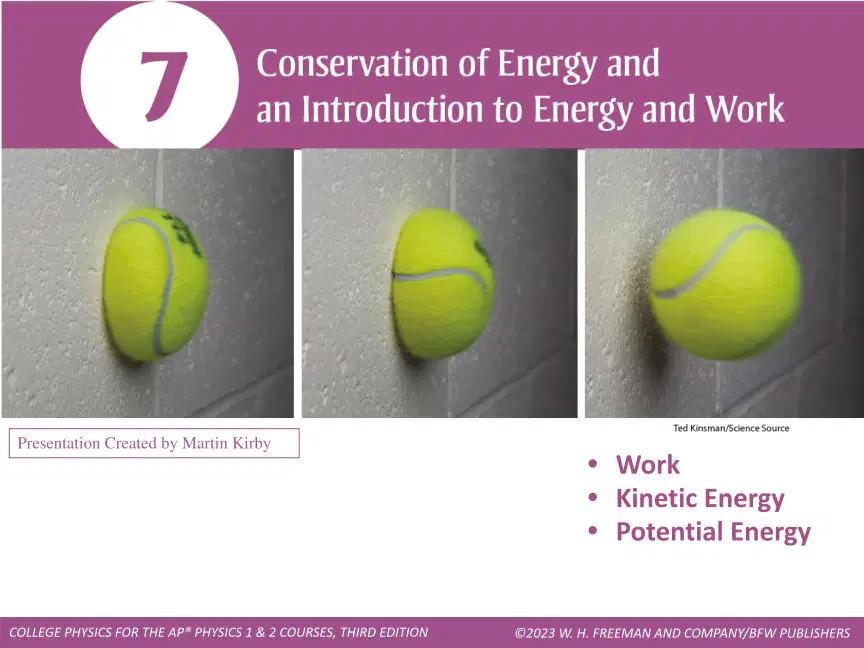
Conservation of Energy and Intro to Energy and Work

Presentation
•
Physics
•
9th - 12th Grade
•
Hard
+6
Standards-aligned

Brandon Griffin
FREE Resource
77 Slides • 28 Questions
1
2
3
Multiple Choice
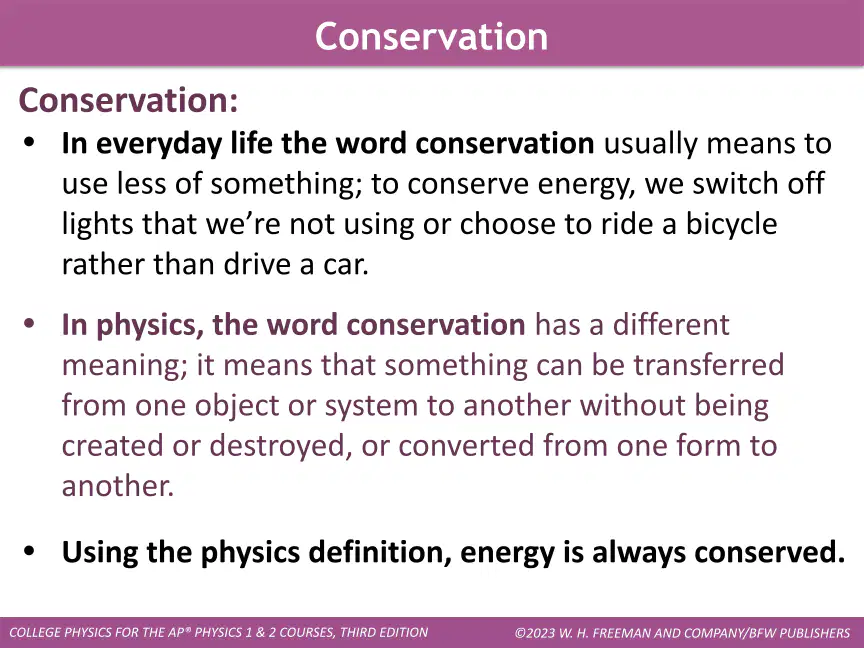
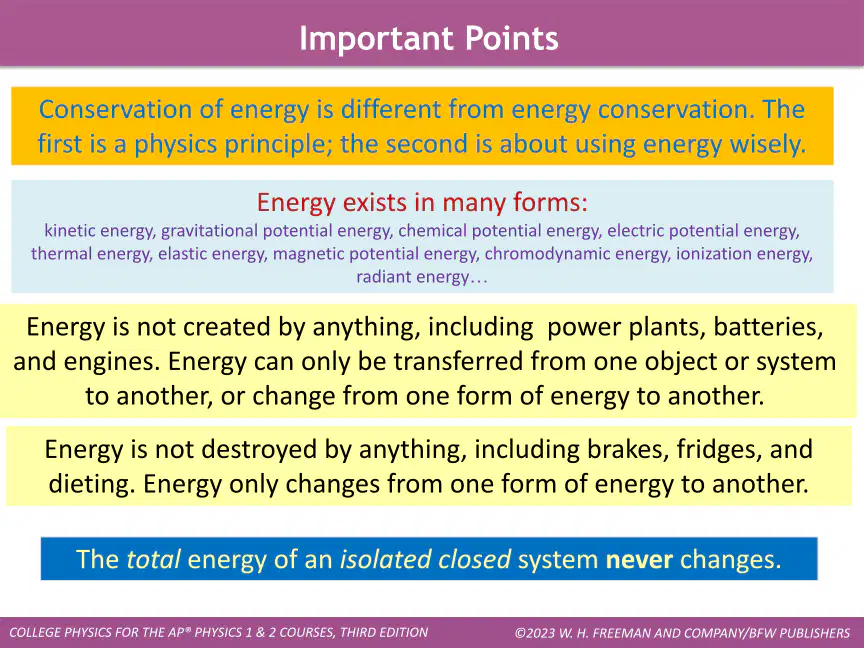
In physics, what does the term 'conservation' mean?
Using less of something
Transferring something without creating or destroying it
Saving money
Increasing energy
4
Open Ended
Why is the conservation of energy important in our daily lives and in physics?
5
6
Multiple Choice
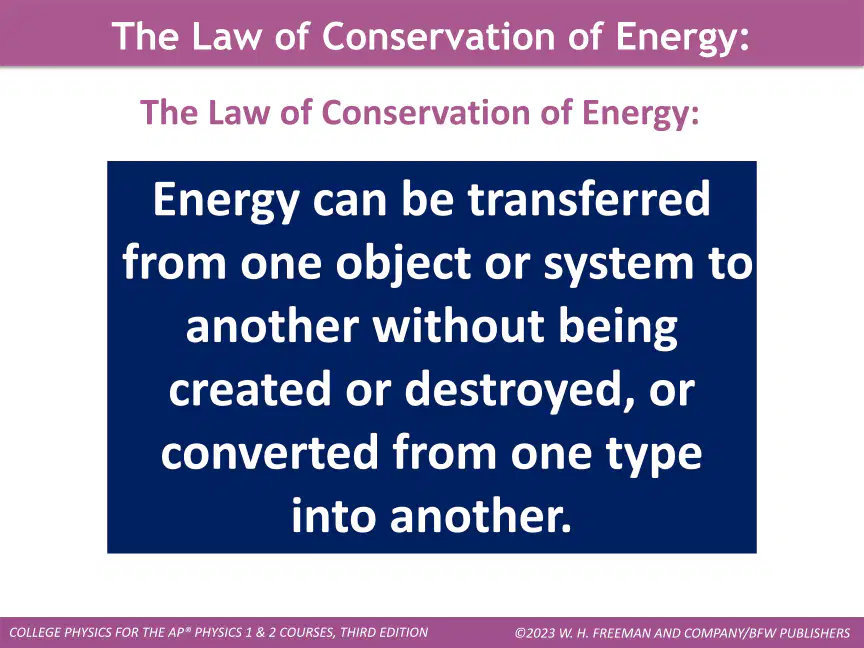
According to the law of conservation of energy, what happens to energy when it is transferred from one object or system to another?
It is created.
It is destroyed.
It is converted from one type to another or transferred without being created or destroyed.
It disappears.
7
8
Multiple Select
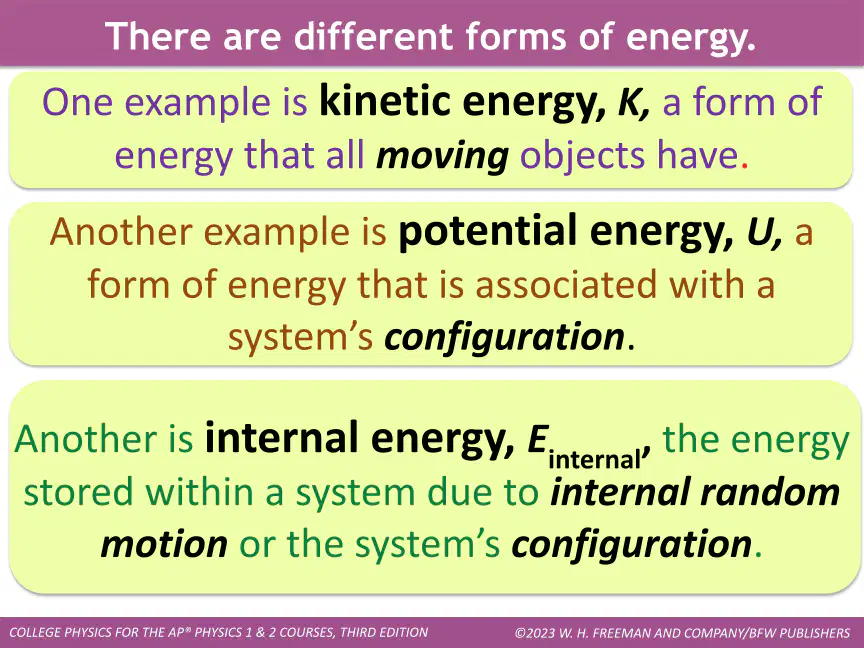
Which of the following are forms of energy described in the slides?
Kinetic energy
Potential energy
Internal energy
Thermal energy
9

10
Open Ended
Describe how energy changes form and is transferred in the example involving the Sun, solar panel, and electric motor.
11

12
Multiple Choice
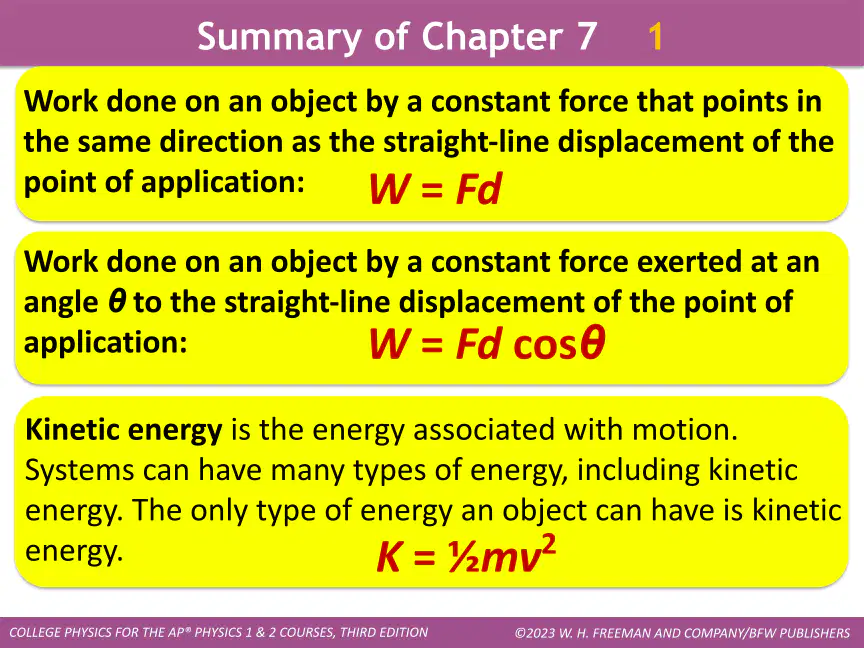
Work is the transfer of energy from one object or system to another through a ___ process that happens when a force is exerted.
mechanical
chemical
thermal
electrical
13
Fill in the Blanks
14
15
16
Open Ended
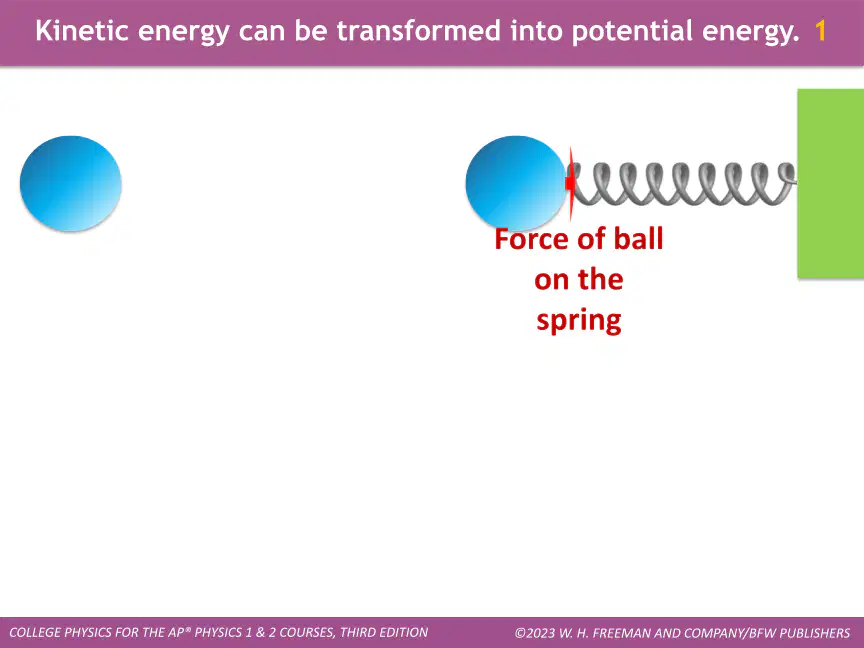
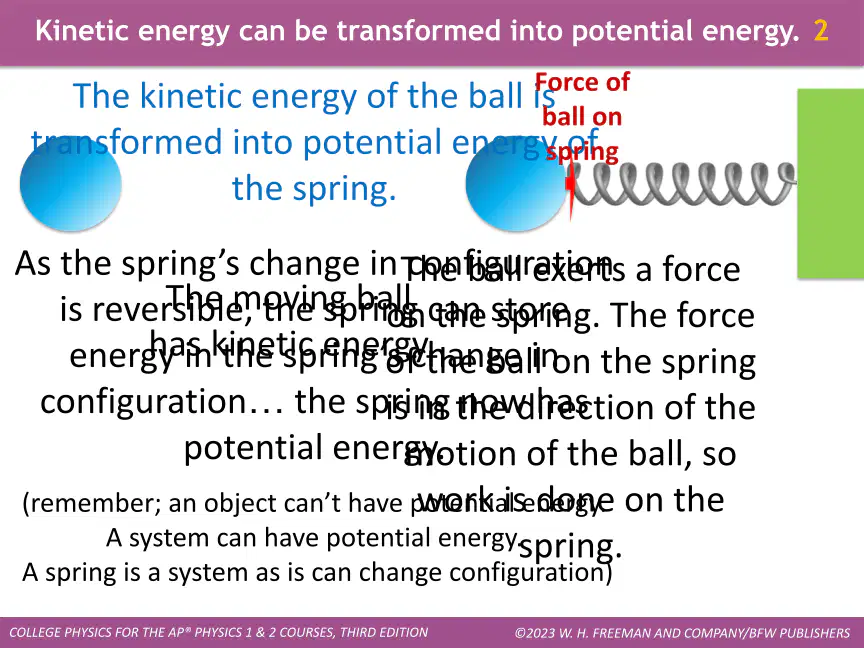
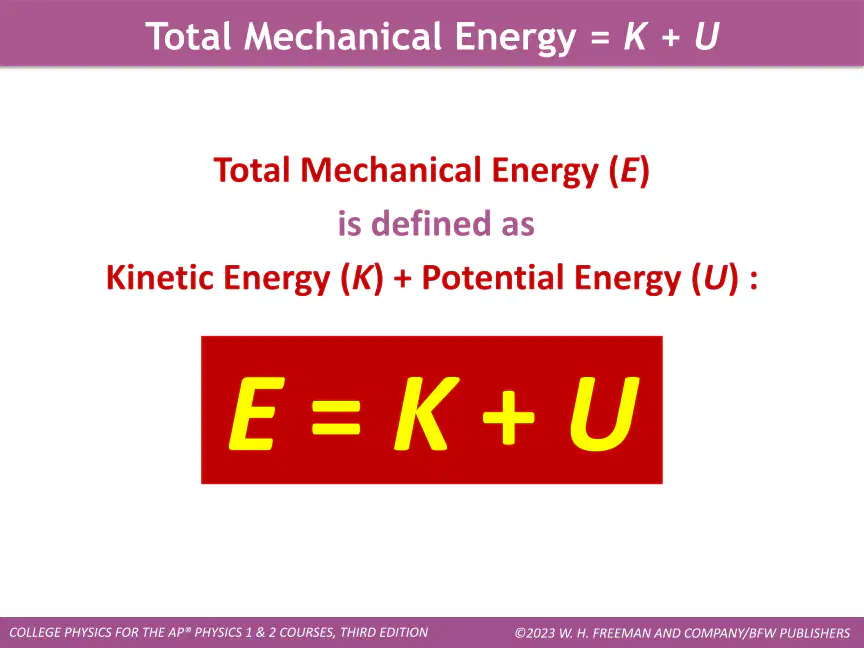
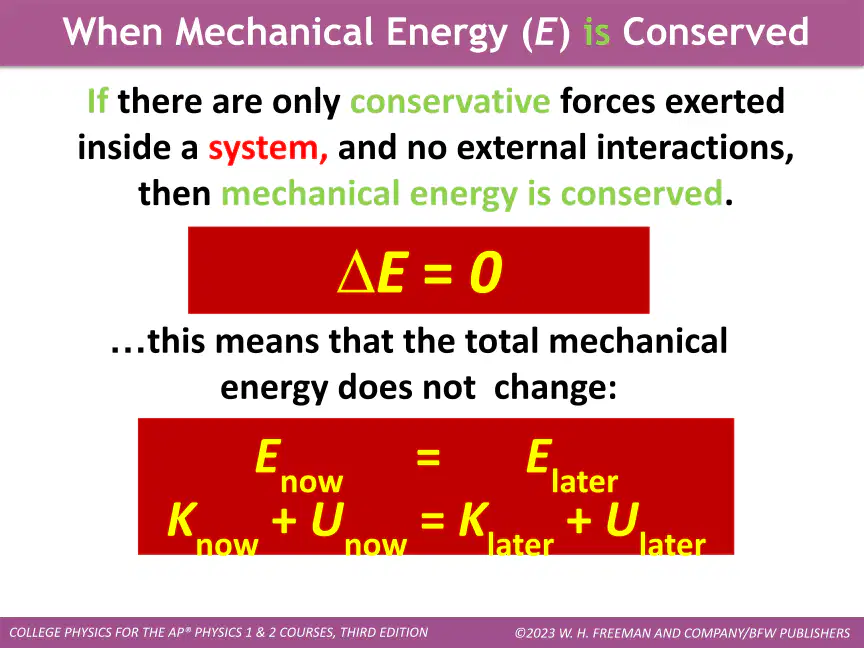
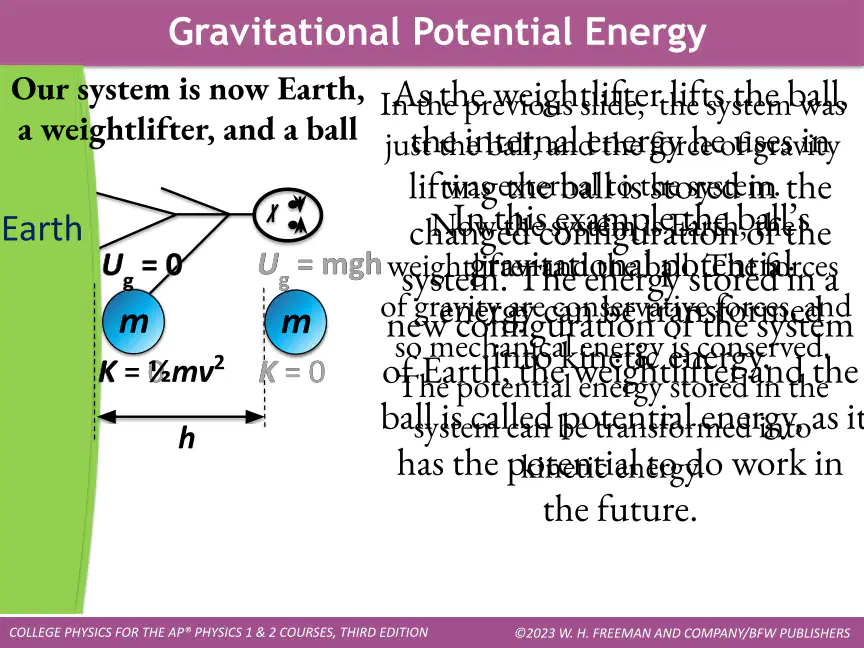
What is the relationship between kinetic energy and potential energy as shown in the ball and spring example?
17
18
Multiple Choice
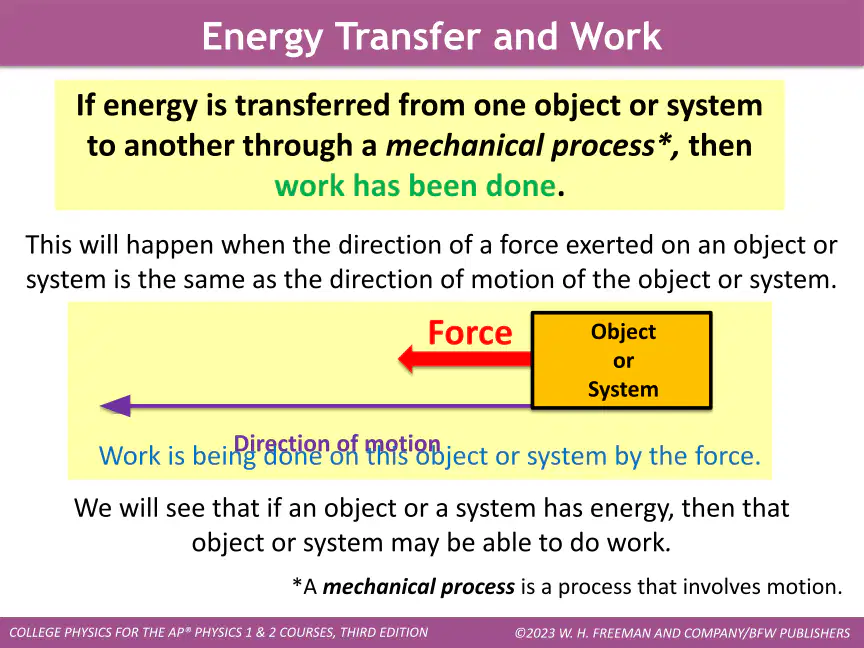
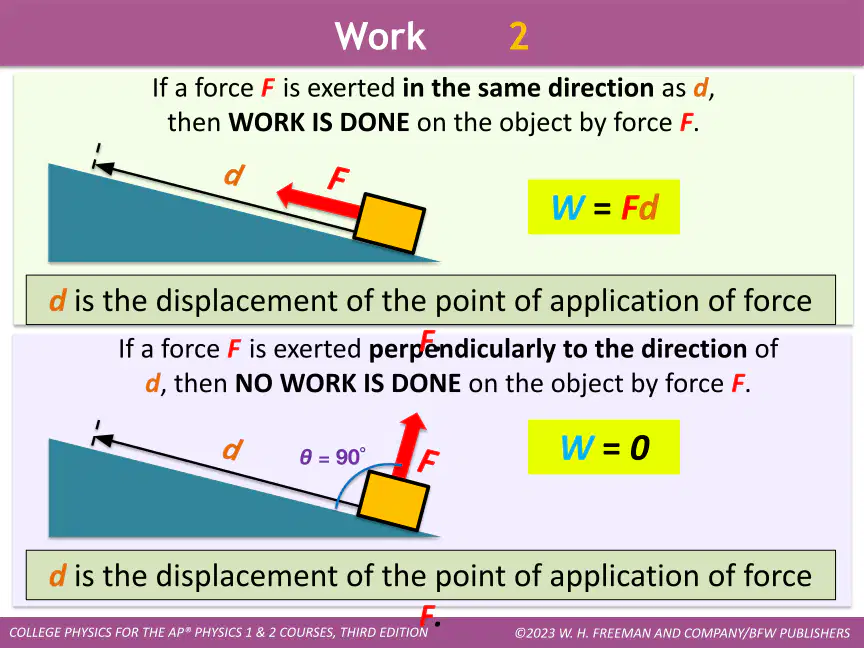
What condition must be met for work to be done on an object or system according to the definition of energy transfer through a mechanical process?
The force must be perpendicular to the direction of motion.
Energy must be transferred through heat only.
The direction of force must be the same as the direction of motion.
The object must be stationary.
19
20
Open Ended
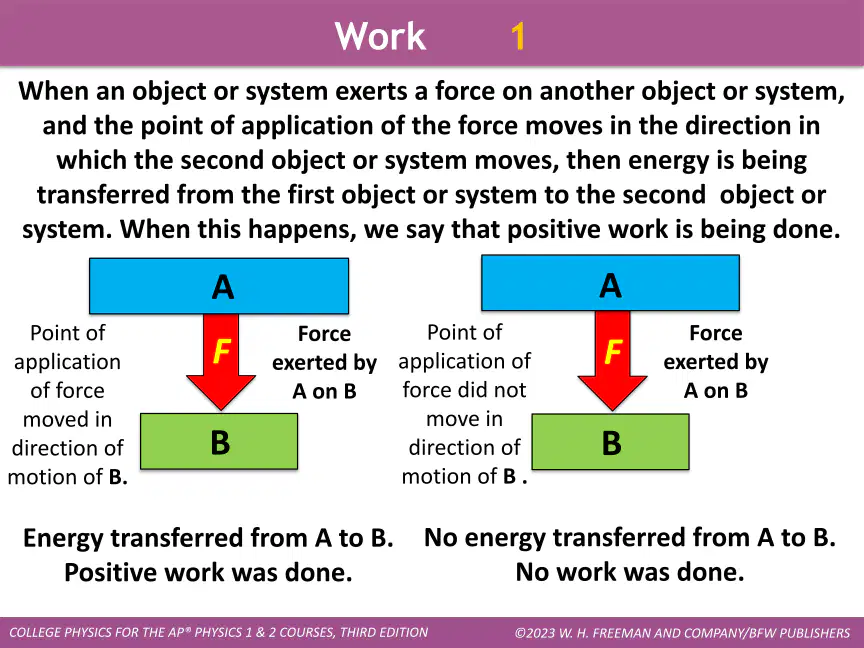
Compare the scenarios in which energy is transferred from object A to B and when no energy is transferred. What is the key difference in terms of the force and motion?
21
22
Multiple Select
Which of the following statements are true about the work done by a force F on an object?
Work is done only if force and displacement are in the same direction.
No work is done if force is perpendicular to displacement.
Work is always done regardless of the direction of force.
Work is done only if there is displacement in the direction of force.
23
24
Fill in the Blanks
25
26
Open Ended
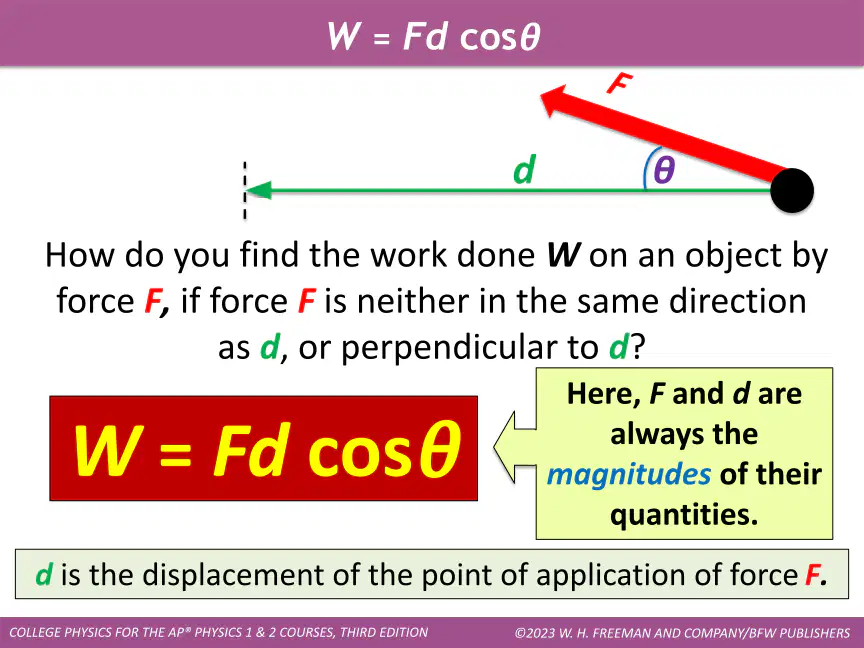
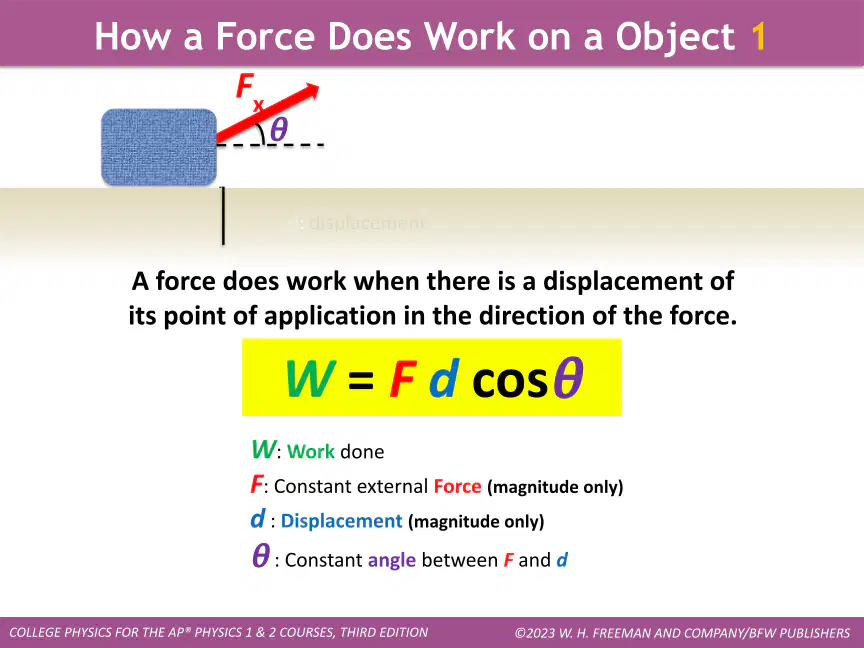
Explain how the angle between force and displacement affects the amount of work done on an object.
27
28
Multiple Choice
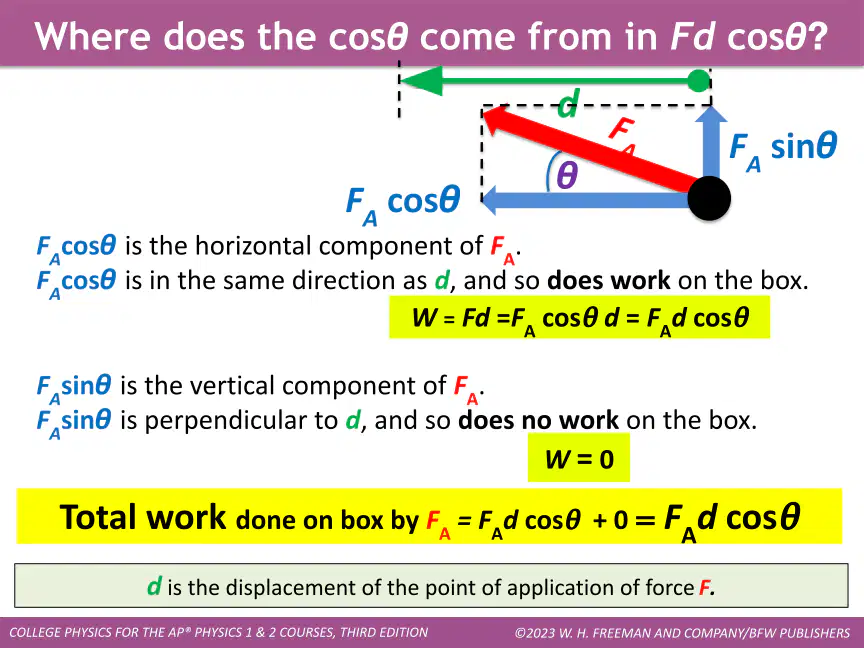
Which component of the applied force does work on the box, and why does the other component do no work?
The vertical component does work; the horizontal does not because it is perpendicular to displacement.
Both components do work because force is applied.
The horizontal component does work; the vertical does not because it is perpendicular to displacement.
Neither component does work if the force is at an angle.
29
30
Open Ended
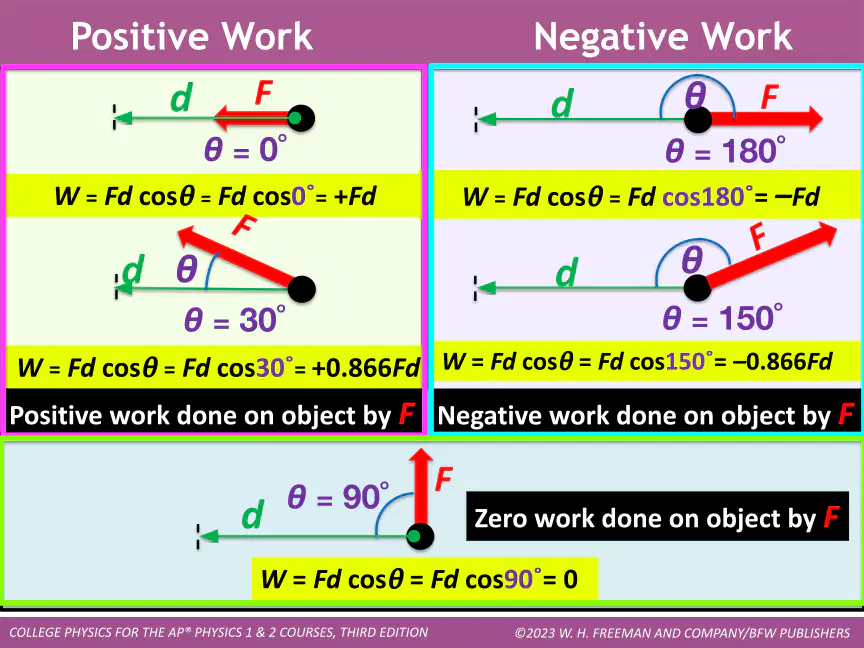
Explain how the direction of force relative to displacement affects the sign (positive, negative, or zero) of the work done, using examples from the diagrams.
31
Multiple Choice
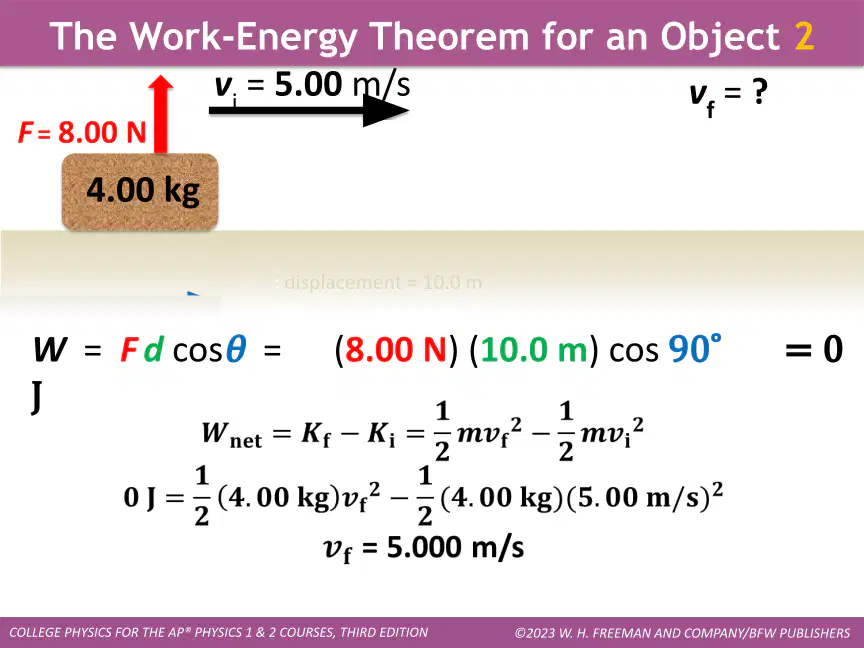
Which of the following angles between force and displacement results in zero work done by the force?
0°
30°
90°
180°
32
33
Fill in the Blanks
Type answer...
34
35
36
Open Ended
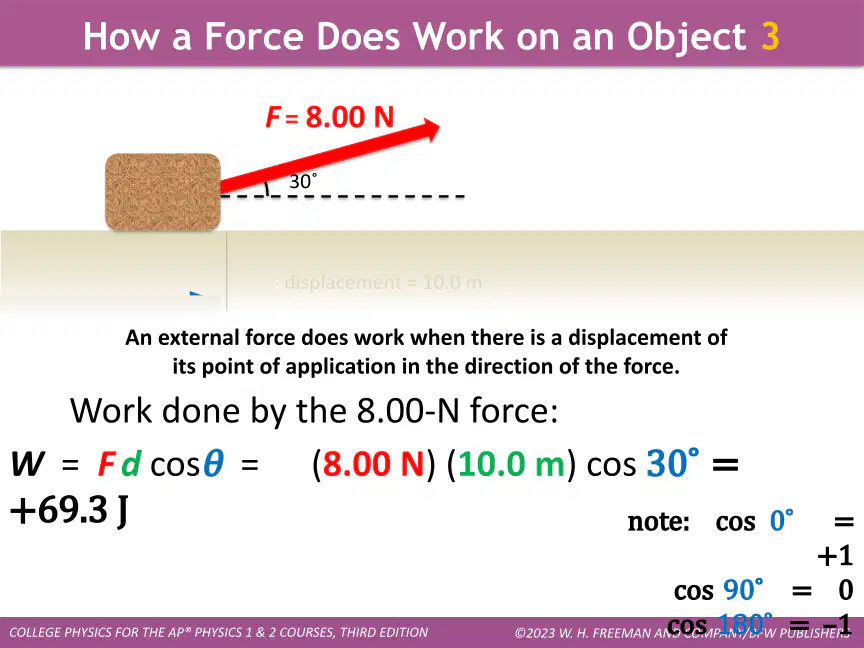
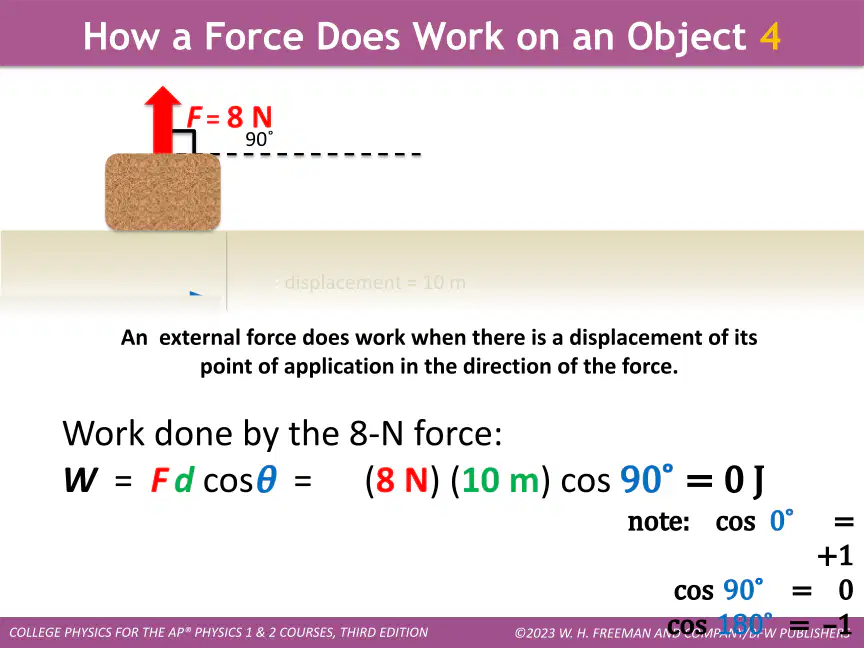
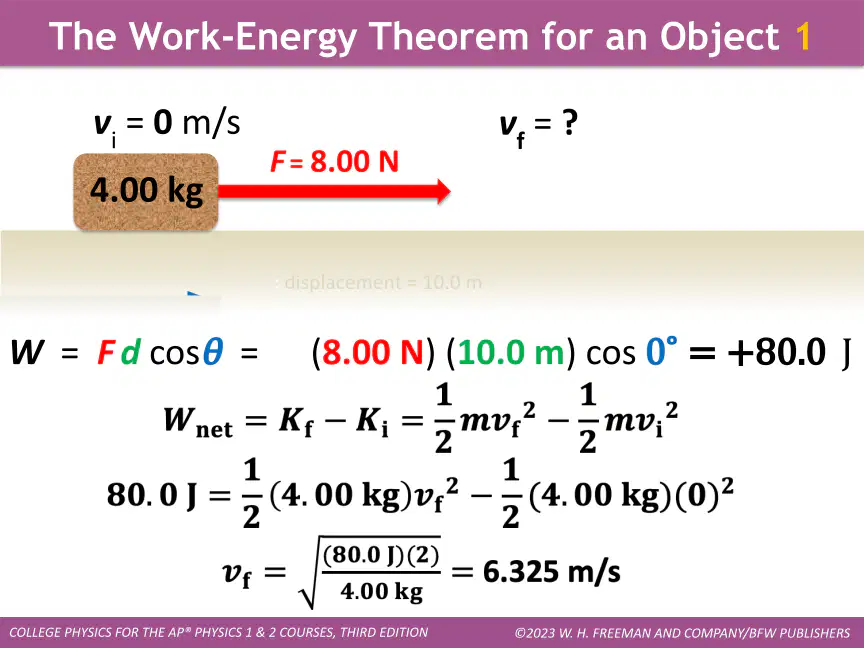
A force of 8 N acts at an angle of 30° to the direction of displacement of 10 m. Calculate the work done by the force.
37
38
39
Multiple Select
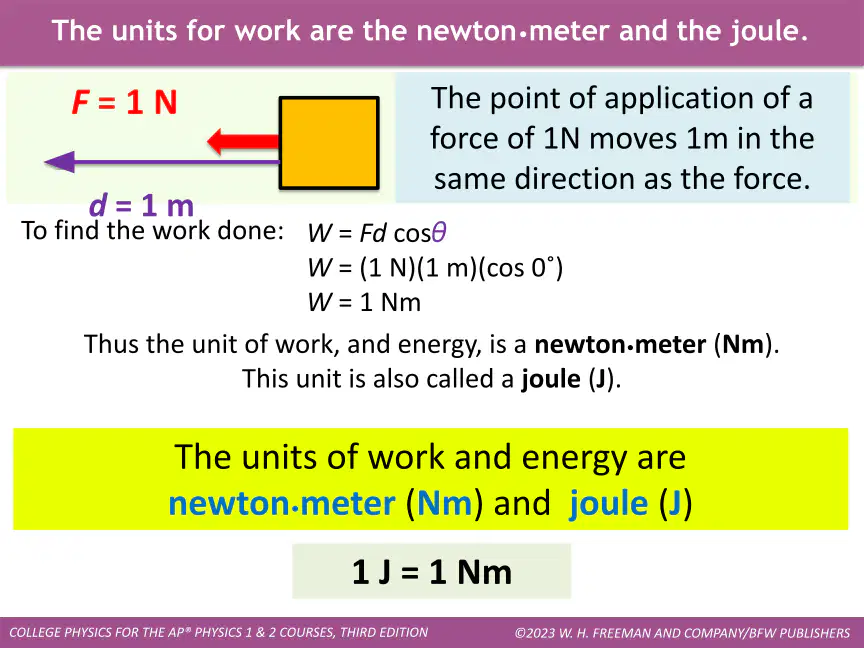
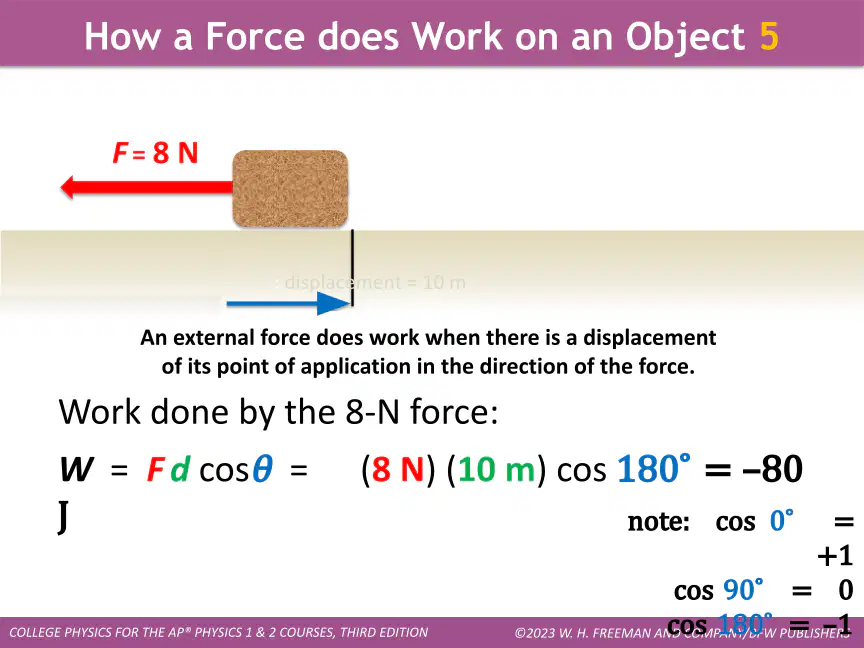
Select all the correct statements about the calculation of work from the images:
Work is calculated as the product of force, displacement, and the cosine of the angle between them.
The unit of work is the newton-meter (Nm).
Work is always positive.
Work can be zero if the force is perpendicular to displacement.
40
Multiple Choice
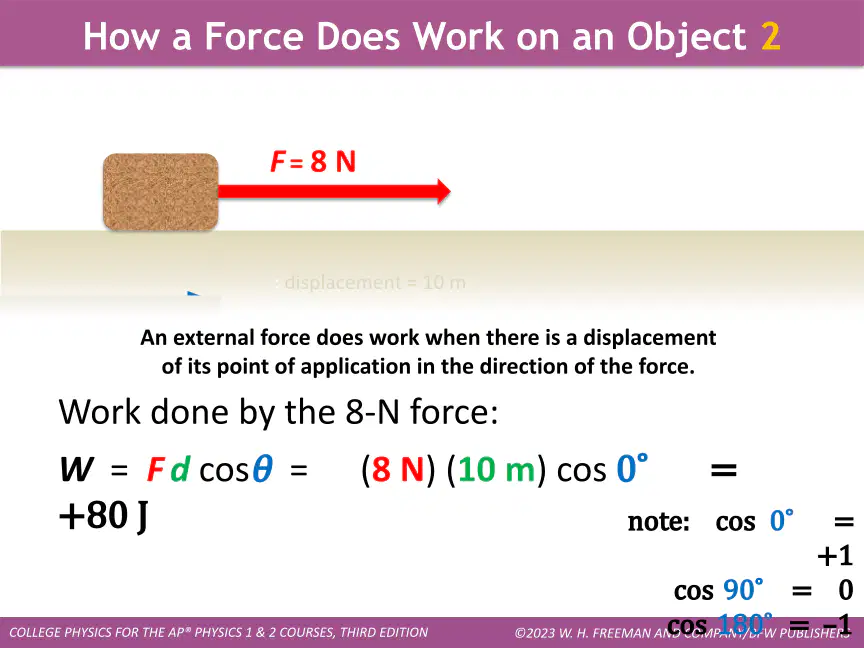
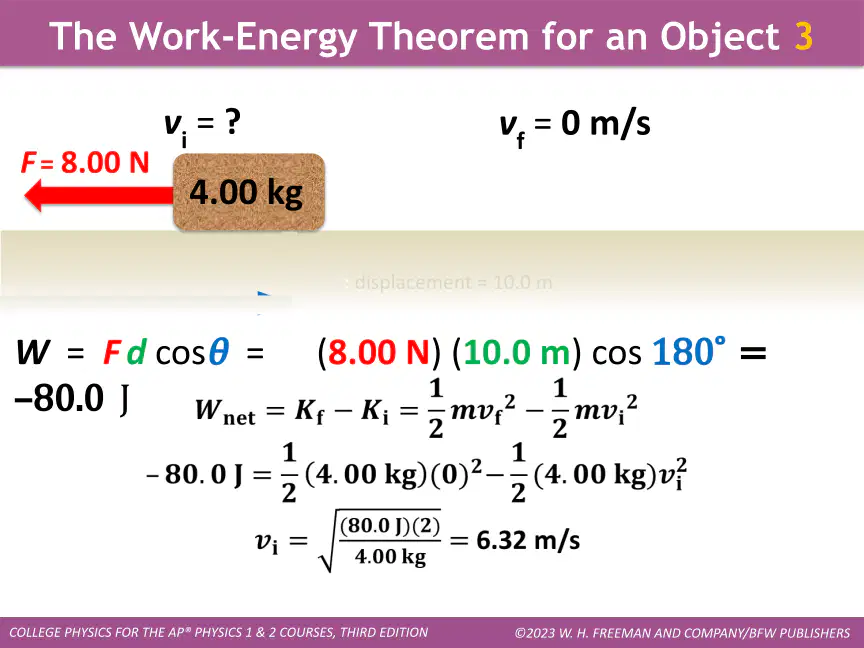
Which of the following statements is correct regarding the calculation of work done by a force of 8 N over a displacement of 10 m at different angles?
Work is always positive regardless of the angle.
Work is maximum when the force is perpendicular to displacement.
Work is zero when the force is perpendicular to displacement.
Work is negative when the force is in the same direction as displacement.
41
42
Multiple Choice
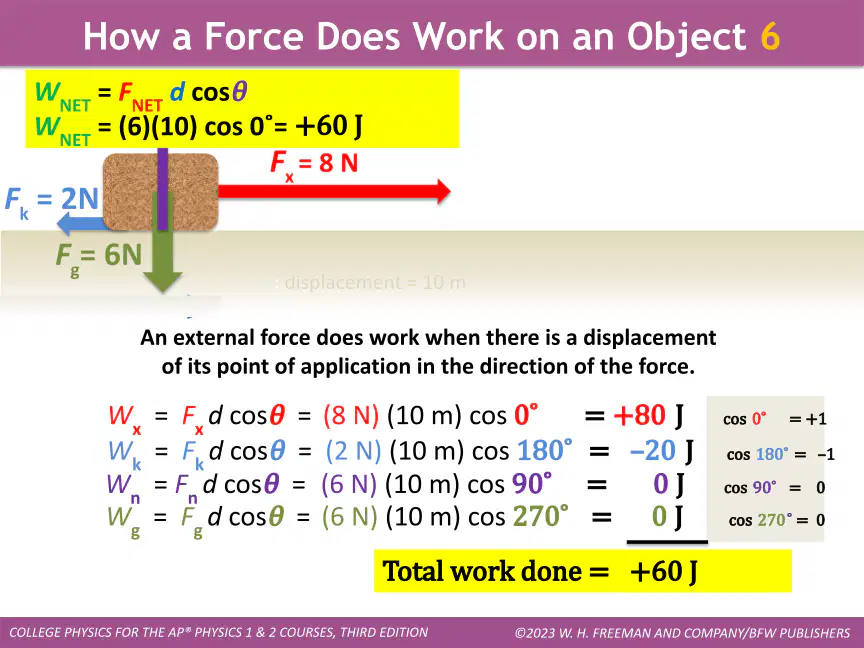
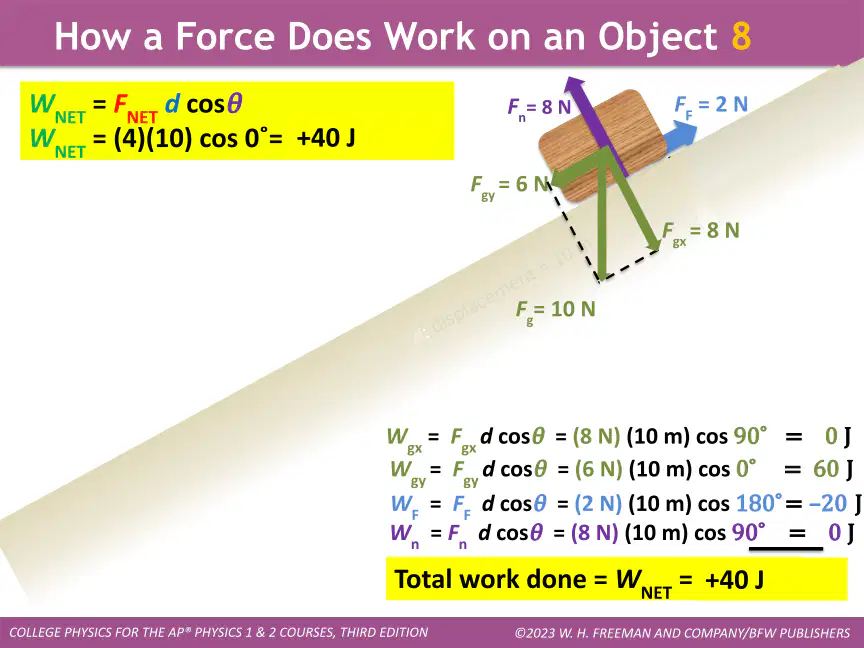
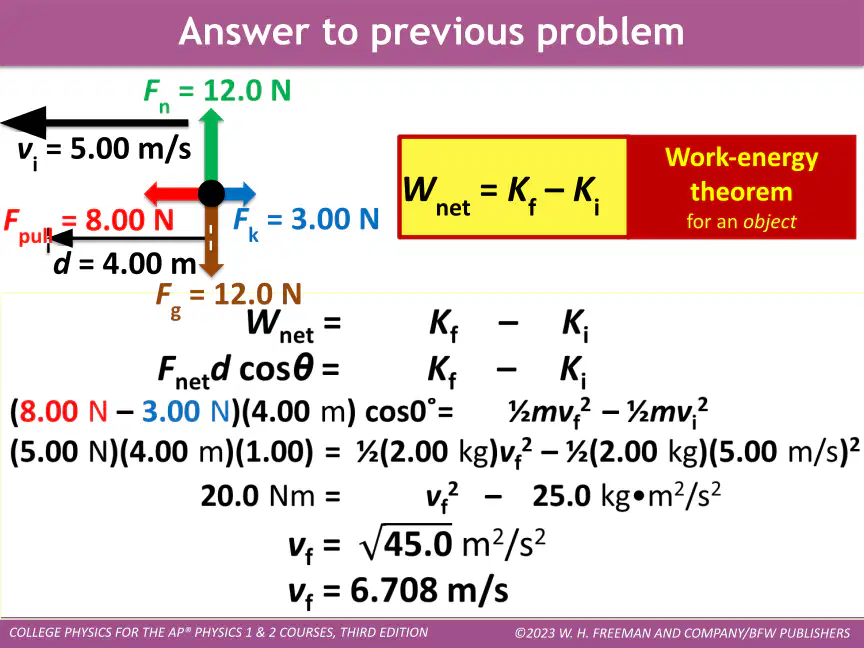
Which force(s) in the first scenario (slide 1) do zero work on the object?
F_x and F_k
F_g and F_n
F_x and F_g
F_k and F_n
43
44
45
Open Ended
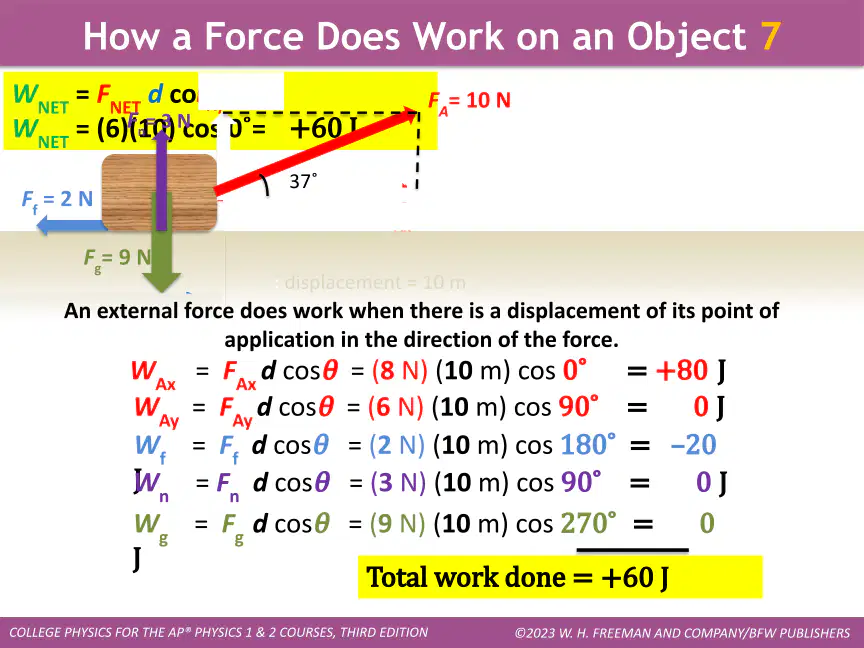
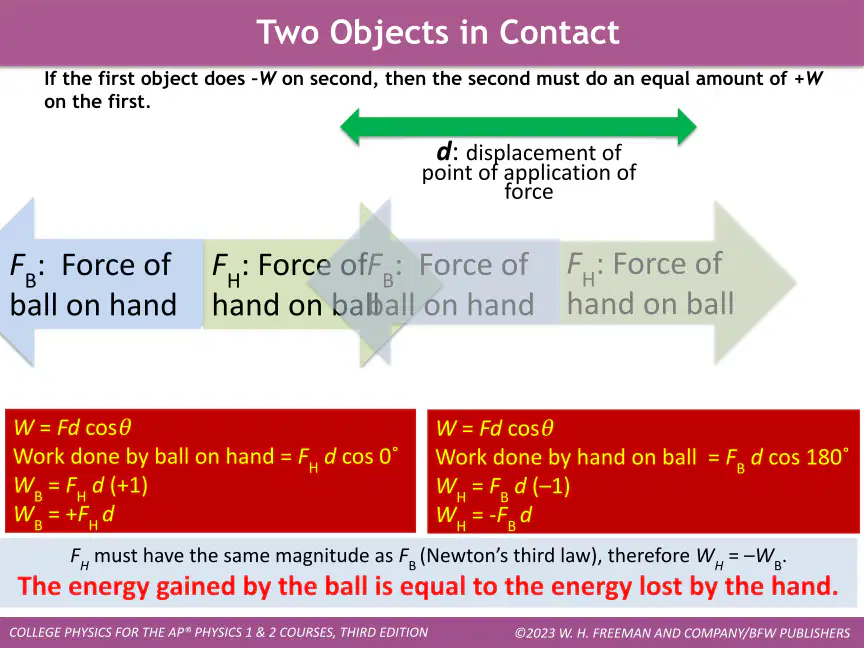
Consider the examples in slides 1–3. How does the direction of force relative to displacement affect the work done by each force?
46
Open Ended
How does the calculation of total work done change when the applied force is at an angle, as shown in slides 2 and 3?
47
48
Fill in the Blanks
49
50
Multiple Choice
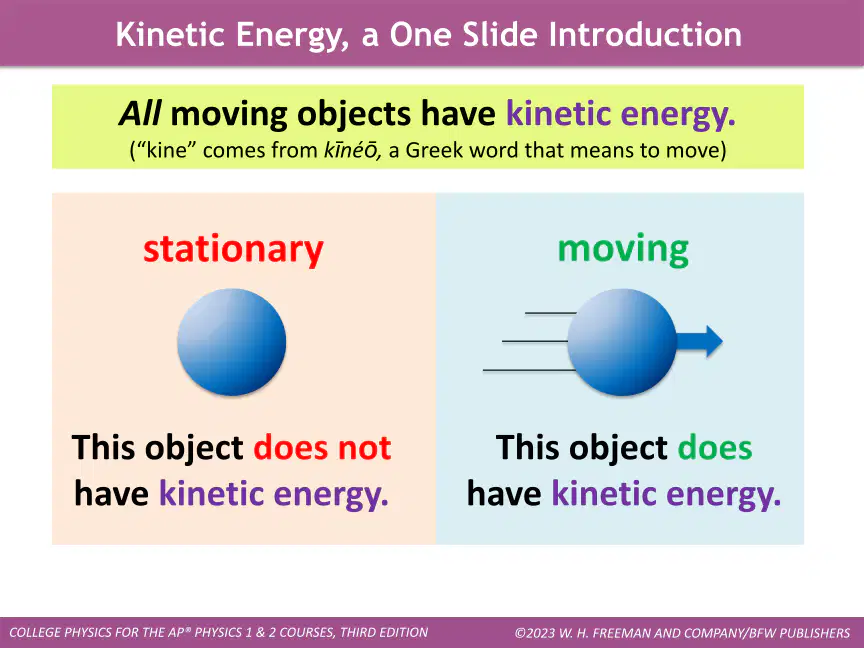
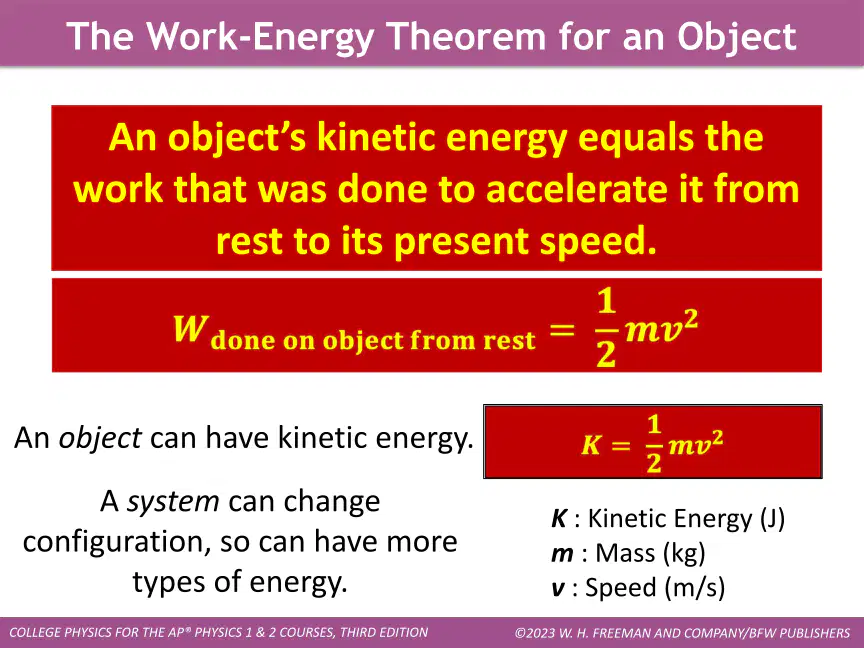
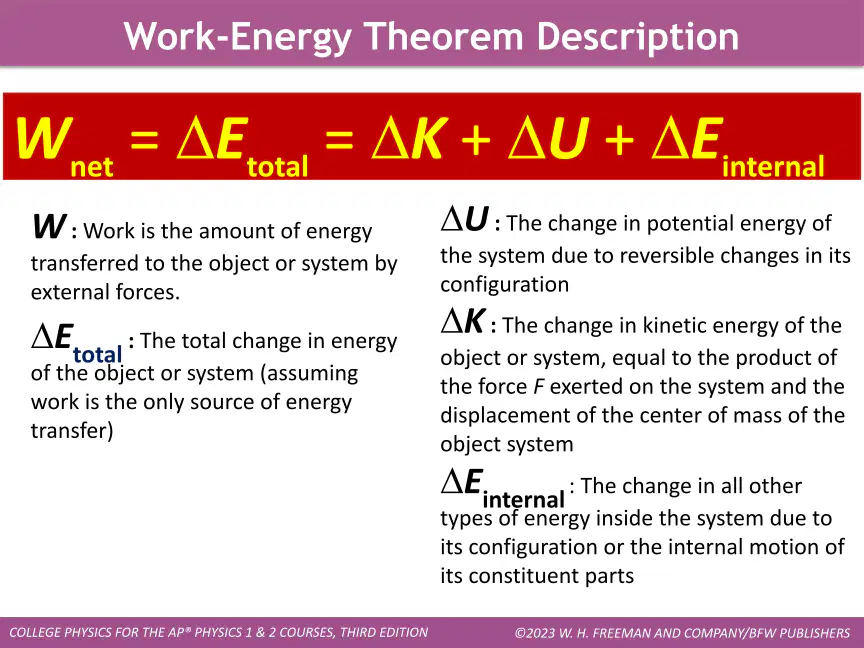
Which of the following statements is true about kinetic energy, based on slide 5?
All objects have kinetic energy.
Only stationary objects have kinetic energy.
Only moving objects have kinetic energy.
Kinetic energy does not depend on motion.
51
52
Multiple Choice
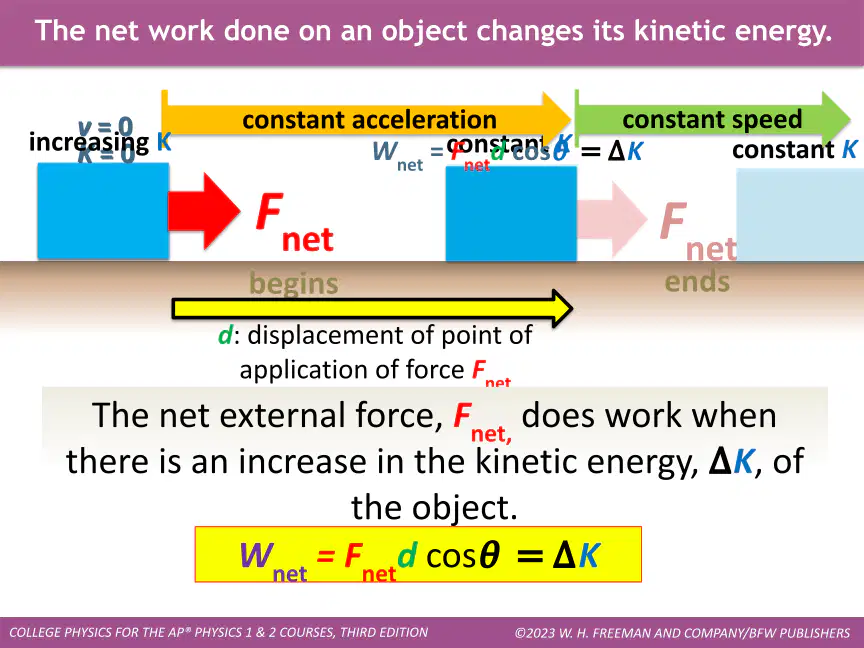
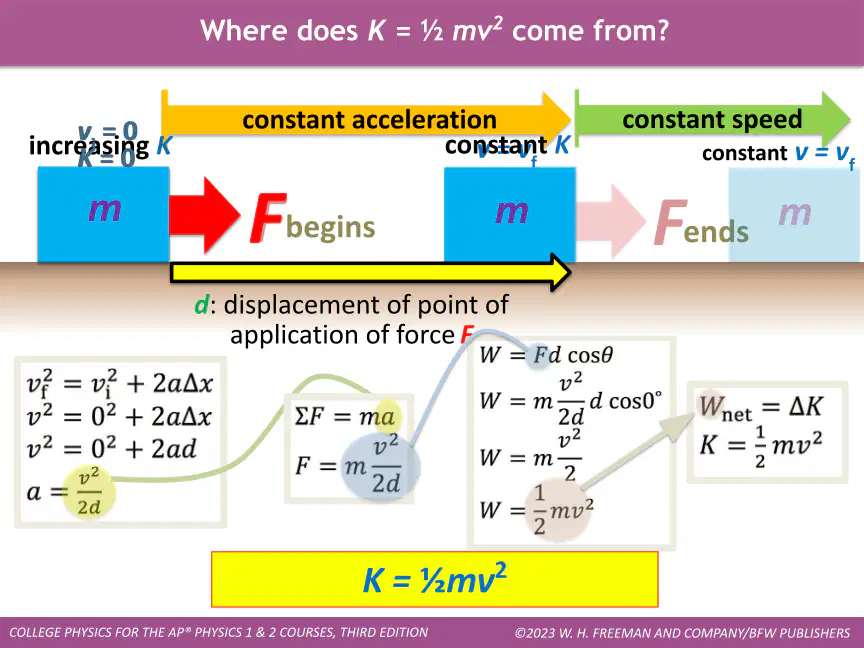
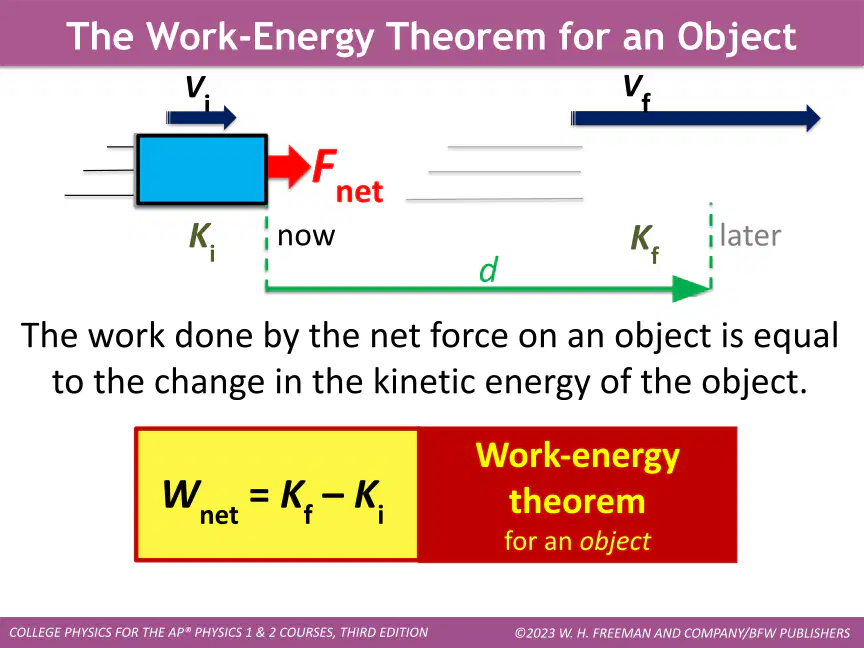
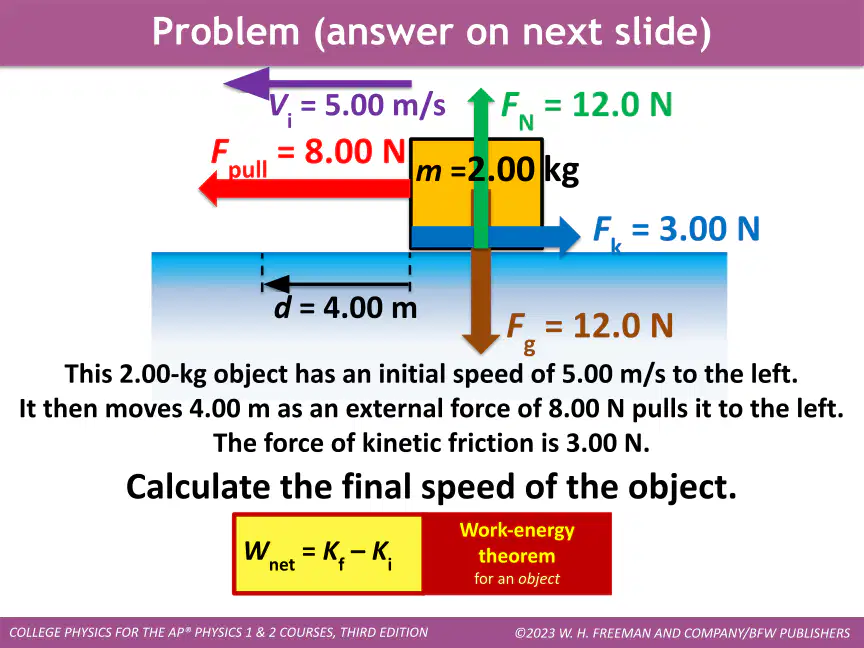
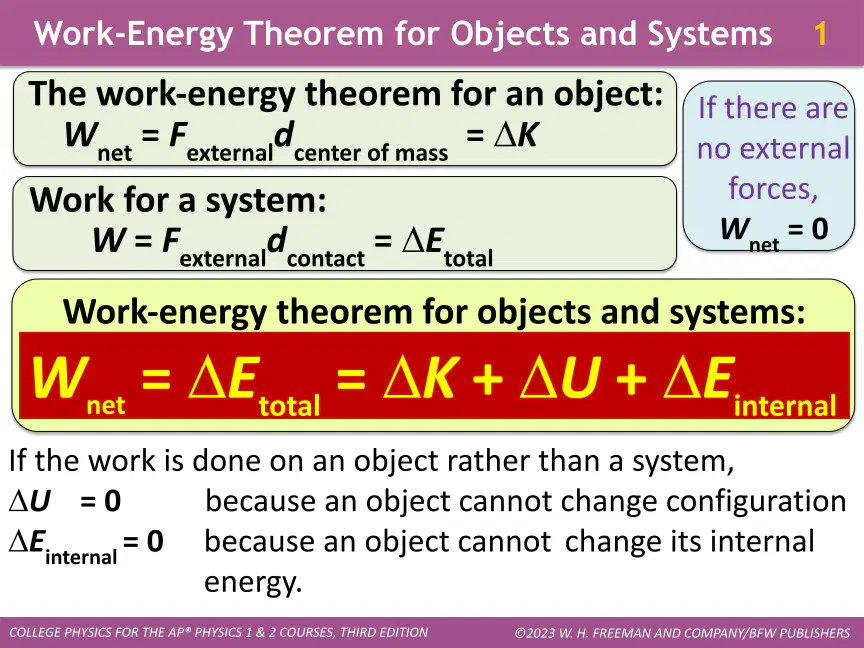
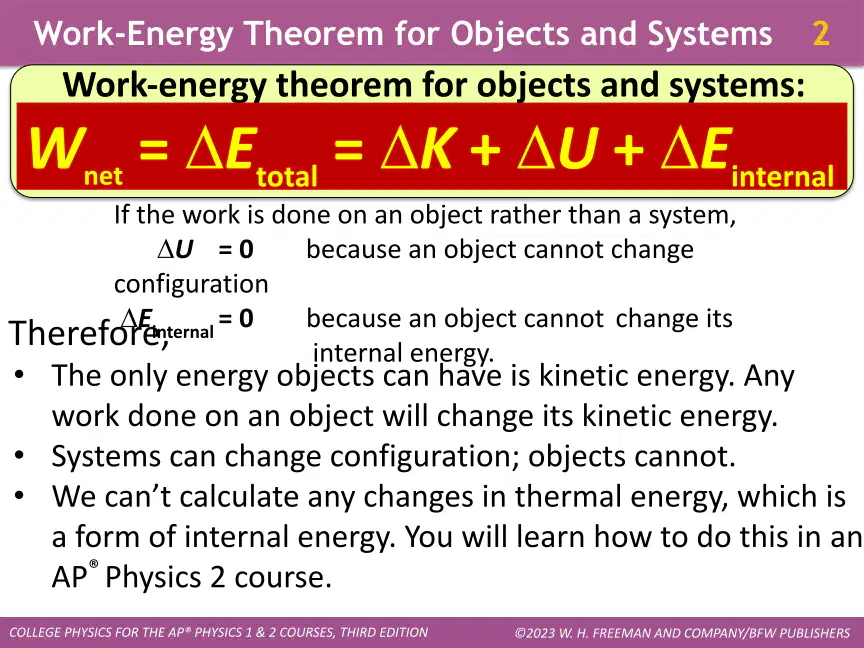
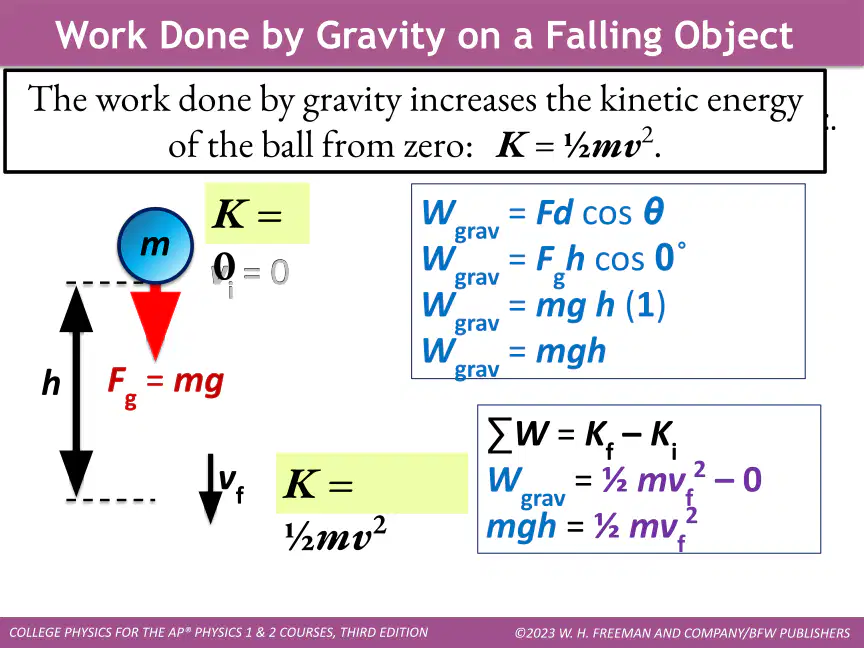
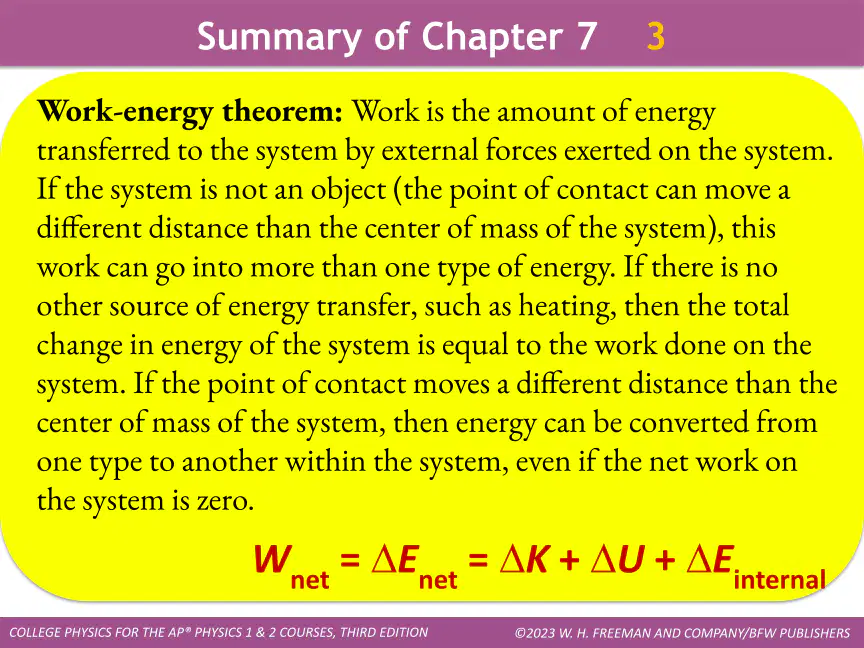
What is the relationship between the net work done on an object and its kinetic energy, as shown in slide 6?
The net work done is always greater than the change in kinetic energy.
The net work done equals the change in kinetic energy.
The net work done is always less than the change in kinetic energy.
There is no relationship between net work and kinetic energy.
53
54
55
56
57
58
59
60
61

62

63
64
65
66
67
68
69
70
71
72
73
74

75
76
77
78
79
80
81
82
83
84
85
86
87
88
89
90
91
92
93
94

95
96
97
98
99

100
101
102
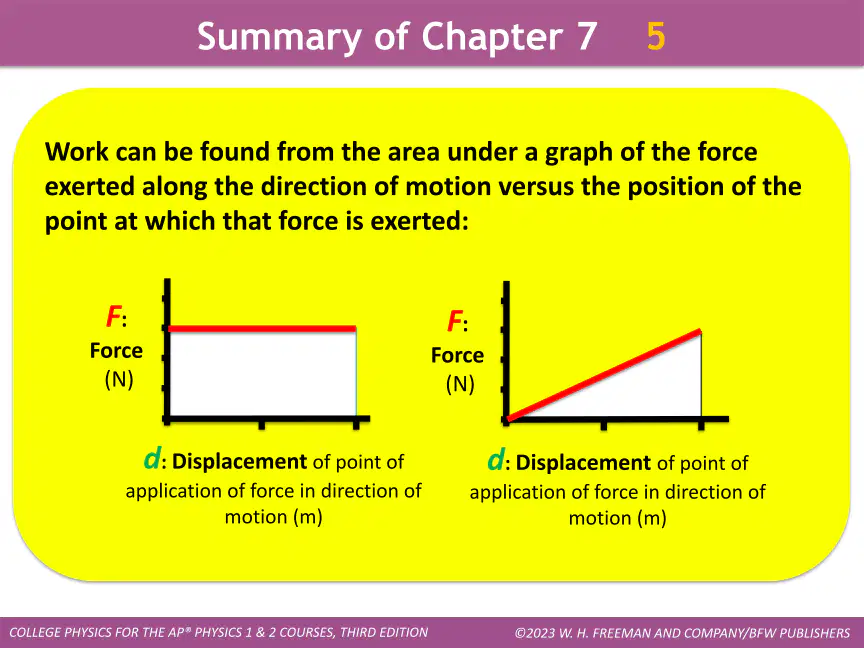
103
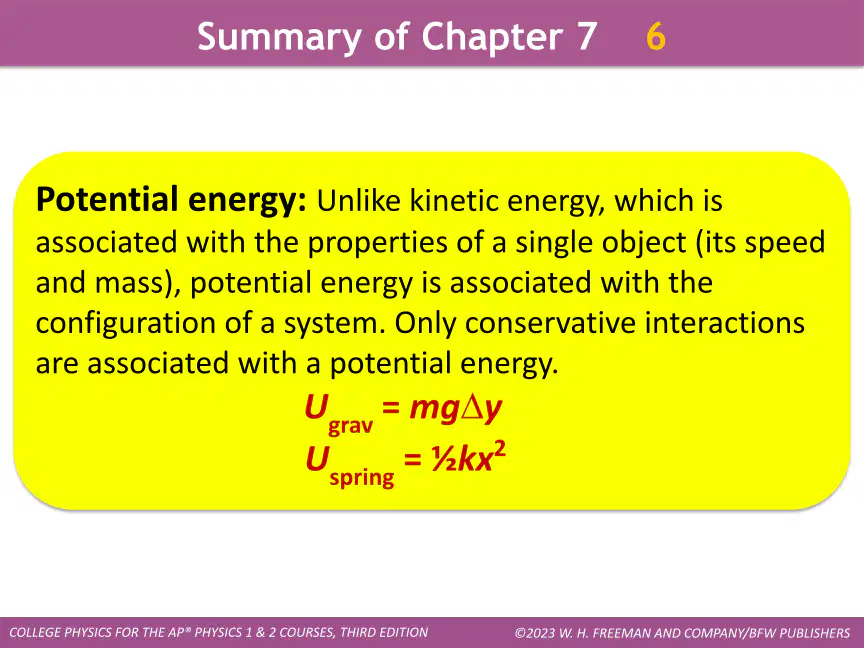
104
Open Ended
What questions do you still have about the conservation of energy or its applications in real life?
105
Open Ended
How does the definition of 'conservation' in everyday life differ from its meaning in physics?
Show answer
Auto Play
Slide 1 / 105
SLIDE
Similar Resources on Wayground

96 questions
6092 Chapter 17 Rate of Reactions
Presentation
•
9th - 12th Grade
99 questions
Covalent (Molecular) Compounds lesson
Presentation
•
9th - 12th Grade
101 questions
3.1 Enzymes
Presentation
•
10th - 12th Grade
97 questions
LEVEL 1e Alternatives to 4-Year College
Presentation
•
9th - 12th Grade
93 questions
Biomolecules STAAR Lesson
Presentation
•
9th - 12th Grade
105 questions
Exposition Text and Modals for Grade 10 CJ
Presentation
•
10th Grade
106 questions
Rotational Motion + Gravity
Presentation
•
9th - 12th Grade
104 questions
Unit 3 Review
Presentation
•
9th - 12th Grade
Popular Resources on Wayground
10 questions
Factors 4th grade

Quiz
•
4th Grade
10 questions
Cinco de Mayo Trivia Questions

Interactive video
•
3rd - 5th Grade
13 questions
Cinco de mayo
Interactive video
•
6th - 8th Grade
20 questions
Math Review
Quiz
•
3rd Grade
20 questions
Main Idea and Details
Quiz
•
5th Grade
20 questions
Context Clues
Quiz
•
6th Grade
20 questions
Inferences
Quiz
•
4th Grade
19 questions
Classifying Quadrilaterals
Quiz
•
3rd Grade
Discover more resources for Physics
18 questions
Series and Parallel Circuits
Quiz
•
9th Grade
15 questions
waves and wave properties
Quiz
•
9th - 12th Grade
10 questions
Exit Check 7.5 - Assessing Bias
Quiz
•
9th Grade
50 questions
Physics Semester 2 Review
Quiz
•
11th Grade
20 questions
Electromagnets, Motors and Generators
Quiz
•
11th Grade
9 questions
Exit Check 7.4 - Wave Particle Duality
Quiz
•
9th Grade
10 questions
Exit Check 8.1 - Our Solar System
Quiz
•
9th Grade
40 questions
Physics Semester 1 Final Review
Quiz
•
9th - 12th Grade