

DE Activity 2.3.4

Presentation
•
Science
•
10th Grade
•
Practice Problem
•
Easy

Hatice Yildirim
Used 3+ times
FREE Resource
20 Slides • 22 Questions
1

2
3
Multiple Choice
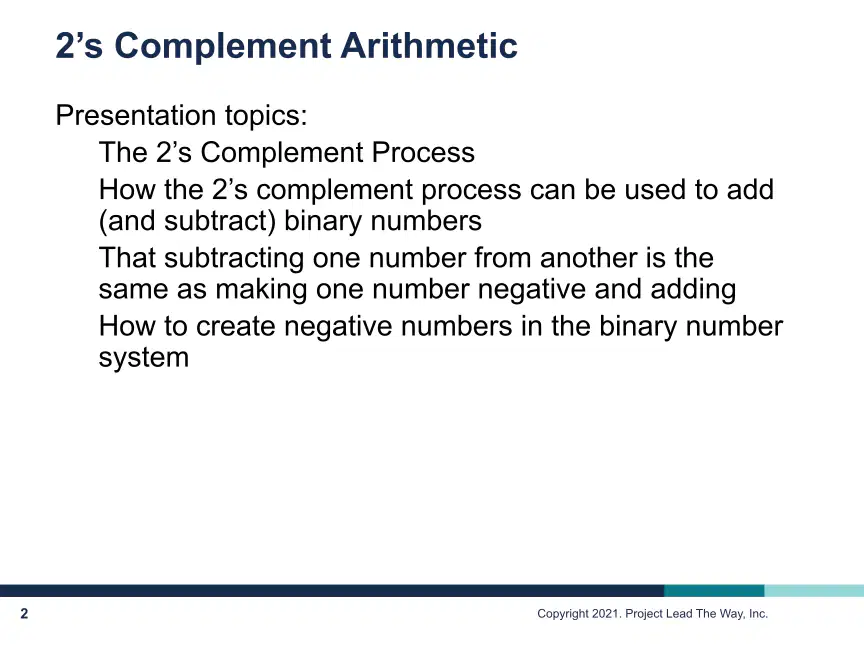
Which of the following is a key use of the 2’s complement process in digital electronics?
To represent negative numbers in binary
To increase the speed of processors
To store decimal numbers directly
To simplify multiplication operations
4
Open Ended
Why is it important to understand how negative numbers are represented in the binary number system?
5
6
Multiple Choice
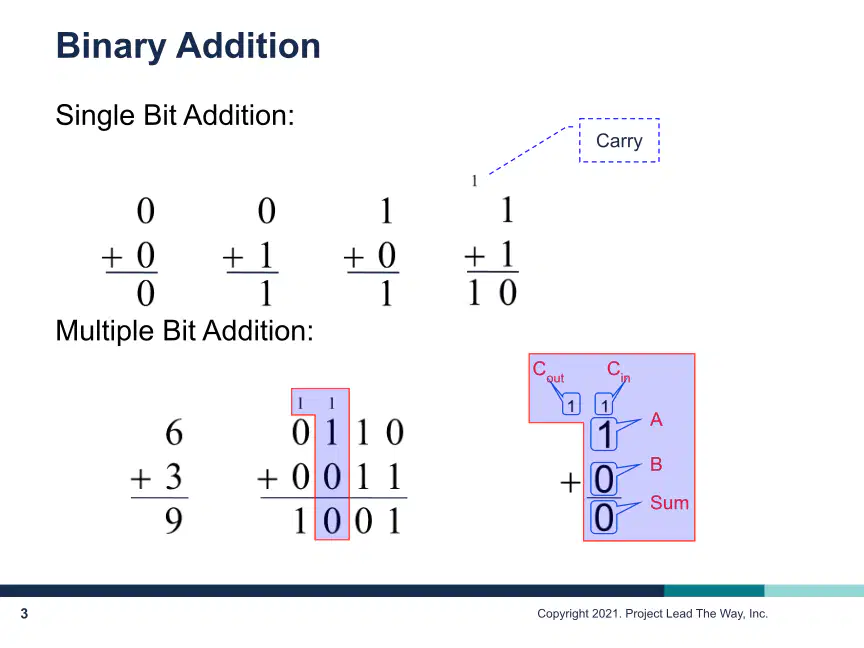
Which of the following best describes the purpose of a carry in binary addition?
To indicate an overflow in decimal addition
To represent a negative number
To transfer a value to the next higher bit position
To subtract two binary numbers
7
8
Open Ended
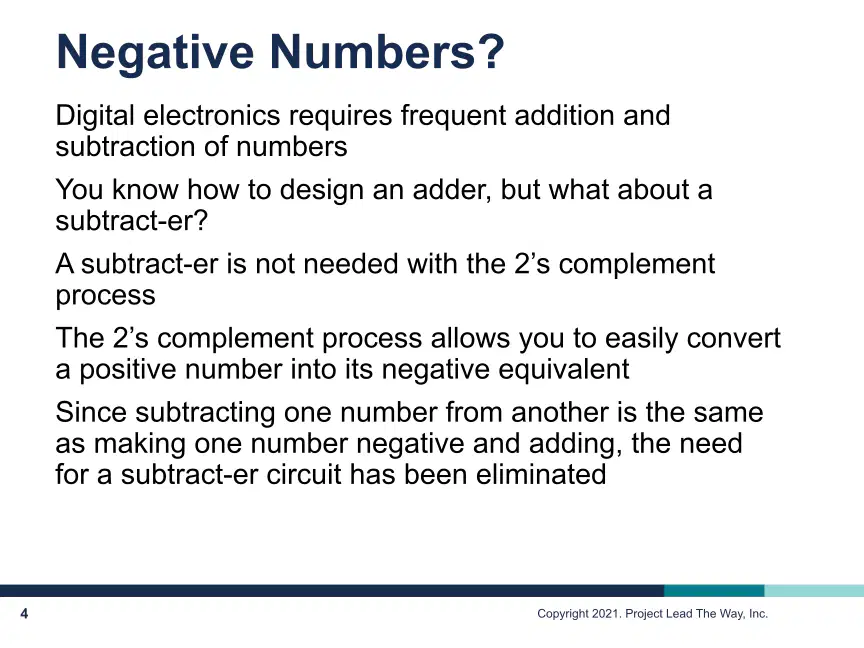
Explain how the 2's complement process eliminates the need for a subtract-er circuit in digital electronics.
9
10
Multiple Select
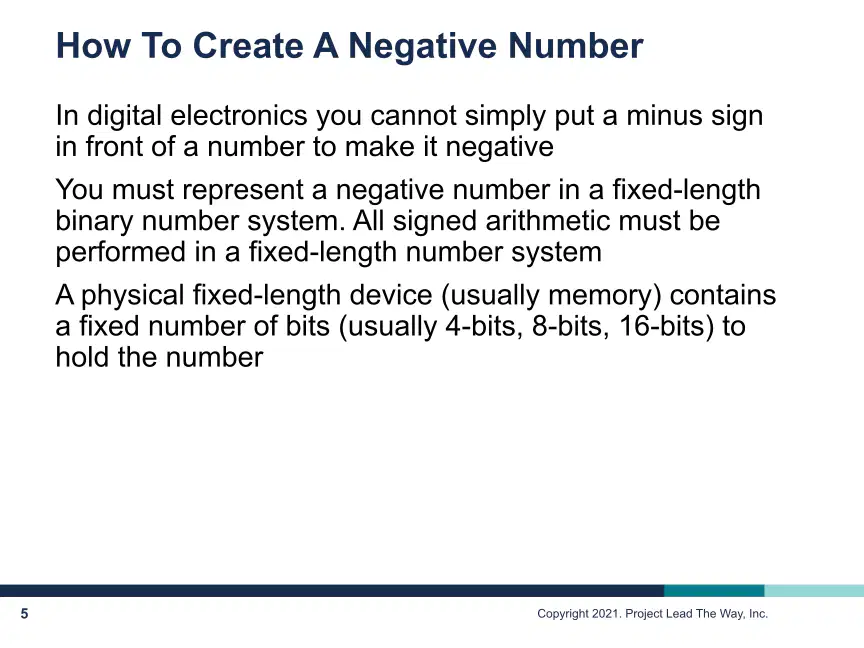
In digital electronics, why can't you simply put a minus sign in front of a number to make it negative?
Because binary numbers do not support negative signs
Because all arithmetic must be performed in a fixed-length system
Because memory devices cannot store negative numbers
Because negative numbers are not used in digital electronics
11
12
Fill in the Blanks
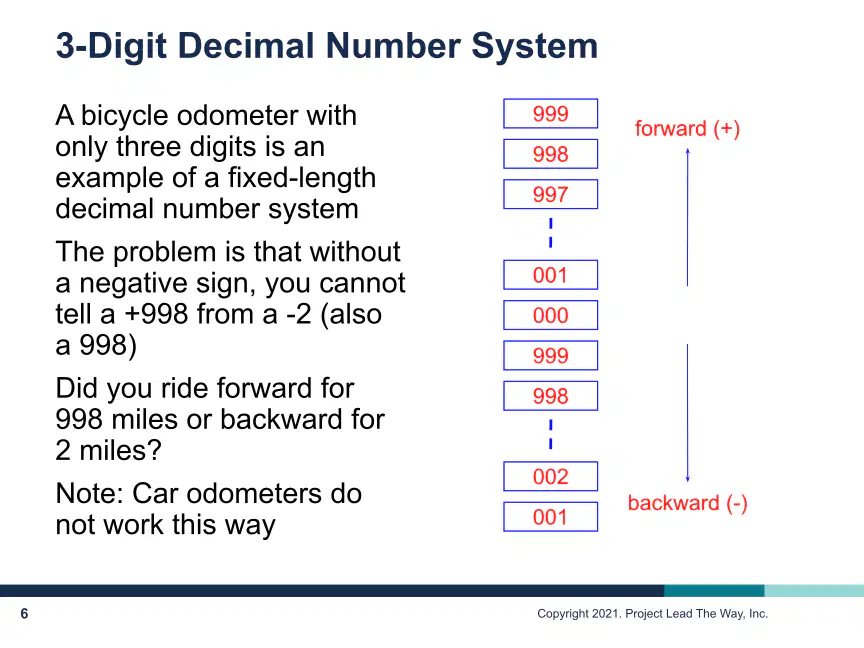
A bicycle odometer with only three digits is an example of a
Type answer...
13
14
Open Ended
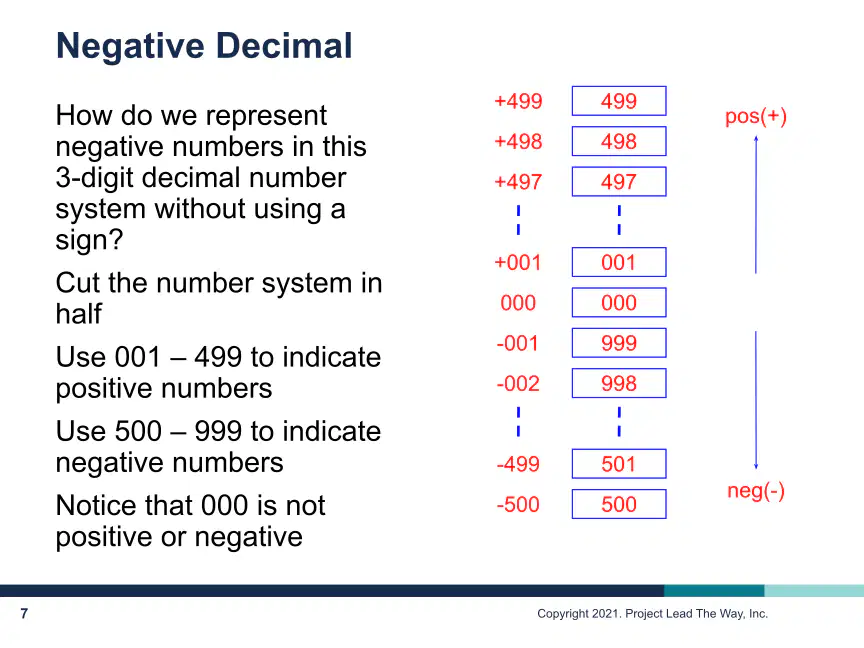
How are negative numbers represented in a 3-digit decimal number system without using a sign?
15
16
Multiple Choice
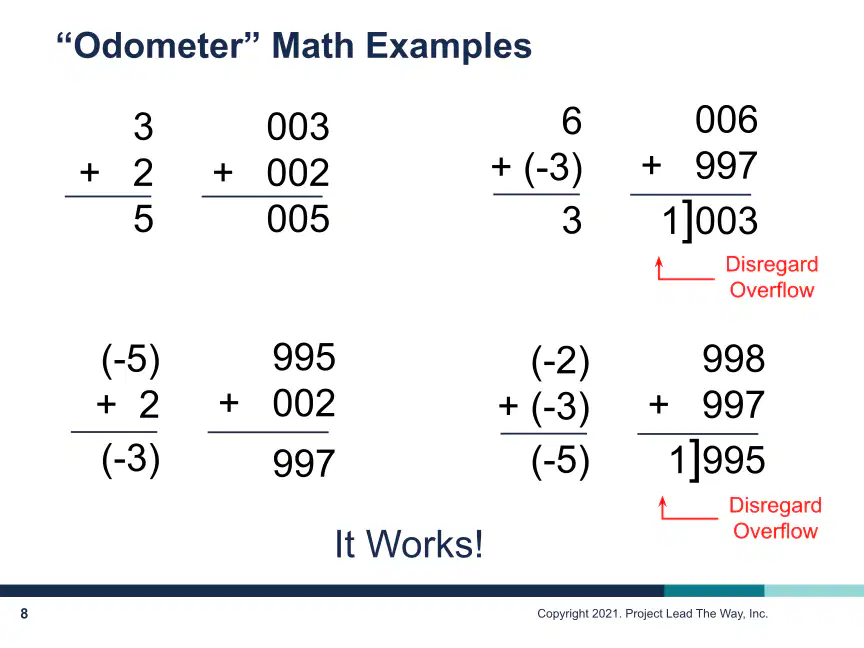
When performing odometer math, what should you do if an overflow occurs?
Subtract the overflow value
Disregard the overflow
Add the overflow to the result
Restart the calculation
17
18
Multiple Choice
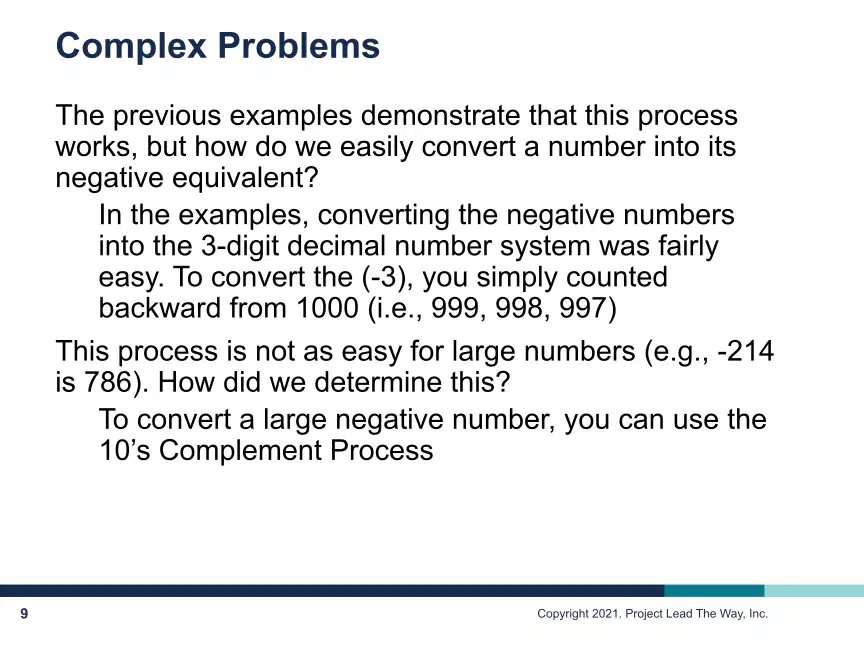
What is the main difference between converting small negative numbers and large negative numbers in the decimal system?
Small negative numbers can be converted by simple counting backwards, while large negative numbers require the 10’s Complement Process.
Small negative numbers use the 2’s Complement Process, while large negative numbers use the 10’s Complement Process.
Both small and large negative numbers use the same conversion method.
Small negative numbers are converted using binary, while large negative numbers use decimal.
19
20
Multiple Select
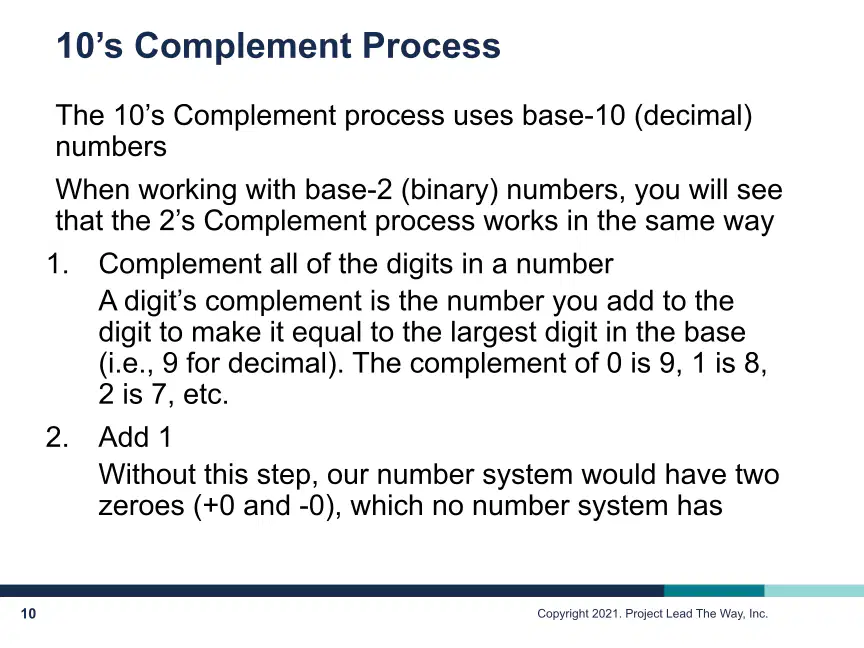
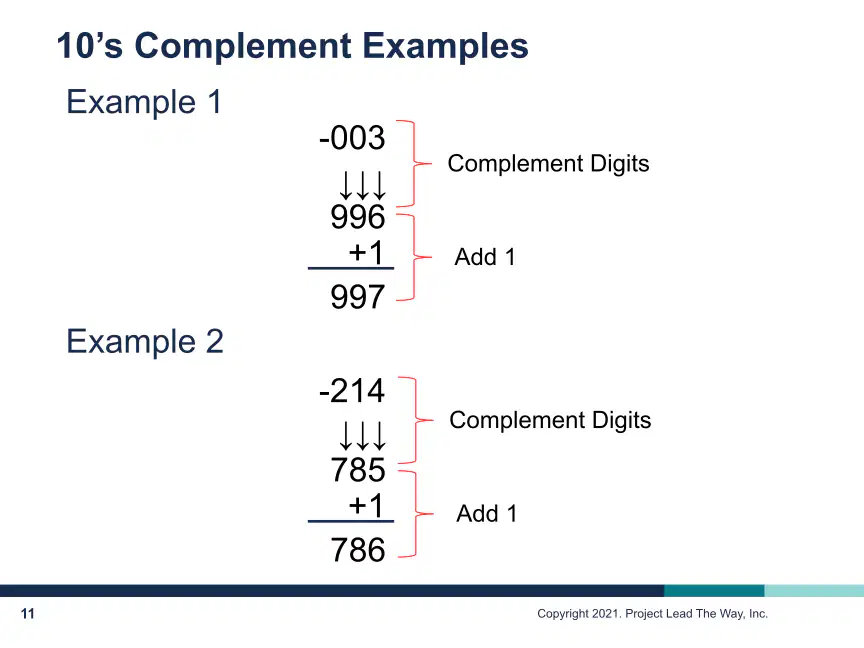
Which of the following are correct steps in the 10’s Complement Process?
Complement all digits in the number
Add 1 to the result
Subtract 1 from the result
Multiply all digits by 9
21
Open Ended
Explain the steps involved in the 10’s Complement Process for converting a decimal number to its negative equivalent.
22
23
24
25
Fill in the Blanks
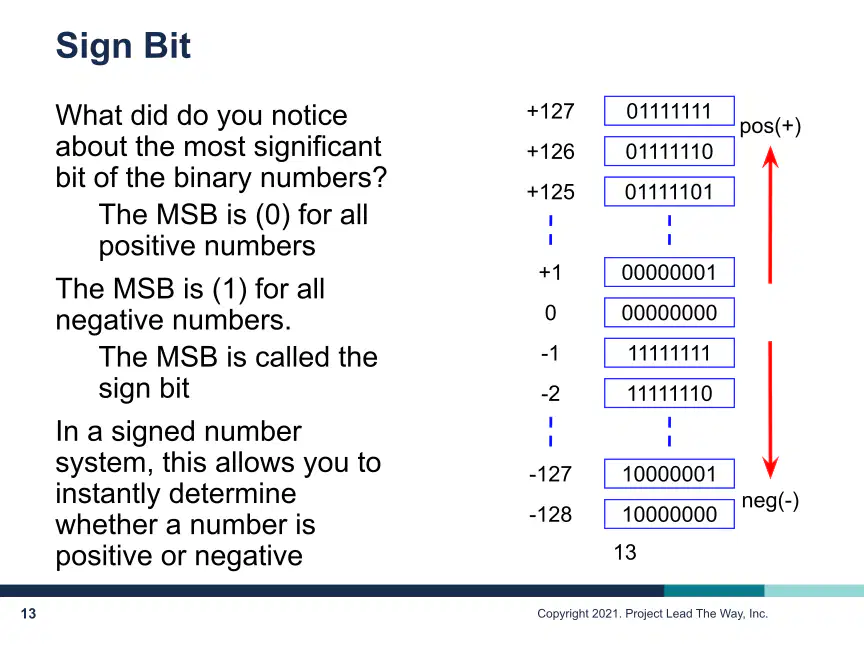
The MSB in a signed binary number is called the
Type answer...
26
Multiple Choice
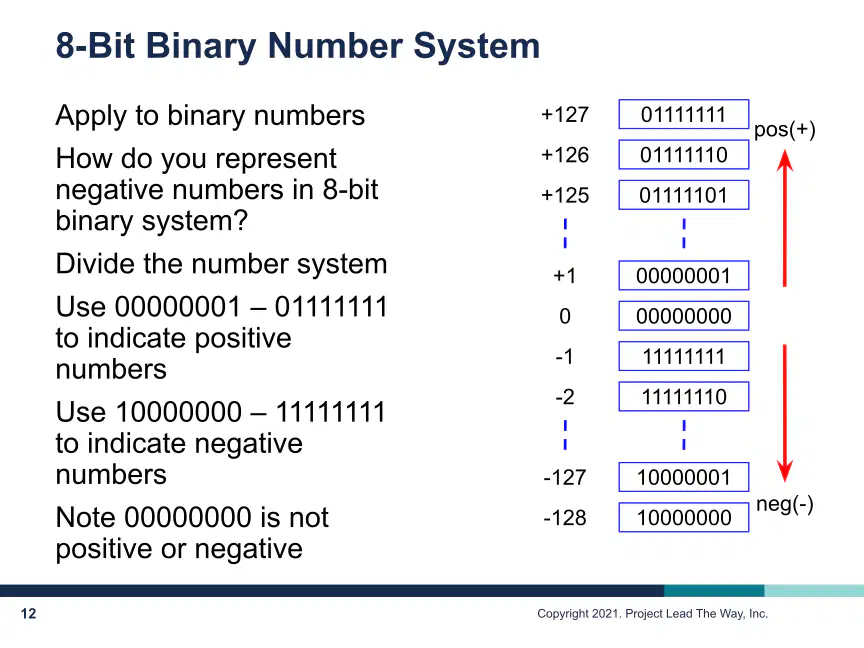
In the 8-bit binary number system, what is the significance of the most significant bit (MSB)?
It determines whether the number is positive or negative.
It indicates the least significant digit.
It is always set to 1.
It is used for error checking.
27
28
Open Ended
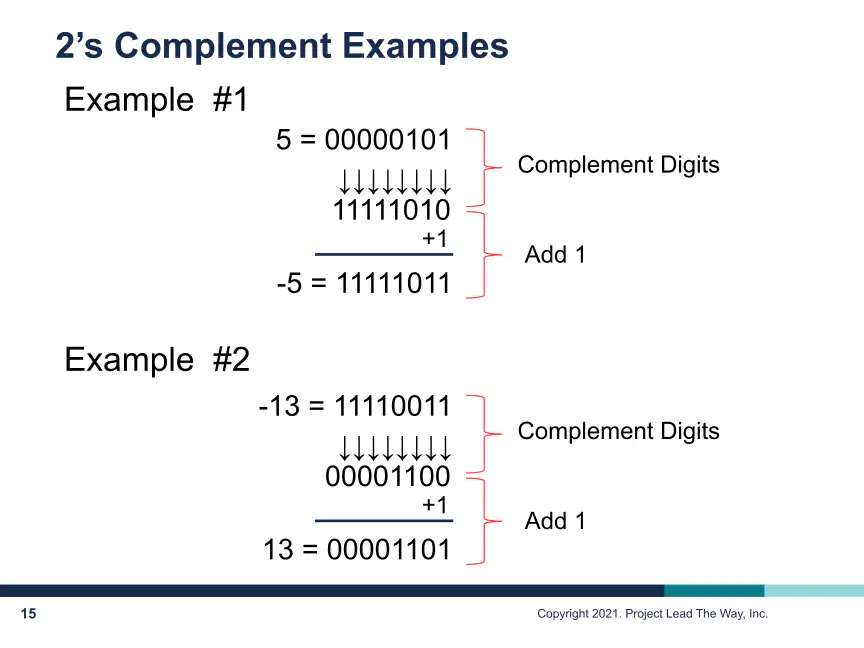
Compare the steps of the 10’s Complement Process and the 2’s Complement Process. What is similar and what is different?
29
30
Multiple Choice
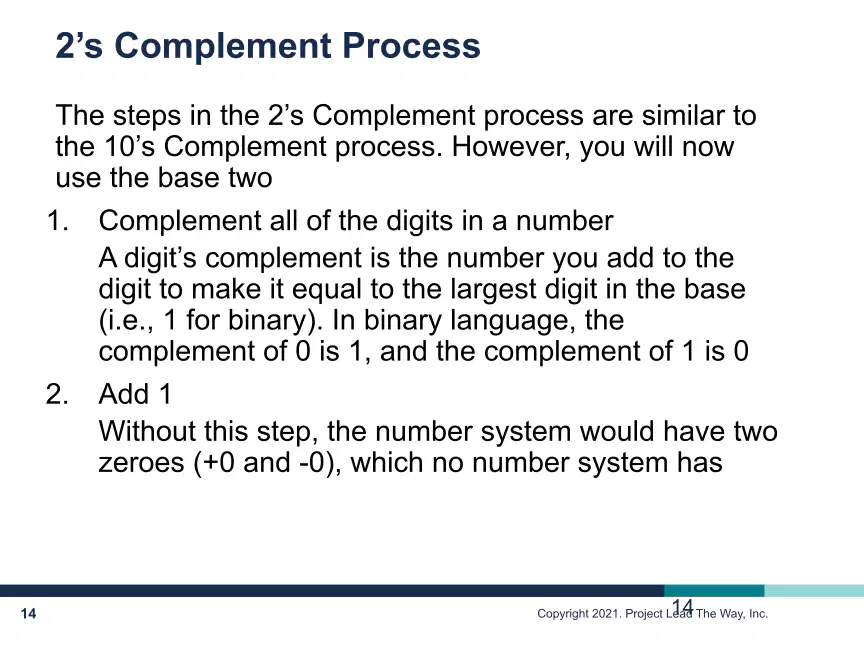
Which step is necessary to convert a positive binary number to its negative equivalent using 2's complement?
Invert the digits and add 1
Invert the digits only
Add 1 to the original number
Subtract 1 from the original number
31
32
33
Fill in the Blanks
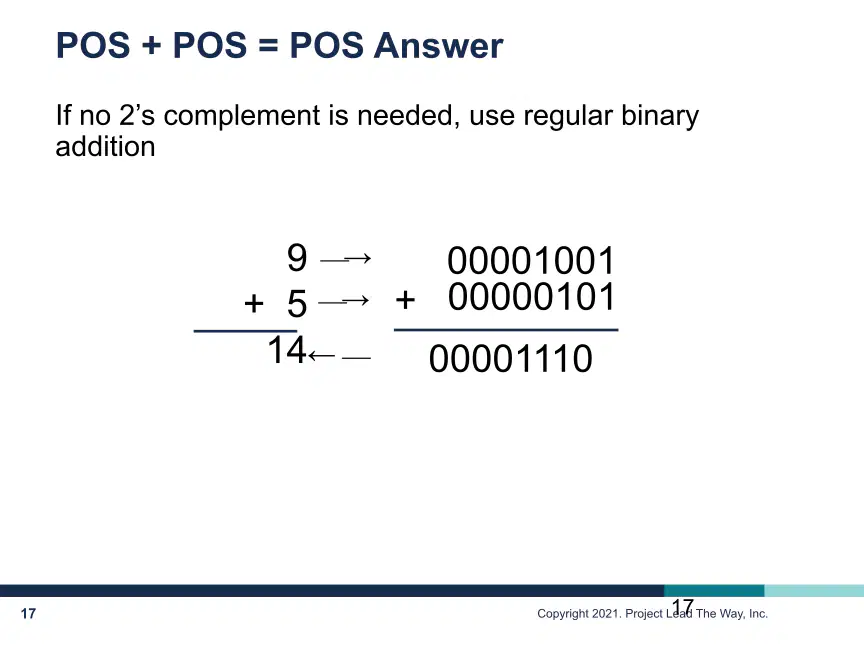
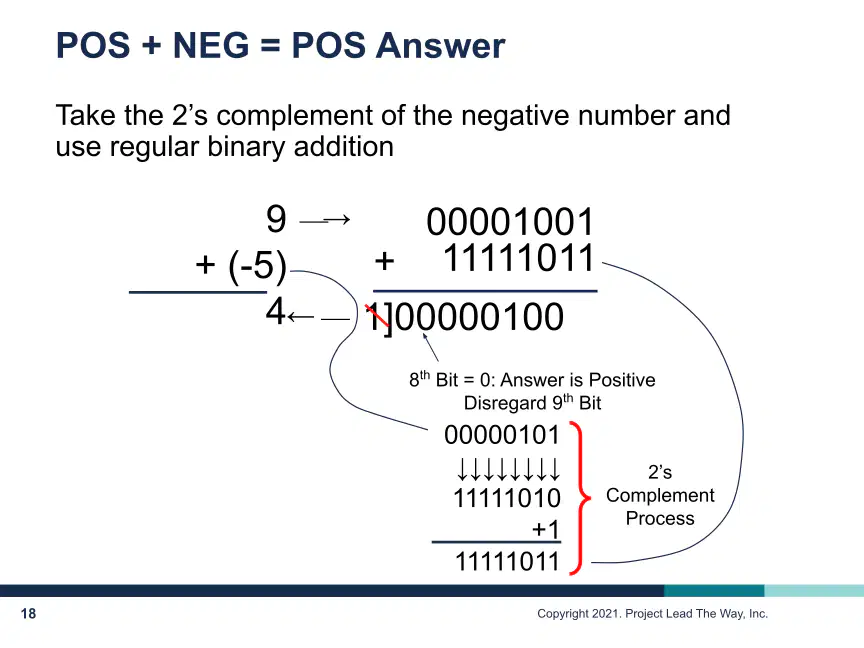
If you add 9 (00001001) and 5 (00000101) in binary, the result is
Type answer...
34
35
Open Ended
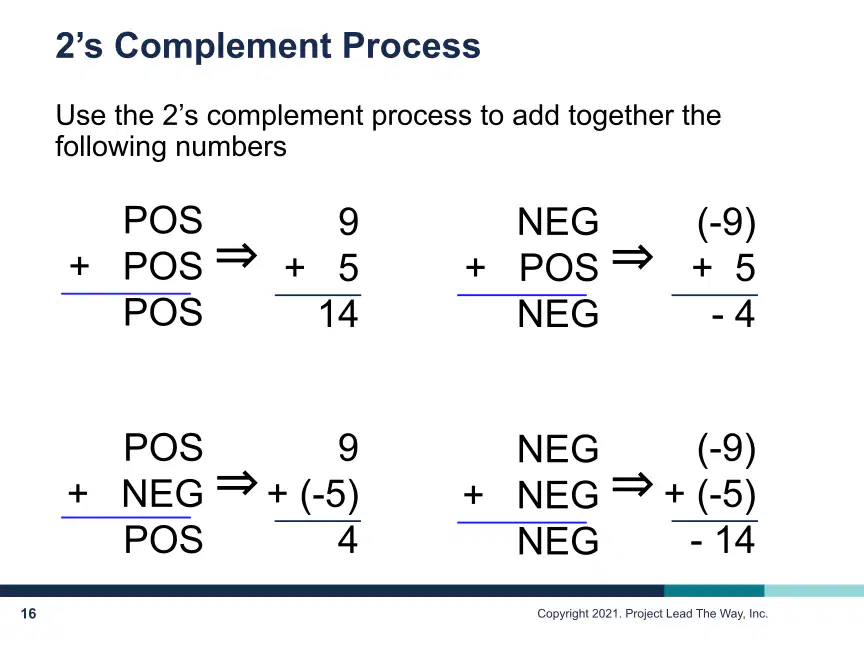
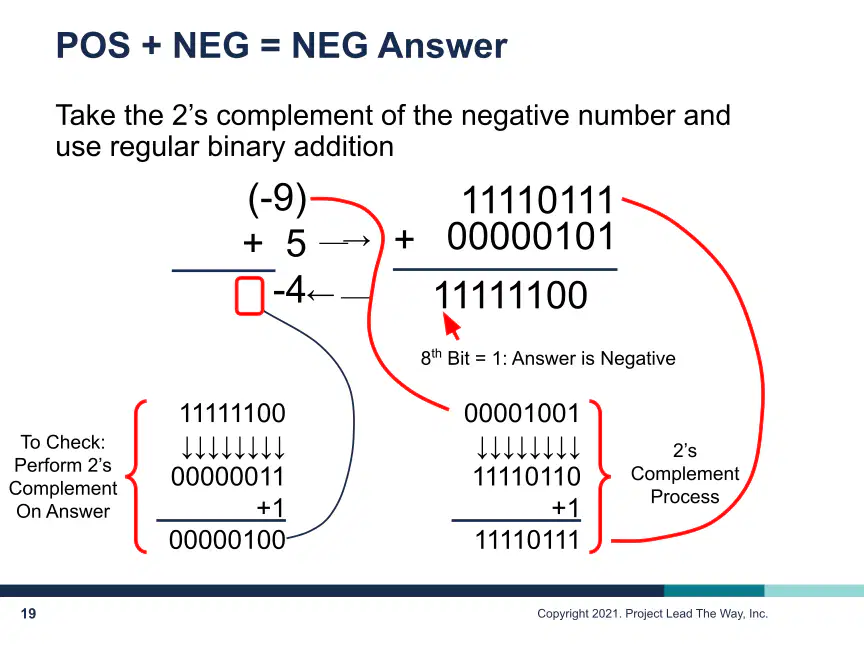
Explain the process of adding two numbers using 2's complement when one number is positive and the other is negative.
36
37
38
Open Ended
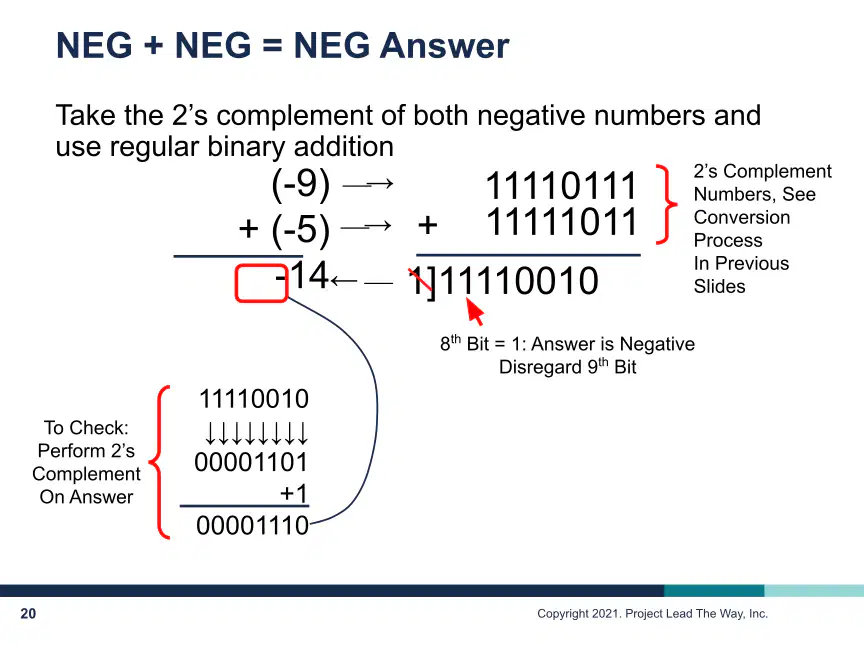
Describe how you would check the correctness of a negative result obtained from adding two numbers using 2's complement.
39
Multiple Choice
What does the 8th bit indicate in the result of binary addition using 2's complement?
Whether the answer is positive or negative
The value of the answer
The need to perform another complement
The number of bits used
40
Multiple Select
Which of the following statements are true about binary addition in the context of 2's complement?
Adding two positive numbers does not require 2's complement.
Adding a positive and a negative number requires converting the negative number using 2's complement.
Adding two negative numbers requires converting both numbers using 2's complement.
Adding two positive numbers always results in a negative answer.
41
Multiple Choice
Which of the following statements best describes the process of creating negative numbers in the binary number system using 2's complement?
Invert all bits and add 1 to the result
Invert all bits and subtract 1 from the result
Add a sign bit to the binary number
Multiply the binary number by -1
42
Open Ended
Explain how the 2's complement process can be used to add and subtract binary numbers. Why is this method useful in digital electronics?
Show answer
Auto Play
Slide 1 / 42
SLIDE
Similar Resources on Wayground

37 questions
Boundary Types
Presentation
•
10th Grade
38 questions
Invertebrate Classification- Bus Activity
Presentation
•
10th Grade
35 questions
Valence Electrons and Ions
Presentation
•
KG
36 questions
Types of Chemical Reactions
Presentation
•
10th Grade
39 questions
The Organization of the Periodic Table
Presentation
•
10th Grade
36 questions
DISASTER PREPAREDNESS
Presentation
•
10th Grade
39 questions
Electron Configuration
Presentation
•
10th Grade
37 questions
Neolithic Revolution
Presentation
•
9th Grade
Popular Resources on Wayground
10 questions
Safety Day 2026 – Student Review

Quiz
•
9th Grade
21 questions
Continents and Oceans
Quiz
•
6th Grade
20 questions
Parts of Speech
Quiz
•
5th Grade
16 questions
Subject & Predicate
Quiz
•
5th Grade
25 questions
Multiplication Facts
Quiz
•
5th Grade
12 questions
Map Skills
Quiz
•
3rd Grade
22 questions
Continents and Oceans
Quiz
•
5th Grade
15 questions
Rounding Decimals
Quiz
•
5th Grade
Discover more resources for Science
10 questions
Exploring Chemical and Physical Changes

Interactive video
•
6th - 10th Grade
10 questions
Exploring the Electromagnetic Spectrum for Middle School Science
Interactive video
•
6th - 10th Grade
10 questions
Exploring Force and Motion Concepts
Interactive video
•
6th - 10th Grade
10 questions
Exploring Air Masses and Weather Fronts
Interactive video
•
6th - 10th Grade
10 questions
Exploring the States of Matter
Interactive video
•
6th - 10th Grade
10 questions
Exploring Forces: Net Force, Normal Force, Gravity, and Friction
Interactive video
•
6th - 10th Grade
10 questions
Differentiating Thermal Energy and Temperature
Interactive video
•
6th - 10th Grade
10 questions
Exploring the States of Matter and Thermal Energy
Interactive video
•
6th - 10th Grade