Copy of Physical Oceanography
Presentation
•
Science
•
9th - 12th Grade
•
Hard
+13
Standards-aligned
Natalie Mcdonald
FREE Resource
63 Slides • 54 Questions
1
2
Fill in the Blanks
Type answer...
3
4
Multiple Choice
What is the role of the moon's gravity in the formation of tides?
It has no effect
It pulls the ocean and land
It only affects the ocean
It only affects the land
5
6
Multiple Choice
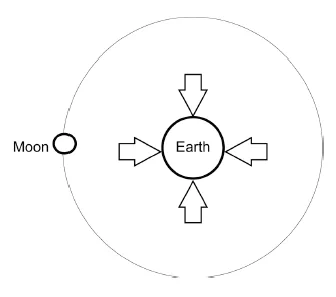
Look at the diagram provided. How many points on Earth, as indicated by the arrows, will be experiencing high tides?
1
2
3
4
7
8
Multiple Choice
What factors affect the tides according to the image?
Shape of the shoreline
Shape of bays/estuaries
Local wind and weather patterns
All of the above
9
10
Multiple Choice
What is the definition of tidal range?
The difference between high tide and low tide
The height of the ocean floor
The distance between two tides
The speed of tidal waves
11
12
Multiple Choice
During the moon phase shown in the image Earth will experience a -
Spring Tide
Neap Tide
13
14
Multiple Choice
What are Neap Tides and when do they occur?
During full moons
During new moons
During 1st and 3rd quarter moons
During solar eclipses
15
16
Multiple Choice
What are the characteristics of spring tides compared to neap tides?
Spring tides have minimal range
Neap tides have extreme high and low tides
Spring tides occur during full moons
Neap tides occur during new moons
17
18
19
20
Multiple Choice
What is the definition of a semi-diurnal tide?
One high and one low water per tidal day
Two high and two low waters per tidal day
Three high and three low waters per tidal day
Variable heights of tides
21
22
Multiple Choice
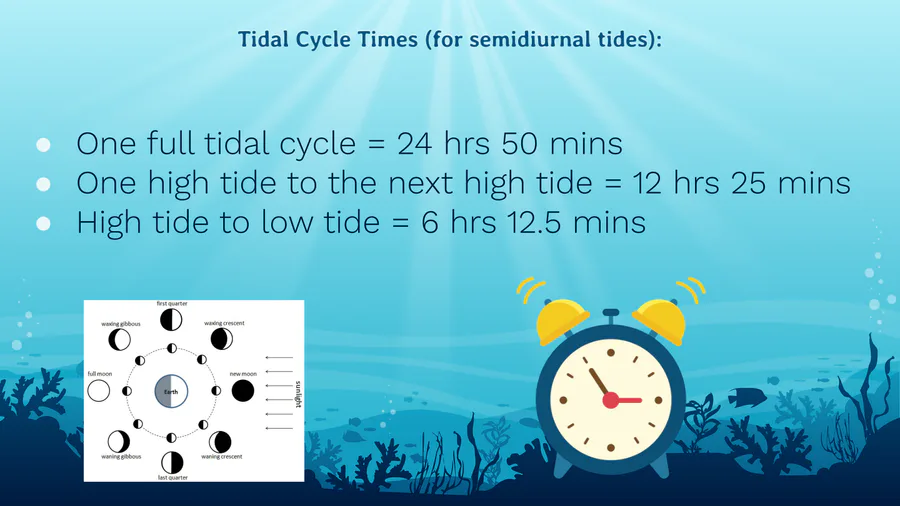
What is the duration of one full tidal cycle?
24 hrs 50 mins
12 hrs 25 mins
6 hrs 12.5 mins
48 hrs
23
24
25
Multiple Choice
What is the average tidal range of the Bay of Fundy?
30ft
40ft
50ft
60ft
26
27
Multiple Select
What are the impacts of Perigean tides?
Road closures
Overwhelmed storm water systems
Damage to transportation infrastructure
Coastal erosion
28
29
Multiple Choice
What conditions lead to a perigean spring tide?
When the moon is in its first quarter
When the moon is closest to Earth
When the moon is in its last quarter
When the moon is farthest from Earth
30
31
Multiple Choice
What is a storm surge and what factors influence its amplitude?
The height of water above normal tide
The speed of the storm
The direction of the wind
The temperature of the water
32
33
Multiple Choice
What is storm tide and how is it formed?
The total observed seawater level during a storm
The highest storm tides observed during a new moon
The combination of storm surge and astronomical tide
The lowest tide observed during a storm
34
35
Multiple Choice
How do tides affect marine life at the beach or in an estuary?
They have no effect on marine life.
They only affect fish.
They can expose or cover organisms.
They only affect the water temperature.
36
37
Multiple Choice
Alternate exposure to air and water caused by the tides results in intertidal organisms occupying specific zones according to their range of tolerance to:
dryness
temperature
predation
feeding
38
39
Multiple Choice
What are ocean waves?
The result of forces acting on the water.
Represent the flow of energy or motion.
Both A and B.
None of the above.
40
Multiple Choice
As energy passes through the water in a wave, how do the water molecules move?
against the currents
in the direction of the waves
in a small orbital motion
41
42
43
Multiple Choice
What does 'wind duration' refer to in wave formation?
The speed of the wind
The height of the waves
The distance the wind travels
The time for which the wind has blown over the water without disruption
44
Multiple Choice
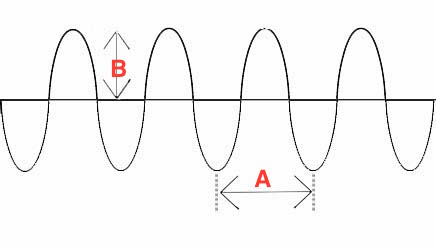
What property of the wave is represented by the letter "A"?
amplitude
crest
trough
wavelength
45
46
Multiple Choice
All waves carry ________ as they travel from one place to another.
matter
space
energy
water
47
48
Multiple Choice
The waves are traveling at the same speed.
Which wave has the greater frequency?
Graph on the Left
Graph on the Right
Both have the same frequency
49
Multiple Choice
Which word is used to identify the distance between points C & G?
Amplitude
Crest
Frequency
Wavelength
50
51
Multiple Choice
What are the three types of wave interference patterns described in the image?
Constructive
Destructive
Mixed
Transitional
52
53
54
Multiple Choice
What distinguishes a tsunami from other types of ocean waves?
The wave energy of tsunamis increases as the water depth decreases.
A tsunami forms when a large volume of water is suddenly displaced up or down.
A tsunami is caused by the disruption of deep ocean currents by volcanic eruptions.
The wave height of a tsunami is much lower in the center of the ocean than it is near shore.
55
56
Multiple Choice
True or false? A restoring force makes a wave larger.
TRUE
FALSE
57
Multiple Choice
True or false? Constructive interference will cause a wave to get bigger.
TRUE
FALSE
58
59
Multiple Choice
Which one of these is NOT a cause of a tsunami?
wind
landslide
earthquake
volcanic eruption
60
61
62
63
Multiple Choice
Which breaker type is the most exciting to go surfing?
Surging
Spilling
plunging
64
65
66
Multiple Choice
Surface currents are caused by the surface of the Earth and by the force and direction of wind.
True
False
67
68
Multiple Choice
69
Multiple Choice
70
71
Multiple Choice
The name of the system that causes the winds to spin in a hurricane
The Coriolis Effect
The Corleone Affect
The Circular Wind Phenomenon
The East-West Effect
72
Multiple Choice
What are trade winds?
Winds that blow from south to north
Winds that blow from north to south
Winds that blow from east to west
Winds that blow from west to east
73
Multiple Choice
74
Multiple Choice
75
76
Multiple Choice
77
78
79
Multiple Choice
The replacement of nutrient-depleted water by nutrient-rich water is called
Downwelling
Upwelling
Circulating
None of the above
80
81
Multiple Choice
Downwelling brings water to the bottom of the ocean, driving deep currents
TRUE
FALSE
82
83
84
85
Multiple Choice
What helps in the formation of deep ocean currents?
Temperature
Wind
Salinity
All of the above
86
87
88
Multiple Choice
The effects of upwellings
Nutrients are brought up from the seafloor, creating high productivity and increasing biodiversity
Nutrient poor water sinks and traps nutrients on the bottom of the ocean
Plastic bits are eaten by fish, who's stomachs fill and they starve
Trash is trapped by the circular motion of water "hilling up" in the center
89
90
91
92
93
94
95
Multiple Choice
What is the relationship between El Niño and La Niña?
They have no relationship
El Niño and La Niña are the same phenomenon
El Niño and La Niña are opposite phases of a cycle
El Niño and La Niña occur simultaneously
96
Multiple Choice
What happens during La Niña?
Trade winds weaken and warm surface water moves eastward
Trade winds strengthen and warm surface water moves westward
Trade winds strengthen and warm surface water moves eastward
Trade winds weaken and warm surface water moves westward
97
Multiple Choice
What happens during El Niño?
Trade winds strengthen and warm surface water moves eastward
Trade winds weaken and warm surface water moves westward
Trade winds strengthen and warm surface water moves westward
Trade winds weaken and warm surface water moves eastward
98
99
100
101
Multiple Choice
102
103
Multiple Choice
104
Multiple Choice
105
106
Multiple Choice
107
108
109
Multiple Choice
110
111
Multiple Choice
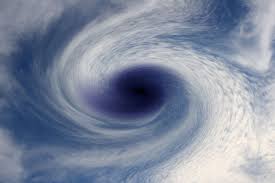
112
Multiple Choice
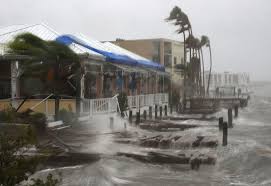
113
114
115
116
Multiple Choice
What happens when trade winds become stronger than normal?
They blow cool water back into the eastern Pacific and restart the upwelling of warm water in the western Pacific
They blow cool water back into the western Pacific and restart the upwelling of warm water in the eastern Pacific
They blow warm water back into the western Pacific and restart the upwelling of cool water in the eastern Pacific
They blow warm water back into the eastern Pacific and restart the upwelling of cool water in the western Pacific
117
Multiple Choice
Show answer
Auto Play
Slide 1 / 117
SLIDE

Similar Resources on Wayground
112 questions
Industrialization Part 2
Presentation
•
KG - University
112 questions
Dressing for Your Success Notes
Presentation
•
9th Grade - University
105 questions
TRANSPORT IN HUMANS (BLOOD CIRCULATORY SYSTEM)
Presentation
•
9th - 12th Grade
113 questions
The Civil Rights Movement
Presentation
•
11th Grade
112 questions
Interdependence of Organisms in Their Environment
Presentation
•
9th - 12th Grade
108 questions
EARTH DAY 32: Earth & the Sun
Presentation
•
9th - 12th Grade
114 questions
Conference
Presentation
•
9th - 12th Grade
115 questions
WW1 USH
Presentation
•
9th - 12th Grade
Popular Resources on Wayground
20 questions
"What is the question asking??" Grades 3-5
Quiz
•
1st - 5th Grade
20 questions
“What is the question asking??” Grades 6-8
Quiz
•
6th - 8th Grade
10 questions
Fire Safety Quiz
Quiz
•
12th Grade
20 questions
Equivalent Fractions
Quiz
•
3rd Grade
34 questions
STAAR Review 6th - 8th grade Reading Part 1
Quiz
•
6th - 8th Grade
20 questions
“What is the question asking??” English I-II
Quiz
•
9th - 12th Grade
20 questions
Main Idea and Details
Quiz
•
5th Grade
47 questions
8th Grade Reading STAAR Ultimate Review!
Quiz
•
8th Grade
Discover more resources for Science
20 questions
Cell Biology and Biochemistry Quiz
Quiz
•
9th Grade
20 questions
Human Impact on the Environment Review #2
Quiz
•
9th Grade
20 questions
Balancing Chemical Equations
Quiz
•
9th Grade
26 questions
Cell Cycle and Cancer Retest
Quiz
•
9th Grade
20 questions
Mendelian Genetics Review
Quiz
•
9th Grade
10 questions
Exploring Light and Waves Concepts
Interactive video
•
6th - 10th Grade
10 questions
Evolution Review
Presentation
•
10th Grade
10 questions
Exploring Plant Structures and Adaptations
Interactive video
•
6th - 10th Grade